Dress and adornmentCentral Asia and the Caucasus
Ak-kalpak
In its own language: Ак калпак
A traditional Kyrgyz four-sided white wool felt hat worn by men across generations

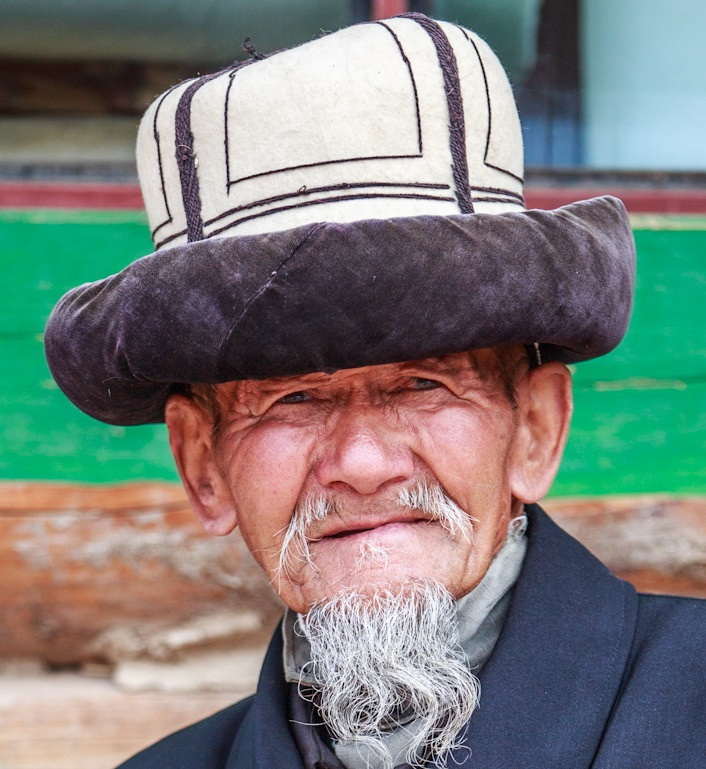
The ak-kalpak is a traditional white wool felt cap worn by Kyrgyz men in cities and mountain regions alike. Crafted from four stitched panels, it represents natural elements and heritage, serving as an emblem of national unity and cultural pride.
When is Ak-kalpak kept?
Ak-kalpak is kept on worn year-round and celebrated on National Ak-kalpak Day on March 5.
The ak-kalpak is a tall white felt hat worn by Kyrgyz men. Stitched together from four panels of wool felt and turned up at the brim, this distinct headpiece remains a daily garment and ceremonial staple across Kyrgyzstan. For Kyrgyz communities, the hat reflects the country's snowy mountain peaks, ancestral connections, and shared cultural identity, worn by boys and elders alike.
Design and craftsmanship
The name ak-kalpak combines the Kyrgyz word for white with the general term for a hat. Makers construct the elongated cap from four separate sections of white wool felt. These panels are stitched together and turned up at the bottom to form a small brim. Across Kyrgyzstan, craftsmen produce more than eighty distinct varieties. While everyday styles usually feature dark embroidery and matching accents along the rim, completely plain white versions are reserved for formal ceremonial occasions.
Symbolism and meaning
Every feature of the ak-kalpak carries symbolic weight. Its pointed structure mirrors the snow-covered mountain peaks of Kyrgyzstan. The four felt sections correspond to the classic natural elements of air, water, fire, and earth. Embroidered patterns represent a family lineage, while tassels placed on top honour the memory of ancestors. Beyond personal heritage, the hat stands as an emblem of national solidarity, fostering inclusion when worn by people from diverse ethnic communities across the country.
A living modern emblem
While many traditional garments have faded from common use, the ak-kalpak remains widely worn across all generations. Men wear it both in rural highlands and in the capital city of Bishkek. Kyrgyzstan officially observes National Ak-kalpak Day every year on March 5. To protect this heritage, workshops continue to train new artisans, and cultural exhibitions highlight craft methods. In 2019, UNESCO inscribed the traditional skills of making and wearing the hat on its Representative List of Intangible Cultural Heritage.
Respect and public standing
Because the hat represents the motherland, it is treated with deep reverence. In late 2017, a dog parade in Bishkek featuring an animal in a kalpak sparked widespread public controversy and official criticism. Lawmakers responded with proposals to protect the headwear as an official cultural symbol, protect domestic production, and mandate its use by national leaders during high-level international meetings. Today, the hat remains an essential expression of Kyrgyz citizenship and pride.
How Ak-kalpak is kept
Men of all ages wear the ak-kalpak as daily attire and during civic gatherings. Artisans craft each hat by cutting and sewing four panels of pressed wool felt, rolling the brim, and adding decorative stitched motifs and top tassels. During significant state ceremonies or rituals, participants often choose pure white versions without dark borders. Across Kyrgyzstan, schools, civic groups, and citizens celebrate the headwear each March with exhibitions and community events.
When and where
Men wear the ak-kalpak throughout the entire year for daily life, family events, and formal gatherings. Kyrgyzstan also celebrates an official National Ak-kalpak Day annually on March 5.
The hat is worn across Kyrgyzstan, from high-altitude mountain settlements to urban centers such as Bishkek. It is also found in neighbouring Kazakhstan.
What Ak-kalpak means
The high shape of the ak-kalpak evokes Kyrgyzstan's snow-topped mountain peaks. Its four joined panels represent earth, water, fire, and air. Stitched abstract motifs evoke a family tree, while upper tassels commemorate departed ancestors. Today, it also serves as a symbol of unity for the entire country.



Questions people ask about Ak-kalpak
When is Ak-kalpak kept?
Ak-kalpak is kept on worn year-round and celebrated on National Ak-kalpak Day on March 5.
What is an ak-kalpak?
An ak-kalpak is a traditional Kyrgyz men's hat made from four panels of white wool felt. It has a turned-up brim and is often decorated with embroidery and top tassels.
Where and by whom is the ak-kalpak worn?
It is worn by Kyrgyz men and boys across Kyrgyzstan, both in remote mountainous areas and in major cities like Bishkek, as well as in Kazakhstan.
What do the design elements of the hat represent?
Its shape recalls Kyrgyzstan's snowy peaks. The four felt pieces represent the elements of fire, earth, air, and water, while the embroidery and tassels evoke ancestral lineage.
See also
 NowruzThe Iranian new year at the March equinox, kept with fire, greenery and picnicsJeti ataA Kazakh custom requiring knowledge of seven direct ancestors to ensure healthy marriages and tribal identity.
 Immortal RegimentA civic procession where people carry portraits of relatives who served in the Second World War.
 ʻIe tōgaPrecious woven mats exchanged in Samoan ceremonies to honor family ties and chiefly status.
Good reading and sources
- Consulter les Listes du patrimoine culturel immatériel et le Registre de bonnes pratiques de sauvegardeUNESCO, Heritage listing
- Consulter les Listes du patrimoine culturel immatériel et le Registre de bonnes pratiques de sauvegardeUNESCO, Article
- Ak-kalpak on WikipediaEncyclopedia
- More photos on Wikimedia CommonsPhotos and video
- Wikidata recordOpen data
The facts on this page come from the Wikipedia article "Ak-kalpak", written by its contributors and used under the CC BY-SA 4.0 licence, and from its Wikidata record (CC0). EveryParampara rewrote the text in its own words, with AI assistance, and compares every page with the article to make sure no passage is copied. It may be reused under the same CC BY-SA 4.0 licence with a link back.
It may contain mistakes. Traditions differ from one family, village and community to the next, and the people who keep them know them best. If something is wrong, tell us. Last refreshed 2026-10-06.
More from Kyrgyzstan
All the traditions of Kyrgyzstan
🇷🇺 Moscow, Russia and 5 moreImmortal RegimentБессмертный полк (Bessmertnyy polk)
A civic procession where people carry portraits of relatives who served in the Second World War.Festival
🇰🇿 Kazakhstan and 1 moreJeti ataЖеті ата
A Kazakh custom requiring knowledge of seven direct ancestors to ensure healthy marriages and tribal identity.Folklore
 🇲🇳 Ölgii, Mongolia and 3 moreHunting with eagles
The Central Asian tradition of hunting foxes and hares from horseback with golden eagles.Game
🇲🇳 Ölgii, Mongolia and 3 moreHunting with eagles
The Central Asian tradition of hunting foxes and hares from horseback with golden eagles.Game
 🇰🇬 Kyrgyzstan and 1 moreTush kyizтуш кийиз
An embroidered wall hanging made for a child's wedding in Kyrgyz and Kazakh homesCraft
🇰🇬 Kyrgyzstan and 1 moreTush kyizтуш кийиз
An embroidered wall hanging made for a child's wedding in Kyrgyz and Kazakh homesCraft
The same idea elsewhere
Remembering the ancestors compared 🇮🇪 Ireland and 5 moreHalloween
An annual observance on 31 October marking the eve of All Saints' Day, rooted in Christian tradition and Celtic heritageFestival · Sweets given and shared
🇮🇪 Ireland and 5 moreHalloween
An annual observance on 31 October marking the eve of All Saints' Day, rooted in Christian tradition and Celtic heritageFestival · Sweets given and shared
 🇮🇳 Ayodhya, India and 7 moreDiwaliदीपावली (Dīpāvalī)
A five-day festival of lights celebrated across India and its diaspora to mark the victory of light over darkness.Festival · Feasts and festival meals
🇮🇷 Iran and 7 moreNowruzنوروز
The Iranian new year at the March equinox, kept with fire, greenery and picnicsSeasonal
🇮🇳 Ayodhya, India and 7 moreDiwaliदीपावली (Dīpāvalī)
A five-day festival of lights celebrated across India and its diaspora to mark the victory of light over darkness.Festival · Feasts and festival meals
🇮🇷 Iran and 7 moreNowruzنوروز
The Iranian new year at the March equinox, kept with fire, greenery and picnicsSeasonal
 🇮🇱 Jerusalem, Israel and 1 moreHanukkahחֲנֻכָּה
An eight-day Jewish festival marking the rededication of the Second Temple in Jerusalem and the miracle of a single day'Festival
🇮🇱 Jerusalem, Israel and 1 moreHanukkahחֲנֻכָּה
An eight-day Jewish festival marking the rededication of the Second Temple in Jerusalem and the miracle of a single day'Festival