Festivals and celebrationsCentral Asia and the CaucasusSecular and civic
Asrlar Sadosi
An annual outdoor festival celebrating Uzbek folk arts, sports, crafts, and heritage

Asrlar Sadosi was an annual outdoor festival celebrating the traditional culture, folk music, crafts, and cuisine of Uzbekistan. Staged in different historical regions each year, it brought together tens of thousands of visitors for folk performances, equestrian games, and craft markets.
When is Asrlar Sadosi kept?
Asrlar Sadosi is kept on annually in late spring.
Asrlar Sadosi, meaning Echo of Centuries, was an annual cultural gathering held in Uzbekistan to celebrate the country's folk customs, handmade arts, and regional traditions. Launched in 2008, the open-air event moved to a different historic location each year. It brought together master artisans, folk musicians, epic storytellers, and traditional cooks, offering visitors a direct encounter with regional life, folk wrestling, and horseback games.
A travelling celebration
The festival changed its location every spring, transforming historic ruins, fortress walls, or mountain valleys into temporary festive settlements. Organisers built tent towns and yurts where participants gathered. Its first gathering took place near Shahrisabz, before moving in subsequent years to the walled district of Ichan-Qala in Khiva, the historic streets of Bukhara, the ancient desert fortress of Tuproq Qala, and the Sarmishsai Gorge. Each host setting highlighted the unique geography and architectural backdrops of Uzbekistan, framing the live performances against centuries of local history.
Folk arts and performances
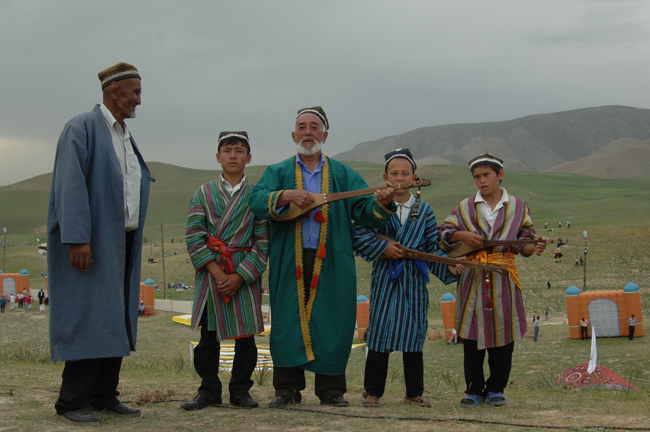
Open-air stages across the festival grounds featured regional folk ensembles and traditional epic storytellers known as bakhshi. Alongside musical recitals, tightrope walkers performed daring acts on high wires, while fashion shows presented national attire created by regional designers. Skilled craftspeople set up large open markets to display their work and explain their techniques. Guests could watch artisans produce glazed ceramics, fine woodwork, miniature paintings, hand-stitched gold embroidery, stamped copper, and traditional puppets, preserving specialised handcraft traditions from different provinces.
Traditional sports and food
Spectators gathered to watch customary contests and games of skill. Horsemen competed in uloq-kopkari, a fast-paced equestrian sport, while wrestlers took part in matches of kurash, a folk wrestling style central to Uzbek culture. The festival also hosted ram matches and gamecock bouts. In open-air kitchens, master cooks known as oshpaz competed to prepare regional recipes, serving local specialities to crowds from yurt cafes. Alongside the games, scholarly panels, archaeology exhibits, and student awards supported historical research and spiritual education.
How Asrlar Sadosi is kept
Across two days, participants and visitors gather in an outdoor tent encampment set up near a historical site. Craftsmen arrange exhibition stalls to display pottery, textiles, and carved wood, while folk groups and bakhshi storytellers take the stage. Spectators move between musical performances, tightrope displays, and athletic arenas featuring kurash wrestling and horse games. Meanwhile, professional chefs prepare traditional dishes in open kitchens, and academic presentations and craft workshops run alongside the public entertainment.
When and where
The festival took place annually over two days, typically during late spring in late April or early May. Each edition was scheduled as a weekend event in coordination with cultural foundations and international partners.
The event was held across Uzbekistan, rotating to a new cultural or archaeological site every year. Past host locations included Bukhara, Khiva, Karakalpakstan, Tashkent Region, the area near Shahrisabz, and the Sarmishsai Gorge in the Navoi Region.
What Asrlar Sadosi means
The festival was created to safeguard and celebrate Uzbekistan's non-material heritage, oral traditions, and craftsmanship. Its name, Echo of Centuries, reflects an intention to connect modern generations with ancestral customs. By staging events in historic fortresses and Silk Road cities, the gathering highlighted the continuous practice of traditional sports, culinary methods, and applied arts across diverse Uzbek provinces.



Questions people ask about Asrlar Sadosi
When is Asrlar Sadosi kept?
Asrlar Sadosi is kept on annually in late spring.
What was Asrlar Sadosi?
Asrlar Sadosi, or Echo of Centuries, was an annual cultural festival in Uzbekistan that showcased traditional folk music, handmade crafts, regional cuisine, and folk sports such as kurash wrestling and horse games.
Where did the festival take place?
The event moved to a different historical or natural landmark in Uzbekistan every year. Host sites included the city of Bukhara, the walled town of Ichan-Qala in Khiva, and ancient desert fortresses.
What kinds of arts and crafts were featured?
Master artisans displayed ceramics, gold embroidery, textile weaving, miniature painting, wood engraving, and traditional doll making, demonstrating their crafting techniques directly to visiting audiences.
What traditional sports were played at the event?
Visitors could watch matches of kurash folk wrestling, traditional uloq-kopkari horse games, ram fighting, and daring performances by tightrope walkers known as darboz.
See also
 Yaldā NightA solstice night of poetry, fruit and family, kept from Iran through Central Asia
 Immortal RegimentA civic procession where people carry portraits of relatives who served in the Second World War.
 Novy GodA secular winter celebration of decorated trees, family feasts and midnight giftsFlower Festival in UzbekistanAn annual spring celebration of floriculture and floral art held across several cities in Uzbekistan.
Good reading and sources
The facts on this page come from the Wikipedia article "Asrlar Sadosi Festival of Traditional Culture", written by its contributors and used under the CC BY-SA 4.0 licence, and from its Wikidata record (CC0). EveryParampara rewrote the text in its own words, with AI assistance, and compares every page with the article to make sure no passage is copied. It may be reused under the same CC BY-SA 4.0 licence with a link back.
It may contain mistakes. Traditions differ from one family, village and community to the next, and the people who keep them know them best. If something is wrong, tell us. Last refreshed 2026-10-06.
More from Uzbekistan
All the traditions of Uzbekistan
🇮🇷 Iran and 5 moreYaldā Nightشب یلدا
A solstice night of poetry, fruit and family, kept from Iran through Central AsiaFestival · Dinner
🇷🇺 Moscow, Russia and 5 moreNovy GodНовый Год
A secular winter celebration of decorated trees, family feasts and midnight giftsFestival · Feasts and festival meals
🇷🇺 Moscow, Russia and 5 moreImmortal RegimentБессмертный полк (Bessmertnyy polk)
A civic procession where people carry portraits of relatives who served in the Second World War.Festival
🇺🇿 Namangan, UzbekistanFlower Festival in UzbekistanGul bayrami
An annual spring celebration of floriculture and floral art held across several cities in Uzbekistan.Festival
The same idea elsewhere
All of this kind 🇮🇹 Rome, Italy and 4 moreChristmas
A festival of Jesus's birth, kept on 25 December with gifts, lights and shared mealsFestival
🇮🇹 Rome, Italy and 4 moreChristmas
A festival of Jesus's birth, kept on 25 December with gifts, lights and shared mealsFestival
 🇮🇪 Ireland and 5 moreHalloween
An annual observance on 31 October marking the eve of All Saints' Day, rooted in Christian tradition and Celtic heritageFestival · Sweets given and shared
🇮🇪 Ireland and 5 moreHalloween
An annual observance on 31 October marking the eve of All Saints' Day, rooted in Christian tradition and Celtic heritageFestival · Sweets given and shared
 🇮🇹 Rome, Italy and 4 moreValentine's Day
A Christian feast day and cultural celebration of love kept on February 14 in many countries.Festival
🇮🇹 Rome, Italy and 4 moreValentine's Day
A Christian feast day and cultural celebration of love kept on February 14 in many countries.Festival
 🇹🇷 Turkey and 5 moreEid al-Fitrعيد الفطر
The feast that ends Ramadan, opened with morning prayers, sweets and visits homeFestival · Feasts and festival meals
🇹🇷 Turkey and 5 moreEid al-Fitrعيد الفطر
The feast that ends Ramadan, opened with morning prayers, sweets and visits homeFestival · Feasts and festival meals