🇺🇿 Traditions of Uzbekistan
19 traditions from Uzbekistan, best known first, across 5 cities and towns.
Uzbek traditions sit at a Central Asian crossroads where Turkic, Persian, and Islamic currents meet. What stands out most is the social place of food: enormous pots of plov cooked by specialist chefs for weddings and holidays, and teahouses that anchor daily life. Spring's Nowruz marks the year's turning with overnight cooking and bright dress.
Uzbekistan lies along the old Silk Road, and its customs reflect centuries of trade and exchange across Central Asia. The population is mostly Uzbek but includes Tajiks, Russians, Kazakhs, Tatars, Karakalpaks, and Bukharan Jews, among others. After independence from the Soviet Union in 1991, the country began rediscovering and reshaping the traditions that shape daily life, from meals shared around a communal cauldron to festivals that mark the turning of the seasons.
The year and its festivals
Two celebrations shape the calendar. Yangi Yil, the New Year, brings decorated trees, gift exchanges, and a costumed figure who appears at the gathering. At midnight the national anthem is sung to welcome the fresh year. Nowruz, tied to the spring equinox, holds deeper roots and wider affection. Families wear traditional dress and lay elaborate tables, but the centrepiece is sumalak, a thick paste that must be stirred through the entire night. It is a communal vigil as much as a dish, and the shared effort itself carries meaning.
The table
Plov sits at the centre of Uzbek eating life. Rice is steamed over a base of fried meat, onions, and carrots in a large cauldron called a kazan; chickpeas, raisins, or dried fruit may join the pot. UNESCO lists plov culture as intangible heritage, recognising its communal character. Specialist cooks known as oshpaz prepare it for hundreds at weddings and festivals, and it is customary for elders to begin eating before others. Flat breads baked in a clay oven, the tandur, vary from region to region. Mutton is the most common meat, reflecting the country's many sheep.
Tea and hospitality
Hospitality in Uzbekistan is closely bound to tea. A guest is offered a cup automatically, green or black depending on the region, and it is drunk plain, without milk or sugar. Teahouses called chaikhanas serve as places to gather, talk, and rest. A chilled yoghurt drink known as ayran appears in the heat of summer, but hot tea remains the constant. Wine has a modest yet real presence for a mainly Muslim country: the Khovrenko Winery in Samarkand dates to 1927, and Uzbek dessert wines have earned international awards. A festive meal closes with fresh or dried fruit, nuts, and halva.
Faith and identity
Most Uzbeks identify as Muslim, yet surveys after independence suggested that many had limited formal knowledge of the religion and its observances. The country's public life remains largely secular. Alongside the Uzbek majority, communities of Tajiks, Bukharan Jews, and others keep their own household customs; the Bukharan Jewish practice of preparing a milky tea called chai kaymoki for Saturday guests is one example. Religious expression has been cautious since 1991, shaped by both official policy and the legacy of decades under Soviet rule.
Traditional sport
Kurash, a wrestling art native to the region, has been modernised into an international discipline with its own governing body. The country also has a strong football culture: the domestic league draws large followings, and clubs have won continental cups. Boxing and freestyle wrestling have produced Olympic champions, and football remains the most widely followed sport. In everyday life, the emphasis on physical skill and competition ties back to a broader Central Asian tradition of martial practice that predates the modern state.
The facts in this overview come from the Wikipedia article "Culture of Uzbekistan", written by its contributors and used under the CC BY-SA 4.0 licence. EveryParampara rewrote the text in its own words, with AI assistance, and compares every page with the article to make sure no passage is copied. It may be reused under the same CC BY-SA 4.0 licence with a link back.
The table in Uzbekistan
Foods and drinks by the moment they belong to.
Cities, towns and villages of Uzbekistan
 🇮🇩 Bali, Indonesia and 5 moreIkat
A resist-dyeing craft from Southeast Asia, where yarns are tied and dyed before weavingCraft
🇮🇩 Bali, Indonesia and 5 moreIkat
A resist-dyeing craft from Southeast Asia, where yarns are tied and dyed before weavingCraft
 🇮🇷 Iran and 5 moreYaldā Nightشب یلدا
A solstice night of poetry, fruit and family, kept from Iran through Central AsiaFestival · Dinner
🇮🇷 Iran and 5 moreYaldā Nightشب یلدا
A solstice night of poetry, fruit and family, kept from Iran through Central AsiaFestival · Dinner
 🇮🇷 Isfahan, Iran and 4 moreMehreganمهرگان
An Iranian autumn festival honoring Mithra, friendship, and the harvestSeasonal
🇮🇷 Isfahan, Iran and 4 moreMehreganمهرگان
An Iranian autumn festival honoring Mithra, friendship, and the harvestSeasonal
 🇮🇷 Iran and 3 moreChovganچوگان
An equestrian team sport played with mallets and horses across Iran and AzerbaijanGame
🇮🇷 Iran and 3 moreChovganچوگان
An equestrian team sport played with mallets and horses across Iran and AzerbaijanGame
 🇺🇿 Bukhara, UzbekistanNavruzNavroʻz
The spring equinox festival celebrated across Uzbekistan with sumalak and family visits.Seasonal · Sweets given and shared
🇺🇿 Bukhara, UzbekistanNavruzNavroʻz
The spring equinox festival celebrated across Uzbekistan with sumalak and family visits.Seasonal · Sweets given and shared
 🇮🇷 Tabriz, Iran and 3 morePersian miniatureنگارگری ایرانی
A tradition of small, brightly coloured paintings created for books and albums.Craft
🇮🇷 Tabriz, Iran and 3 morePersian miniatureنگارگری ایرانی
A tradition of small, brightly coloured paintings created for books and albums.Craft
 🇺🇿 Uzbekistan and 5 moreKurashкөрәш
Central Asian traditional upright folk wrestling using cloth belts or towelsGame
🇺🇿 Uzbekistan and 5 moreKurashкөрәш
Central Asian traditional upright folk wrestling using cloth belts or towelsGame
 🇮🇷 Iran and 5 moreDutarدوتار
A long-necked lute crafted from wood and played across Iran and Central AsiaPerformance
🇮🇷 Iran and 5 moreDutarدوتار
A long-necked lute crafted from wood and played across Iran and Central AsiaPerformance
 🇷🇺 Moscow, Russia and 5 moreImmortal RegimentБессмертный полк (Bessmertnyy polk)
A civic procession where people carry portraits of relatives who served in the Second World War.Festival
🇷🇺 Moscow, Russia and 5 moreImmortal RegimentБессмертный полк (Bessmertnyy polk)
A civic procession where people carry portraits of relatives who served in the Second World War.Festival
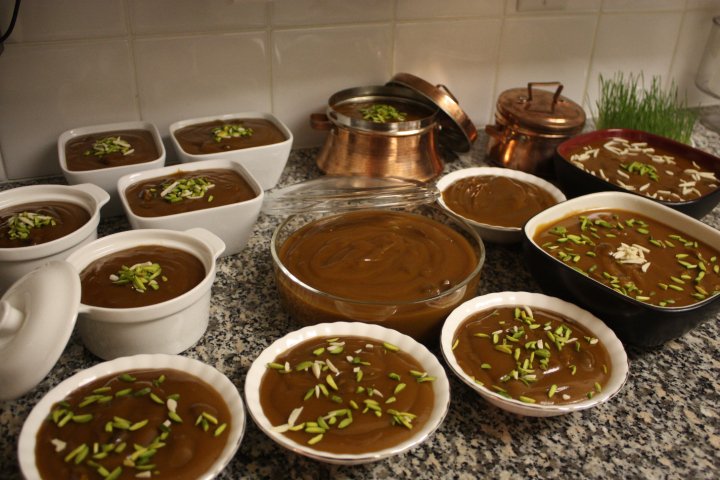 🇮🇷 Ashtian, Iran and 5 moreSamanuسمنو
A sweet sprouted-wheat paste stirred through the night for NowruzTable custom · Sweets given and shared
🇮🇷 Ashtian, Iran and 5 moreSamanuسمنو
A sweet sprouted-wheat paste stirred through the night for NowruzTable custom · Sweets given and shared
 🇰🇬 Kyrgyzstan and 4 moreBeshbarmakбешбармак
Boiled meat and noodles, eaten by hand from one platter, with a set cut for each guestTable custom · Feasts and festival meals
🇰🇬 Kyrgyzstan and 4 moreBeshbarmakбешбармак
Boiled meat and noodles, eaten by hand from one platter, with a set cut for each guestTable custom · Feasts and festival meals
 🇮🇷 Iran and 4 moreZardoziزردوزی (zarduzi)
Heavy gold and silver embroidery on silk or velvet, worked in Iran, India and beyondCraft
🇮🇷 Iran and 4 moreZardoziزردوزی (zarduzi)
Heavy gold and silver embroidery on silk or velvet, worked in Iran, India and beyondCraft
 🇮🇷 Mashhad, Iran and 7 moreIftarإفطار
The sunset meal that breaks the Ramadan fast, eaten with family and communityTable custom · Fasting and breaking the fast
🇮🇷 Mashhad, Iran and 7 moreIftarإفطار
The sunset meal that breaks the Ramadan fast, eaten with family and communityTable custom · Fasting and breaking the fast
 🇺🇿 Bukhara, Uzbekistan and 2 moreShashmaqamШашмақом
A classical song cycle of Central Asia, built on six modes and Sufi love poetryPerformance
🇺🇿 Bukhara, Uzbekistan and 2 moreShashmaqamШашмақом
A classical song cycle of Central Asia, built on six modes and Sufi love poetryPerformance
 🇺🇿 Tashkent, Uzbekistan and 1 moreDoppaدوپپا (Uyghur); doʻppi / дўппи / دوپا (Uzbek)
An embroidered cap, square or round, that Uyghurs and Uzbeks wear across Central AsiaDress
🇺🇿 Tashkent, Uzbekistan and 1 moreDoppaدوپپا (Uyghur); doʻppi / дўппи / دوپا (Uzbek)
An embroidered cap, square or round, that Uyghurs and Uzbeks wear across Central AsiaDress
 🇷🇺 Moscow, Russia and 5 moreNovy GodНовый Год
A secular winter celebration of decorated trees, family feasts and midnight giftsFestival · Feasts and festival meals
🇷🇺 Moscow, Russia and 5 moreNovy GodНовый Год
A secular winter celebration of decorated trees, family feasts and midnight giftsFestival · Feasts and festival meals
 🇺🇿 Tashkent, UzbekistanIndependence DayOʻzbekiston Respublikasi Mustaqilligi kuni
A state holiday on 1 September marking Uzbekistan's break from the Soviet UnionCeremony
🇺🇿 Namangan, UzbekistanFlower Festival in UzbekistanGul bayrami
An annual spring celebration of floriculture and floral art held across several cities in Uzbekistan.Festival
🇺🇿 Tashkent, UzbekistanIndependence DayOʻzbekiston Respublikasi Mustaqilligi kuni
A state holiday on 1 September marking Uzbekistan's break from the Soviet UnionCeremony
🇺🇿 Namangan, UzbekistanFlower Festival in UzbekistanGul bayrami
An annual spring celebration of floriculture and floral art held across several cities in Uzbekistan.Festival
 🇺🇿 Bukhara, UzbekistanAsrlar Sadosi
An annual outdoor festival celebrating Uzbek folk arts, sports, crafts, and heritageFestival
🇺🇿 Bukhara, UzbekistanAsrlar Sadosi
An annual outdoor festival celebrating Uzbek folk arts, sports, crafts, and heritageFestival
Photo credits on this page
The small pictures above come from Wikimedia Commons under free licences. Some are cropped to fit.
- Mehregan: PersianDutchNetwork, CC BY-SA 3.0, source
- Chovgan: en:User:Arad, CC BY-SA 3.0, source
- Doppa: Jasper Lee, CC BY-SA 4.0, source
- Zardozi: Zarood, CC BY-SA 3.0, source
- Kurash: IlshatS, CC BY-SA 4.0, source
- Navruz: dalbera, CC BY 2.0, source
- Ikat: Midori, CC BY 3.0, source
- Novy God: Евгений Самарин, CC BY 4.0, source
- Shashmaqam: Шухрат Саъдиев, CC BY-SA 4.0, source
- Persian miniature: 13th century CE painter, Public domain, source
- Dutar: Yuet Man Lee, CC BY-SA 4.0, source
- Immortal Regiment: Presidential Press and Information Office, CC BY 4.0, source
- Iftar: Shariful Islam (Masum), CC BY-SA 4.0, source
- Samanu: Myone63, CC BY-SA 3.0, source
- Beshbarmak: NataAllice, CC BY-SA 4.0, source
- Yaldā Night: M.Sadegh Nikgostar/Tasnim News Agency, CC BY 4.0, source
- Independence Day: Ymblanter, CC BY-SA 4.0, source
- Asrlar Sadosi: Patisserie, CC BY-SA 3.0, source