Festivals and celebrationsEast AsiaBuddhist
Awa Dance Festival
In its own language: 阿波踊り
A summer street dance festival held in Tokushima during the Buddhist season of Obon
![Awa Dance Festival: Awa Odori in Tokushima , Japan [2008].](https://thumb.wikimedia.org/wikipedia/commons/thumb/6/63/Awa-odori_2008_Tokushima_03.jpg/1280px-Awa-odori_2008_Tokushima_03.jpg)
The Awa Dance Festival is a mid-August gathering held in Tokushima on the Japanese island of Shikoku during the Buddhist festival of Obon. Organised troupes of dancers and musicians parade through city streets, performing distinct steps to the rhythm of drums, lutes, bells and flutes.
When is Awa Dance Festival marked?
Awa Dance Festival is kept as part of Obon, which runs from 13 to 15 August 2027.
The Awa Dance Festival, or Awa Odori, fills the streets of Tokushima each August during Obon, the Buddhist period when ancestor spirits return home. Coordinated performance troupes march through the town in traditional dress, singing, chanting and playing instruments. Known across Japan for its distinct dance styles and energetic night parades, the event welcomes both trained performers and enthusiastic onlookers to share in the rhythm.
Dance styles and movements
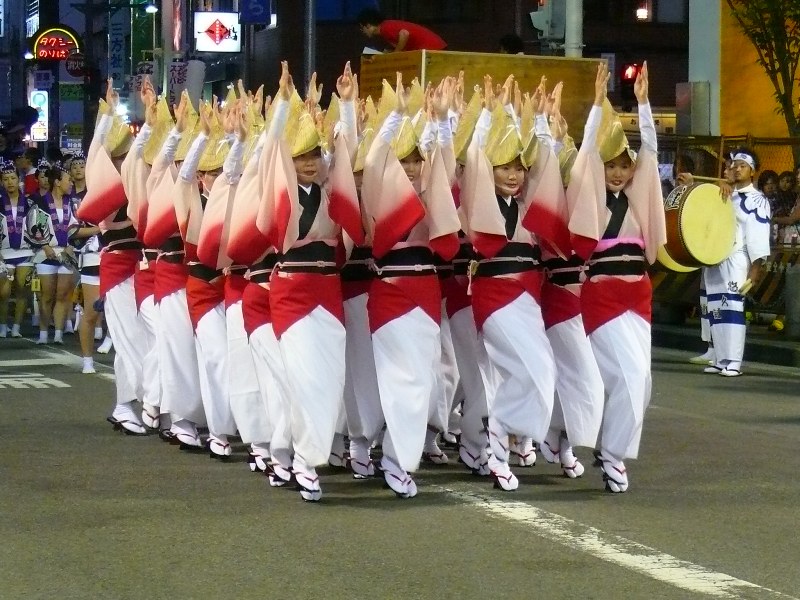
Performers dance in organized groups called ren, shifting their tempo as day turns to night. Daylight hours feature a slower, orderly style called nagashi, while nighttime brings the faster zomeki dance. Men perform in a low squat with outward knees and raised arms, stepping forward and crossing their feet while their wrists trace triangles in the air. Women wear fitted kimono and balance on the edges of raised geta sandals, taking petite forward steps and sharp backward kicks with hands raised high. Younger participants and many young women also dance the men's style. Some groups stage a kite dance, where an acrobatic performer tumbles freely while others form a crouching line representing the string.
Music and chants
Musicians accompany each group with four core instruments: the taiko drum, the three-stringed shamisen lute, the shinobue bamboo flute and the kane chime. Performers sing verses from Awa Yoshikono, a regional variation of a historic folk tune, alongside rhythmic call-and-response shouts known as hayashi kotoba. Phrases such as 'Ayattosa' and 'Erai yaccha' carry no literal meaning, but they set a shared pulse that drives the dancers forward. At road junctions and spectator stands with sound systems, troupes often pause in place to deliver featured stationary performances.
Origins and history
The tradition draws from ancient Kamakura-era Buddhist priestly dances and multi-day harvest celebrations. Popular legend attributes the festival to 1586, when the regional ruler Lord Hachisuka Iemasa gave locals sake to celebrate Tokushima Castle, prompting drunken street dancing. Feudal edicts from the seventeenth century reveal that the dances caused frequent civic disruption. Authorities restricted celebrations to three days, banned dancing after midnight, prohibited weapons and masks, and ordered samurai to dance only behind closed gates. The festivities waned during the late nineteenth century after the local indigo dye trade collapsed, before being revived and renamed in the 1920s.
Celebrations beyond Tokushima
Tokushima remains the central home of the dance, drawing hundreds of thousands of visitors each summer, but the custom has spread elsewhere. In 1956, migrants from Tokushima established a sister festival in the Koenji neighbourhood of Tokyo. That event has grown into the second largest gathering of its kind in Japan, featuring thousands of dancers across dozens of teams. The tradition has also appeared overseas in cultural showcases, and it frequently features in Japanese cinema and animated films.
How Awa Dance Festival is kept
From 12 to 15 August, choreographed teams called ren fill the streets of Tokushima. Clad in traditional Obon festival clothing, musicians play drums, flutes, bells and lutes while dancers step through designated routes. Dancers progress from measured daytime routines to fast, spirited evening performances. Groups chant rhythmic phrases to keep time, occasionally stopping at intersections or seating stands to perform concentrated routines before moving ahead. Spectators line the avenues and are often invited to step into the procession and join the dance.
When and where
The festival takes place every year from 12 to 15 August. It is held during Obon, the annual Buddhist observance in which families welcome the returning spirits of their ancestors.
The main celebration is held across Tokushima Prefecture on the island of Shikoku in Japan. A major sister festival also takes place in the Koenji district of Tokyo, started in 1956 by Tokushima migrants.
What Awa Dance Festival means
Rooted in the Buddhist season of Obon, the dance is tied to honouring deceased ancestors whose spirits visit their living descendants. While early forms stemmed from religious and harvest rites, the tradition has also long served as a communal release, bringing people together across social barriers to sing, chant and dance in public streets.



Days Awa Dance Festival is marked
Questions people ask about Awa Dance Festival
When is Awa Dance Festival marked?
Awa Dance Festival is kept as part of Obon, which runs from 13 to 15 August 2027.
What is the Awa Dance Festival?
It is Japan's largest street dance festival, held as part of the Buddhist Obon season. Choreographed groups of dancers and musicians in traditional attire parade through city streets playing drums, flutes, bells and lutes.
How do men and women dance differently in Awa Odori?
Men dance in a low crouch with raised arms and wide knees, flicking their wrists to draw triangles. Women wear kimono, balance on the edges of geta sandals, and use restrained, graceful steps with raised hands.
What do the chants during the dance mean?
Dancers shout call-and-response phrases known as hayashi kotoba, including 'Ayattosa' and 'Erai yaccha'. These words carry no specific meaning, but they help maintain rhythm and energise the performers.
See also
 HalloweenAn annual observance on 31 October marking the eve of All Saints' Day, rooted in Christian tradition and Celtic heritage
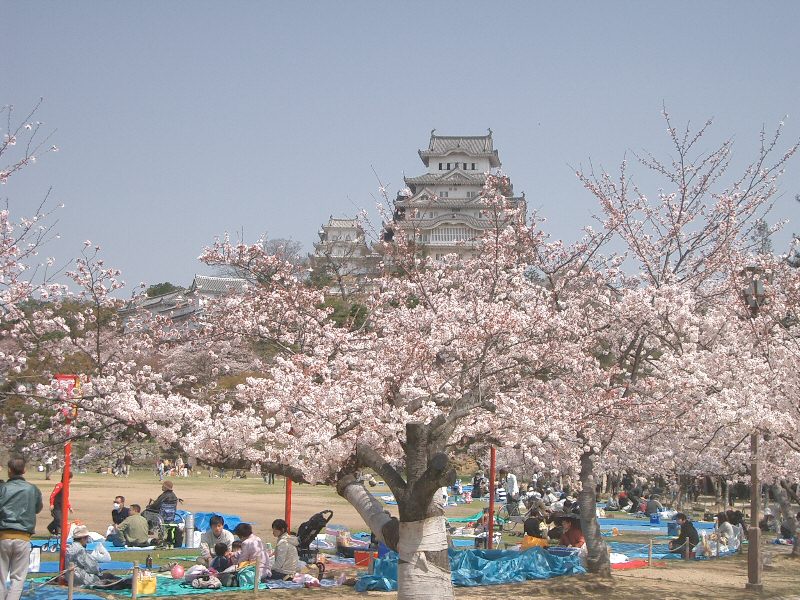 HanamiA Japanese spring custom of gathering under blooming cherry trees to eat, drink, and celebrate the fleeting beauty of th
 Buddha's BirthdayA festival marking the birth of Siddhartha Gautama, observed across Asia with temple rituals and community gatherings.
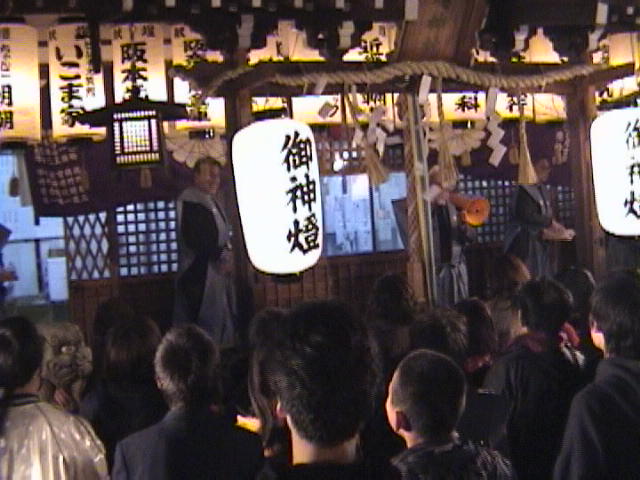 SetsubunA Japanese ritual of throwing roasted soybeans to banish evil spirits and welcome spring.
Good reading and sources
- Awa Odori Festival | Travel Japan - Japan National Tourism Organization (Official Site)Japan National Tourism Organization, Article
- Awa Odori Festival | Travel Japan - Japan National Tourism Organization (Official Site)Japan National Tourism Organization, Article
- Awa Dance Festival on WikipediaEncyclopedia
- More photos on Wikimedia CommonsPhotos and video
- Wikidata recordOpen data
The facts on this page come from the Wikipedia article "Awa Dance Festival", written by its contributors and used under the CC BY-SA 4.0 licence, and from its Wikidata record (CC0). EveryParampara rewrote the text in its own words, with AI assistance, and compares every page with the article to make sure no passage is copied. It may be reused under the same CC BY-SA 4.0 licence with a link back.
It may contain mistakes. Traditions differ from one family, village and community to the next, and the people who keep them know them best. If something is wrong, tell us. Last refreshed 2026-10-04.
More from Japan
All the traditions of Japan
🇮🇪 Ireland and 5 moreHalloween
An annual observance on 31 October marking the eve of All Saints' Day, rooted in Christian tradition and Celtic heritageFestival · Sweets given and shared
 🇮🇳 India and 4 moreWater lantern
Small lamps floated on water to honour the dead and ask for good fortuneFestival
🇯🇵 Kyoto, Japan and 4 moreHanami花見
A Japanese spring custom of gathering under blooming cherry trees to eat, drink, and celebrate the fleeting beauty of thFestival · Lunch
🇮🇳 India and 6 moreBuddha's Birthday佛诞 (Fódàn)
A festival marking the birth of Siddhartha Gautama, observed across Asia with temple rituals and community gatherings.Festival
🇮🇳 India and 4 moreWater lantern
Small lamps floated on water to honour the dead and ask for good fortuneFestival
🇯🇵 Kyoto, Japan and 4 moreHanami花見
A Japanese spring custom of gathering under blooming cherry trees to eat, drink, and celebrate the fleeting beauty of thFestival · Lunch
🇮🇳 India and 6 moreBuddha's Birthday佛诞 (Fódàn)
A festival marking the birth of Siddhartha Gautama, observed across Asia with temple rituals and community gatherings.Festival
The same idea elsewhere
Remembering the ancestors compared 🇮🇳 Ayodhya, India and 7 moreDiwaliदीपावली (Dīpāvalī)
A five-day festival of lights celebrated across India and its diaspora to mark the victory of light over darkness.Festival · Feasts and festival meals
🇮🇳 Ayodhya, India and 7 moreDiwaliदीपावली (Dīpāvalī)
A five-day festival of lights celebrated across India and its diaspora to mark the victory of light over darkness.Festival · Feasts and festival meals
 🇮🇷 Iran and 7 moreNowruzنوروز
The Iranian new year at the March equinox, kept with fire, greenery and picnicsSeasonal
🇮🇷 Iran and 7 moreNowruzنوروز
The Iranian new year at the March equinox, kept with fire, greenery and picnicsSeasonal
 🇮🇱 Jerusalem, Israel and 1 moreHanukkahחֲנֻכָּה
An eight-day Jewish festival marking the rededication of the Second Temple in Jerusalem and the miracle of a single day'Festival
🇮🇱 Jerusalem, Israel and 1 moreHanukkahחֲנֻכָּה
An eight-day Jewish festival marking the rededication of the Second Temple in Jerusalem and the miracle of a single day'Festival
 🇮🇳 Mathura, India and 5 moreHoliहोली (Hindi)
A spring festival of colours and bonfires that marks the end of winter and the triumph of good over evil.Festival
🇮🇳 Mathura, India and 5 moreHoliहोली (Hindi)
A spring festival of colours and bonfires that marks the end of winter and the triumph of good over evil.Festival