Festivals and celebrationsEurope
Baba Marta
In its own language: Баба Марта
A Bulgarian day on 1 March, when red and white martenitsi are given and worn

Baba Marta is a figure from Bulgarian folklore and the name of the holiday kept on 1 March, when people exchange and wear martenitsi, red and white threads or small figurines. The custom belongs to Bulgaria and to ethnic Bulgarian communities in southeastern Serbia, and it greets the end of winter.
When is Baba Marta kept?
Baba Marta is kept every year on 1 March.
Baba Marta is a Bulgarian figure who marks the end of winter and the coming of spring. Her day falls on 1 March, when people give each other red and white threads and small figures called martenitsi. Worn on the wrist or pinned to clothing, these tokens carry wishes for health and happiness through the year. Bulgarians have kept the custom for centuries.
What it is
Baba Marta is a figure from Bulgarian folklore. Bulgarians picture her as a strong willed older woman who argues with her two brothers, January and February, and the sun only comes out when she smiles. Her day marks the end of the cold and the start of spring. Stories about her differ. In one, she does her spring cleaning on that day and shakes out her mattress one last time before the next winter. The feathers that fall out become snow, the last snow of the year. A similar tale is told in German folklore, in the Frau Holle or Mother Hulda legend.
The martenitsa
A martenitsa is a band or a small figure in red and white. People give them to friends and family, and wear them around the wrist or fastened to clothing. In small mountain villages, homes, children and farm animals are decorated too. They come in many shapes and sizes, from whole packages to a string tied on a newborn baby's arm, and children often compete over who collects the most. The colours carry old meanings. White first stood for man and for light, and later, under Christian influence, for purity and for Christ. Red stood for woman and for health, for blood, conception and birth. Long ago, brides wore red.
Wearing and guessing
People wear their martenitsi until spring shows itself. The sign is usually the first bird of the season, a stork or a swallow. When that happens, the wearer decides what to do with the token. Some tie it to a branch of a tree. Others put it under a stone and leave it overnight. In the morning they look at what they find there, and read it as a hint about the kind of year that lies ahead. The custom makes the end of winter something to watch for.
Where it is kept
The day is kept in Bulgaria, where it is best known. It also lives in southeastern Serbia, in the municipalities of Bosilegrad and Dimitrovgrad, where most residents are ethnic Bulgarians. In Bulgarian villages, and especially in the mountains, the decorating spreads beyond people to houses, children and animals. Romanians keep a holiday called Mărțișor on the same day, which the sources describe as a variant of Baba Marta. Baba Marta is remembered as the figure behind the day, and the day carries her name.
Similar customs elsewhere
The sources note that the custom has relatives in other places. In parts of Asia and South America, people wear a friendship bracelet that is thought to bring luck until it falls apart. In German speaking lands, empty eggs are hung in blossoming trees at Easter, a festival that Christianity took up. In Persia, fruit is hung in trees at midwinter. These are likenesses offered in the article, not shared origins.
How Baba Marta is kept
On 1 March, Bulgarians give martenitsi to friends and family and wear them themselves, tied around the wrist or pinned to clothing. In mountain villages, houses are decorated, and so are children and domestic animals. Children compete over how many they collect. The tokens stay on until the first storks or swallows arrive. Then the wearer ties the martenitsa to a tree, or places it under a stone, and checks in the morning what has appeared there to guess the shape of the coming year.
When and where
Baba Marta falls on 1 March every year, a fixed date rather than a moveable one. The day belongs to the turn from winter to spring in Bulgaria, and it comes before the weather has settled. The martenitsi themselves are worn on past that date, until the first storks or swallows of the year are seen, which is the sign that the season has arrived.
The custom belongs to Bulgaria, where it is kept across the country on 1 March. It is also found in southeastern Serbia, in the municipalities of Bosilegrad and Dimitrovgrad, where ethnic Bulgarians make up most of the population. The article describes the decorating of houses and animals as strongest in the small villages of the mountains.
What Baba Marta means
To those who keep it, Baba Marta is about health, happiness and protection. The red and white martenitsa is a lucky charm, worn against evil spirits, and a promise that winter is nearly over. The two colours carry meanings that have shifted over time. White was first linked with men and with light, and later, in Christian telling, with purity and with Christ. Red stands for women and for health, for blood, for conception and for birth.
Questions people ask about Baba Marta
When is Baba Marta kept?
Baba Marta is kept every year on 1 March.
What is Baba Marta?
Baba Marta is a figure in Bulgarian folklore, a strong willed older woman who ends the cold season and brings spring. Her name is also given to the holiday kept on 1 March, when Bulgarians exchange and wear red and white martenitsi.
What is a martenitsa?
A martenitsa is a red and white band or small figure. Friends and family give them to each other, and they are worn on the wrist or fastened to clothes. People treat them as tokens of health and happiness and as a charm against evil spirits.
How long are they worn?
Until spring gives a sign. The sign is usually the first stork or swallow. Wearers then tie the martenitsa to a tree or leave it under a stone overnight. What they find there in the morning is taken as a clue about the year ahead.
Where else is the custom kept?
It is kept in Bulgaria and also in southeastern Serbia, in the municipalities of Bosilegrad and Dimitrovgrad, where many people are ethnic Bulgarians. Romania has a holiday called Mărțișor on the same day, which the article calls a variant of Baba Marta.
See also
 Kupala NightA summer solstice folk festival marked by bonfires, water rituals and herbal gatherings across Eastern Europe.
 HıdırellezA spring festival marking the meeting of two prophets, celebrated across Turkey and the Balkans.MărțișorA spring custom of wearing intertwined red and white strings to welcome the new season.
 KoliadaA traditional winter caroling and solstice festival kept across Slavic Europe
Good reading and sources
The facts on this page come from the Wikipedia article "Baba Marta", written by its contributors and used under the CC BY-SA 4.0 licence, and from its Wikidata record (CC0). EveryParampara rewrote the text in its own words, with AI assistance, and compares every page with the article to make sure no passage is copied. It may be reused under the same CC BY-SA 4.0 licence with a link back.
It may contain mistakes. Traditions differ from one family, village and community to the next, and the people who keep them know them best. If something is wrong, tell us. Last refreshed 2026-10-05.
More from Bulgaria
All the traditions of Bulgaria
🇺🇦 Ukraine and 5 moreKupala Night
A summer solstice folk festival marked by bonfires, water rituals and herbal gatherings across Eastern Europe.Festival
🇹🇷 Turkey and 6 moreHıdırellez
A spring festival marking the meeting of two prophets, celebrated across Turkey and the Balkans.Festival · Feasts and festival meals
🇷🇴 Romania and 3 moreMărțișor
A spring custom of wearing intertwined red and white strings to welcome the new season.Festival
🇺🇦 Ukraine and 7 moreKoliadaКоляда
A traditional winter caroling and solstice festival kept across Slavic EuropeFestival
The same idea elsewhere
Spring and renewal compared 🇰🇷 Jeju, South KoreaGut굿
Sacred rites of song, dance, and spirit communion performed by Korean shamansSpiritual
🇰🇷 Jeju, South KoreaGut굿
Sacred rites of song, dance, and spirit communion performed by Korean shamansSpiritual
 🇯🇵 JapanChildren's Dayこどもの日
A Japanese holiday on May fifth celebrating the happiness and growth of childrenFestival
🇯🇵 JapanChildren's Dayこどもの日
A Japanese holiday on May fifth celebrating the happiness and growth of childrenFestival
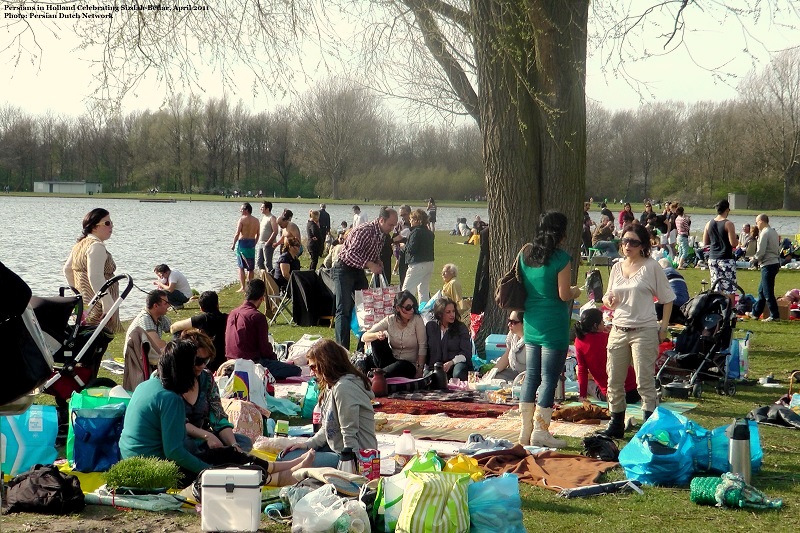 🇮🇷 Iran and 4 moreSizdah Bedarسیزدهبدر
An open-air picnic holiday concluding the Iranian New Year celebrationsFestival
🇮🇷 Iran and 4 moreSizdah Bedarسیزدهبدر
An open-air picnic holiday concluding the Iranian New Year celebrationsFestival
 🇯🇵 Kyoto, JapanAoi Matsuri葵祭
A classical Kyoto festival with an imperial procession and ancient shrine ritualsFestival
🇯🇵 Kyoto, JapanAoi Matsuri葵祭
A classical Kyoto festival with an imperial procession and ancient shrine ritualsFestival