Festivals and celebrationsEast AsiaShinto, Taoist and folk Chinese
Aoi Matsuri
In its own language: 葵祭
A classical Kyoto festival with an imperial procession and ancient shrine rituals

Held every year on 15 May in Kyoto, Japan, Aoi Matsuri is an ancient festival honouring the deities of the Kamo shrines. A grand procession of hundreds of people in classical Heian court robes walks from the Imperial Palace to Shimogamo and Kamigamo shrines to deliver imperial prayers.
When is Aoi Matsuri kept?
Aoi Matsuri is kept on annually on 15 May.
Aoi Matsuri is one of the three principal annual festivals of Kyoto, Japan. Dedicated to the twin Kamo shrines, the festival honours local deities to ensure peace and good harvests. Every spring, a massive procession wearing the elegant dress of the ancient Heian court travels through the city. An imperial messenger and a chosen festival maiden carry formal prayers and offerings from the old palace to the sacred shrine grounds.
Origins and imperial history
According to ancient chronicles, the rite began in the sixth century during the reign of Emperor Kinmei. Severe storms had destroyed crops and disease had spread, which diviners attributed to anger from the Kamo deities. The emperor dispatched an envoy to present offerings and ride running horses to calm the spirits. When Emperor Kanmu relocated the imperial throne to Kyoto in the late eighth century, he named the Kamo gods guardians of the capital and elevated the festival into an official court observance. Although the parades were suspended during several wars and when the capital shifted to Tokyo, civic leaders revived the procession in the nineteenth and twentieth centuries.
The grand court procession
The centrepiece of the festival takes place on 15 May, beginning at the Kenreimon gate of the Kyoto Imperial Palace. Hundreds of participants dress as courtiers, guards, and officials of the Heian era. They accompany decorated oxcarts trimmed with wisteria blooms, four cows, and dozens of horses. An imperial messenger on horseback leads the way, followed by the Saiō-Dai, a festival princess carried in a ceremonial palanquin. The journey moves steadily north toward Shimogamo Shrine before proceeding to Kamigamo Shrine, where sacred rescripts are read and formal greetings are presented before the deities.
The festival princess and shrine rites
In classical times, the Saiō was an unwed woman from the imperial family sent to serve the shrines. Today, an unmarried Kyoto resident is chosen for the role of Saiō-Dai based on her grace, knowledge, and standing. Before appearing in public, she undergoes purification rituals to ensure spiritual cleanliness. During the parade, she wears the jūnihitoe, a ceremonial attire made of twelve layers of coloured silk robes. Earlier ceremonies also prepare the shrines for the event, including nightly rites to invite the deity into sacred trees and welcoming sacred horses from Mount Mikage.
Sacred plants and equestrian arts
The festival takes its common name from the aoi plant, commonly translated as hollyhock but historically tied to wild ginger. During the Heian period, people believed these heart-shaped leaves could ward off lightning and earthquakes, so residents fastened them under their eaves. In the festival, these leaves ornament garments, carts, and shrines alongside katsura foliage. Associated festivities also feature equestrian traditions rooted in early rituals, such as mounted archery demonstrations and horse races held to entertain visitors and honour the shrine deities.
How Aoi Matsuri is kept
Preparations begin with evening rituals on 12 May to invoke the deity at Kamigamo Shrine, alongside a procession of sacred horses arriving at Shimogamo Shrine on 15 May. Later that morning, the primary procession departs from the Kyoto Imperial Palace. Led by the Imperial Messenger on horseback, six hundred attendants in Heian robes travel alongside cows, horses, and wisteria-covered oxcarts. The Saiō-Dai accompanies them in formal twelve-layered silk robes. Upon reaching Shimogamo and Kamigamo shrines, the messenger intones imperial prayers while the Saiō-Dai offers respects. The festivities also include demonstrations of horseback archery and horse races.
When and where
The main festival takes place annually on 15 May. Preceding rituals occur earlier in the month, including an evening invocation at Kamigamo Shrine on 12 May.
The festival is held in Kyoto, Japan. The parade begins at the Kenreimon gate of the Kyoto Imperial Palace and proceeds through city streets to Shimogamo Shrine and Kamigamo Shrine in the north of the city.
What Aoi Matsuri means
The rituals arose as prayers for agricultural abundance, disease prevention, and protection from disasters like thunder and earthquakes. The aoi leaf symbolises spiritual safeguarding and divine blessing. Through the imperial messenger and the Saiō-Dai, the ceremony maintains ritual purity and expresses reverence to the guardian deities of Kyoto, asking for their ongoing protection.


Questions people ask about Aoi Matsuri
When is Aoi Matsuri kept?
Aoi Matsuri is kept on annually on 15 May.
What is Aoi Matsuri?
Aoi Matsuri is an ancient Shinto festival in Kyoto, Japan. It features an elaborate procession of around six hundred people dressed in Heian court attire, who travel from the Imperial Palace to the city's two Kamo shrines.
Who is the Saiō-Dai?
The Saiō-Dai is a stand-in for an imperial princess who historically dedicated herself to the shrine. Today, an unmarried woman from Kyoto is selected to wear traditional twelve-layered silk robes and represent the imperial court in the procession.
Why is it called the Hollyhock Festival?
It is named after the aoi plant, traditionally translated as hollyhock or wild ginger. In the Heian era, these leaves were believed to ward off natural disasters and were used as protective decorations on clothes, carts, and buildings.
See also
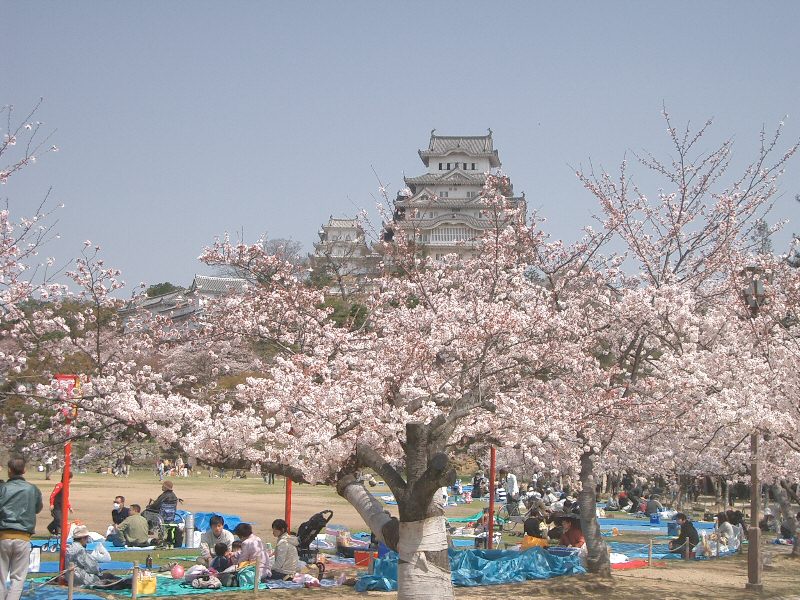 HanamiA Japanese spring custom of gathering under blooming cherry trees to eat, drink, and celebrate the fleeting beauty of th
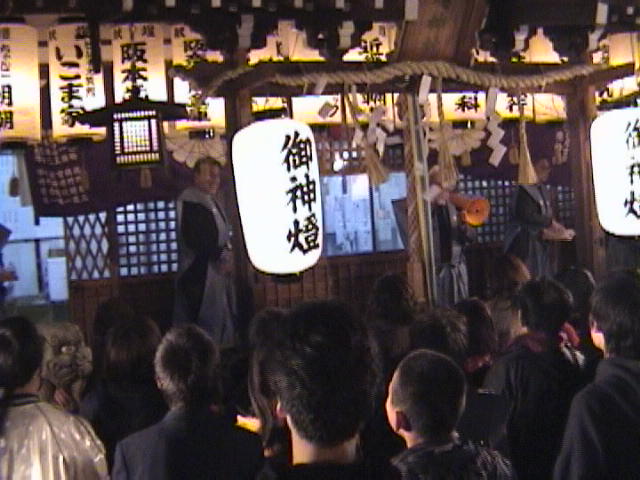 SetsubunA Japanese ritual of throwing roasted soybeans to banish evil spirits and welcome spring.
 Children's DayA Japanese holiday on May fifth celebrating the happiness and growth of children
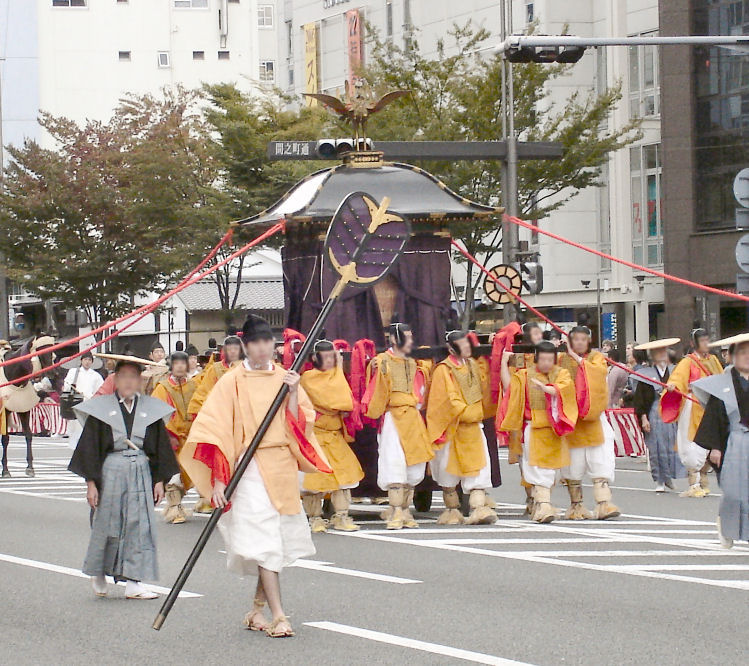 Jidai MatsuriAn autumn costume procession celebrating Kyoto's imperial heritage and history
Good reading and sources
- Aoi Matsuri on WikipediaEncyclopedia
- More photos on Wikimedia CommonsPhotos and video
- Wikidata recordOpen data
The facts on this page come from the Wikipedia article "Aoi Matsuri", written by its contributors and used under the CC BY-SA 4.0 licence, and from its Wikidata record (CC0). EveryParampara rewrote the text in its own words, with AI assistance, and compares every page with the article to make sure no passage is copied. It may be reused under the same CC BY-SA 4.0 licence with a link back.
It may contain mistakes. Traditions differ from one family, village and community to the next, and the people who keep them know them best. If something is wrong, tell us. Last refreshed 2026-10-04.
More from Japan
All the traditions of Japan 🇮🇳 India and 4 moreWater lantern
Small lamps floated on water to honour the dead and ask for good fortuneFestival
🇯🇵 Kyoto, Japan and 4 moreHanami花見
A Japanese spring custom of gathering under blooming cherry trees to eat, drink, and celebrate the fleeting beauty of thFestival · Lunch
🇯🇵 JapanChildren's Dayこどもの日
A Japanese holiday on May fifth celebrating the happiness and growth of childrenFestival
🇯🇵 Tokyo, JapanSetsubun節分
A Japanese ritual of throwing roasted soybeans to banish evil spirits and welcome spring.Festival · Feasts and festival meals
🇮🇳 India and 4 moreWater lantern
Small lamps floated on water to honour the dead and ask for good fortuneFestival
🇯🇵 Kyoto, Japan and 4 moreHanami花見
A Japanese spring custom of gathering under blooming cherry trees to eat, drink, and celebrate the fleeting beauty of thFestival · Lunch
🇯🇵 JapanChildren's Dayこどもの日
A Japanese holiday on May fifth celebrating the happiness and growth of childrenFestival
🇯🇵 Tokyo, JapanSetsubun節分
A Japanese ritual of throwing roasted soybeans to banish evil spirits and welcome spring.Festival · Feasts and festival meals
The same idea elsewhere
Spring and renewal compared 🇫🇷 France and 5 moreCandlemas
A Christian feast of candle blessings marking the end of the Christmas seasonSpiritual
🇫🇷 France and 5 moreCandlemas
A Christian feast of candle blessings marking the end of the Christmas seasonSpiritual
 🇮🇳 IndiaKambala
An annual traditional buffalo race across muddy paddy fields in southwestern IndiaGame
🇮🇳 IndiaKambala
An annual traditional buffalo race across muddy paddy fields in southwestern IndiaGame
 🇱🇰 Kandy, Sri LankaKandyan danceඋඩරට නැටුම්
The sacred dance of Sri Lanka's hill country, kept in temple and on the stagePerformance
🇮🇳 Gwalior, India and 1 moreDhrupadध्रुवपद
The foundational vocal and instrumental classical music tradition of northern IndiaPerformance
🇱🇰 Kandy, Sri LankaKandyan danceඋඩරට නැටුම්
The sacred dance of Sri Lanka's hill country, kept in temple and on the stagePerformance
🇮🇳 Gwalior, India and 1 moreDhrupadध्रुवपद
The foundational vocal and instrumental classical music tradition of northern IndiaPerformance