Crafts and makingSoutheast Asia
Batik kawung
An old Indonesian batik pattern of four neat ovals, read as fruit or lotus

Batik kawung is an Indonesian batik motif built from circles arranged in a regular geometric pattern, and it is counted among the country's oldest. Javanese makers have used it since the Mataram Sultanate, and it is worn as cloth and read as a sign of purity, perfection and self-control.
Batik kawung is a patterned cloth from Indonesia. Its design repeats a rounded shape, four ovals set in a neat grid, and people often read it as a fruit cut open or as an open lotus. It is one of the oldest known batik motifs, linked to the Mataram court, and it carries ideas of purity, self-control and evenness of mind.
What it is
Kawung is a batik motif, which means a repeated pattern applied to cloth. Each unit is a circle or an oval, and the units sit in a tidy geometric order. The shape is usually described as a kawung fruit, a kind of coconut, though some people call it sugar palm or palm fruit. Others see a lotus with four open crowns, a flower they link to long life and purity. Cloth for this motif is made from cambric, silk or cotton. Batik as a whole joined the UNESCO representative list in 2009 under Indonesia's name, covering both work drawn by hand and work applied with a stamp.
Origins and history
Batik kawung is among the oldest motifs recorded in Indonesia. Written records and spoken tradition place it in the time of the Mataram Sultanate, in the 16th century. Two accounts of its beginning are given. One says the fourth Sultan of Mataram, Sultan Agung, who ruled from 1613 to 1645, created it after looking at a palm tree. The other comes from folklore: a young man known for good manners and wisdom was summoned by a king, and his mother dressed him in kawung cloth, hoping he would serve the community well.
Sizes and names
Versions are told apart by the size of the oval, or by whatever is mixed with it. Kawung picis has the smallest circles, named after a small ten-cent coin. Kawung bribil, also called gidril, is bigger; accounts differ, naming half a penny, five cents or 25 cents. Kawung sen comes next, after a colonial coin larger than the bribil, though one account treats sen, bribil and gidril as a single motif and sets picis apart. Kawung kemplong is the biggest. Other names come from what fills the shape: kawung beton from the jackfruit seed, kawung cacah gori from chopped gori, kawung geger from small kawung set inside a large one. Further kinds include kopi or sari, sekar ageng, semar, buntal, bunga or kembang, seling, prabu, putri, putro and ndil.
Design and meaning
People who study the design say the basic unit comes from a kawung fruit cut in two, which leaves four hollows at the corners of the circle. What the motif says is about character. It stands for perfection, purity and holiness. The word suwung, which means empty, is heard inside kawung, and from that comes the idea of emptying oneself of worldly wants. A person who manages this becomes level-headed, fair, unwilling to push forward, and content to move with life as it comes. Semar, a god who takes human form and is known for kindness and wisdom, is always shown wearing kawung.
A sacred cloth
One version of the motif stands apart. Kawung geger is a broad kawung with smaller kawung packed inside it, and it is held to be sacred: in the past only kings and their near family were allowed to wear it. Its story is tied to a political settlement, the Ponorogo agreement of 1813, which divided one sultanate into two. Colour follows set habits across the kawung family. The main oval is often white or yellowish white, the outlines are drawn in red soga, and black is laid in as the ground behind the pattern.
When and where
Indonesia is the country tied to this motif, and the sources place its history on Java, at the Mataram court and later around the settlement of 1813. Batik as a whole is listed by UNESCO under Indonesia's name. Kawung is worn as cloth rather than kept at one shrine or one town, so no single city holds it.
What Batik kawung means
For those who read it closely, kawung is about how a person should be. Perfection, purity and holiness are the three words attached to it. Through the sound of suwung, empty, it speaks of letting go of worldly longing and desire, and of the self-control that follows. Someone who lives this way is said to stay neutral, fair and free of the wish to stand out, moving with life instead of against it. Semar, the wise god in human form, wears it.

Questions people ask about Batik kawung
What is batik kawung?
It is one of Indonesia's old batik motifs. Its pattern is a circle or oval repeated in a regular geometric order, usually read as the kawung fruit, a kind of coconut, or as an open lotus with four crowns.
Where does it come from?
The sources link it to the Mataram Sultanate on Java and date its recorded use to the 16th century. One account credits Sultan Agung of Mataram, who ruled from 1613 to 1645, with creating the design.
When is it worn or made?
There is no fixed day or month for it. It is a cloth pattern rather than a festival, so it belongs to dress in Indonesia, and one kind, kawung geger, was once reserved for kings and their close family.
What does the pattern mean?
It stands for perfection, purity and holiness. The word suwung, meaning empty, is heard within kawung, and the motif is read as the emptying of worldly desire and the self-control that comes with it.
Are there different kinds?
Yes, many. They are named for the size of the oval, as with picis, bribil, sen and kemplong, or for what is worked between the circles, as with beton, cacah gori, kopi, semar, buntal and seling.
See also
 IkatA resist-dyeing craft from Southeast Asia, where yarns are tied and dyed before weaving
 SekatenA week-long Javanese royal festival and market honouring the birth of the Prophet
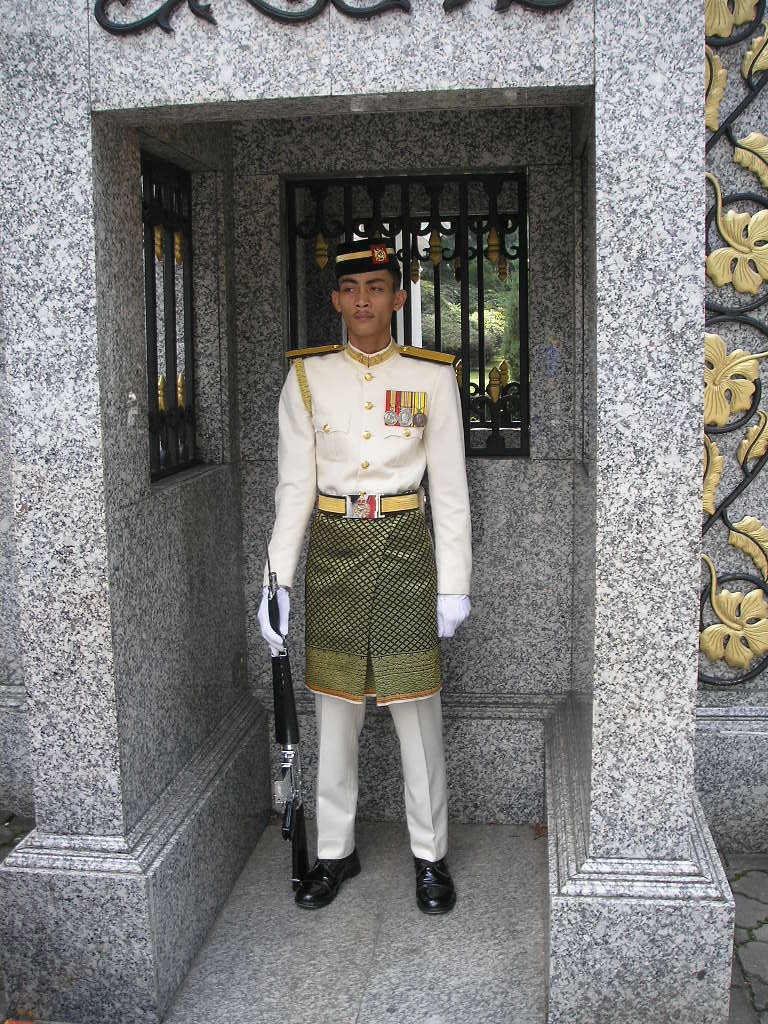 SampingA traditional Malay waist cloth worn over festive attire in Southeast Asia
 KebayaA front-opening blouse and wrapped cloth, worn by women across Southeast Asia
Good reading and sources
The facts on this page come from the Wikipedia article "Batik kawung", written by its contributors and used under the CC BY-SA 4.0 licence, and from its Wikidata record (CC0). EveryParampara rewrote the text in its own words, with AI assistance, and compares every page with the article to make sure no passage is copied. It may be reused under the same CC BY-SA 4.0 licence with a link back.
It may contain mistakes. Traditions differ from one family, village and community to the next, and the people who keep them know them best. If something is wrong, tell us. Last refreshed 2026-10-10.
More from Indonesia
All the traditions of Indonesia
🇮🇩 Bali, Indonesia and 5 moreIkat
A resist-dyeing craft from Southeast Asia, where yarns are tied and dyed before weavingCraft
 🇺🇬 Uganda and 4 moreBarkcloth
Cloth beaten from tree bark across Africa, Asia and the PacificCraft
🇺🇬 Uganda and 4 moreBarkcloth
Cloth beaten from tree bark across Africa, Asia and the PacificCraft
 🇮🇩 Indonesia and 5 moreBatikꦧꦛꦶꦏ꧀ (bathik)
A Javanese wax-resist way of patterning cloth, and the textiles made that wayCraft
🇮🇩 Indonesia and 5 moreBatikꦧꦛꦶꦏ꧀ (bathik)
A Javanese wax-resist way of patterning cloth, and the textiles made that wayCraft
 🇮🇳 India and 5 moreKolamகோலம்
A rice-flour floor drawing made at South Indian doorsteps before sunriseCraft
🇮🇳 India and 5 moreKolamகோலம்
A rice-flour floor drawing made at South Indian doorsteps before sunriseCraft
The same idea elsewhere
Royalty and coronation compared 🇮🇱 IsraelRosh Hashanahרֹאשׁ הַשָּׁנָה
The Jewish New Year marked by shofar horn blasts, prayer and sweet foodsSpiritual
🇮🇱 IsraelRosh Hashanahרֹאשׁ הַשָּׁנָה
The Jewish New Year marked by shofar horn blasts, prayer and sweet foodsSpiritual
 🇵🇪 Cusco, Peru and 4 moreIntiinti (Quechua)
The Inca sun deity, honoured with temples, offerings and the June festival Inti RaymiSpiritual
🇵🇪 Cusco, Peru and 4 moreIntiinti (Quechua)
The Inca sun deity, honoured with temples, offerings and the June festival Inti RaymiSpiritual
 🇸🇪 Mora, SwedenVasaloppet
A 90 km cross-country ski race from Sälen to Mora, run every March since 1922Game
🇸🇪 Mora, SwedenVasaloppet
A 90 km cross-country ski race from Sälen to Mora, run every March since 1922Game
 🇺🇸 United StatesTalking stick
A carved staff that shows who may speak at a Northwest Coast gatheringCeremony
🇺🇸 United StatesTalking stick
A carved staff that shows who may speak at a Northwest Coast gatheringCeremony