Dress and adornmentSoutheast AsiaMuslim
Kebaya
In its own language: ꦏꦼꦧꦪ
A front-opening blouse and wrapped cloth, worn by women across Southeast Asia

A front-opening blouse worn by women in Brunei, Indonesia, Malaysia, Singapore and southern Thailand, usually with a wrapped sarong, kemben or kain. It is cut from light cloth such as lace, gauze, cotton or brocade, and its origins are debated between the Arab world, Portuguese Malacca, Java and China.
When is Kebaya kept?
Kebaya is kept on no fixed date; worn through the year as everyday and ceremonial dress.
A kebaya is a blouse worn by women across Southeast Asia, open down the front and held shut with buttons, pins or a brooch. Under it goes a sarong, kemben or kain, a length of cloth tucked at the waist or below the arms. Brunei, Indonesia, Malaysia, Singapore and southern Thailand all keep it, and in 2024 UNESCO added it to the Representative List.
What it is
The garment opens down the front. It is sewn from light material: cotton, gauze, lace, voile or brocade, and embroidery may be added. Buttons, pins or a brooch keep the two sides together. Below it sits a long cloth, called sarong, kemben or kain, folded and tucked at the waist or below the arms. That cloth can be batik, ikat, songket or tenun, which means woven cloth. The word covers a family of regional styles rather than one fixed design, and many styles are named after a famous wearer, the place they come from, or a change made to them.
Origins and history
Where the kebaya began is disputed. One line of argument ties it to the Arabic qaba, a loose long jacket, and to a Persian phrase meaning a robe of honour; two orientalist scholars, Henry Yule and Arthur Burnell, set out that link in 1886. Portuguese records of the 1500s and 1600s describe cabaya as a long Muslim robe. Others point to Malacca, or to Java, where the kemben gave way to more covering cloth as Islamic teaching on modesty spread along the coast. A further suggestion credits Chinese Ming tunics worn by settlers between the 1300s and 1500s. Many accounts therefore treat the garment as a blend of Arab, Portuguese and Chinese elements.
Lace and cutwork
Lacework reached Asia through Goa in the 1500s and 1600s and took hold in coastal India, Sri Lanka and Malacca. In the Dutch East Indies, a rule of 1872 obliged residents to wear the clothing of their own community in public, and between then and 1920 the kebaya became the usual dress of women there, native, European and Eurasian alike. A second regulation, in 1910, pushed wealthy Chinese Peranakan women towards it. Around the early 1900s a shorter kebaya, ending above the hip, appeared in Java and the Straits Settlements. By the 1930s cutwork and scalloped edges were common.
Today and recognition
There is no single day for the kebaya. It is kept as dress for ordinary days and for ceremonies in Brunei, Indonesia, Malaysia, Singapore and southern Thailand. New fabrics changed how it looked: voile and organdie came from France and Switzerland by the 1910s, German organdie and printed cloth grew popular in the 1920s, and sewing machines later sped up its embroidery. In 2024 UNESCO added kebaya: knowledge, skills, traditions and practices to its Representative List, on a nomination from the five countries. Some national airlines in the region have dressed their female cabin crew in it.
How Kebaya is kept
A woman puts the blouse on first, easing her arms into the sleeves, then draws the two front panels across her chest. Pins, a brooch or buttons hold them in place. At the waist or below the arms she wraps a sarong, kemben or kain, folding and tucking the cloth so it stays. Batik, ikat, songket or tenun shows the wearer's region and taste. Length and cut vary with fashion and with age: the longer form came to be seen as old-fashioned and was worn by older Peranakan women, while younger ones turned it into a short kebaya and reused the fabric.
When and where
No fixed date marks the kebaya. It is worn through the year, on ordinary days and on ceremonial ones, wherever it is traditional. Its story runs from the 16th century, when the word entered the Malay world, through rapid changes in style in the 20th century.
The kebaya belongs to maritime Southeast Asia. It is strongest in Java and on the Malay peninsula, and it is also worn in Brunei, Singapore and southern Thailand. In Java it became court dress, kept on later at Cirebon, Surakarta and Yogyakarta. It travelled through Malacca and the Straits Settlements, and Portuguese Malays and Chinese from Malacca and Macau took a version of it to Cochin in India.
What Kebaya means
For the people who wear it, the kebaya is modest dress: it covers the arms and the body while staying light in a hot, damp climate. In Java it once marked rank, because only royalty and nobles wore it, and that courtly use continued at Cirebon, Surakarta and Yogyakarta. Today it speaks of belonging to a place or a community, and the joint UNESCO listing treats its making and wearing as shared knowledge held by five countries rather than by one.


Questions people ask about Kebaya
When is Kebaya kept?
Kebaya is kept on no fixed date; worn through the year as everyday and ceremonial dress.
What is a kebaya?
It is an upper garment for women, open at the front and fastened with buttons, pins or a brooch. It is sewn from light cloth such as cotton, gauze, lace, voile or brocade. Under it goes a wrapped lower cloth, the sarong, kemben or kain.
Where does the kebaya come from?
Nobody agrees. One claim places its roots in the Arab world, through the word qaba and a Persian term for a robe of honour. Others look to Portuguese Malacca, to Java, where the kemben was covered for modesty, or to Chinese Ming tunics worn by settlers. Many accounts call it a blend of Arab, Portuguese and Chinese influences.
Which countries keep it?
It is traditional in Brunei, Indonesia, Malaysia, Singapore and southern Thailand. Those five countries nominated kebaya for the UNESCO Representative List, and it was inscribed in 2024.
What is worn with it?
A long piece of cloth wrapped and tucked at the waist or below the arms, in batik, ikat, songket or tenun. The kebaya itself closes with pins, brooches or buttons, and lace or embroidery often trims the front edges and the sleeves.
Is it only women's clothing?
For today's speakers of Malay and Indonesian, yes: Kamus Dewan and Kamus Besar Bahasa Indonesia both describe a women's garment. It was not always so. The word once covered dress for men as well, and by the 17th century men and women across the Malay Archipelago were wearing it.
See also
 Chinese operaA sung, danced and acrobatic theatre from China, in over a hundred regional styles
 IkatA resist-dyeing craft from Southeast Asia, where yarns are tied and dyed before weavingThai solar calendarThe official solar calendar of Thailand, numbered in the Buddhist Era
 Coronation of the Thai monarchA consecration ceremony blending Hindu and Buddhist rites to formally install the King of Thailand.
Good reading and sources
- Kebaya: knowledge, skills, traditions and practicesUNESCO, Heritage listing
- Red checks and floral jacketsThe Hindu, Article
- Boatbuilding in PonjikkaraSahapedia, Article
- Kebaya: knowledge, skills, traditions and practicesUNESCO, Article
- Red checks and floral jacketsThe Hindu, Article
- Boatbuilding in PonjikkaraSahapedia, Article
- Kebaya on WikipediaEncyclopedia
- More photos on Wikimedia CommonsPhotos and video
- Wikidata recordOpen data
The facts on this page come from the Wikipedia article "Kebaya", written by its contributors and used under the CC BY-SA 4.0 licence, and from its Wikidata record (CC0). EveryParampara rewrote the text in its own words, with AI assistance, and compares every page with the article to make sure no passage is copied. It may be reused under the same CC BY-SA 4.0 licence with a link back.
It may contain mistakes. Traditions differ from one family, village and community to the next, and the people who keep them know them best. If something is wrong, tell us. Last refreshed 2026-10-05.
More from Indonesia
All the traditions of Indonesia 🇮🇩 Palembang, Indonesia and 3 moreSongketᬲᭀᬂᬓᬾᬢ᭄
A hand-woven cloth threaded with gold or silver, worn at weddings and royal courtsDress
🇮🇩 Palembang, Indonesia and 3 moreSongketᬲᭀᬂᬓᬾᬢ᭄
A hand-woven cloth threaded with gold or silver, worn at weddings and royal courtsDress
 🇲🇾 Malacca, Malaysia and 5 moreBaju Melayuباجو ملايو
The long-sleeved Malay man's shirt and trousers, formal national dress in Malaysia and BruneiDress
🇲🇾 Malacca, Malaysia and 5 moreBaju Melayuباجو ملايو
The long-sleeved Malay man's shirt and trousers, formal national dress in Malaysia and BruneiDress
 🇲🇾 Malacca, Malaysia and 4 moreSampingسمڤيڠ
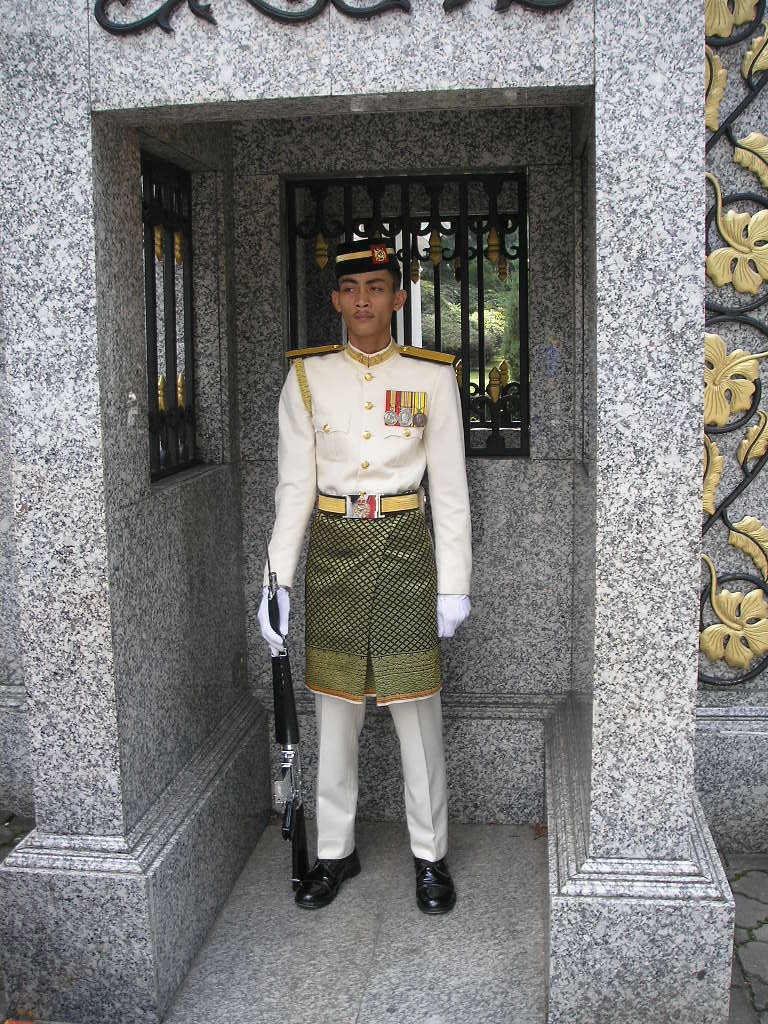
A traditional Malay waist cloth worn over festive attire in Southeast AsiaDress
🇲🇾 Malacca, Malaysia and 4 moreSampingسمڤيڠ
A traditional Malay waist cloth worn over festive attire in Southeast AsiaDress
 🇹🇱 Dili, Timor-Leste and 1 moreTais
Traditional hand-woven cloth of East Timor, worn as dress or used in ceremonies and exchange.Dress
🇹🇱 Dili, Timor-Leste and 1 moreTais
Traditional hand-woven cloth of East Timor, worn as dress or used in ceremonies and exchange.Dress
The same idea elsewhere
Royalty and coronation compared 🇮🇱 IsraelRosh Hashanahרֹאשׁ הַשָּׁנָה
The Jewish New Year marked by shofar horn blasts, prayer and sweet foodsSpiritual
🇮🇱 IsraelRosh Hashanahרֹאשׁ הַשָּׁנָה
The Jewish New Year marked by shofar horn blasts, prayer and sweet foodsSpiritual
 🇸🇪 Mora, SwedenVasaloppet
A 90 km cross-country ski race from Sälen to Mora, run every March since 1922Game
🇸🇪 Mora, SwedenVasaloppet
A 90 km cross-country ski race from Sälen to Mora, run every March since 1922Game
 🇵🇪 Cusco, Peru and 4 moreIntiinti (Quechua)
The Inca sun deity, honoured with temples, offerings and the June festival Inti RaymiSpiritual
🇵🇪 Cusco, Peru and 4 moreIntiinti (Quechua)
The Inca sun deity, honoured with temples, offerings and the June festival Inti RaymiSpiritual
 🇺🇸 United StatesTalking stick
A carved staff that shows who may speak at a Northwest Coast gatheringCeremony
🇺🇸 United StatesTalking stick
A carved staff that shows who may speak at a Northwest Coast gatheringCeremony