🇮🇩 Traditions of Indonesia
73 traditions from Indonesia, best known first, across 32 cities and towns.
Indonesian traditions reflect a blend of indigenous customs and foreign influences, creating a diverse cultural landscape. The archipelago's heritage is marked by distinct regional practices in music, dance, and cuisine, shaped by centuries of trade and migration.
Indonesia’s living traditions emerge from the interplay of over six hundred ethnic groups across thousands of islands. Indigenous customs merge with Hindu, Buddhist, Islamic, and Christian influences to form unique local practices. Communities mark time through seasonal rituals, life-cycle rites, and shared meals that reinforce social bonds. Music, dance, and puppetry serve as vital expressions of faith and history. Regional cuisines highlight local ingredients and ancestral cooking methods.
The year and its festivals
Communities across the archipelago mark the passage of time through religious observances and agricultural cycles. In Bali, Hindu ceremonies structure the calendar, while Muslim holidays like Eid al-Fitr are celebrated nationwide. These events bring families together for prayer, feasting, and community gatherings. Traditional dances often accompany these festivities, telling stories of ancient kingdoms or spiritual beliefs. The rhythm of the year is also defined by harvest seasons, which vary by region due to the tropical climate. Local festivals may feature specific rituals tied to nature, such as offerings to spirits of the land or sea. These celebrations reinforce communal identity and connect people to their ancestral past.
Faith and ritual
Religious practice in Indonesia is deeply intertwined with daily life and local custom. Islam is the majority faith, but significant populations follow Christianity, Hinduism, Buddhism, and indigenous beliefs. Syncretic traditions exist, such as Javanese Abangan, which blends Islamic practices with pre-Islamic animist elements. Rituals often involve offerings, prayers, and communal feasts. In regions like Sumatra and Sulawesi, Islamic architecture and art coexist with traditional forms. Sacred sites range from mosques to temples and ancestral shrines. Spiritual leaders guide communities through rites of passage and seasonal ceremonies. These practices emphasize harmony between the physical and spiritual worlds.
Birth and marriage and death
Life-cycle events are marked by elaborate rituals that honor ancestors and welcome new members into the community. Birth ceremonies often include naming rites and blessings from elders. Marriage unions are celebrated with feasts, gift exchanges, and traditional performances that vary by ethnicity. Death rituals focus on guiding the soul to the afterlife, often involving specific prayers, burial practices, and mourning periods. Funerals may be accompanied by music or dance to comfort the bereaved. These rites strengthen family ties and reaffirm social roles within the group. Community members participate actively, sharing responsibilities and support during these significant transitions.
The table and what is eaten when
Rice serves as the staple food across most of Indonesia, accompanied by a variety of side dishes and condiments. Spicy chili sauce, known as sambal, is a common addition to meals, reflecting the preference for hot and savory flavors. Regional cuisines differ significantly; Sumatran dishes often feature curries influenced by Indian and Middle Eastern traditions, while Javanese fare tends to be milder and sweeter. Dishes like nasi goreng, satay, and rendang are widely consumed and considered national favorites. Fermented foods such as tempeh and oncom are important protein sources, particularly in Java. Meals are often shared communally, emphasizing hospitality and togetherness.
Music and dance
Traditional music and dance are central to Indonesian cultural expression, with each ethnic group contributing unique styles. Gamelan ensembles, featuring metallophones and gongs, accompany court dances and shadow puppet performances in Java and Bali. Other regions have distinct instruments, such as the bamboo angklung in West Java or the tifa drum in Papua. Dance forms range from precise court movements to energetic folk routines, often telling mythological or historical stories. UNESCO recognizes several genres, including wayang puppetry and the saman dance, highlighting their cultural significance. These arts are preserved through apprenticeship and community participation, ensuring their continuity for future generations.
The facts in this overview come from the Wikipedia article "Culture of Indonesia", written by its contributors and used under the CC BY-SA 4.0 licence. EveryParampara rewrote the text in its own words, with AI assistance, and compares every page with the article to make sure no passage is copied. It may be reused under the same CC BY-SA 4.0 licence with a link back.
The table in Indonesia
Foods and drinks by the moment they belong to.
Cities, towns and villages of Indonesia
 🇹🇷 Turkey and 5 moreEid al-Fitrعيد الفطر
The feast that ends Ramadan, opened with morning prayers, sweets and visits homeFestival · Feasts and festival meals
🇹🇷 Turkey and 5 moreEid al-Fitrعيد الفطر
The feast that ends Ramadan, opened with morning prayers, sweets and visits homeFestival · Feasts and festival meals
 🇪🇬 Egypt and 5 moreMawlidمولد (Mawlid)
An annual festival marking the birth of the Prophet Muhammad, marked by poetry, processions and feasts.Festival · Feasts and festival meals
🇪🇬 Egypt and 5 moreMawlidمولد (Mawlid)
An annual festival marking the birth of the Prophet Muhammad, marked by poetry, processions and feasts.Festival · Feasts and festival meals
 🇲🇾 Malaysia and 4 moreKopitiam
A neighbourhood coffee shop where Southeast Asians share meals, drinks and newsTable custom · Breakfast
🇲🇾 Malaysia and 4 moreKopitiam
A neighbourhood coffee shop where Southeast Asians share meals, drinks and newsTable custom · Breakfast
 🇮🇩 Jakarta, Indonesia and 2 moreMudik
Indonesians head home to family before Lebaran, in the year's biggest journeyHome
🇮🇩 Jakarta, Indonesia and 2 moreMudik
Indonesians head home to family before Lebaran, in the year's biggest journeyHome
 🇮🇩 Bali, Indonesia and 5 moreIkat
A resist-dyeing craft from Southeast Asia, where yarns are tied and dyed before weavingCraft
🇮🇩 Bali, Indonesia and 5 moreIkat
A resist-dyeing craft from Southeast Asia, where yarns are tied and dyed before weavingCraft
 🇮🇩 Bali, Indonesia and 3 morePencak silat
Indonesia's many schools of full-body fighting, with strikes, locks, throws and bladesGame
🇮🇩 Bali, Indonesia and 3 morePencak silat
Indonesia's many schools of full-body fighting, with strikes, locks, throws and bladesGame
 🇮🇩 Indonesia and 2 moreKenduri
A communal prayer meal and gathering shared across Indonesia, Malaysia and BruneiSpiritual · Feasts and festival meals
🇮🇩 Indonesia and 2 moreKenduri
A communal prayer meal and gathering shared across Indonesia, Malaysia and BruneiSpiritual · Feasts and festival meals
 🇮🇩 IndonesiaPasola
A ritual horseback spear contest in western Sumba marking the rice-planting seasonGame
🇮🇩 IndonesiaPasola
A ritual horseback spear contest in western Sumba marking the rice-planting seasonGame
 🇨🇳 China and 5 moreShadow play
A storytelling art using flat puppets and light to cast moving silhouettes on a screen.Performance
🇨🇳 China and 5 moreShadow play
A storytelling art using flat puppets and light to cast moving silhouettes on a screen.Performance
 🇮🇩 Bali, Indonesia and 1 moreLegonglégong
A refined Balinese dance of intricate finger movements and expressive gestures, kept in Indonesia.Performance
🇮🇩 Bali, Indonesia and 1 moreLegonglégong
A refined Balinese dance of intricate finger movements and expressive gestures, kept in Indonesia.Performance
 🇹🇭 Thailand and 7 moreSpirit house
A small roofed shrine on a pillar, kept in homes and villages across Southeast Asia to honour protective spirits.Spiritual
🇹🇭 Thailand and 7 moreSpirit house
A small roofed shrine on a pillar, kept in homes and villages across Southeast Asia to honour protective spirits.Spiritual
 🇮🇩 IndonesiaOgoh-ogohᬳᭀᬕᭀᬄᬳᭀᬕᭀᬄ
Giant handcrafted statues paraded and burned on the eve of the Balinese Saka New YearFestival
🇮🇩 IndonesiaOgoh-ogohᬳᭀᬕᭀᬄᬳᭀᬕᭀᬄ
Giant handcrafted statues paraded and burned on the eve of the Balinese Saka New YearFestival
 🇮🇹 Naples, Italy and 5 moreGreasy pole
A slippery pole climbed, walked or crossed to win a prize at the top or the far endGame
🇮🇹 Naples, Italy and 5 moreGreasy pole
A slippery pole climbed, walked or crossed to win a prize at the top or the far endGame
 🇺🇬 Uganda and 4 moreBarkcloth
Cloth beaten from tree bark across Africa, Asia and the PacificCraft
🇺🇬 Uganda and 4 moreBarkcloth
Cloth beaten from tree bark across Africa, Asia and the PacificCraft
 🇨🇳 China and 5 moreLion dance舞獅
A dynamic ritual dance featuring costumed lions, drums and martial acrobaticsPerformance
🇨🇳 China and 5 moreLion dance舞獅
A dynamic ritual dance featuring costumed lions, drums and martial acrobaticsPerformance
 🇮🇳 Goa, India and 2 moreShehnai
A traditional reed instrument played at weddings and temple festivals across IndiaPerformance
🇮🇳 Goa, India and 2 moreShehnai
A traditional reed instrument played at weddings and temple festivals across IndiaPerformance
 🇮🇩 Ubud, IndonesiaBarongᬩᬭᭀᬂ
A sacred Balinese masked dance drama depicting the eternal struggle of good and evilPerformance
🇮🇩 Ubud, IndonesiaBarongᬩᬭᭀᬂ
A sacred Balinese masked dance drama depicting the eternal struggle of good and evilPerformance
 🇨🇳 Quanzhou, China and 3 moreGlove puppetry布袋戲
A traditional theatre of cloth-bodied puppets with carved wooden heads and live musicPerformance
🇨🇳 Quanzhou, China and 3 moreGlove puppetry布袋戲
A traditional theatre of cloth-bodied puppets with carved wooden heads and live musicPerformance
 🇬🇷 Greece and 5 moreHandshake
A brief clasp of hands to greet, part or seal a deal, with local rules on how it is doneEtiquette
🇬🇷 Greece and 5 moreHandshake
A brief clasp of hands to greet, part or seal a deal, with local rules on how it is doneEtiquette
 🇮🇩 North Sumatra, IndonesiaUlosᯥᯞᯘᯬ᯲
A hand-woven textile of the Batak people in Indonesia, worn for warmth and ceremony.Dress
🇮🇩 North Sumatra, IndonesiaUlosᯥᯞᯘᯬ᯲
A hand-woven textile of the Batak people in Indonesia, worn for warmth and ceremony.Dress
 🇲🇾 Malaysia and 2 moreNgajatTanda Ngajat
A traditional folk dance of the Iban people in Sarawak and Borneo, mimicking birds and warriors.Performance
🇲🇾 Malaysia and 2 moreNgajatTanda Ngajat
A traditional folk dance of the Iban people in Sarawak and Borneo, mimicking birds and warriors.Performance
 🇮🇩 Bali, IndonesiaPenjorᬧᬾᬜ᭄ᬚᭀᬃ
A curved bamboo pole decorated with leaves and offerings, raised in Bali to mark Galungan and invite prosperity.Spiritual
🇮🇩 Bali, IndonesiaPenjorᬧᬾᬜ᭄ᬚᭀᬃ
A curved bamboo pole decorated with leaves and offerings, raised in Bali to mark Galungan and invite prosperity.Spiritual
 🇹🇱 Dili, Timor-Leste and 1 moreTais
Traditional hand-woven cloth of East Timor, worn as dress or used in ceremonies and exchange.Dress
🇹🇱 Dili, Timor-Leste and 1 moreTais
Traditional hand-woven cloth of East Timor, worn as dress or used in ceremonies and exchange.Dress
 🇮🇳 India and 5 moreTribal youth dormitoryMorung
A communal house where a tribe's unmarried young people sleep, learn and serveRite of passage
🇮🇳 India and 5 moreTribal youth dormitoryMorung
A communal house where a tribe's unmarried young people sleep, learn and serveRite of passage
 🇮🇩 Bali, IndonesiaMelasti
A Balinese Hindu purification ritual held at the sea before Nyepi to cleanse sacred objects and people.Spiritual
🇮🇩 Bali, IndonesiaMelasti
A Balinese Hindu purification ritual held at the sea before Nyepi to cleanse sacred objects and people.Spiritual
 🇮🇩 IndonesiaIsra and Mi'rajالإسراء والمعراج (al-’Isrā’ wal-Miʿrāj)
An Islamic observance marking the prophet Muhammad’s night journey and ascent through the heavens.Spiritual
🇮🇩 IndonesiaIsra and Mi'rajالإسراء والمعراج (al-’Isrā’ wal-Miʿrāj)
An Islamic observance marking the prophet Muhammad’s night journey and ascent through the heavens.Spiritual
 🇨🇳 China and 5 moreQingming Festival清明节
A spring custom of sweeping family graves and honouring ancestors across East Asia.Spiritual
🇨🇳 China and 5 moreQingming Festival清明节
A spring custom of sweeping family graves and honouring ancestors across East Asia.Spiritual
 🇨🇳 China and 5 moreGhost Festival中元節 / 中元节 (Zhōngyuán jié)
A full-moon night in the seventh lunar month for feeding ghosts and guiding souls homeSpiritual
🇨🇳 China and 5 moreGhost Festival中元節 / 中元节 (Zhōngyuán jié)
A full-moon night in the seventh lunar month for feeding ghosts and guiding souls homeSpiritual
 🇮🇳 India and 5 moreThaipusam
A Tamil Hindu festival honoring Murugan through devotional burdens and pilgrimageSpiritual
🇮🇳 India and 5 moreThaipusam
A Tamil Hindu festival honoring Murugan through devotional burdens and pilgrimageSpiritual
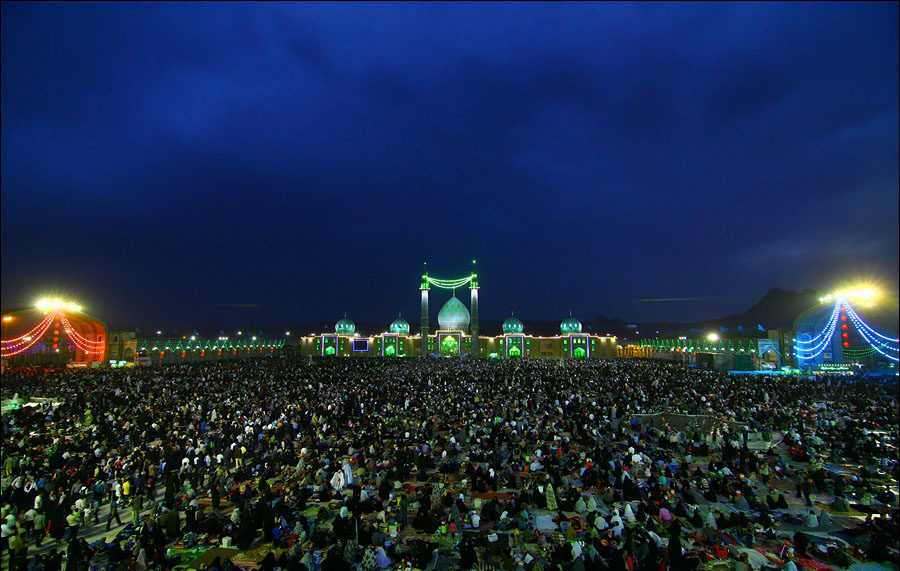 🇮🇷 Iran and 5 moreMid-Sha'banنصف شعبان
An Islamic night of prayer, remembrance, and seeking divine forgiveness.Spiritual
🇮🇷 Iran and 5 moreMid-Sha'banنصف شعبان
An Islamic night of prayer, remembrance, and seeking divine forgiveness.Spiritual
 🇮🇩 Bali, IndonesiaNyepiᬜᬾᬧᬶ
A Balinese Hindu day of silence, fasting and stillness marking the Saka new yearSpiritual · Fasting and breaking the fast
🇮🇩 Bali, IndonesiaNyepiᬜᬾᬧᬶ
A Balinese Hindu day of silence, fasting and stillness marking the Saka new yearSpiritual · Fasting and breaking the fast
 🇹🇭 Thailand and 5 moreMāgha Pūjāមាឃបូជា
A Buddhist holy day honoring monastic unity, moral guidance and spiritual fellowshipSpiritual · Fasting and breaking the fast
🇹🇭 Thailand and 5 moreMāgha Pūjāមាឃបូជា
A Buddhist holy day honoring monastic unity, moral guidance and spiritual fellowshipSpiritual · Fasting and breaking the fast
 🇮🇳 Varanasi, India and 2 moreKartika Purnimaकार्त्तिकपूर्णिमा (Kārttikapūrṇimā)
A full moon festival of lights and holy baths celebrated by Hindus, Sikhs, and Jains across South Asia.Festival
🇮🇳 Varanasi, India and 2 moreKartika Purnimaकार्त्तिकपूर्णिमा (Kārttikapūrṇimā)
A full moon festival of lights and holy baths celebrated by Hindus, Sikhs, and Jains across South Asia.Festival
 🇨🇳 China and 5 moreChinese New Year's Evechúxī
A reunion day for ethnic Chinese families before the Lunar New Year, marked by feasts, rituals, and staying up late.Festival · Dinner
🇨🇳 China and 5 moreChinese New Year's Evechúxī
A reunion day for ethnic Chinese families before the Lunar New Year, marked by feasts, rituals, and staying up late.Festival · Dinner
 🇮🇩 Indonesia and 4 moreLebaranHari Raya Lebaran
Indonesia's festive season of homecoming, seeking forgiveness and shared feastsFestival · Breakfast
🇮🇩 Indonesia and 4 moreLebaranHari Raya Lebaran
Indonesia's festive season of homecoming, seeking forgiveness and shared feastsFestival · Breakfast
 🇮🇩 IndonesiaGalungan
A Balinese Hindu festival welcoming ancestral spirits and honouring good over evilSpiritual
🇮🇩 IndonesiaGalungan
A Balinese Hindu festival welcoming ancestral spirits and honouring good over evilSpiritual
 🇮🇩 IndonesiaSlametan
A short communal meal on Java where neighbours share food, prayer and a wish for peaceSpiritual · Feasts and festival meals
🇮🇩 IndonesiaSlametan
A short communal meal on Java where neighbours share food, prayer and a wish for peaceSpiritual · Feasts and festival meals
 🇮🇩 Yogyakarta, IndonesiaSekatenꦱꦼꦏꦠꦺꦤ꧀
A week-long Javanese royal festival and market honouring the birth of the ProphetFestival
🇮🇩 Yogyakarta, IndonesiaSekatenꦱꦼꦏꦠꦺꦤ꧀
A week-long Javanese royal festival and market honouring the birth of the ProphetFestival
 🇲🇾 Malaysia and 1 moreGawai DayakAri Gawai
An annual harvest and thanksgiving festival of the Dayak peoples in BorneoSeasonal
🇲🇾 Malaysia and 1 moreGawai DayakAri Gawai
An annual harvest and thanksgiving festival of the Dayak peoples in BorneoSeasonal
 🇮🇩 IndonesiaBau Nyale
An annual night-time gathering on Lombok to collect spawning sea worms from the shoreFestival
🇮🇩 IndonesiaBau Nyale
An annual night-time gathering on Lombok to collect spawning sea worms from the shoreFestival
 🇮🇩 Yogyakarta, Indonesia and 4 moreKebayaꦏꦼꦧꦪ
A front-opening blouse and wrapped cloth, worn by women across Southeast AsiaDress
🇮🇩 Yogyakarta, Indonesia and 4 moreKebayaꦏꦼꦧꦪ
A front-opening blouse and wrapped cloth, worn by women across Southeast AsiaDress
 🇸🇬 Singapore and 2 moreChingay Parade妝藝
A lively street procession of floats, giant flags, and performing arts in Southeast AsiaFestival
🇸🇬 Singapore and 2 moreChingay Parade妝藝
A lively street procession of floats, giant flags, and performing arts in Southeast AsiaFestival
 🇹🇭 Thailand and 5 moreAsalha Pujaอาสาฬหบูชา
A Theravada festival marking the Buddha's first sermon and the monastic orderSpiritual
🇹🇭 Thailand and 5 moreAsalha Pujaอาสาฬหบูชา
A Theravada festival marking the Buddha's first sermon and the monastic orderSpiritual
 🇮🇷 Mashhad, Iran and 7 moreIftarإفطار
The sunset meal that breaks the Ramadan fast, eaten with family and communityTable custom · Fasting and breaking the fast
🇮🇷 Mashhad, Iran and 7 moreIftarإفطار
The sunset meal that breaks the Ramadan fast, eaten with family and communityTable custom · Fasting and breaking the fast
 🇳🇱 Amsterdam, Netherlands and 3 moreZwarte Piet
Saint Nicholas's companion in the Low Countries, who hands out sweets to childrenFolklore · Sweets given and shared
🇳🇱 Amsterdam, Netherlands and 3 moreZwarte Piet
Saint Nicholas's companion in the Low Countries, who hands out sweets to childrenFolklore · Sweets given and shared
 🇵🇭 Philippines and 3 moreManoPagmamano
A Filipino greeting where a younger person bows and asks an elder for a blessingEtiquette
🇲🇾 Kelantan, Malaysia and 2 moreMak yongTarian Mak Yong (Jawi: مق يوڠ)
A dance-drama of Kelantan and Patani, told in song, music and improvised speechPerformance
🇵🇭 Philippines and 3 moreManoPagmamano
A Filipino greeting where a younger person bows and asks an elder for a blessingEtiquette
🇲🇾 Kelantan, Malaysia and 2 moreMak yongTarian Mak Yong (Jawi: مق يوڠ)
A dance-drama of Kelantan and Patani, told in song, music and improvised speechPerformance
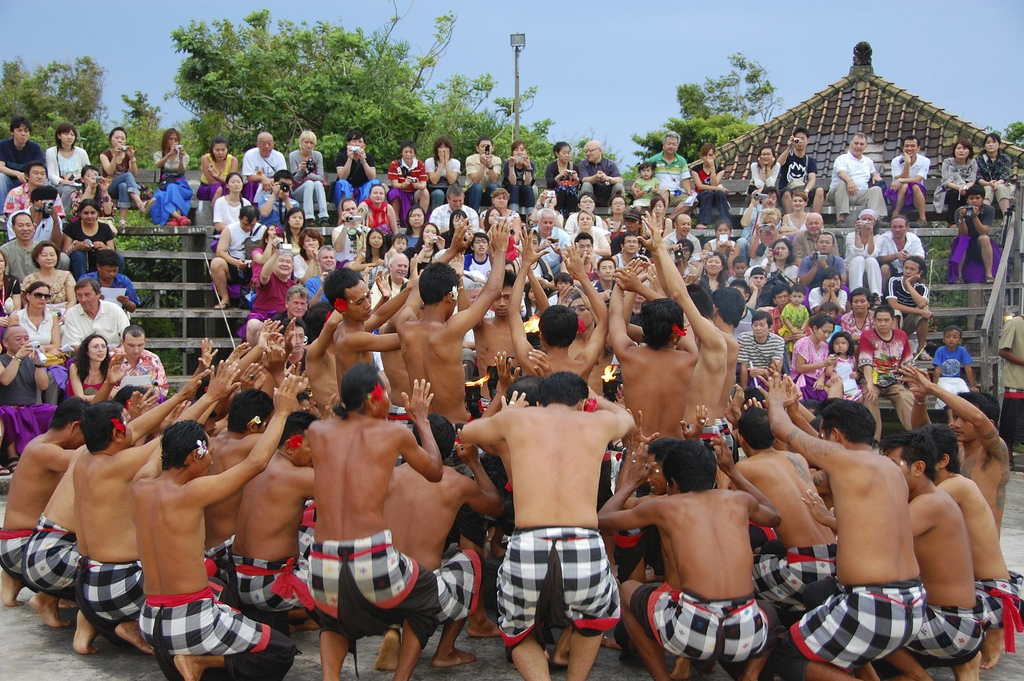 🇮🇩 Uluwatu, IndonesiaKecakᬓᬾᬘᬓ᭄ (Balinese), Tari Kecak (Indonesian)
A circle of men chanting chak as they dance the Ramayana epic in BaliPerformance
🇮🇩 Uluwatu, IndonesiaKecakᬓᬾᬘᬓ᭄ (Balinese), Tari Kecak (Indonesian)
A circle of men chanting chak as they dance the Ramayana epic in BaliPerformance
Photo credits on this page
The small pictures above come from Wikimedia Commons under free licences. Some are cropped to fit.
- Kenduri: Andreasprasetya, CC BY-SA 4.0, source
- Eid al-Fitr: Mohammed Tawsif Salam, CC BY-SA 4.0, source
- Pencak silat: Agus Triyanto, CC0, source
- Isra and Mi'raj: عامر شاہین, CC BY-SA 3.0, source
- Ghost Festival: Chong Fat, CC BY-SA 3.0, source
- Thaipusam: hams Nocete, CC BY-SA 2.0, source
- Mid-Sha'ban: sayyed shahab-o- din vajedi, CC BY 4.0, source
- Mawlid: Firdaus Latif, CC BY-SA 2.0, source
- Qingming Festival: Jacklee ., CC BY-SA 3.0, source
- Nyepi: Matt Croxson, Public domain, source
- Māgha Pūjā: myself, CC BY-SA 3.0, source
- Kartika Purnima: Pictowrit, CC BY-SA 3.0, source
- Chinese New Year's Eve: Mickey Đại Phát, CC BY-SA 4.0, source
- Lebaran: Nurudin Jauhari, CC BY-SA 2.0, source
- Galungan: Davidelit, CC BY-SA 3.0, source
- Sekaten: Kembangraps, CC BY-SA 4.0, source
- Gawai Dayak: Zahirulnukman, CC BY-SA 4.0, source
- Chingay Parade: HundenvonPenang, CC BY-SA 4.0, source
- Bau Nyale: Focusfeel, CC BY-SA 4.0, source
- Ikat: Midori, CC BY 3.0, source
- Mudik: Arie Basuki, CC BY-SA 4.0, source
- Greasy pole: Andrepoiy, CC BY-SA 4.0, source
- Handshake: Rufino, CC BY-SA 2.0, source
- Asalha Puja: Chainwit., CC BY 4.0, source
- Glove puppetry: Taman Renyah, CC0, source
- Ogoh-ogoh: Simondodit, CC BY-SA 4.0, source
- Shehnai: TAPAS KUMAR HALDER, CC BY-SA 4.0, source
- Barong: Michael Gunther, CC BY-SA 4.0, source
- Lion dance: Alfresco24, CC BY 3.0, source
- Barkcloth: Hiart, CC0, source
- Slametan: Unknown author, CC BY-SA 3.0, source
- Mano: TOTO LOZANO/PRESIDENTIAL PHOTO, Public domain, source
- Tribal youth dormitory: Aravind Manickam, CC BY-SA 4.0, source
- Tais: Daderot, CC0, source
- Kopitiam: Chongkian, CC BY-SA 4.0, source
- Penjor: Chainwit., CC BY-SA 4.0, source
- Ngajat: Menuaibansarawak, CC0, source
- Kebaya: Simon_sees, CC BY 2.0, source
- Ulos: Boy Lawson, CC BY-SA 3.0, source
- Spirit house: Chainwit., CC BY-SA 4.0, source
- Legong: P. (Paul) Spies (Fotograaf/photographer)., CC BY-SA 3.0, source
- Shadow play: Museu Valencià d'Etnologia, CC BY-SA 2.0, source
- Pasola: Fakhri Anindita, CC BY-SA 4.0, source
- Melasti: Unknown author, CC BY-SA 3.0, source
- Iftar: Shariful Islam (Masum), CC BY-SA 4.0, source
- Kecak: Rollan Budi, CC BY-SA 2.0, source
- Zwarte Piet: The illustrator is Daan Hoeksma, who died in 1935. The author is liste, Public domain, source