Music, dance and storytellingEuropeChristian
Batlejka
In its own language: Батле́йка
A two-level puppet booth from Belarus, playing Nativity and folk scenes at Christmas

A puppet theatre from Belarus, named after Bethlehem and played at Christmas. One hidden puppeteer works figures on rods inside a two-storey wooden booth: the upper floor for the Nativity story, the lower for comic village scenes. Nearly lost in the Soviet years, it is performed again in Belarus and by Belarusian communities living abroad.
When is Batlejka marked?
Batlejka is kept as part of Christmas, which is on Friday, 25 December 2026.
Batlejka is a puppet theatre kept by amateur performers in Belarus. Its name comes from Bethlehem, and its plays belong to the Christmas season. Two storeys of a wooden booth hold the action: saints above, everyday folk below. The tradition was nearly lost in the Soviet years and is now performed again in Belarus and by Belarusian communities abroad.
A booth with two levels
Batlejka is a puppet theatre made and performed by amateurs in Belarus. A single puppeteer stands hidden behind a wooden booth fitted with doors and moves figures mounted on metal rods. The booth is built in two storeys. The upper one, called the heavenly or canonical level, is where the sacred scenes take place. The lower one, the earthly or layman's level, is for the human world below. Figures were traditionally carved from wood and given small, bright costumes. Performances were, and are, given at Christmas.
Origins and history
Accounts trace its growth to the 16th century, and it reached its widest use in the 18th and 19th centuries. The name ties it to Bethlehem, and its place in the year ties it to Christmas. During the Soviet period it was largely forgotten. Since then it has been taken up again, in Belarus itself and among Belarusian communities living abroad. It is an amateur theatre, kept by people who take it up themselves, and that is part of how it has carried on.
The Nativity scenes
The first part is the Nativity. The Three Kings tell King Herod that a Saviour has been born, and Herod, seeing a rival, decides the child must die. He sends a soldier to Bethlehem with orders to kill every newborn there. The soldier carries out the command, sparing no child except the baby of Rachael, and an angry Herod tells him to kill that one as well. Herod's own life ends the sequence: Death cuts off his head, the Devil carries the body to Hell, and the soldier soon meets the same end. This part varied only slightly from place to place.
Comic scenes
The second half leaves scripture behind and turns to village and town life. Short humorous and satirical sketches bring on peasants, tradesmen, members of the aristocracy and other figures, each with something to send up. Because these episodes were not fixed by a sacred text, they changed from region to region and from puppeteer to puppeteer, so that a performance in one district could look quite unlike one somewhere else. That freedom is why the second half differs in each place, while the Nativity scenes stayed close to a common shape.
Today and change
Batlejka is no longer the widespread village practice it once was, yet it has not vanished. Performers in Belarus have revived it, and Belarusian communities abroad stage it too, generally around Christmas. They work from older scripts and from versions collected in different districts, since the comic half was never fixed in one form. The Ukrainian vertep is named as its counterpart in a neighbouring tradition. Studies of the theatre have been printed in Belarusian journals and books, which is why so much of its regional variety is on record.
How Batlejka is kept
A puppeteer stands unseen behind a wooden booth and moves the figures, which are mounted on rods of metal. The booth's upper storey is where the sacred story unfolds. The lower storey belongs to ordinary people. The first part follows the Nativity, from the arrival of the Three Kings and Herod's fear of a rival to his order to kill the infants of Bethlehem, and then to his own death. The second part turns to comedy and satire, with peasants, traders and nobles among the characters. Audiences gather during the Christmas season.
When and where
The theatre belongs to the Christmas season, and its plays are given while that feast is being kept. The Nativity story sets the occasion, and the comic scenes fill out the rest of the evening. The material does not record one fixed date for a performance.
The tradition belongs to Belarus, where it was once played widely and where it has been revived. The Nativity scenes stayed close to a common form across the country, while the comic scenes shifted with the district. Today it is also performed by Belarusian communities abroad.
What Batlejka means
The booth's two floors carry the sense of the whole play: heaven above, earth below, with a single puppeteer moving the figures on both. The Nativity scenes set the birth of the Saviour against Herod's cruelty, and Herod's death shows that such cruelty is answered. On the lower level the ordinary people of the village and the town appear, laughed at and recognised at once.

Days Batlejka is marked
Questions people ask about Batlejka
When is Batlejka marked?
Batlejka is kept as part of Christmas, which is on Friday, 25 December 2026.
What is a batlejka?
It is a puppet play from Belarus. A puppeteer works figures on metal rods from behind a wooden booth, and the booth has two floors: the upper one for the sacred story, the lower one for comic scenes of everyday life. It is named after Bethlehem.
What happens in the Nativity part?
The Three Kings tell King Herod that a Saviour is born. Herod fears a rival and sends a soldier to kill the newborns of Bethlehem. One baby, Rachael's, is spared, so Herod orders that child killed too. Death beheads Herod, the Devil takes his body to Hell, and the soldier soon follows him.
Why does the booth have two levels?
The upper level is the heavenly or canonical one, where the sacred scenes are played. The lower level is the earthly or layman's one, for scenes of ordinary people. The sacred story sits above and the everyday world below.
Is it still performed today?
Yes. It was largely forgotten in Soviet times, then revived. Performers in Belarus keep it now, and Belarusian communities in other countries stage it as well. The Ukrainian vertep is a related form in a neighbouring tradition.
See also
 KoliadaA traditional winter caroling and solstice festival kept across Slavic Europe
 MalankaA Ukrainian folk celebration of masked mummers, feasting and New Year blessings
 Christmas carolFestive songs and hymns sung during the Christmas season and door to door
 Mummers' playA comic folk drama of staged combat, death, and revival by an eccentric doctor
Good reading and sources
The facts on this page come from the Wikipedia article "Batlejka", written by its contributors and used under the CC BY-SA 4.0 licence, and from its Wikidata record (CC0). EveryParampara rewrote the text in its own words, with AI assistance, and compares every page with the article to make sure no passage is copied. It may be reused under the same CC BY-SA 4.0 licence with a link back.
It may contain mistakes. Traditions differ from one family, village and community to the next, and the people who keep them know them best. If something is wrong, tell us. Last refreshed 2026-10-05.
More from Belarus
All the traditions of Belarus 🇷🇺 Russia and 2 moreKhorovodхоровод
A Slavic circle dance with singing, danced with linked hands or little fingersPerformance
🇺🇦 Ukraine and 7 moreKoliadaКоляда
A traditional winter caroling and solstice festival kept across Slavic EuropeFestival
🇺🇦 Chernivtsi, Ukraine and 3 moreMalankaМаланка
A Ukrainian folk celebration of masked mummers, feasting and New Year blessingsFestival · Feasts and festival meals
🇷🇺 Russia and 2 moreKhorovodхоровод
A Slavic circle dance with singing, danced with linked hands or little fingersPerformance
🇺🇦 Ukraine and 7 moreKoliadaКоляда
A traditional winter caroling and solstice festival kept across Slavic EuropeFestival
🇺🇦 Chernivtsi, Ukraine and 3 moreMalankaМаланка
A Ukrainian folk celebration of masked mummers, feasting and New Year blessingsFestival · Feasts and festival meals
 🇺🇦 Ukraine and 2 moreRushnykрушник
A sacred embroidered cloth used in East Slavic rituals, weddings and daily life.Dress
🇺🇦 Ukraine and 2 moreRushnykрушник
A sacred embroidered cloth used in East Slavic rituals, weddings and daily life.Dress
The same idea elsewhere
Midwinter and the longest night compared 🇵🇪 Cusco, Peru and 4 moreIntiinti (Quechua)
The Inca sun deity, honoured with temples, offerings and the June festival Inti RaymiSpiritual
🇵🇪 Cusco, Peru and 4 moreIntiinti (Quechua)
The Inca sun deity, honoured with temples, offerings and the June festival Inti RaymiSpiritual
 🇮🇷 Iran and 5 moreYaldā Nightشب یلدا
A solstice night of poetry, fruit and family, kept from Iran through Central AsiaFestival · Dinner
🇮🇷 Iran and 5 moreYaldā Nightشب یلدا
A solstice night of poetry, fruit and family, kept from Iran through Central AsiaFestival · Dinner
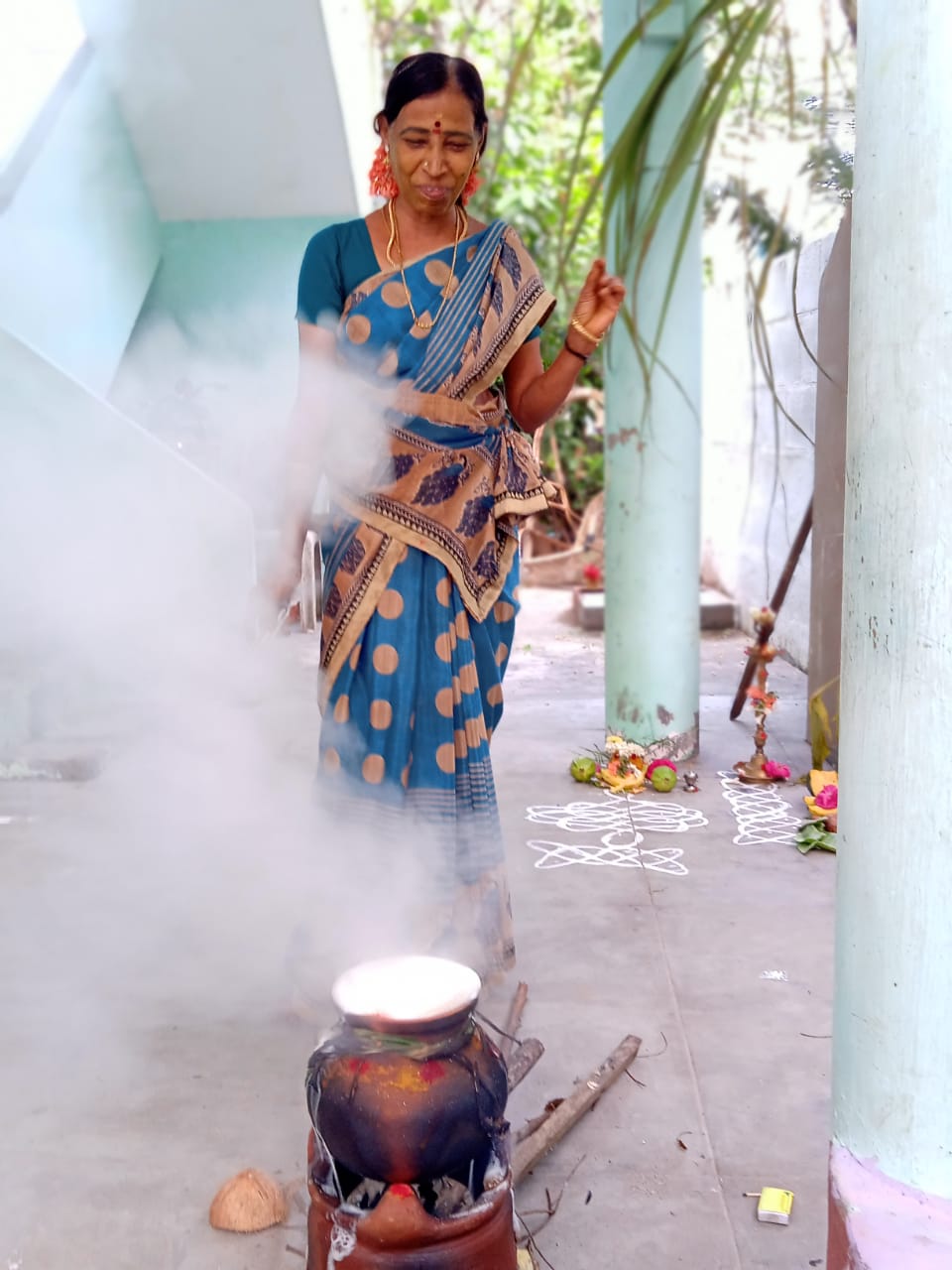 🇮🇳 India and 5 morePongal
Three or four days of boiling rice, garlanded cattle and thanks to the sunSeasonal · Sweets given and shared
🇮🇳 India and 5 morePongal
Three or four days of boiling rice, garlanded cattle and thanks to the sunSeasonal · Sweets given and shared
 🇨🇳 Shanghai, China and 1 moreJiaozi餃子
Crescent Chinese dumplings filled with meat or vegetables, eaten for fortune and feastsTable custom · Breakfast
🇨🇳 Shanghai, China and 1 moreJiaozi餃子
Crescent Chinese dumplings filled with meat or vegetables, eaten for fortune and feastsTable custom · Breakfast