Customs of food and drinkEast Asia
Jiaozi
In its own language: 餃子
Crescent Chinese dumplings filled with meat or vegetables, eaten for fortune and feasts

Jiaozi are filled Chinese dumplings made by wrapping ground meat or chopped vegetables inside rolled rounds of dough. Eaten across northern China throughout the year and gathered over at midnight on Chinese New Year's Eve, they are boiled, steamed, or pan-fried and served with fragrant dipping sauces to invite prosperity.
When is Jiaozi marked?
Jiaozi is kept as part of Lunar New Year, which runs from 7 to 21 February 2027.
Jiaozi are traditional Chinese dumplings filled with minced meat, seafood, or vegetables folded into thin pastry wrappers. Prepared in households and street stalls across China, they are enjoyed as an everyday staple and as an essential celebratory dish. Because their crescent shape recalls the curved gold and silver ingots of imperial times, families eat them together around the new year to welcome good fortune and wealth into the household.
Remedy and imperial history
According to Chinese folklore, the physician Zhang Zhongjing created the earliest dumplings during the Eastern Han period. While returning home in bitter winter weather, he noticed local people suffering from frostbitten ears. He prepared parcels filled with stewed mutton, warming herbs, and black pepper, boiling them into medicinal parcels called tender ears. Over the following dynasties, the dish spread across China under several names. Archaeological digs in Turpan uncovered preserved dumplings inside ancient tombs from the Six Dynasties and Tang eras. In early historical records, the food was linked to the word for animal horns before developing its own distinct culinary character.
Wrappers and savory fillings
Making jiaozi centers on wrapping chopped fillings inside thin discs of rolled dough. Popular stuffing combinations blend pork, beef, chicken, or shrimp with finely minced napa cabbage, scallions, leeks, celery, or fragrant chives. Cooks seal the edges with tight pleats, pressing one rim outward to create a classic curved crescent. Depending on preference, the dumplings are boiled in water, steamed in bamboo baskets, pan-fried until crisp, deep-fried, or simmered in clear soup. When pan-frying, cooks sometimes add flour water to form a lacy, delicate crust across the bottom.
New Year traditions
During Chinese New Year celebrations, jiaozi take center stage at family reunions, especially across the northern provinces. Relatives gather to fold dumplings together on New Year's Eve, sharing the food as the clock strikes midnight. Their shape mirrors traditional silver and gold currency ingots, connecting every bite to wishes for financial success in the coming months. In some homes, the cook secretly hides a thoroughly cleaned coin inside one dumpling, and the person who discovers it at the table is thought to receive special luck.
Regional styles and global reach
Across China and beyond, jiaozi have developed distinct regional forms. Cantonese dim sum chefs prepare delicate steamed versions like translucent shrimp dumplings, whereas northern cooks make elongated pan-fried potstickers. Following the Second World War, returning Japanese settlers introduced the dumplings to Japan as gyoza, adapting the filling with generous amounts of garlic and serving them alongside ramen. In Hawaii, Cantonese migrants developed crispy deep-fried variations made with thicker pastry squares, which remain a popular island snack served with mustard dipping sauce.
How Jiaozi is kept
Families and cooks prepare dough rounds and mix savory fillings of minced meat and vegetables. Household members assemble around the table to spoon filling into each wrapper and pinch the edges into neat pleats. The dumplings are then cooked in boiling water, steamed in stacked baskets, or fried in a pan until golden. They are served hot at the table alongside bowls of dipping sauce made from dark vinegar, soy sauce, garlic, and sesame oil, ready to be eaten immediately.
When and where
Jiaozi are cooked and eaten throughout the entire year for daily meals. They hold a dedicated place during the Chinese New Year festival, especially at midnight on New Year's Eve, when families share them to mark the transition between years.
Originating in China, jiaozi remain a cornerstone of northern Chinese cooking. Regional adaptations are also found across southern China, in Japanese restaurants where they are served as gyoza, and in Chinese communities worldwide.
What Jiaozi means
Because their pinched crescent shape resembles ancient Chinese gold and silver ingots, jiaozi represent wealth, good fortune, and material abundance. Eating them at midnight on New Year's Eve symbolizes turning over a new leaf and inviting prosperity into the home. Hiding a coin within a dumpling extends a blessing of exceptional luck to whoever finds it.
On the table
- Boiled dumplings (shuijiao)
- Steamed dumplings (zhengjiao)
- Potstickers (guotie)
- Shrimp dumplings (har gow)
- Egg dumplings (danjiao)
- Black vinegar and soy dip
- Soup dumplings (tangjiao)
- Gyoza


Days Jiaozi is marked
Questions people ask about Jiaozi
When is Jiaozi marked?
Jiaozi is kept as part of Lunar New Year, which runs from 7 to 21 February 2027.
What are jiaozi?
Jiaozi are traditional Chinese dumplings made of thinly rolled dough wrappers folded around savory fillings of ground meat, seafood, or finely chopped vegetables. They are boiled, steamed, or pan-fried and served with seasoned dipping sauces.
Why are jiaozi shaped like crescents?
The crescent shape comes from traditional pleating methods and deliberately resembles ancient Chinese silver and gold ingots. Serving them honors this resemblance and symbolizes hopes for wealth, good fortune, and prosperity in the new year.
How do jiaozi differ from Japanese gyoza?
Japanese gyoza developed from jiaozi after the Second World War. Gyoza are typically made with thinner machine-pressed wrappers and feature a stronger garlic flavor, often served pan-fried alongside ramen.
See also
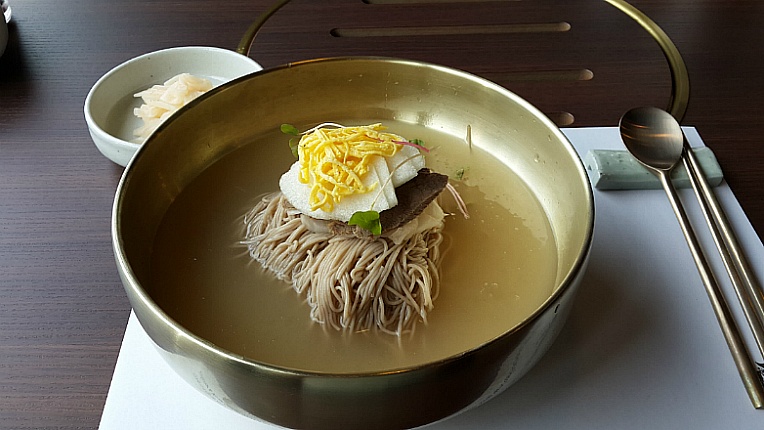 NaengmyeonLong buckwheat noodles in icy broth, born in North Korea and eaten most in summer
 HalloweenAn annual observance on 31 October marking the eve of All Saints' Day, rooted in Christian tradition and Celtic heritage
 NowruzThe Iranian new year at the March equinox, kept with fire, greenery and picnics
 Mid-Autumn FestivalAn annual harvest festival celebrating family reunions, full moons and mooncakes
Good reading and sources
- Jiaozi on WikipediaEncyclopedia
- More photos on Wikimedia CommonsPhotos and video
- Wikidata recordOpen data
The facts on this page come from the Wikipedia article "Jiaozi", written by its contributors and used under the CC BY-SA 4.0 licence, and from its Wikidata record (CC0). EveryParampara rewrote the text in its own words, with AI assistance, and compares every page with the article to make sure no passage is copied. It may be reused under the same CC BY-SA 4.0 licence with a link back.
It may contain mistakes. Traditions differ from one family, village and community to the next, and the people who keep them know them best. If something is wrong, tell us. Last refreshed 2026-10-04.
More from China
All the traditions of China
🇰🇵 Pyongyang, North Korea and 3 moreNaengmyeon냉면
Long buckwheat noodles in icy broth, born in North Korea and eaten most in summerTable custom · Dinner
 🇨🇳 Beijing, China and 1 moreLaba congee腊八粥
A ceremonial Chinese porridge of rice, beans and dried fruit, eaten at the Laba FestivalTable custom · Feasts and festival meals
🇨🇳 Beijing, China and 1 moreLaba congee腊八粥
A ceremonial Chinese porridge of rice, beans and dried fruit, eaten at the Laba FestivalTable custom · Feasts and festival meals
 🇨🇳 Lhasa, China and 5 moreButter teaབོད་ཇ་
A salted tea churned with yak butter, served to guests across the HimalayaTable custom · Tea, coffee and drinking ceremonies
🇨🇳 China and 1 moreReunion dinner團圓飯
A family gathering meal on lunar new year's eve, kept in China and VietnamTable custom · Dinner
🇨🇳 Lhasa, China and 5 moreButter teaབོད་ཇ་
A salted tea churned with yak butter, served to guests across the HimalayaTable custom · Tea, coffee and drinking ceremonies
🇨🇳 China and 1 moreReunion dinner團圓飯
A family gathering meal on lunar new year's eve, kept in China and VietnamTable custom · Dinner
The same idea elsewhere
New Year compared 🇬🇧 United Kingdom and 5 moreYule log
A log kept burning on the hearth through the twelve days of Christmas, for luckSeasonal
🇬🇧 United Kingdom and 5 moreYule log
A log kept burning on the hearth through the twelve days of Christmas, for luckSeasonal
 🇵🇪 Cusco, PeruQoyllur Rit'iQuyllurit'i
An Andean mountain pilgrimage uniting indigenous star lore and Catholic devotionSpiritual
🇵🇪 Cusco, PeruQoyllur Rit'iQuyllurit'i
An Andean mountain pilgrimage uniting indigenous star lore and Catholic devotionSpiritual
 🇺🇦 Chernivtsi, Ukraine and 3 moreMalankaМаланка
A Ukrainian folk celebration of masked mummers, feasting and New Year blessingsFestival · Feasts and festival meals
🇺🇦 Chernivtsi, Ukraine and 3 moreMalankaМаланка
A Ukrainian folk celebration of masked mummers, feasting and New Year blessingsFestival · Feasts and festival meals
 🇬🇷 Greece and 5 moreKallikantzarosκαλικάντζαρος
A malevolent goblin of Greek and Balkan folklore, active in the Christmas season.Folklore
🇬🇷 Greece and 5 moreKallikantzarosκαλικάντζαρος
A malevolent goblin of Greek and Balkan folklore, active in the Christmas season.Folklore