Spiritual and religiousNorth AmericaChristian
Beatification
A Catholic rite conferring the title Blessed and allowing local public veneration

Beatification is a Catholic ceremony that honors a deceased person believed to reside in heaven, granting them the title of Blessed. It gives permission for local communities, dioceses, or religious orders to publicly venerate the figure and hold dedicated feast days in their memory.
When is Beatification kept?
Beatification is kept on when a candidate for sainthood is declared Blessed by the Holy See.
Beatification is a formal ritual in the Catholic Church that acknowledges a deceased Christian as holy and living in heaven. By bestowing the title of Blessed, the Church allows regional communities, dioceses, or religious groups to publicly honor the individual. Believers may ask for their spiritual intercession in prayer, viewing beatification as a key milestone on the path toward full sainthood.
Veneration and papal status
Unlike canonization, which mandates universal veneration for a new saint across the worldwide Church, beatification offers permission for local devotion. The decree allows specific geographic regions, religious congregations, or dioceses to observe a feast day and venerate the individual, who is given the title Blessed. Catholic theologians regard beatification as an administrative and provisional judgment rather than an infallible papal command. This classification means the ruling can be revisited if unexpected historical findings arise. Despite being localized and fallible, the declaration provides moral certainty to the faithful that the person is in heaven and can intercede before God for those who pray to them.
Investigation and miracles
The journey to beatification requires thorough scrutiny of the candidate's life and virtue. Under guidelines established in 1983, a candidate who was not martyred must have one confirmed miracle attributed to their heavenly intercession. Such miracles are almost always medical recoveries that defy scientific explanation. Panels composed of physicians and theologians conduct detailed investigations to confirm that the healing cannot be accounted for by natural means. When a person is formally recognized as a martyr who died for their faith, the standard miracle requirement is waived. Once approved, the candidate receives the title of Blessed during a solemn liturgical celebration.
Shifts in church authority
During earlier eras, local bishops had the authority to beatify holy figures, and many Blesseds were initially chosen through spontaneous popular acclaim. Papal authority over the process expanded steadily during the Middle Ages. In 1634, Pope Urban VIII issued the apostolic constitution Cœlestis Jerusalem, which formally reserved all beatification powers to the Holy See in Rome. Eighteenth-century canonical writings by Pope Benedict XIV further clarified the legal differences between beatification and canonization. In modern times, Pope John Paul II expanded the practice dramatically, proclaiming more Blesseds and saints than all previous popes combined since the late sixteenth century.
Delays and reassessments
Because a decree of beatification is not viewed as an irrevocable ruling, the Holy See has occasionally paused or postponed planned ceremonies when fresh concerns emerge. In 2005, Pope Benedict XVI halted the beatification of Father Léon Dehon after scholars pointed out antisemitic writings in his work. Similarly, the beatification of Archbishop Fulton J. Sheen was postponed in 2019 to permit an additional inquiry into clergy oversight in Rochester, before proceeding in St. Louis in September 2026. Such adjustments illustrate that local honours remain flexible under church governance, allowing authorities time to re-evaluate evidence before granting public veneration.
How Beatification is kept
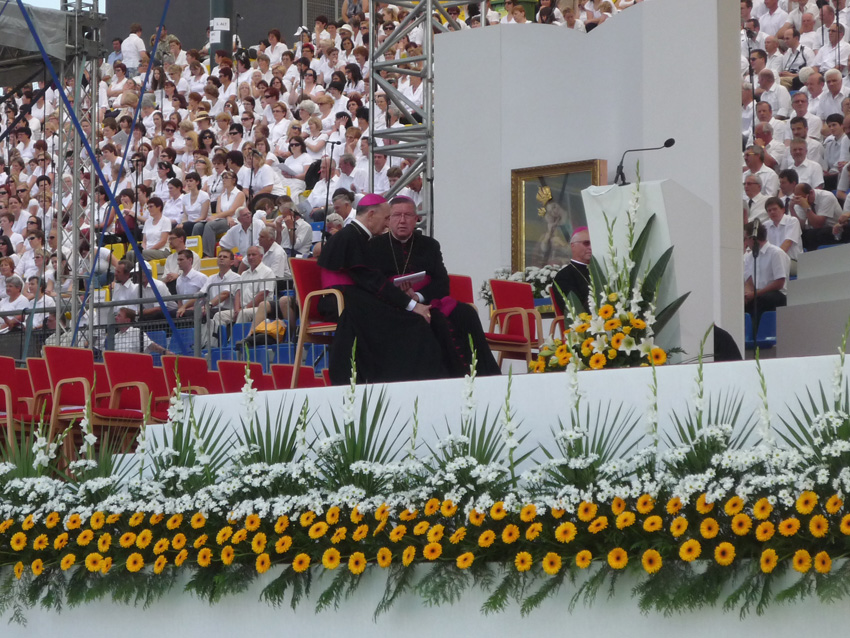
The process begins with an extensive local and Vatican review of a deceased person's life, virtues, and writings. Experts in medicine and theology examine claimed miraculous healings attributed to prayers asking for the candidate's intercession. If the Holy See approves the findings, a celebratory beatification Mass is held, often led by the pope or a papal delegate. During this liturgy, the candidate is declared Blessed. Afterward, designated dioceses, countries, or religious orders may celebrate the Blessed's feast day and ask for their intercession during public worship.
When and where
Beatification does not follow a fixed seasonal date on the calendar. Instead, the ceremony is scheduled individually once the Holy See completes all investigations and gives formal approval. Following the ceremony, the beatified person is assigned a specific local feast day.
Beatification ceremonies may take place at Saint Peter's Basilica in the Vatican or in local dioceses around the world. The resulting public veneration is strictly limited to the particular territories, countries, or religious communities granted permission by the Church.
What Beatification means
To Catholic believers, beatification signifies that a departed soul has entered heaven and shares in divine life. It reassures the community of the power of prayer and intercession. The title Blessed offers an earthly model of Christian holiness and affirms that ordinary lives can achieve exceptional virtue and spiritual closeness to God.


Questions people ask about Beatification
When is Beatification kept?
Beatification is kept on when a candidate for sainthood is declared Blessed by the Holy See.
What is beatification in the Catholic Church?
Beatification is an official act by the Catholic Church recognizing that a deceased believer has entered heaven. It permits limited, regional public veneration and bestows the title of Blessed.
How does beatification differ from canonization?
Canonization is a final decree ordering the universal Church to honor a person as a saint. Beatification is a provisional step that permits local or community veneration rather than universal worship.
What requirements are needed for beatification?
Candidates generally need one scientifically unexplainable miracle, typically a medical healing, confirmed by medical and theological panels. This miracle requirement is waived for martyrs who died for their faith.
Where is a beatified person venerated?
Veneration is confined to specific territories, dioceses, countries, or religious institutes connected to the person, rather than being extended across the entire global Catholic Church.
See also
 Ghost DanceA circle dance ceremony kept by Native American communities to reunite with ancestors and restore peace.
 Sweat lodgeA purification ceremony kept by Indigenous peoples of the Americas using a heated hut and steam.
 Medicine wheelSacred circular stone arrangements built across the plains of North America
 Kol NidreAn Aramaic declaration of vow annulment that opens the Yom Kippur evening service in Jewish synagogues.
Good reading and sources
- Beatification on WikipediaEncyclopedia
- More photos on Wikimedia CommonsPhotos and video
- Wikidata recordOpen data
The facts on this page come from the Wikipedia article "Beatification", written by its contributors and used under the CC BY-SA 4.0 licence, and from its Wikidata record (CC0). EveryParampara rewrote the text in its own words, with AI assistance, and compares every page with the article to make sure no passage is copied. It may be reused under the same CC BY-SA 4.0 licence with a link back.
It may contain mistakes. Traditions differ from one family, village and community to the next, and the people who keep them know them best. If something is wrong, tell us. Last refreshed 2026-10-05.
More from Canada
All the traditions of Canada 🇮🇱 Jerusalem, Israel and 2 moreMezuzahמְזוּזָה (mezuzah)
A parchment scroll with Hebrew verses placed in a case on the doorposts of Jewish homes.Spiritual
🇨🇦 Canada and 1 moreMedicine wheel
Sacred circular stone arrangements built across the plains of North AmericaSpiritual
🇮🇱 Jerusalem, Israel and 2 moreMezuzahמְזוּזָה (mezuzah)
A parchment scroll with Hebrew verses placed in a case on the doorposts of Jewish homes.Spiritual
🇨🇦 Canada and 1 moreMedicine wheel
Sacred circular stone arrangements built across the plains of North AmericaSpiritual
 🇦🇲 Yerevan, Armenia and 6 moreArmenian Genocide Remembrance DayՄեծ Եղեռնի զոհերի հիշատակի օր
An annual day of mourning and remembrance for the victims of the 1915 Armenian Genocide.Spiritual
🇦🇲 Yerevan, Armenia and 6 moreArmenian Genocide Remembrance DayՄեծ Եղեռնի զոհերի հիշատակի օր
An annual day of mourning and remembrance for the victims of the 1915 Armenian Genocide.Spiritual
 🇺🇸 United States and 3 moreFeast of the Ascension
A Christian holy day marking Jesus Christ's bodily ascent into Heaven, kept forty days after Easter.Spiritual
🇺🇸 United States and 3 moreFeast of the Ascension
A Christian holy day marking Jesus Christ's bodily ascent into Heaven, kept forty days after Easter.Spiritual
The same idea elsewhere
Remembering the ancestors compared 🇬🇪 Tbilisi, Georgia and 4 moreGeorgian polyphonic singing
Several voices at once, sung without instruments at Georgian feasts and weddingsPerformance
🇬🇪 Tbilisi, Georgia and 4 moreGeorgian polyphonic singing
Several voices at once, sung without instruments at Georgian feasts and weddingsPerformance
 🇮🇳 India and 4 moreWater lantern
Small lamps floated on water to honour the dead and ask for good fortuneFestival
🇮🇳 India and 4 moreWater lantern
Small lamps floated on water to honour the dead and ask for good fortuneFestival
 🇮🇪 Ireland and 2 moreJack-o'-lantern
A carved pumpkin lantern lit with a candle to brighten and protect Halloween nightsFolklore
🇮🇪 Ireland and 2 moreJack-o'-lantern
A carved pumpkin lantern lit with a candle to brighten and protect Halloween nightsFolklore
 🇨🇬 Republic of the CongoNkisi
Spiritual vessels and figures crafted to channel ancestral power, healing and justiceSpiritual
🇨🇬 Republic of the CongoNkisi
Spiritual vessels and figures crafted to channel ancestral power, healing and justiceSpiritual