Seasons, harvest and the calendarEuropeChristianPagan and ancient
Buergbrennen
A bonfire festival marking the end of winter on the first Sunday of Lent in Luxembourg

Buergbrennen is a traditional bonfire festival celebrated across Luxembourg and nearby border regions on the first Sunday of Lent. Communities gather around towering wooden pyres, often built on hillsides, to cast off the winter cold and welcome the arrival of spring.
When is Buergbrennen kept?
Buergbrennen is kept on annually on the first Sunday of Lent.
Buergbrennen is a seasonal festival observed across Luxembourg and bordering regions on the first Sunday in Lent. Towns and villages construct immense bonfires on hilltops to drive away the cold and celebrate the onset of spring. Local groups gather discarded wood and Christmas trees, build tall pyres topped with crosses, and gather around the flames for an evening of community warmth, food, and torchlight.
Origins and history
Bonfire customs originally grew out of pagan rites connected with the spring equinox in late March. Over time, the timing shifted to align with the Christian calendar on the first Sunday of Lent. Early fires were simple piles of straw and timber, later developing a tall central post with a crosspiece that resembled a cross. The celebration faded during the nineteenth century because organizing it became too expensive for individuals. In the twentieth century, particularly during the 1930s, municipal leaders in Luxembourg revived the festival, turning it into a widespread local custom once more.
How it is kept
Today, local town councils or youth associations handle the preparation. Organizers collect wood, including leftover Christmas trees, from residents to assemble the fire. They usually build the pyre on a nearby hill, covering it in hay so the flames catch quickly. A tall wooden cross typically stands above the centre of the structure. When evening comes, people sometimes walk in torchlight processions toward the site. Spectators gather around the fire, food and drink stalls serve refreshments, and local firefighters stay on duty to keep the event safe.
Role of newlyweds
In earlier times, village men were the primary participants, while women took part only on rare occasions. The most recently wed man held the honour of setting the pyre alight, but this privilege came with heavy duties. Newly married men had to collect the wood, pay helpers for their labour, and host the participants with hospitality at home or in village taverns. While the financial burden contributed to the custom declining in the nineteenth century, a version of the tradition survives: in certain communities today, the newest married couple still lights the fire.
How Buergbrennen is kept
Preparations begin with youth clubs or town authorities gathering timber and old Christmas trees from local homes. The wood is built into a massive pyre on a high hill, wrapped with hay for fast burning, and crowned with a large cross. In the evening, residents often march in a torchlight parade up to the hill. The most recently married couple in the area is often invited to light the bonfire. Crowds watch the blaze, buy refreshments from food stalls, and celebrate while firefighters watch over the flames.
When and where
The festival takes place every year on the first Sunday of Lent. This date in the Christian calendar was adopted to approximate ancient spring equinox celebrations held around 21 March.
Buergbrennen is held across Luxembourg, where roughly three quarters of villages celebrate it. It is also kept to a lesser degree in neighbouring areas of Germany, Belgium, and France.
What Buergbrennen means
The custom signifies the end of winter and the awakening of spring. Rooted in ancient seasonal fires marking the spring equinox, the blaze acts as a communal farewell to cold months. The tall wooden cross built into the pyre blends older pagan equinox traditions with Christian symbolism from the calendar of Lent.
Questions people ask about Buergbrennen
When is Buergbrennen kept?
Buergbrennen is kept on annually on the first Sunday of Lent.
What is Buergbrennen?
Buergbrennen is a traditional bonfire celebration held to mark the departure of winter and welcome the spring season. Large bonfires are lit on hillsides, accompanied by community gatherings and torchlight walks.
Who lights the bonfire?
Historically, the most recently married man in the village was given the honour of lighting the fire. Today, in some areas, the most recently married couple lights the pyre.
How is the pyre constructed?
Organizers build the pyre from collected wood and discarded Christmas trees, cover it with hay so it ignites rapidly, and erect a central pillar with a crosspiece resembling a cross.
See also
 May DayA traditional European festival welcoming summer with greenery, dances and bonfires
 Egg rollingA spring game of rolling decorated hard-boiled eggs down hills or along lawns
 Mummers' playA comic folk drama of staged combat, death, and revival by an eccentric doctor
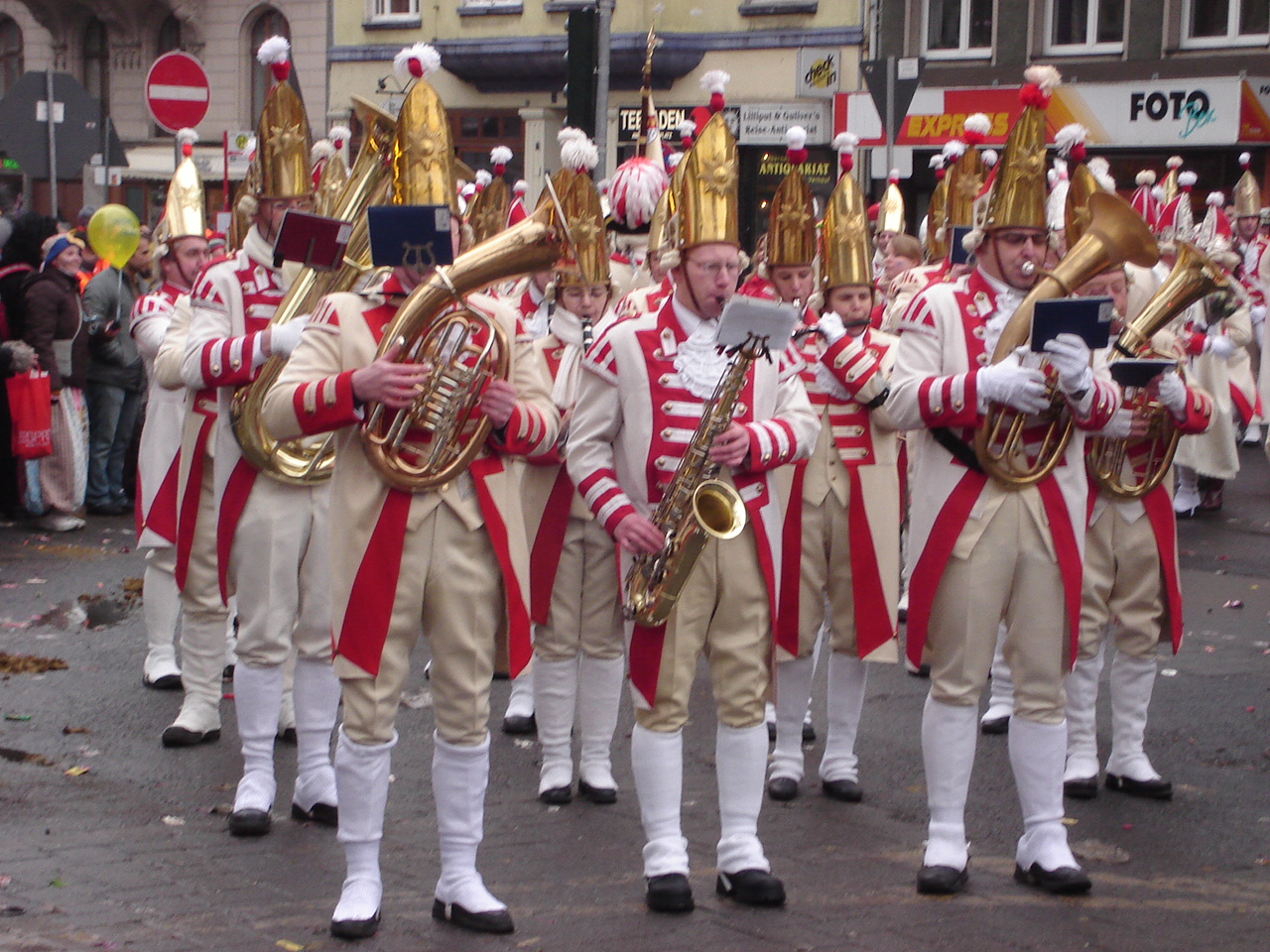 German CarnivalPre-Lenten street parades, costume balls and local revels across German-speaking lands.
Good reading and sources
- Buergbrennen on WikipediaEncyclopedia
- More photos on Wikimedia CommonsPhotos and video
- Wikidata recordOpen data
The facts on this page come from the Wikipedia article "Buergbrennen", written by its contributors and used under the CC BY-SA 4.0 licence, and from its Wikidata record (CC0). EveryParampara rewrote the text in its own words, with AI assistance, and compares every page with the article to make sure no passage is copied. It may be reused under the same CC BY-SA 4.0 licence with a link back.
It may contain mistakes. Traditions differ from one family, village and community to the next, and the people who keep them know them best. If something is wrong, tell us. Last refreshed 2026-10-04.
More from Luxembourg
All the traditions of Luxembourg 🇫🇷 France and 5 moreCandlemas
A Christian feast of candle blessings marking the end of the Christmas seasonSpiritual
🇫🇷 France and 5 moreCandlemas
A Christian feast of candle blessings marking the end of the Christmas seasonSpiritual
 🇪🇸 Santiago de Compostela, Spain and 7 moreCamino de SantiagoEl Camino de Santiago
A Christian walking pilgrimage across Europe to the shrine of Saint James in SpainSpiritual
🇪🇸 Santiago de Compostela, Spain and 7 moreCamino de SantiagoEl Camino de Santiago
A Christian walking pilgrimage across Europe to the shrine of Saint James in SpainSpiritual
 🇱🇺 Nospelt, LuxembourgEmaischen
An Easter Monday market in Luxembourg known for small bird-shaped clay whistlesFestival
🇱🇺 Nospelt, LuxembourgEmaischen
An Easter Monday market in Luxembourg known for small bird-shaped clay whistlesFestival
 🇱🇺 Echternach, LuxembourgDancing procession of EchternachIechternacher Sprangprëssioun
A Roman Catholic hopping pilgrimage honouring Saint Willibrord in eastern LuxembourgSpiritual
🇱🇺 Echternach, LuxembourgDancing procession of EchternachIechternacher Sprangprëssioun
A Roman Catholic hopping pilgrimage honouring Saint Willibrord in eastern LuxembourgSpiritual
The same idea elsewhere
Spring and renewal compared 🇺🇸 United States and 5 moreMother's Day
A worldwide annual celebration dedicated to mothers, maternal bonds and family careHome
🇺🇸 United States and 5 moreMother's Day
A worldwide annual celebration dedicated to mothers, maternal bonds and family careHome
 🇮🇷 Iran and 7 moreNowruzنوروز
The Iranian new year at the March equinox, kept with fire, greenery and picnicsSeasonal
🇮🇷 Iran and 7 moreNowruzنوروز
The Iranian new year at the March equinox, kept with fire, greenery and picnicsSeasonal
 🇮🇱 Jerusalem, IsraelPassoverפסח
A Jewish spring festival celebrating freedom from slavery with ritual mealsSpiritual · Dinner
🇮🇱 Jerusalem, IsraelPassoverפסח
A Jewish spring festival celebrating freedom from slavery with ritual mealsSpiritual · Dinner
 🇮🇳 Mathura, India and 5 moreHoliहोली (Hindi)
A spring festival of colours and bonfires that marks the end of winter and the triumph of good over evil.Festival
🇮🇳 Mathura, India and 5 moreHoliहोली (Hindi)
A spring festival of colours and bonfires that marks the end of winter and the triumph of good over evil.Festival