Festivals and celebrationsEuropeChristian
Carnival of Binche
In its own language: Carnaval de Binche
A Belgian pre-Lenten festival known for masked dancers and orange tossing

The Carnival of Binche is a centuries-old Belgian festival celebrated in the town of Binche in the days leading up to Ash Wednesday. Local men take on the role of Gilles, dressing in traditional wax masks, ostrich feather hats, and wooden clogs to parade through the streets and throw oranges for good fortune.
When is Carnival of Binche marked?
Carnival of Binche is kept as part of Shrove Tuesday and Mardi Gras, which is on Tuesday, 9 February 2027.
The Carnival of Binche is an annual pre-Lenten celebration held in the Walloon town of Binche, Belgium. Taking place during the final three days before Ash Wednesday, the festival unites the local community through music, street dances, and elaborate costumes. Its central figures are the Gilles, hundreds of masked performers who march through town, ward off evil spirits with wooden sticks, and toss fresh oranges to onlookers.
Origins and history
Records of festivities in Binche go back to 1394, when events were organized to mark the start of the Christian season of Lent. The custom endured through the centuries despite changing political regimes. When mask-wearing was outlawed during Napoleonic rule, the Gilles were first recorded in 1795 as rebellious masked figures. In the modern era, the celebration has gained international recognition, earning a place on UNESCO's list of oral and intangible human heritage in 2003, followed by designation as heritage of the French Community of Belgium.
The Gilles and their attire
Up to one thousand local men, ranging from young boys to elders, participate as Gilles on Shrove Tuesday. Becoming a Gille is a celebrated local honour. Their attire includes wooden clogs, wax masks, and padded suits displaying Belgium's national colours of red, yellow, and black. Later in the day, the performers put on towering headdresses made from white ostrich feathers, which are often rented at high expense. Carrying wicker baskets loaded with fruit, they make their way across the streets while tossing oranges into the surrounding crowds.
How the festival unfolds
Preparations begin up to seven weeks ahead of time, with musical gatherings, rehearsals, and marches held on successive Sundays. The celebration culminates in the three days before Ash Wednesday. On the Sunday before Lent, many town residents dress up in elaborate costumes. The climax occurs on Shrove Tuesday, when the Gilles assemble at daybreak. Guided by the rhythm of beating drums, they dance through the centre of Binche, using sticks to drive away evil spirits before parading through the streets with their gifts of oranges until nightfall.
The gift of oranges
The tossing of oranges during the Tuesday procession is among the most famous elements of the carnival. The fruit serves as a token of goodwill and luck from the Gilles to the spectators who gather along the route. Because the oranges represent gifts, returning them or throwing them back at the performers is considered an insult. The throws can be forceful, and property owners in the town centre frequently cover or seal their windows to guard against accidental damage during the lively parade.
How Carnival of Binche is kept
Celebrations build over seven weeks of Sunday rehearsals, marches, and musical events across Binche. On the Sunday before Ash Wednesday, local residents take to the streets in fancy dress. The festival peaks on Shrove Tuesday, when hundreds of male performers known as Gilles gather at dawn. Dressed in wooden clogs and wax masks, they dance to drumbeats and brandish sticks to dispel malevolent spirits. Later in the day, they put on tall ostrich feather headdresses and parade through the streets, distributing oranges from baskets to the gathered crowds.
When and where
The carnival takes place every year during the three days leading into Ash Wednesday, concluding on Shrove Tuesday. Preludes and street performances begin up to seven weeks before the main festivities on the preceding Sundays.
The festival is held throughout the historic town of Binche, located in the Hainaut province of Wallonia, Belgium. Celebrations focus around the town centre, where performers gather in the streets and public squares.
What Carnival of Binche means
The carnival signals the threshold of Lent, blending festive release with protective folklore. Gilles brandish wooden sticks and dance to rhythmic drumbeats to frighten off evil spirits. The oranges they toss into the crowds represent blessings of good luck, offered as generous gifts to spectators rather than items to be thrown back.


Days Carnival of Binche is marked
Questions people ask about Carnival of Binche
When is Carnival of Binche marked?
Carnival of Binche is kept as part of Shrove Tuesday and Mardi Gras, which is on Tuesday, 9 February 2027.
What is the Carnival of Binche?
It is a traditional Belgian festival celebrated before Lent, featuring music, dancing, and masked performers known as Gilles who throw oranges to spectators.
Where and when does the carnival take place?
The carnival is held in the town of Binche in Hainaut, Belgium. It takes place across the Sunday, Monday, and Shrove Tuesday immediately before Ash Wednesday.
Who are the Gilles?
The Gilles are male performers from Binche, aged three to sixty, who wear wax masks, wooden shoes, padded suits in national colours, and tall ostrich feather headdresses on Shrove Tuesday.
Why do the Gilles throw oranges?
Oranges are distributed as gifts of good fortune to onlookers. Throwing an orange back at a Gille is viewed as a serious insult.
See also
 Mardi GrasA festive day of parades and rich foods marking the final celebration before the Christian fasting season of Lent begins
 St. Martin's DayA November feast of lantern walks, bonfires, roast goose and new wine
 RosenmontagThe peak of German carnival, celebrated with satirical street parades and sweets
 CandlemasA Christian feast of candle blessings marking the end of the Christmas season
Good reading and sources
- Carnival of Binche on WikipediaEncyclopedia
- More photos on Wikimedia CommonsPhotos and video
- Wikidata recordOpen data
The facts on this page come from the Wikipedia article "Carnival of Binche", written by its contributors and used under the CC BY-SA 4.0 licence, and from its Wikidata record (CC0). EveryParampara rewrote the text in its own words, with AI assistance, and compares every page with the article to make sure no passage is copied. It may be reused under the same CC BY-SA 4.0 licence with a link back.
It may contain mistakes. Traditions differ from one family, village and community to the next, and the people who keep them know them best. If something is wrong, tell us. Last refreshed 2026-10-04.
More from Belgium
All the traditions of Belgium
🇺🇸 New Orleans, United States and 5 moreMardi Gras
A festive day of parades and rich foods marking the final celebration before the Christian fasting season of Lent beginsFestival
🇩🇪 Cologne, Germany and 3 moreRosenmontag
The peak of German carnival, celebrated with satirical street parades and sweetsFestival
 🇩🇪 Germany and 5 moreMaypole
A tall wooden pole, garlanded and danced around, raised at May Day, Whitsun or MidsummerFestival
🇩🇪 Germany and 5 moreMaypole
A tall wooden pole, garlanded and danced around, raised at May Day, Whitsun or MidsummerFestival
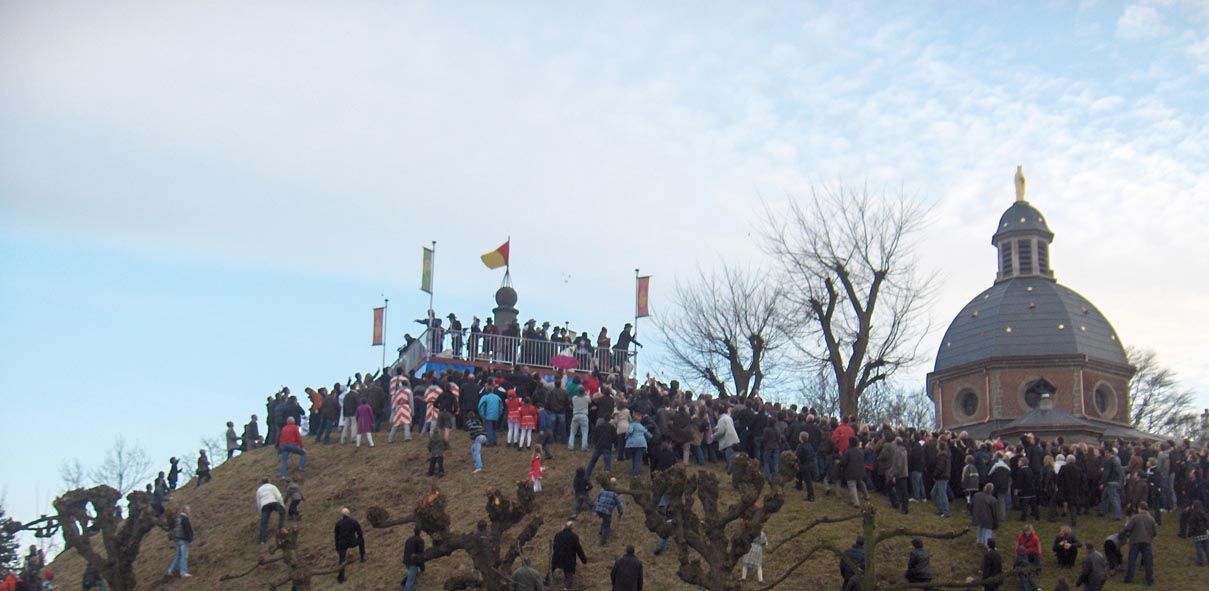 🇧🇪 Geraardsbergen, BelgiumKrakelingen and Tonnekensbrand
A bread throw and a hilltop bonfire that close the winter in GeraardsbergenFestival
🇧🇪 Geraardsbergen, BelgiumKrakelingen and Tonnekensbrand
A bread throw and a hilltop bonfire that close the winter in GeraardsbergenFestival
The same idea elsewhere
Fasting and feasting compared 🇺🇸 United States and 1 moreSaint Patrick's Day in the United States
An annual celebration of Irish heritage across America with parades, feasts and green dyeFestival · Dinner
🇺🇸 United States and 1 moreSaint Patrick's Day in the United States
An annual celebration of Irish heritage across America with parades, feasts and green dyeFestival · Dinner
 🇮🇳 Ayodhya, India and 5 moreRama Navamiराम नवमी
A Hindu spring festival marking the birth of Rama with prayer, fasting and processionsFestival
🇮🇳 Ayodhya, India and 5 moreRama Navamiराम नवमी
A Hindu spring festival marking the birth of Rama with prayer, fasting and processionsFestival
 🇨🇴 Barranquilla, ColombiaBarranquilla CarnivalCarnaval de Barranquilla
A four-day street festival of music, masquerade and dance in coastal ColombiaFestival
🇨🇴 Barranquilla, ColombiaBarranquilla CarnivalCarnaval de Barranquilla
A four-day street festival of music, masquerade and dance in coastal ColombiaFestival
 🇮🇳 IndiaMahavir Janma Kalyanak
A Jain festival of temple worship, street processions and acts of charitySpiritual
🇮🇳 IndiaMahavir Janma Kalyanak
A Jain festival of temple worship, street processions and acts of charitySpiritual