Festivals and celebrationsEurope
Maypole
A tall wooden pole, garlanded and danced around, raised at May Day, Whitsun or Midsummer

A tall wooden pole, often hung with garlands and ribbons, is set up by villagers and danced around. The custom is found mainly in Germanic Europe, from Germany and Austria to Belgium and Hungary, and among European communities in the Americas.
When is Maypole marked?
Maypole is kept as part of May Day and Labour Day, which is on Saturday, 1 May 2027.
Long before the first of May, villages in Germanic Europe choose a tree or trunk, strip it, decorate it and store it. On the day itself they raise it in a square or green, and people dance around it. Nobody agrees on where the custom began. What everyone agrees on is that the pole marks the return of warmth, and that it is worth guarding from the next village.
What a maypole is
A maypole is a tall pole of wood, put up for a folk festival and usually danced around. Some are kept standing all year and brought out for the occasion; others are cut, raised and taken down again within days. The date varies. Many places raise the pole on the first of May, others at Whitsun, which is Pentecost, and some countries wait for Midsummer, the days between 20 and 26 June. It is found above all in Germanic Europe and in lands that region has shaped, and European communities in the Americas keep it too.
Origins and debate
Where the maypole came from is not known. Some researchers link it to the pagan religion practised across Germanic Europe in ancient times, before the region became Christian, and think the custom survived with its old meaning lost. One suggestion is that the pole stands for the world axis; another ties it to sacred trees and wooden pillars once honoured in those lands, such as Thor's Oak and the Irminsul. Others disagree. The historian Ronald Hutton says nothing supports the idea that the pole was understood that way. Folklore writers have argued over its meaning for centuries without settling the question.
Germany and Austria
In German-speaking places the pole is called a Maibaum, and in Germany and Austria it has been documented since the sixteenth century. In Baden and Swabia the trunk usually goes up on 1 May. In East Frisia and some neighbouring districts the raising happens the previous evening. Villages in Baden-Württemberg, Bavaria and Austria hold a ceremony on the village green, with a procession, a brass band and onlookers, and the pole is lifted in the afternoon or evening with long poles, and these days sometimes a tractor or crane. In the Bavarian Alps the raising is a high point of the year. Some trunks are painted white and blue, the Bavarian colours, and many carry emblems of local trades.
Belgium's Meyboom
In Dutch-speaking Belgium the pole is the Meiboom or Meyboom. Hasselt raises its own on 30 April. Brussels and Leuven both hold to 9 August and must have the tree standing before five in the afternoon. The Brussels custom grew out of a quarrel between the two cities in 1213, when a brawl ended in Brussels winning. Almost a century later John II, Duke of Brabant, gave Brussels the lasting right to put up the Meyboom each year on that date and at that hour. Leuven claimed the tree in 1974 after a theft, and the two cities have kept up a friendly contest over whose Meyboom is the real one.
Courting poles
In Hungary the pole is a májusfa, and it belongs to courtship. A suitor cut a tall tree in secret, stripped the bark, left the leaves at the top, and set it in the garden of the young woman he hoped to marry, sometimes with his name carved on it. Families compared lengths the next morning and tried to guess the giver. On May's last Sunday the pole came down in the májusfa-kitáncolás, a dance at its end, and a wagon wheel called the máj-kerék was fixed to the top. In the Rhineland, unmarried men put small birch trees outside their sweethearts' doors.
How Maypole is kept
In the German-speaking areas a village chooses a trunk well ahead of time, decorates it and hides it in a barn, taking turns to guard it because young men from other villages try to steal it. The village that loses its pole must later treat the thieves to beer and a party to get it back. On the day, a procession with a brass band reaches the square, and the pole is lifted by hand, with ropes, or by machine. There is dancing, often a May dance in the evening, and the tree may stand all year or come down at the end of May.
When and where
The date depends on the place. Many poles go up on 1 May, some on the evening before, and others at Whitsun, which is Pentecost. In a few countries the custom waits for Midsummer, between 20 and 26 June. Hasselt raises its Meiboom on 30 April, while Brussels and Leuven hold to 9 August, before five in the afternoon. In Hungary the poles come down on May's last Sunday.
The custom belongs to Germanic Europe and to neighbouring lands that region has shaped. It is strongest in Germany and Austria, above all in the villages of the Bavarian Alps, and it is also kept in Belgium, Hungary and parts of Italy. Older records place it in the British Isles from the fourteenth century, and it travelled with European settlers to communities in the Americas.
What Maypole means
Several readings of the pole have been offered. Carl Wilhelm von Sydow, a Swedish scholar, described maypoles as plain signs that the warm season had returned, and the historian Ronald Hutton agrees. Some writers have proposed a phallic meaning, which Hutton rejects, noting that poles were not carved to look that way. The anthropologist Mircea Eliade placed the maypole alongside other rejoicing at summer's return and new growth, close to the May Day garlands of Britain and Ireland.


Days Maypole is marked
Questions people ask about Maypole
When is Maypole marked?
Maypole is kept as part of May Day and Labour Day, which is on Saturday, 1 May 2027.
What exactly is a maypole?
It is a tall wooden pole put up for a folk festival, usually with garlands or ribbons, and people dance around it. Some poles stay in place all year and are used only for the festival; others are raised for a few days and then taken down again.
Where is the custom kept?
Mainly in Germanic Europe and the lands it has shaped. Germany and Austria have the strongest village traditions, and the pole is also raised in Belgium, Hungary and parts of Italy. European communities in the Americas keep it too.
Was the maypole a pagan symbol?
Some researchers have guessed that it carried meaning in the pagan religion of Germanic Europe before Christianisation, but there is no proof. The historian Ronald Hutton says the evidence does not support the idea. Others read the pole as a simple sign that warm weather had returned.
Why do villages guard the pole?
In Germany and Austria, young men from one village try to steal the Maibaum from another, so the owners take turns watching it. If the theft succeeds, the village that lost the pole must invite the thieves to beer and a celebration to get it back.
See also
 Christmas treeA decorated evergreen or artificial tree placed indoors to mark the Christmas season.
 April Fools' DayAn annual day of lighthearted pranks, hoaxes and teasing kept on the first of AprilMaifestA traditional German celebration marking the arrival of spring with decorated maypoles
 Chelsea Flower ShowA five-day May horticultural festival held in London by the Royal Horticultural Society
Good reading and sources
- Maypole on WikipediaEncyclopedia
- More photos on Wikimedia CommonsPhotos and video
- Wikidata recordOpen data
The facts on this page come from the Wikipedia article "Maypole", written by its contributors and used under the CC BY-SA 4.0 licence, and from its Wikidata record (CC0). EveryParampara rewrote the text in its own words, with AI assistance, and compares every page with the article to make sure no passage is copied. It may be reused under the same CC BY-SA 4.0 licence with a link back.
It may contain mistakes. Traditions differ from one family, village and community to the next, and the people who keep them know them best. If something is wrong, tell us. Last refreshed 2026-10-05.
More from Germany
All the traditions of Germany
🇩🇪 Germany and 5 moreChristmas tree
A decorated evergreen or artificial tree placed indoors to mark the Christmas season.Festival
🇩🇪 Germany and 1 moreMaifest
A traditional German celebration marking the arrival of spring with decorated maypolesFestival
 🇵🇭 Cebu City, Philippines and 4 moreSinulog Festival
An annual Philippine dance festival and Catholic devotion honouring the Santo NiñoFestival
🇵🇭 Cebu City, Philippines and 4 moreSinulog Festival
An annual Philippine dance festival and Catholic devotion honouring the Santo NiñoFestival
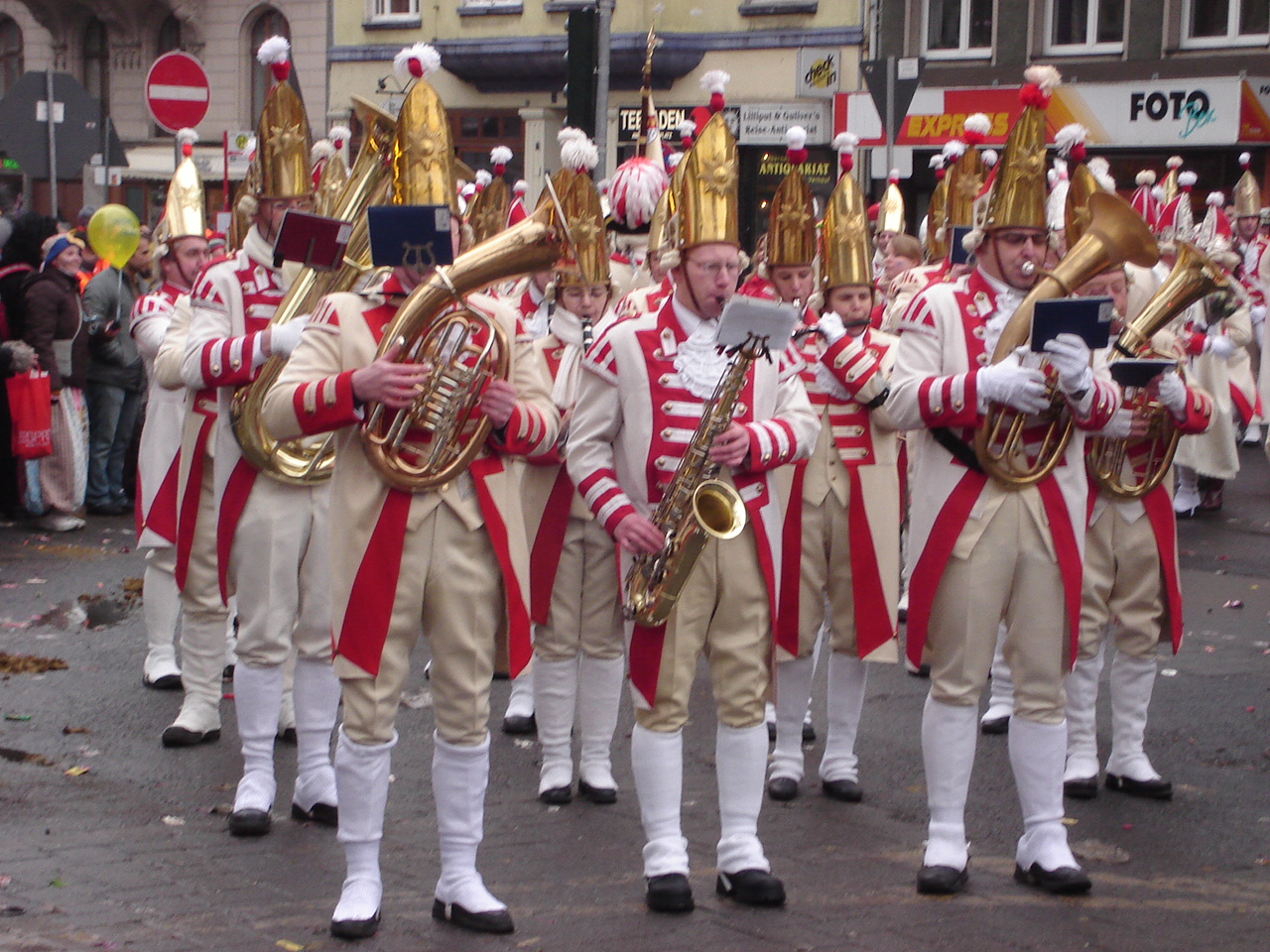 🇩🇪 Cologne, Germany and 2 moreGerman CarnivalKarneval
Pre-Lenten street parades, costume balls and local revels across German-speaking lands.Festival · Feasts and festival meals
🇩🇪 Cologne, Germany and 2 moreGerman CarnivalKarneval
Pre-Lenten street parades, costume balls and local revels across German-speaking lands.Festival · Feasts and festival meals
The same idea elsewhere
Spring and renewal compared 🇰🇷 Jeju, South KoreaGut굿
Sacred rites of song, dance, and spirit communion performed by Korean shamansSpiritual
🇰🇷 Jeju, South KoreaGut굿
Sacred rites of song, dance, and spirit communion performed by Korean shamansSpiritual
 🇯🇵 JapanChildren's Dayこどもの日
A Japanese holiday on May fifth celebrating the happiness and growth of childrenFestival
🇯🇵 JapanChildren's Dayこどもの日
A Japanese holiday on May fifth celebrating the happiness and growth of childrenFestival
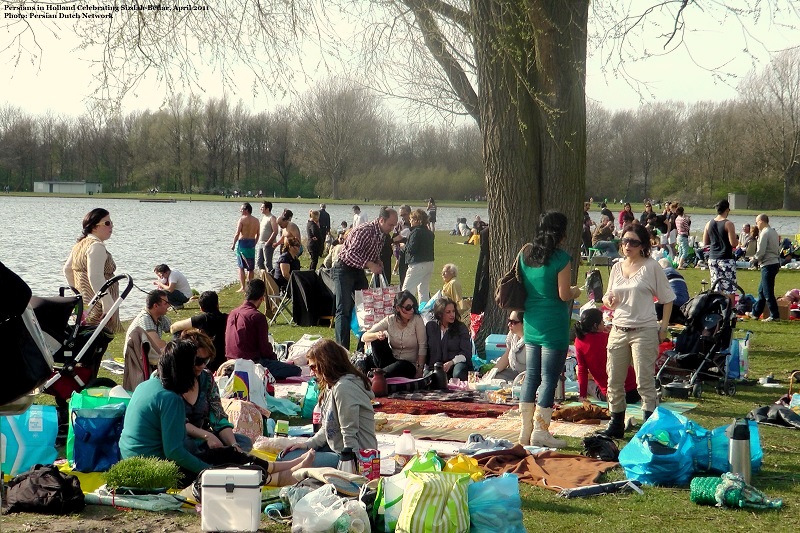 🇮🇷 Iran and 4 moreSizdah Bedarسیزدهبدر
An open-air picnic holiday concluding the Iranian New Year celebrationsFestival
🇮🇷 Iran and 4 moreSizdah Bedarسیزدهبدر
An open-air picnic holiday concluding the Iranian New Year celebrationsFestival
 🇯🇵 Kyoto, JapanAoi Matsuri葵祭
A classical Kyoto festival with an imperial procession and ancient shrine ritualsFestival
🇯🇵 Kyoto, JapanAoi Matsuri葵祭
A classical Kyoto festival with an imperial procession and ancient shrine ritualsFestival