Chikankari
In its own language: چِکن کاری / चिकन की कढ़ाई / चिकनकारी
Delicate hand embroidery from Lucknow, India, featuring white-on-white floral patterns and intricate shadow-work stitche

Chikankari is a traditional embroidery style from Lucknow, India. Artisans use fine threads to stitch delicate patterns onto light fabrics like muslin and cotton. The craft is celebrated for its white-on-white designs and shadow effects, preserving centuries-old techniques passed down through generations.
When is Chikankari kept?
Chikankari is kept on year-round.
Chikankari is a revered embroidery craft from Lucknow, India. Skilled artisans stitch intricate floral and geometric patterns onto light fabrics using fine threads. The style is famous for its subtle white-on-white designs and shadow-work effects, reflecting a blend of Persian artistry and local skill that has defined Lucknow's textile heritage for centuries.
Origins and history
Early records mention flowered muslins in India dating back to the third century BC, yet these lacked the defining traits of this craft. The style likely evolved from white-on-white embroidery introduced by Persian nobles during the Mughal period. Some accounts credit Empress Noor Jahan with bringing the technique to India, while folk tales suggest it began when a traveler shared the skill in exchange for water. Over time, it became a signature art of Lucknow.
Technique and stitches
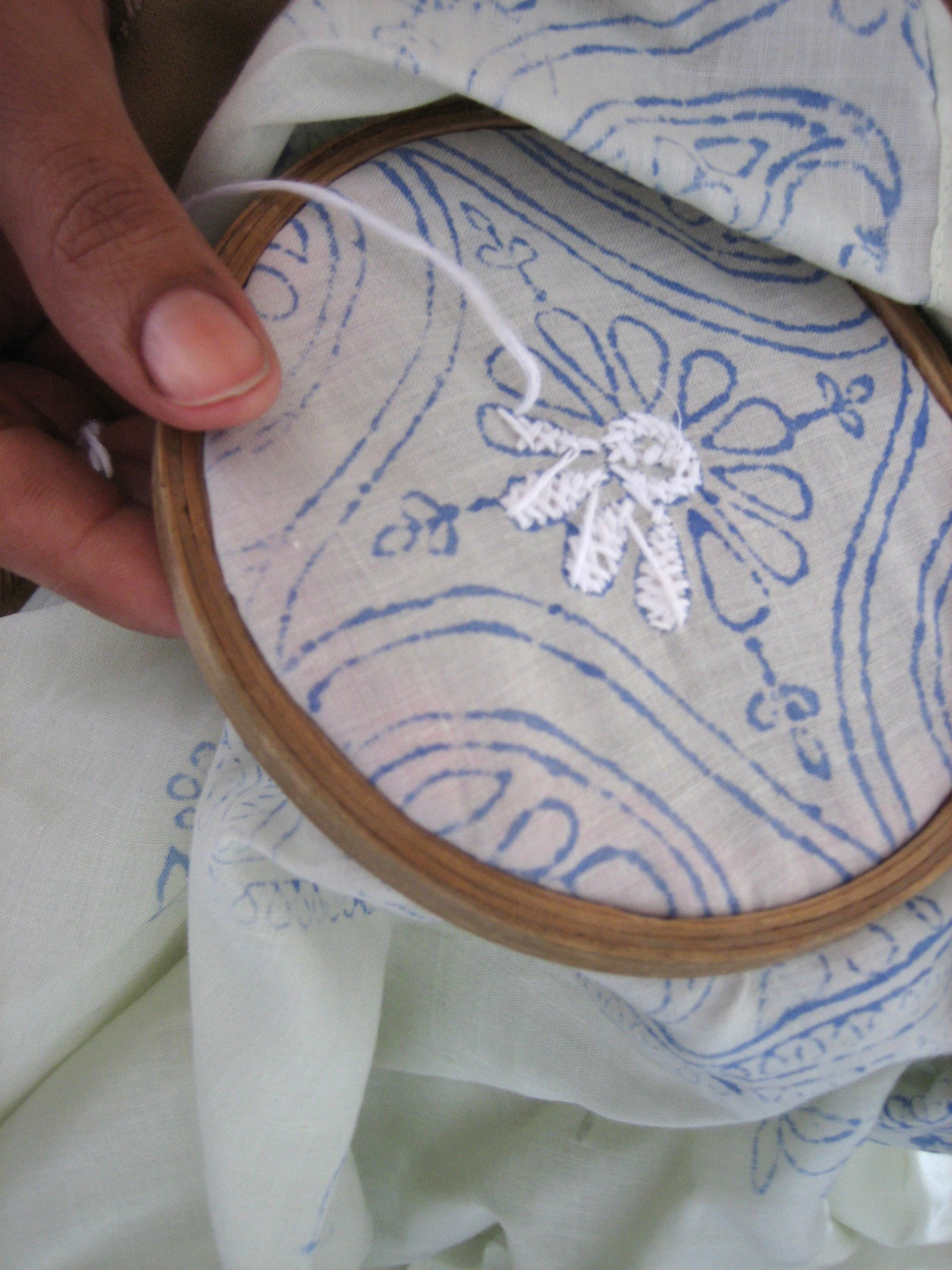
The process starts with block-printing a design onto the ground fabric. Artisans then hand-stitch the pattern using more than thirty specialized stitches. Techniques include tepchi for outlining, bakhiaya for shadow work done from the reverse side, and murri for raised flower centers. A distinctive method creates jali, or lace-like mesh, by separating warp and weft threads without cutting them. Once complete, the piece is washed to remove the initial print, leaving only the embroidery visible.
Fabrics and embellishments
This embroidery requires light, sheer materials such as cotton, muslin, georgette, silk, or organza so the needle can pass through easily and the reverse stitches show through. While traditionally executed in white thread on pale backgrounds, modern versions now incorporate colored and silk threads to suit current fashion. Additional decorations like mukaish, kamdani, badla, sequins, beads, and mirrors are sometimes added to enhance the visual richness of the finished garment.
Recognition and culture
In December 2008, the Geographical Indication Registry granted official status to recognize Lucknow as the exclusive home of this craft. The tradition has appeared in popular media, such as the 1986 film Anjuman, which highlighted the lives of workers in the industry. Actor Farooque Shaikh developed a deep appreciation for the fabric, wearing it throughout his life and becoming an informal ambassador for Lucknowi chikan.
How Chikankari is kept
Artisans begin by block-printing a design onto light fabric like muslin or cotton. They then hand-stitch the pattern using over thirty distinct stitches, such as tepchi, bakhiya, and murri. Some stitches create a shadow effect by working from the reverse side, while others form open lace-like mesh called jali. After stitching, the piece is washed to remove the printed marks, revealing the final embroidered design.
When and where
This craft is produced throughout the year, with activity levels rising to meet seasonal fashion demands and market requirements for new collections, ensuring steady supply for buyers.
Production centers in Lucknow, India, where the Chowk market serves as a primary hub for selling finished goods. Manufacturing also spreads to nearby districts surrounding the city.
What Chikankari means
The craft represents the fusion of Persian elegance and Indian craftsmanship. The white-on-white aesthetic symbolizes purity and subtlety, while the intricate shadow-work highlights the artisan's skill in creating depth without heavy ornamentation.

Questions people ask about Chikankari
When is Chikankari kept?
Chikankari is kept on year-round.
What is Chikankari?
Chikankari is a traditional hand embroidery style from Lucknow, India, known for its delicate floral patterns and white-on-white designs stitched onto light fabrics.
Where is Chikankari made?
It is primarily crafted in Lucknow, India, with the Chowk area being a major center for production and sale of these embroidered textiles.
What makes Chikankari unique?
The craft is distinguished by its use of over thirty specific stitches, including shadow-work and jali techniques, which create subtle textures and open mesh patterns on the fabric.
See also
 PhulkariGeometric and floral threadwork embroidered by Punjabi women on handwoven cotton.
 South Asian truck artThe craft of painting and adorning cargo trucks and buses across India and Pakistan.
 Kolhapuri chappalHandcrafted braided leather slip-on sandals from western India
 Persian gardenAn ancient tradition of creating walled, geometric sanctuaries of shade and flowing water
Good reading and sources
- Chikankari on WikipediaEncyclopedia
- More photos on Wikimedia CommonsPhotos and video
- Wikidata recordOpen data
The facts on this page come from the Wikipedia article "Chikankari", written by its contributors and used under the CC BY-SA 4.0 licence, and from its Wikidata record (CC0). EveryParampara rewrote the text in its own words, with AI assistance, and compares every page with the article to make sure no passage is copied. It may be reused under the same CC BY-SA 4.0 licence with a link back.
It may contain mistakes. Traditions differ from one family, village and community to the next, and the people who keep them know them best. If something is wrong, tell us. Last refreshed 2026-10-05.
More from India
All the traditions of India
🇮🇳 Kolhapur, IndiaKolhapuri chappal
Handcrafted braided leather slip-on sandals from western IndiaCraft
 🇮🇩 Bali, Indonesia and 5 moreIkat
A resist-dyeing craft from Southeast Asia, where yarns are tied and dyed before weavingCraft
🇵🇰 Karachi, Pakistan and 2 moreSouth Asian truck art
The craft of painting and adorning cargo trucks and buses across India and Pakistan.Craft
🇮🇳 India and 1 morePhulkariਫੁਲਕਾਰੀ
Geometric and floral threadwork embroidered by Punjabi women on handwoven cotton.Craft
🇮🇩 Bali, Indonesia and 5 moreIkat
A resist-dyeing craft from Southeast Asia, where yarns are tied and dyed before weavingCraft
🇵🇰 Karachi, Pakistan and 2 moreSouth Asian truck art
The craft of painting and adorning cargo trucks and buses across India and Pakistan.Craft
🇮🇳 India and 1 morePhulkariਫੁਲਕਾਰੀ
Geometric and floral threadwork embroidered by Punjabi women on handwoven cotton.Craft
The same idea elsewhere
All of this kind 🇮🇷 Shiraz, Iran and 1 moreKhatamخاتم
A Persian inlay craft that builds geometric patterns from thousands of tiny cut piecesCraft
🇮🇷 Shiraz, Iran and 1 moreKhatamخاتم
A Persian inlay craft that builds geometric patterns from thousands of tiny cut piecesCraft
 🇮🇪 Galway, Ireland and 1 moreBrigid's crossCros Bhríde
A cross of woven rushes or straw, made for Saint Brigid's Day on the first of FebruaryCraft
🇮🇪 Galway, Ireland and 1 moreBrigid's crossCros Bhríde
A cross of woven rushes or straw, made for Saint Brigid's Day on the first of FebruaryCraft
 🇦🇺 AustraliaBark painting
Ochre pictures on flattened tree bark, an Aboriginal art form of northern AustraliaCraft
🇦🇺 AustraliaBark painting
Ochre pictures on flattened tree bark, an Aboriginal art form of northern AustraliaCraft
 🇺🇸 United States and 1 moreDreamcatcherᐊᓴᐱᑫᔒᓐᐦ (asabikeshiinh)
A hand-woven hoop from Anishinaabe tradition, hung above a cradle to protect a childCraft
🇺🇸 United States and 1 moreDreamcatcherᐊᓴᐱᑫᔒᓐᐦ (asabikeshiinh)
A hand-woven hoop from Anishinaabe tradition, hung above a cradle to protect a childCraft