Crafts and makingOceaniaIndigenous and traditional
Bark painting
Ochre pictures on flattened tree bark, an Aboriginal art form of northern Australia

A bark painting is a picture made with ochre on the inside of a flattened sheet of tree bark, an Aboriginal art form from northern Australia. Yolngu artists of Arnhem Land and other Aboriginal painters still make them with earth pigments and fine cross-hatching, for ceremony, for teaching and increasingly for the art market.
When is Bark painting kept?
Bark painting is kept on an ongoing practice, not tied to a date; bark is best cut in the wet season.
Bark painting is an Aboriginal Australian art form. Artists paint on the smooth inner side of a strip of tree bark, using earth pigments called ochres. The tradition is old: painted bark shelters were recorded in the 19th century. Today it is kept most strongly in Arnhem Land and other parts of northern Australia, where paintings carry clan designs, Dreaming stories and maps of country.
What it is
Bark painting means painting with ochre on the inner surface of a strip of bark taken from a tree. The sheet is thin, flat and slightly uneven, and artists treat it much as a canvas. In the past, painted bark belonged to everyday and ceremonial life: shelters were decorated, and bark served for coffins, belts and baskets. Today most bark paintings are made to be shown or sold. The practice continues in Arnhem Land, in other parts of the Top End, and in the Kimberley.
Origins and history
Ochre painting on dried bark is an old practice. A painted shelter over a grave in Tasmania, seen about 1800 by the French artist Nicolas-Martin Petit, is the earliest European record; painted shelters were later reported in Victoria and New South Wales. The oldest surviving paintings date from the 19th century, and one bark etching of a kangaroo hunt, collected near Boort in Victoria, is now in the British Museum. The modern market form began in 1912, when Baldwin Spencer commissioned works from Yolngu artists at Gunbalanya. From the late 1920s and into the 1930s, missionaries at Milingimbi and Yirrkala encouraged painting for sale, to fund the missions and to teach white Australians about Yolngu culture.
Designs and meaning
Many paintings rest on sacred designs: abstract patterns, clan marks and cross-hatching, called rarrk, that can tell a viewer which clan and moiety the painter belongs to. Some images are plainly figurative, such as an animal or a person. Others are symbols whose sense changes with context; a circle may stand for a water hole, a campsite, a mat or a fire. Yolngu knowledge is divided. An uninitiated person may paint only outside stories, the kind told to a child, while inside stories are restricted. A painter may hold the right to paint a story and still not be allowed to tell it.
Regions and styles
The styles differ from place to place. In the Kimberley of Western Australia, painters show the Wandjina, creator-beings linked to wet season storms, as large faces with rayed headdresses. Around Port Keats, also called Wadeye, figurative images are combined with geometric patterns of a kind seen in desert art. Tiwi artists on Bathurst and Melville Islands favour colourful crosshatched and dotted designs without figures, and paint the same designs on bark baskets, ironwood carvings and objects for mortuary ceremonies. Work from Groote Eylandt sets figures against a black background and often shows the prau boats of Makassan trepangers.
Today and change
Bark painting is now largely made for sale and exhibition, though some artists still paint traditional designs. Demand grew during the 1960s, much of it met through mission shops, and from 1973 the Aboriginal Arts Board gave communities money to set up art centres and employ arts advisers. Maningrida, Ramingining and Katherine became centres for marketing. In 1963, four bark documents decorated with local fish and animals were presented to the Australian Parliament. These Yirrkala bark petitions were the first recognition of Indigenous Australians in Australian law, and they asserted that Yolngu people owned land the government had opened to mining.
How Bark painting is kept
The painters are Aboriginal artists: Yolngu people of north-east Arnhem Land, Kunwinjku artists, and painters from the Kimberley, the Tiwi Islands and Groote Eylandt. A work starts with stringybark, cut in the wet season free of knots, dried over a fire and pressed flat. The painter covers the sheet with a ground of ochre, adds a border if wanted, divides it into blocks for separate scenes, then sets down figures, geometric symbols and clan designs, finishing with fine cross-hatching. Traditionally these works served instruction and ceremony; today most are made for art centres, exhibitions and buyers, and many early makers are unnamed.
When and where
Bark painting has no fixed day. It is a continuing practice rather than a date in the year. Painted shelters belonged to the wet season, when people stayed in them for long periods and the stories told there were illustrated. Bark is still best cut at that season, when sap rises in the tree.
It belongs to northern Australia. Arnhem Land in the Northern Territory is its main home, and the Kimberley, the Tiwi Islands and Groote Eylandt have their own styles. Early pieces went far: a bark etching of a kangaroo hunt collected in Victoria is held in the British Museum, and another early painting is in the Museum of Victoria.
What Bark painting means
Bark paintings carry meaning that is layered, and often restricted. Designs can name a clan and its moiety, and images may describe the journeys of creation ancestors across the land, the same paths recorded in songs and songlines. Some patterns are sacred, and an outsider may see only lines and dots where a knowledgeable viewer sees a story. Painters hold rights over stories: a person may be allowed to paint a design but not to tell its story, which is why the art form is hard for outsiders to read.

Questions people ask about Bark painting
When is Bark painting kept?
Bark painting is kept on an ongoing practice, not tied to a date; bark is best cut in the wet season.
What is a bark painting?
It is a picture painted with ochre on the smooth inner side of a flattened strip of tree bark. Bark paintings come from Aboriginal Australia, especially Arnhem Land. They may show animals, people, maps of country or abstract clan designs, and are made both for ceremony and for sale.
Where is bark painting kept today?
Mainly in northern Australia: Arnhem Land and other parts of the Top End of the Northern Territory, the Kimberley in Western Australia, the Tiwi Islands and Groote Eylandt. Maningrida, Ramingining and Katherine are centres where paintings are made and sold. Museums and collectors outside Australia also hold them.
What is rarrk?
Rarrk is cross-hatching, closely spaced parallel lines that cross one another. It is one of the best known features of Yolngu art from north-eastern Arnhem Land. Traditionally it is drawn on bark with grass; brushes are almost always used now, with black, white and the red and yellow ochres.
Can any artist paint any story?
No. In Yolngu tradition an uninitiated person may paint only outside stories, the kind told to a child. Sacred inside stories and clan designs are restricted. An artist may hold the right to paint a story but not the right to tell it, and clan designs are read as belonging to a clan and its moiety.
How old is the tradition?
Ochre painting on dried bark is an old practice. The earliest European record is a painted shelter over a grave in Tasmania, seen around 1800. The oldest surviving paintings are from the 19th century. The modern form began in 1912, when Baldwin Spencer asked Yolngu artists at Gunbalanya for works.
See also
 Smoking ceremonyAn Aboriginal Australian ritual of burning native plants to cleanse, heal and welcome
 BarkclothCloth beaten from tree bark across Africa, Asia and the Pacific
 Good FridayA solemn Christian holy day commemorating the crucifixion and death of Jesus Christ.
 Mother's DayA worldwide annual celebration dedicated to mothers, maternal bonds and family care
Good reading and sources
- Bark painting on WikipediaEncyclopedia
- More photos on Wikimedia CommonsPhotos and video
- Wikidata recordOpen data
The facts on this page come from the Wikipedia article "Bark painting", written by its contributors and used under the CC BY-SA 4.0 licence, and from its Wikidata record (CC0). EveryParampara rewrote the text in its own words, with AI assistance, and compares every page with the article to make sure no passage is copied. It may be reused under the same CC BY-SA 4.0 licence with a link back.
It may contain mistakes. Traditions differ from one family, village and community to the next, and the people who keep them know them best. If something is wrong, tell us. Last refreshed 2026-10-05.
More from Australia
All the traditions of Australia 🇮🇩 Indonesia and 5 moreBatikꦧꦛꦶꦏ꧀ (bathik)
A Javanese wax-resist way of patterning cloth, and the textiles made that wayCraft
🇮🇩 Indonesia and 5 moreBatikꦧꦛꦶꦏ꧀ (bathik)
A Javanese wax-resist way of patterning cloth, and the textiles made that wayCraft
 🇬🇧 United Kingdom and 5 moreTopping out
A builders' rite for the day the last beam goes up, marked with a tree, a flag and a toastCraft
🇬🇧 United Kingdom and 5 moreTopping out
A builders' rite for the day the last beam goes up, marked with a tree, a flag and a toastCraft
 🇺🇦 Ukraine and 7 moreEgg decorating
Decorating eggs with dye, wax and carving, kept at Easter, Nowruz and springCraft
🇺🇦 Ukraine and 7 moreEgg decorating
Decorating eggs with dye, wax and carving, kept at Easter, Nowruz and springCraft
 🇦🇺 AustraliaBoat building
The craft of constructing watercraft from timber, metal and modern composite materialsCraft
🇦🇺 AustraliaBoat building
The craft of constructing watercraft from timber, metal and modern composite materialsCraft
The same idea elsewhere
Death and mourning compared 🇲🇽 Mexico City, Mexico and 1 moreDay of the DeadDía de Muertos
A Mexican remembrance of deceased family and friends with altars, marigolds and feastsFestival · Sweets given and shared
🇲🇽 Mexico City, Mexico and 1 moreDay of the DeadDía de Muertos
A Mexican remembrance of deceased family and friends with altars, marigolds and feastsFestival · Sweets given and shared
 🇹🇱 Timor-LesteUma Lulik
Sacred ancestral clan houses and ritual shrines in East TimorSpiritual
🇹🇱 Timor-LesteUma Lulik
Sacred ancestral clan houses and ritual shrines in East TimorSpiritual
 🇮🇩 Indonesia and 2 moreKenduri
A communal prayer meal and gathering shared across Indonesia, Malaysia and BruneiSpiritual · Feasts and festival meals
🇮🇩 Indonesia and 2 moreKenduri
A communal prayer meal and gathering shared across Indonesia, Malaysia and BruneiSpiritual · Feasts and festival meals
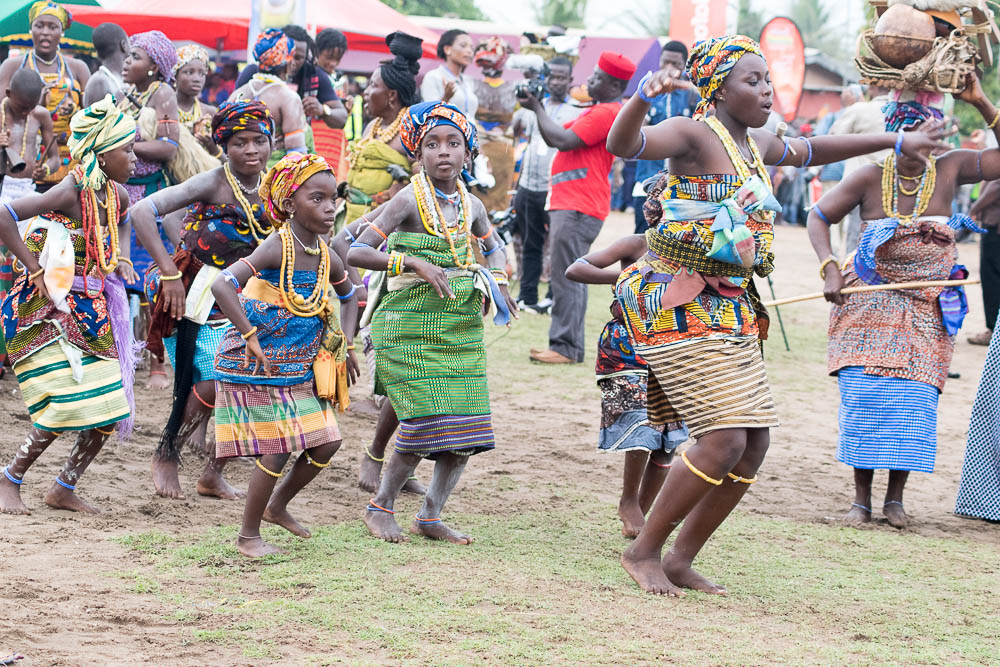 🇬🇭 Ghana and 2 moreAgbadza
An Ewe music and dance, born of war songs and kept for funerals, weddings and festivalsPerformance
🇬🇭 Ghana and 2 moreAgbadza
An Ewe music and dance, born of war songs and kept for funerals, weddings and festivalsPerformance