Traditions with cinnamon
Cinnamon, the dried inner bark of a tropical tree, is among the oldest spices in trade, and was once worth more than gold.
Cinnamon, the dried inner bark of a tropical tree, is among the oldest spices in trade, and was once worth more than gold. Native to Sri Lanka, it is now used in sweet and savoury foods around the world, from cinnamon buns in Sweden to Mexican hot chocolate, Moroccan pastilla, Lebanese stews and Indian garam masala. Its warm scent is the smell of the festive kitchen in many cultures. These pages explore where it is used and what it stands for.
Where it is used
In Sweden, it fills kanelbullar and the sweet buns of Christmas. In Mexico, it flavours canela tea, horchata and chocolate. In Morocco, it is dusted over pastilla, and in Lebanon it perfumes rice and meat. In the Middle East, a cinnamon stick spices the drinks of Ramadan, and in the Americas, cinnamon features in apple pie and in Christmas cookies. In Sri Lanka, the true cinnamon is part of the island's identity.
What it means
Because it was once rare, cinnamon has long been a spice of festivity and welcome, and gifts of cinnamon were exchanged by rulers. In Sweden, Cinnamon Bun Day on 4 October celebrates the bun. In Jewish tradition, it appears in the Passover charoset, recalling the mortar of the Egypt story. The scent of cinnamon in a house is a sign of baking, family and holiday, for many people.
Written by the EveryParampara desk with AI assistance. Background on Cinnamon (spice). Customs differ from place to place and family to family. If this is your tradition and we have it wrong, tell us.
 🇷🇺 Tula, Russia and 3 moreSamovarсамовар
A heated urn that brews tea for a slow, sociable pour, from Russia to Iran and KashmirTable custom · Tea, coffee and drinking ceremonies
🇷🇺 Tula, Russia and 3 moreSamovarсамовар
A heated urn that brews tea for a slow, sociable pour, from Russia to Iran and KashmirTable custom · Tea, coffee and drinking ceremonies
 🇩🇪 Nuremberg, Germany and 5 moreChristmas marketWeihnachtsmarkt
A seasonal street market held during Advent in German-speaking regions and beyond, featuring stalls, food, and crafts.Festival · Tea, coffee and drinking ceremonies
🇩🇪 Nuremberg, Germany and 5 moreChristmas marketWeihnachtsmarkt
A seasonal street market held during Advent in German-speaking regions and beyond, featuring stalls, food, and crafts.Festival · Tea, coffee and drinking ceremonies
 🇩🇰 Copenhagen, Denmark and 4 moreRisalamande
A chilled Danish Christmas rice dessert with cream, chopped almonds and cherry sauceTable custom · Sweets given and shared
🇩🇰 Copenhagen, Denmark and 4 moreRisalamande
A chilled Danish Christmas rice dessert with cream, chopped almonds and cherry sauceTable custom · Sweets given and shared
 🇸🇪 SwedenJul
A midwinter holiday of feast tables, doorstep gift givers, and candlelit morningsSeasonal · Feasts and festival meals
🇸🇪 SwedenJul
A midwinter holiday of feast tables, doorstep gift givers, and candlelit morningsSeasonal · Feasts and festival meals
 🇩🇰 DenmarkJul
Winter feasts, carols around the tree, and family gatherings across DenmarkFestival · Lunch
🇩🇰 DenmarkJul
Winter feasts, carols around the tree, and family gatherings across DenmarkFestival · Lunch
 🇸🇪 Sweden and 2 moreGlögg
A spiced, warm winter wine served across Nordic countries around ChristmasTable custom · Tea, coffee and drinking ceremonies
🇸🇪 Sweden and 2 moreGlögg
A spiced, warm winter wine served across Nordic countries around ChristmasTable custom · Tea, coffee and drinking ceremonies
 🇪🇸 Jijona, Spain and 5 moreTurrón
A festive Mediterranean nut-and-honey confection shared at Christmas and local feastsTable custom · Sweets given and shared
🇪🇸 Jijona, Spain and 5 moreTurrón
A festive Mediterranean nut-and-honey confection shared at Christmas and local feastsTable custom · Sweets given and shared
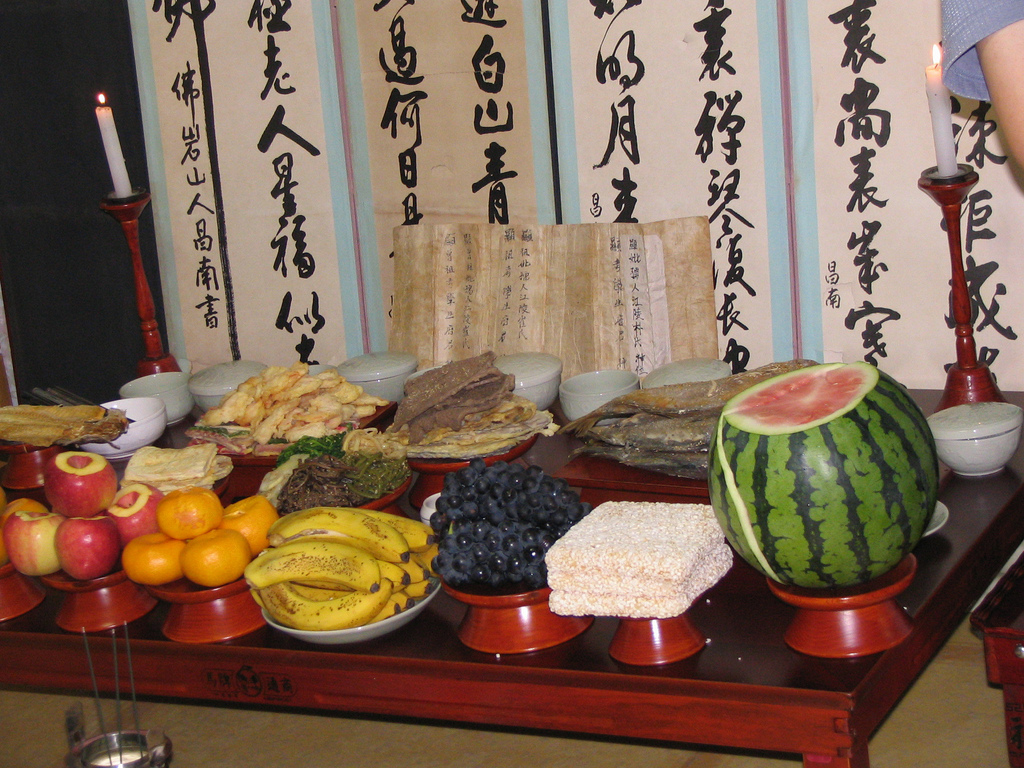 🇰🇷 South Korea and 1 moreChuseok추석
A Korean harvest festival of ancestral rites, seasonal rice cakes, and folk gamesFestival · Feasts and festival meals
🇰🇷 South Korea and 1 moreChuseok추석
A Korean harvest festival of ancestral rites, seasonal rice cakes, and folk gamesFestival · Feasts and festival meals
 🇷🇺 Russia and 1 moreRussian tea culture
The everyday cup of Russia, brewed strong and diluted to taste, with jam and sweetsTable custom · Tea, coffee and drinking ceremonies
🇷🇺 Russia and 1 moreRussian tea culture
The everyday cup of Russia, brewed strong and diluted to taste, with jam and sweetsTable custom · Tea, coffee and drinking ceremonies
 🇻🇳 Hanoi, Vietnam and 5 morePhophở
A Vietnamese noodle soup of broth and rice noodles, served hot with beef or chicken.Table custom · Breakfast
🇻🇳 Hanoi, Vietnam and 5 morePhophở
A Vietnamese noodle soup of broth and rice noodles, served hot with beef or chicken.Table custom · Breakfast
 🇸🇪 Stockholm, Sweden and 2 moreSmorgasbordsmörgåsbord
A Swedish table of hot and cold dishes where guests serve themselvesTable custom · Lunch
🇸🇪 Stockholm, Sweden and 2 moreSmorgasbordsmörgåsbord
A Swedish table of hot and cold dishes where guests serve themselvesTable custom · Lunch
 🇬🇧 United Kingdom and 4 moreSaffron bun
A golden, spiced yeast roll flavoured with saffron, baked for festive and holy daysTable custom · Tea-time and snacking customs
🇬🇧 United Kingdom and 4 moreSaffron bun
A golden, spiced yeast roll flavoured with saffron, baked for festive and holy daysTable custom · Tea-time and snacking customs
 🇧🇬 Bulgaria and 3 moreBanitsaБаница
A layered Bulgarian cheese pastry baked for morning meals and holiday fortunesTable custom · Breakfast
🇧🇬 Bulgaria and 3 moreBanitsaБаница
A layered Bulgarian cheese pastry baked for morning meals and holiday fortunesTable custom · Breakfast
 🇰🇷 South Korea and 1 morePyebaek폐백
A Korean wedding rite where newlyweds bow to elders and share dates, chestnuts and wineRite of passage
🇰🇷 South Korea and 1 morePyebaek폐백
A Korean wedding rite where newlyweds bow to elders and share dates, chestnuts and wineRite of passage
 🇩🇪 Germany and 1 moreRäucherkerze
A scented incense cone burned in German and Czech homes during the Christmas season to fill rooms with fragrance.Festival
🇩🇪 Germany and 1 moreRäucherkerze
A scented incense cone burned in German and Czech homes during the Christmas season to fill rooms with fragrance.Festival
 🇦🇲 ArmeniaAgra HadigԱգրա Հադիգ
An Armenian ceremony for a baby's first tooth, featuring symbolic items and wheat.Rite of passage
🇦🇲 ArmeniaAgra HadigԱգրա Հադիգ
An Armenian ceremony for a baby's first tooth, featuring symbolic items and wheat.Rite of passage
 🇨🇳 ChinaChinese herbology中藥學
The traditional Chinese system of preparing and prescribing herbal and natural remediesCraft
🇨🇳 ChinaChinese herbology中藥學
The traditional Chinese system of preparing and prescribing herbal and natural remediesCraft
Photo credits on this page
The small pictures above come from Wikimedia Commons under free licences. Some are cropped to fit.
- Chinese herbology: Vberger, Public domain, source
- Jul: Holger.Ellgaard, CC BY-SA 3.0, source
- Risalamande: Lorie Shaull, CC BY-SA 4.0, source
- Saffron bun: Nenniu, CC BY-SA 4.0, source
- Banitsa: Sheku80, CC BY-SA 3.0, source
- Agra Hadig: Աբգարյան Անի, CC BY-SA 4.0, source
- Jul: Erik Christensen, CC BY-SA 3.0, source
- Glögg: Mr.choppers, CC BY-SA 3.0, source
- Turrón: Tamorlan, CC BY 3.0, source
- Chuseok: by Joseph Steinberg (Baltimoron in Korea) at Flickr, CC BY-SA 2.0, source
- Russian tea culture: Boris Kustodiev, Public domain, source
- Christmas market: Dietmar Rabich, CC BY-SA 4.0, source
- Samovar: Unknown author, CC BY-SA 3.0, source
- Smorgasbord: Jordan Klein, CC BY 2.0, source
- Pho: Phương Huy, CC BY-SA 4.0, source
- Pyebaek: halfGoku, CC BY-SA 2.0, source
- Räucherkerze: Richard Huber, CC BY-SA 3.0, source