Festivals and celebrationsEuropeChristian
Christkind
The traditional Christmas Eve gift-bringer across Central Europe and Latin America

The Christkind is a traditional Christmas gift-bringer celebrated across Central Europe, parts of Latin America, and beyond. Originating in the sixteenth century, the figure leaves presents beneath the family tree on Christmas Eve, often announced by the ringing of a tiny bell.
When is Christkind marked?
Christkind is kept as part of Christmas Eve, which is on Thursday, 24 December 2026.
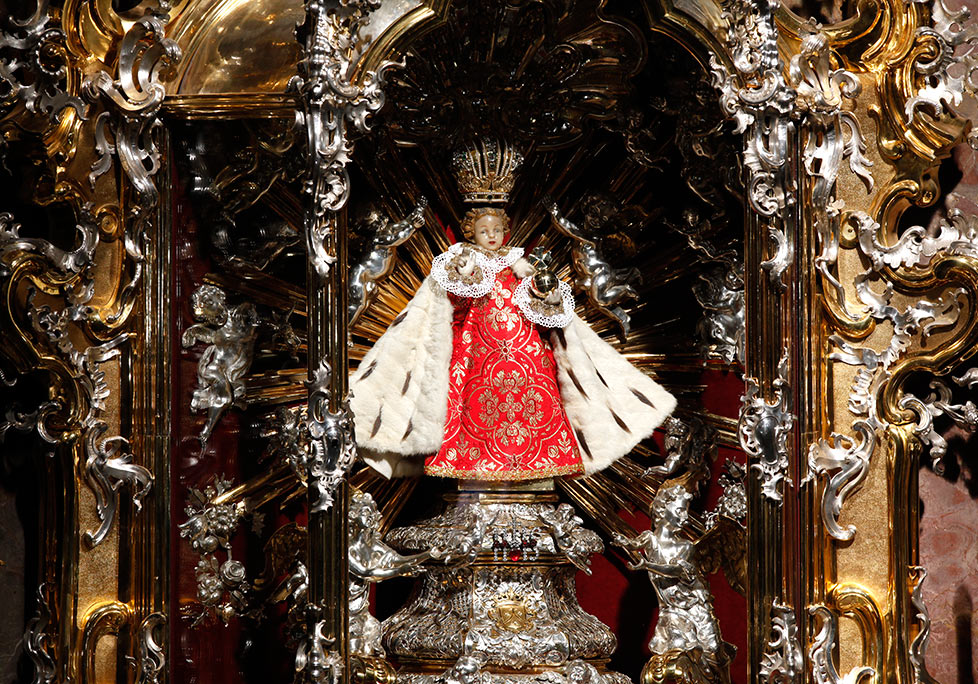
The Christkind is a traditional gift-bringer who delivers presents on Christmas Eve in many European and Latin American homes. Depicted as an angelic child or the infant Jesus, the figure visits secretly while children wait in another room. Families gather once the presents are under the tree, keeping alive a custom that replaced medieval saint devotions during the Protestant Reformation.
Origins and spread
Martin Luther introduced the Christkind during the sixteenth-century Protestant Reformation in Europe. The reformers wanted to shift focus away from Catholic veneration of Saint Nicholas and draw attention back to the infant Jesus. This change moved the primary day of giving presents from the sixth of December to Christmas Eve. Over time, Catholic communities across southern Germany and other European regions also adopted the custom during the nineteenth century. Settlers later carried the practice to Latin America and parts of the United States, where local names and variations developed over generations.
Christmas Eve customs
On the evening of twenty-fourth December, parents ask children to stay out of the living room while presents are arranged under the decorated tree. Household tradition holds that curious children who try to catch a glimpse will receive nothing. When the gifts are safely placed, adults signal that the visitor has departed, often by ringing a tiny hidden bell. The family then enters together for the gift-giving, known in German as the Bescherung. In places like the Czech Republic, some families also credit this unseen figure with bringing and decorating the Christmas tree itself.
Companions and local lore
Over the centuries, regional customs paired the gentle child with contrasting figures. In nineteenth-century Alsace, a woman in white with a golden crown and lit candles portrayed the gift-bringer, accompanied by the menacing, soot-faced Hans Trapp. In Swabia, a straw-covered companion known as Pelzmärte carried chains, a basket, and bells. In Czech households, the figure is known as Ježíšek, remaining popular despite low rates of church attendance. Modern cities also honour the tradition publicly, such as in Nuremberg, where a local woman is chosen every two years to represent the Christkind.
How Christkind is kept
On Christmas Eve, children wait outside the main room while adults place presents beneath the Christmas tree. Parents tell the young that the Christkind visits in secret and will leave if spotted. Once the gifts are delivered, someone secretly rings a small bell or announces that the visitor has gone. The family then gathers inside the living room to celebrate the gift opening, known as the Bescherung, and unbox their presents together around the tree.
When and where
The tradition takes place annually on Christmas Eve, the twenty-fourth of December. This timing stems from the Protestant Reformation, which moved the custom of winter gift-giving from Saint Nicholas Day on the sixth of December to the night before Christmas.
The Christkind is prominent throughout Austria, Germany, Switzerland, the Czech Republic, Slovakia, Hungary, and parts of France and Poland. It is also kept in parts of Latin America, such as Brazil and Argentina, as well as the Acadiana region of Louisiana.
What Christkind means
The figure originally symbolised the incarnation of Jesus as a baby, directing focus toward the birth of Christ rather than the veneration of saints. Over the centuries, popular imagination blended this meaning with angelic imagery, portraying the gift-bringer as a winged sprite or radiant angel. For many families, keeping the tradition represents an effort to maintain the spiritual heart of the winter holiday against modern commercial characters.


Days Christkind is marked
Questions people ask about Christkind
When is Christkind marked?
Christkind is kept as part of Christmas Eve, which is on Thursday, 24 December 2026.
What is the Christkind?
The Christkind is a traditional Christmas gift-bringer, portrayed as an angelic child or the infant Jesus, who delivers presents to families on Christmas Eve across Central Europe and Latin America.
Where is the tradition observed today?
It is widely kept in Germany, Austria, Switzerland, the Czech Republic, Slovakia, Hungary, Slovenia, Croatia, Belgium, Luxembourg, and parts of Poland, France, Brazil, Argentina, and Louisiana.
How do children receive their gifts?
Children stay out of the room while presents are placed under the Christmas tree. Parents signal the arrival and departure of the visitor, often by ringing a small bell, before opening presents together.
See also
 BusójárásA six-day winter carnival of carved wooden masks, folk music, and parades in Mohács
 Advent wreathAn evergreen ring of candles lit week by week in the lead-up to Christmas
 ChristmasA festival of Jesus's birth, kept on 25 December with gifts, lights and shared meals
 Christmas treeA decorated evergreen or artificial tree placed indoors to mark the Christmas season.
Good reading and sources
- BBC News - Austria campaign to save Christkind from Santa ClausBBC, Article
- BBC News - Austria campaign to save Christkind from Santa ClausBBC, Article
- Christkind on WikipediaEncyclopedia
- More photos on Wikimedia CommonsPhotos and video
- Wikidata recordOpen data
The facts on this page come from the Wikipedia article "Christkind", written by its contributors and used under the CC BY-SA 4.0 licence, and from its Wikidata record (CC0). EveryParampara rewrote the text in its own words, with AI assistance, and compares every page with the article to make sure no passage is copied. It may be reused under the same CC BY-SA 4.0 licence with a link back.
It may contain mistakes. Traditions differ from one family, village and community to the next, and the people who keep them know them best. If something is wrong, tell us. Last refreshed 2026-10-04.
More from Germany
All the traditions of Germany
🇮🇹 Rome, Italy and 4 moreChristmas
A festival of Jesus's birth, kept on 25 December with gifts, lights and shared mealsFestival
🇩🇪 Germany and 5 moreChristmas tree
A decorated evergreen or artificial tree placed indoors to mark the Christmas season.Festival
 🇩🇪 Germany and 1 moreRäucherkerze
A scented incense cone burned in German and Czech homes during the Christmas season to fill rooms with fragrance.Festival
🇩🇪 Germany and 1 moreRäucherkerze
A scented incense cone burned in German and Czech homes during the Christmas season to fill rooms with fragrance.Festival
 🇵🇱 Poland and 5 moreChristmas Eve
The evening before Christmas, marked by church services, family meals, and gift preparations across Christian cultures.Festival · Dinner
🇵🇱 Poland and 5 moreChristmas Eve
The evening before Christmas, marked by church services, family meals, and gift preparations across Christian cultures.Festival · Dinner
The same idea elsewhere
Midwinter and the longest night compared 🇵🇪 Cusco, Peru and 4 moreIntiinti (Quechua)
The Inca sun deity, honoured with temples, offerings and the June festival Inti RaymiSpiritual
🇵🇪 Cusco, Peru and 4 moreIntiinti (Quechua)
The Inca sun deity, honoured with temples, offerings and the June festival Inti RaymiSpiritual
 🇨🇳 Shanghai, China and 1 moreJiaozi餃子
Crescent Chinese dumplings filled with meat or vegetables, eaten for fortune and feastsTable custom · Breakfast
🇨🇳 Shanghai, China and 1 moreJiaozi餃子
Crescent Chinese dumplings filled with meat or vegetables, eaten for fortune and feastsTable custom · Breakfast
 🇮🇳 Prayagraj, India and 6 moreMakar Sankrantiमकरसङ्क्रान्ति (Makarasaṅkrānti)
A mid-winter harvest festival marking the sun's northward journey, celebrated across South and Southeast Asia with fairsFestival · Feasts and festival meals
🇮🇳 Prayagraj, India and 6 moreMakar Sankrantiमकरसङ्क्रान्ति (Makarasaṅkrānti)
A mid-winter harvest festival marking the sun's northward journey, celebrated across South and Southeast Asia with fairsFestival · Feasts and festival meals
 🇮🇳 India and 1 moreLohri
A northern Indian midwinter festival of evening bonfires, folk songs and harvest foodsSeasonal
🇮🇳 India and 1 moreLohri
A northern Indian midwinter festival of evening bonfires, folk songs and harvest foodsSeasonal