🇸🇰 Traditions of Slovakia
15 traditions from Slovakia, best known first, across 6 cities and towns.
Slovakia's living culture is rooted in village self-sufficiency, pastoral mountain customs, and Catholic faith. Everyday life draws heavily on hearty farm staples like potatoes, pork, and sheep cheese, while centuries of woodcraft endure in hillside settlements, hand-built churches, and lively gatherings of music and dance.
Set in the middle of Europe, Slovak folk culture reflects its close ties with surrounding lands and an agrarian past. Mountain communities developed distinct ways of building and eating that relied on what the soil, forests, and livestock could provide through harsh winters. Today, these practices survive through preserved wooden architecture, treasured sheep-cheese recipes, legendary outlaw lore, and large gathering festivals that celebrate regional song and movement across generations.
Folk music and legend
Folk music and storytelling remain central to Slovak identity. The country's national anthem draws its melody directly from an old folk tune called "Kopala studienku". Communities celebrate these oral and performance arts at major gatherings, most notably the annual Východná Folklore Festival, where ensembles like the SĽUK collective stage traditional music and choreography. Alongside songs, folklore celebrates Juraj Jánošík, an early eighteenth-century figure who robbed the wealthy to help the impoverished. His exploits feature widely in regional myths, stage plays, and cinema, holding a lasting place in the national imagination as a champion of common people.
Traditional timber architecture
In the forested uplands, builders developed a timber architectural style that used local wood for walls, ornate gables, and shingled roofs. Entire historic settlements, such as the mountain village of Vlkolínec, retain these historic layouts, while other regions preserve earthen houses built by compacting clay and straw. Slovakia also holds around forty wooden churches, primarily built from the late fifteenth century onward. Notable surviving shrines in places like Bodružal, Hervartov, Ladomirová, and Ruská Bystrá are crafted entirely from wood. Ten open-air museums across the country, alongside designated architectural reserves in villages like Čičmany and Ždiar, keep these regional construction methods intact.
Dumplings and sheep cheese
Slovak home cooking developed around foods that could withstand cold winters: wheat, potatoes, cabbage, and dairy. The national staple is bryndzové halušky, small boiled potato dumplings coated in bryndza, a pungent salted sheep's milk cheese, often topped with smoked bacon. The same cheese fills boiled dumplings known as bryndzové pirohy and flavors the broth demikát. Other everyday dishes include strapačky, which pairs potato dumplings with sauerkraut, and lokše, thin potato pancakes baked dry on the stovetop. Quark cheese, fried bacon, and noodles also combine in popular home meals, showing how village kitchens transformed simple dairy and potato dough into filling daily fare.
Hearty meats and soups
Pork is the most common meat across Slovakia, followed by chicken and other poultry. Because of vast woodland areas, wild game such as boar, rabbit, and venison is also widely prepared throughout the year. Home cooks frequently simmer meats in thick sauces, like goulash served with sliced steamed dumplings, or fry breaded cutlets. Savory soups begin many meals, especially kapustnica, a rich sauerkraut soup packed with sausage and mushrooms. Celebrations bring specific dishes: Christmas meals feature carp, while the autumn goose and duck feasts of Slovenský Grob center on roasted poultry, poultry liver, lokše pancakes, stewed red cabbage, and poppy seed strudel.
Language and shared art
Slovak culture was shaped by linguistic reform and visual storytelling. The literary language was formally codified first by Anton Bernolák using western dialects in 1787, and later by Ľudovít Štúr in 1843 using central speech. Visual arts and craft heritage are maintained in major collections, from the Slovak National Gallery in Bratislava to regional institutions like the Andy Warhol Museum of Modern Art in the northeast, where the artist's family had roots. These creative institutions, together with preserved castle ruins and historic town squares, reflect how regional traditions and formal cultural history sit side by side.
The facts in this overview come from the Wikipedia article "Culture of Slovakia", written by its contributors and used under the CC BY-SA 4.0 licence. EveryParampara rewrote the text in its own words, with AI assistance, and compares every page with the article to make sure no passage is copied. It may be reused under the same CC BY-SA 4.0 licence with a link back.
The table in Slovakia
Foods and drinks by the moment they belong to.
| Tea, coffee and drinking ceremonies | Pezinok Grape Harvest Festival |
|---|
Cities, towns and villages of Slovakia
 🇭🇺 Hungary and 5 moreCsárdás
A Hungarian folk dance that moves from a slow start to a fast finish, kept in Hungary and neighboring regions.Performance
🇭🇺 Hungary and 5 moreCsárdás
A Hungarian folk dance that moves from a slow start to a fast finish, kept in Hungary and neighboring regions.Performance
 🇺🇦 Ukraine and 5 moreKupala Night
A summer solstice folk festival marked by bonfires, water rituals and herbal gatherings across Eastern Europe.Festival
🇺🇦 Ukraine and 5 moreKupala Night
A summer solstice folk festival marked by bonfires, water rituals and herbal gatherings across Eastern Europe.Festival
 🇩🇪 Nuremberg, Germany and 5 moreChristkind
The traditional Christmas Eve gift-bringer across Central Europe and Latin AmericaFestival
🇩🇪 Nuremberg, Germany and 5 moreChristkind
The traditional Christmas Eve gift-bringer across Central Europe and Latin AmericaFestival
 🇨🇿 Czechia and 2 moreEaster whippingpomlázka
An Easter Monday custom of tapping women with braided willow switches for vitalitySeasonal
🇨🇿 Czechia and 2 moreEaster whippingpomlázka
An Easter Monday custom of tapping women with braided willow switches for vitalitySeasonal
 🇸🇰 SlovakiaFujara
A tall Slovak flute played by shepherds, with a deep voice built from overtonesPerformance
🇸🇰 SlovakiaFujara
A tall Slovak flute played by shepherds, with a deep voice built from overtonesPerformance
 🇩🇪 Germany and 3 moreVisitation
A Christian feast commemorating Mary's journey to visit her cousin ElizabethSpiritual
🇩🇪 Germany and 3 moreVisitation
A Christian feast commemorating Mary's journey to visit her cousin ElizabethSpiritual
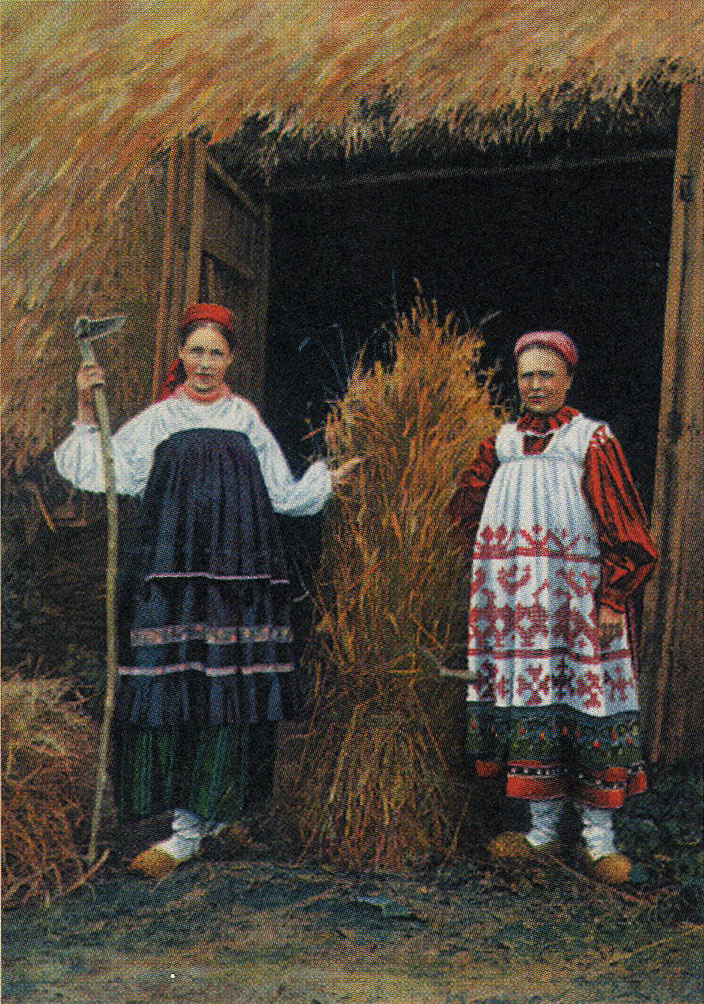 🇵🇱 Kraków, Poland and 5 moreDozhinkiDożynki
A Slavic harvest festival of the last sheaf, a woven wreath and a shared mealSeasonal
🇵🇱 Kraków, Poland and 5 moreDozhinkiDożynki
A Slavic harvest festival of the last sheaf, a woven wreath and a shared mealSeasonal
 🇺🇦 Ukraine and 7 moreVechornytsiвечорниці
Evening gatherings of Ukrainian youth, with songs, jokes, games and winter divinationSeasonal
🇺🇦 Ukraine and 7 moreVechornytsiвечорниці
Evening gatherings of Ukrainian youth, with songs, jokes, games and winter divinationSeasonal
 🇧🇬 Plovdiv, Bulgaria and 7 moreDay of Slavonic Alphabet, Bulgarian Enlightenment and CultureДен на българската просвета и култура и на славянската писменост
Bulgaria's public holiday for its alphabet, schools and culture, kept each 24 MayFestival
🇧🇬 Plovdiv, Bulgaria and 7 moreDay of Slavonic Alphabet, Bulgarian Enlightenment and CultureДен на българската просвета и култура и на славянската писменост
Bulgaria's public holiday for its alphabet, schools and culture, kept each 24 MayFestival
 🇵🇱 Kraków, Poland and 5 moreTurońTuroń (Polish), Turoň (Slovak)
A shaggy horned beast led from house to house by carol singers at carnival timeFolklore
🇵🇱 Kraków, Poland and 5 moreTurońTuroń (Polish), Turoň (Slovak)
A shaggy horned beast led from house to house by carol singers at carnival timeFolklore
 🇵🇱 Poland and 6 morePolaznik
The first visitor to cross the threshold at Christmas, read as a sign of the year to comeFolklore
🇵🇱 Poland and 6 morePolaznik
The first visitor to cross the threshold at Christmas, read as a sign of the year to comeFolklore
 🇵🇱 Poland and 3 morePodłaźniczka
A decorated evergreen branch hung over the Christmas Eve table in Poland and SlovakiaFestival
🇵🇱 Poland and 3 morePodłaźniczka
A decorated evergreen branch hung over the Christmas Eve table in Poland and SlovakiaFestival
 🇸🇰 Pezinok, SlovakiaPezinok Grape Harvest FestivalPezinské vinobranie
An annual autumn harvest and wine festival filling the streets of Pezinok, SlovakiaSeasonal · Tea, coffee and drinking ceremonies
🇸🇰 SlovakiaName days in SlovakiaMeniny
The Slovak tradition of celebrating personal name days alongside birthdaysSeasonal
🇸🇰 SlovakiaJasličkári
A Slovak Christmas custom of young men acting out the Nativity from house to houseFestival
🇸🇰 Pezinok, SlovakiaPezinok Grape Harvest FestivalPezinské vinobranie
An annual autumn harvest and wine festival filling the streets of Pezinok, SlovakiaSeasonal · Tea, coffee and drinking ceremonies
🇸🇰 SlovakiaName days in SlovakiaMeniny
The Slovak tradition of celebrating personal name days alongside birthdaysSeasonal
🇸🇰 SlovakiaJasličkári
A Slovak Christmas custom of young men acting out the Nativity from house to houseFestival
Photo credits on this page
The small pictures above come from Wikimedia Commons under free licences. Some are cropped to fit.
- Kupala Night: Ivan Sokolov, Public domain, source
- Christkind: Roland Berger, CC BY-SA 3.0, source
- Easter whipping: Chmee2, CC BY-SA 3.0, source
- Csárdás: Unknown author, Public domain, source
- Fujara: -jkb-, CC BY 3.0, source
- Dozhinki: Unknown author, Public domain, source
- Vechornytsi: Гейслер, Кристиан Готфрид Генрих, Public domain, source
- Day of Slavonic Alphabet, Bulgarian Enlightenment and Culture: Unknown author, Public domain, source
- Turoń: Museum: The Seweryn Udziela Ethnographic Museum in Kraków, CC0, source
- Polaznik: Carlton Alfred Smith, Public domain, source
- Podłaźniczka: Unknown author, Public domain, source
- Pezinok Grape Harvest Festival: Bratislavská župa, CC BY 2.0, source
- Visitation: Giotto, Public domain, source