Spiritual and religiousEast AsiaShinto, Taoist and folk Chinese
Dajiao
In its own language: 打醮
An annual Taoist ritual and festival seeking peace and safety for the community

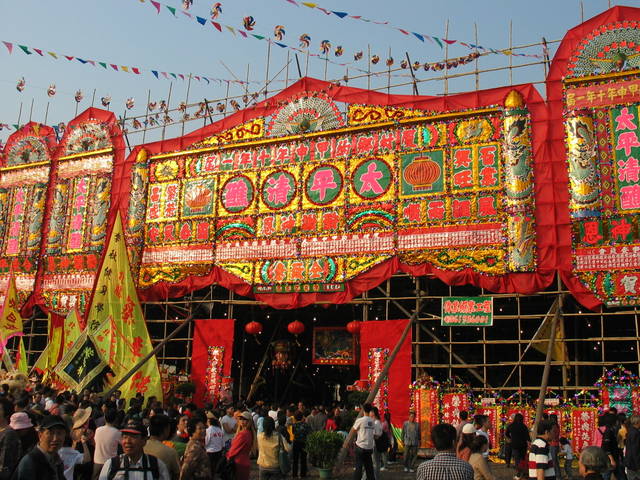
Dajiao is an annual Taoist festival and ritual held across regions such as Hong Kong, Taiwan, and mainland China. Local communities gather to pray for peace and communal harmony, honour deities like Pak Tai, and eat only vegetarian meals.
When is Dajiao kept?
Dajiao is kept every year.
Dajiao is a recurring Taoist ceremony celebrated annually to bring harmony and security to a local neighbourhood. During the observance, worshippers invite the gods to bless their district, with many rites dedicated to Pak Tai. Participants observe vegetarian eating during the proceedings, joining collective prayers to cleanse their surroundings and safeguard everyone living nearby.
Honouring the gods for peace
At its core, Dajiao serves as a communal appeal for protection and calm. Neighbourhoods organise the rites to ask Taoist divinities for blessings upon their immediate surroundings. Worshippers direct their supplications toward celestial figures, particularly Pak Tai, who stands out as the most widely invoked deity in these rituals. Through shared devotion and religious ceremonies, residents seek to ward off misfortune and foster goodwill throughout their shared living spaces.
Observing vegetarian customs
Dietary discipline forms an essential component of the festival period. Believers strictly steer clear of meat, preparing and eating solely vegetarian dishes while the ceremonies take place. This practice of temporary dietary abstinence demonstrates reverence toward the immortals and purifies participants for the divine blessings they request. Community members adhere to these guidelines together, reinforcing shared purpose across the entire district during the holy period.
Regional celebrations
Known as Tai Ping Ching Chiu in Cantonese, the tradition thrives in numerous historic settlements across Hong Kong. Celebrations take place in districts such as Sheung Shui Wai, Yuen Long, and Kam Sheung Road, alongside the widely known Cheung Chau Bun Festival. Beyond Hong Kong, these rites are kept across Greater China, with annual observances occurring in areas such as Guangdong, Fujian, Sichuan, and Taiwan.
How Dajiao is kept
The observance gathers local residents under the guidance of Taoist ritual traditions. Believers maintain a strict meat-free diet throughout the festival period, consuming only vegetarian food. Together, the community conducts liturgical ceremonies and delivers prayers to Taoist deities, notably Pak Tai. These collective rites ask the gods to grant peace and harmony to the local district.
When and where
The ceremonies take place once every year. Communities schedule and conduct the religious rituals annually according to Taoist devotional calendars to renew blessings of harmony.
The tradition is observed across Greater China. It is celebrated in places such as Guangdong, Fujian, Sichuan, Taiwan, and several localities throughout Hong Kong, including Cheung Chau and Yuen Long.
What Dajiao means
Dajiao represents a collective yearning for safety and tranquillity. By presenting pure offerings, avoiding meat, and appealing directly to Taoist deities such as Pak Tai, participants seek spiritual cleansing and the renewal of peace across their entire locality.
Questions people ask about Dajiao
When is Dajiao kept?
Dajiao is kept every year.
What is Dajiao?
Dajiao is a yearly Taoist ritual and festival where communities pray to deities, particularly Pak Tai, to request peace, harmony, and protection for their neighbourhood.
Where is the festival held?
The festival is observed across Greater China, including Taiwan, Guangdong, Sichuan, and Fujian, as well as multiple areas in Hong Kong like Cheung Chau and Yuen Long.
What food rules are observed during Dajiao?
Believers strictly refrain from eating meat during the festival period. They consume only vegetarian meals as an act of spiritual discipline while the ceremonies take place.
See also
 OvooA stone cairn on a peak or pass, circled by travellers and honoured in sky worship
 PretaOfferings and rites for spirits enduring deep hunger across Asian traditions.Cenobitic monasticismA communal way of monastic life where monks live, pray, and follow a shared rule
 Dajia Mazu PilgrimageA nine-day walking procession across central Taiwan honouring the sea goddess Mazu
Good reading and sources
- Dajiao on WikipediaEncyclopedia
- More photos on Wikimedia CommonsPhotos and video
- Wikidata recordOpen data
The facts on this page come from the Wikipedia article "Dajiao", written by its contributors and used under the CC BY-SA 4.0 licence, and from its Wikidata record (CC0). EveryParampara rewrote the text in its own words, with AI assistance, and compares every page with the article to make sure no passage is copied. It may be reused under the same CC BY-SA 4.0 licence with a link back.
It may contain mistakes. Traditions differ from one family, village and community to the next, and the people who keep them know them best. If something is wrong, tell us. Last refreshed 2026-10-06.
More from China
All the traditions of China
🇲🇳 Mongolia and 3 moreOvooовоо (Cyrillic Mongolian); ᠣᠪᠤᠭᠠ (Traditional Mongol)
A stone cairn on a peak or pass, circled by travellers and honoured in sky worshipSpiritual
🇮🇳 India and 5 morePretaप्रेत
Offerings and rites for spirits enduring deep hunger across Asian traditions.Spiritual
 🇨🇳 Meizhou Island, China and 5 moreMazu媽祖
A sea goddess of the Chinese coast, asked for calm water and a safe returnSpiritual
🇪🇬 Alexandria, Egypt and 5 moreCenobitic monasticism
A communal way of monastic life where monks live, pray, and follow a shared ruleSpiritual · Fasting and breaking the fast
🇨🇳 Meizhou Island, China and 5 moreMazu媽祖
A sea goddess of the Chinese coast, asked for calm water and a safe returnSpiritual
🇪🇬 Alexandria, Egypt and 5 moreCenobitic monasticism
A communal way of monastic life where monks live, pray, and follow a shared ruleSpiritual · Fasting and breaking the fast
The same idea elsewhere
Healing, luck and protection compared 🇿🇦 South Africa and 5 moreSouthern African traditional healing
Ancestral divination, herbal muthi, and spiritual care across Southern AfricaSpiritual
🇿🇦 South Africa and 5 moreSouthern African traditional healing
Ancestral divination, herbal muthi, and spiritual care across Southern AfricaSpiritual
 🇮🇳 India and 5 moreThaipusam
A Tamil Hindu festival honoring Murugan through devotional burdens and pilgrimageSpiritual
🇮🇳 India and 5 moreThaipusam
A Tamil Hindu festival honoring Murugan through devotional burdens and pilgrimageSpiritual
 🇮🇳 Varanasi, India and 1 moreChhath Pujaछठ पूजा
A four-day Hindu festival honouring the sun and Chhathi Maiya along riverbanksSpiritual · Fasting and breaking the fast
🇮🇳 Varanasi, India and 1 moreChhath Pujaछठ पूजा
A four-day Hindu festival honouring the sun and Chhathi Maiya along riverbanksSpiritual · Fasting and breaking the fast
 🇲🇦 Morocco and 4 moreMimounaמִימוּנָה
A Maghrebi Jewish celebration marking the end of Passover with sweets and open doorsFestival · Dinner
🇲🇦 Morocco and 4 moreMimounaמִימוּנָה
A Maghrebi Jewish celebration marking the end of Passover with sweets and open doorsFestival · Dinner