Spiritual and religiousEast AsiaShinto, Taoist and folk ChineseBuddhist
Mazu
In its own language: 媽祖
A sea goddess of the Chinese coast, asked for calm water and a safe return
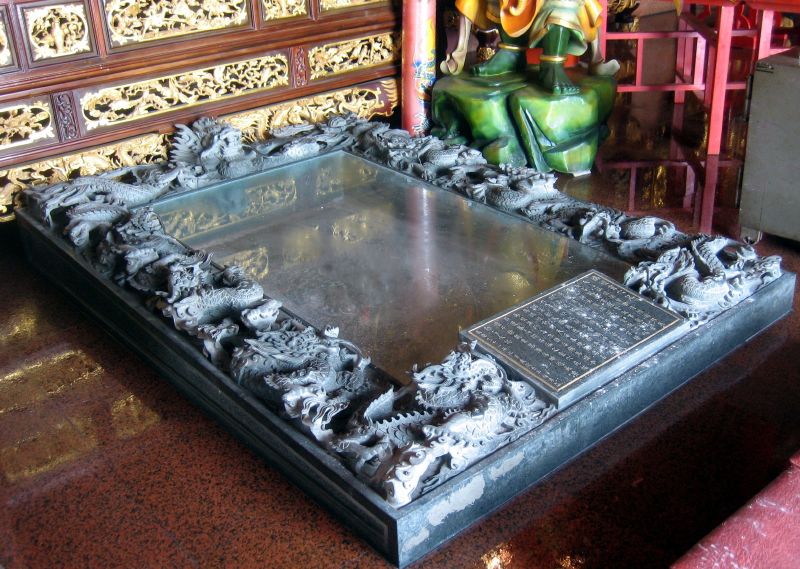
Mazu is a Chinese sea goddess, honoured along the coast of Fujian and in Taiwan, Hong Kong, Macau and Chinese communities abroad. Sailors, fishermen and their families ask her to bring boats safely home, and her feast days and temple festivals are kept with processions, music and offerings.
When is Mazu in 2027?
Mazu 2027 runs from 29 April to 7 May 2027. The date follows the moon or a local calendar, so it can move by a day. Other years: 2026, 9 to 17 May 2026; 2028, 17 to 25 April 2028.
Along the coast of southern China, and wherever Chinese sailors have settled, people honour a goddess called Mazu. She began as a woman of Fujian remembered as Lin Moniang, and through centuries of storytelling she became a guardian of everyone on the water. Families ask her to bring boats home, and her temples keep her feast days with processions, music and offerings.
A goddess of the sea
Mazu is honoured as a goddess of the sea. She has a place in Chinese folk practice, and also in Buddhist, Confucian and Taoist settings, which is why her image can stand in temples of quite different kinds. Those who sail, and the families who wait for them, treat her as a guardian. Stories say she roamed the waters and stepped in when her people were in danger. In time her care grew beyond the shoreline, and today many call her Queen of Heaven.
Names and titles
Her name Mazu means something like Mother Ancestor. People also say Granny Mazu, or Mazupo, and in Macau she is commonly A-Ma. She was born into the Lin family and is remembered as Lin Moniang. Rulers added honours across the centuries: Lady of Numinous Grace in 1156, Princess of Heaven in 1281, and Queen of Heaven in 1683. One custom follows from those titles. In an emergency worshippers leave the grand names aside and call her Mazu, since it is believed that a formal title would make her stop to dress as her rank requires before she answered.
From shamaness to goddess
Very little is known for certain about the woman behind the worship. She seems to have been a shamaness, a woman credited with spirit power, from a fishing village in Fujian, and her life is set in the tenth century. The first written trace of her veneration comes about two hundred years later, in an inscription of 1150 which says she could tell a person's fortune and that after her death a temple was raised for her on her home island. Her following spread along the coast, and by the end of the Song era more than thirty temples stood in her name.
Legends and stories
The legends of her life were largely settled by the twelfth century. She is said to have been born in 960 and to have been a silent baby, which is where her given name, the Silent One, is thought to come from. As a girl she is said to have learned Confucian and Buddhist texts, and to have been taught by a Taoist master who saw something special in her and left her a book of hidden methods. The best known tale tells of a trance at her loom while her father and brothers were caught in a storm at sea.
Temples and festivals today
Her temples are thickest on the Fujian coast and in Taiwan, where settlers from Fujian carried her worship with them. In Taiwan her temple festival is one of the year's great events, and the largest crowds gather at Dajia and Beigang. Shrines raised by Chinese migrants stand across Southeast Asia and further away, often built in thanks for a safe crossing. In Hong Kong people call her Tin Hau, in Vietnam Thiên Hậu, and in Macau A-Ma. Her role has widened beyond the sea, and she is now asked for help in many parts of life.
How Mazu is kept
People visit her temples with thanks and requests. Before a voyage, sailors and their families ask for calm water and a safe return, and those who arrive safely come back to give thanks; migrant communities often raised a shrine for that very reason. Her feast days draw crowds, and in Taiwan her image is carried through the streets with music and offerings at the biggest celebrations, at Dajia and Beigang. In an emergency, worshippers call her Mazu rather than by a court title, believing that a formal name would make her pause to dress before she answered.
When and where
Her dates come from legend rather than from any central calendar. Two are remembered: her birth, kept in spring, and her death, fixed to the Double Ninth, the ninth day of the ninth lunar month, in 987. Individual temples also keep their own festivals, and in Taiwan the largest of them is a major yearly event.
Her worship belongs first to the Fujian coast, and to Meizhou Island and Putian, where her story is set. It is strongest in Taiwan, since many early settlers there came from Fujian. Temples also stand in Hong Kong, Macau, Vietnam and the Philippines, and among Chinese communities across Southeast Asia.
What Mazu means
For those who keep her worship, Mazu is protection in a dangerous trade. She stands for the hope that a boat comes home, and that the people left on shore are not left alone. Later stories widen her care: she is asked to watch over women in childbirth and to help those who wish for a child, and one scripture has her promise to oversee every part of life and death for anyone who calls on her. Families surnamed Lin call her Gupozu, great-grandaunt, claiming her as kin.


Days Mazu is marked
Mazu dates: 2026, 2027, 2028
| Year | Mazu date |
|---|---|
| 2026 | 9 to 17 May 2026 |
| 2027 | 29 April to 7 May 2027 |
| 2028 | 17 to 25 April 2028 |
This date follows the moon or a local calendar and can move by a day, so check with a local source nearer the time.
Questions people ask about Mazu
When is Mazu in 2027?
Mazu 2027 runs from 29 April to 7 May 2027. The date follows the moon or a local calendar, so it can move by a day. Other years: 2026, 9 to 17 May 2026; 2028, 17 to 25 April 2028.
Who is Mazu?
She is a Chinese sea goddess, the deified form of a woman from Fujian remembered as Lin Moniang. Sailors, fishermen and their families ask her to protect them on the water. She is honoured in folk practice and also in Buddhist, Confucian and Taoist settings, and many call her Queen of Heaven.
Where is she worshipped?
Her worship began on the Fujian coast and is strongest in Taiwan, where many early settlers came from Fujian. Temples also stand in Hong Kong, Macau, Vietnam, the Philippines, and among Chinese communities in Southeast Asia and beyond.
Why is she called Queen of Heaven?
The name comes from court honours given over centuries. Officials and emperors granted her titles: Lady of Numinous Grace in 1156, Princess of Heaven in 1281, and Queen of Heaven in 1683. Worshippers in mainland China, Hong Kong and Vietnam often use that last one, while in Taiwan many say Holy Heavenly Mother.
Do people pray to her by her official titles?
Usually, but not in an emergency. It was thought that hearing a grand title would oblige Mazu to groom and dress as her rank demands before she received the request. Worshippers in trouble therefore call her simply Mazu, which is believed to bring a quicker answer.
See also
 Spirit houseA small roofed shrine on a pillar, kept in homes and villages across Southeast Asia to honour protective spirits.
 OvooA stone cairn on a peak or pass, circled by travellers and honoured in sky worship
 Dajia Mazu PilgrimageA nine-day walking procession across central Taiwan honouring the sea goddess Mazu
 ProstrationBowing the whole body to the ground, in prayer and as a sign of respect
Good reading and sources
- Encyclopaedia BritannicaArticle
- The worshippers caught between China and TaiwanBBC, Article
- Mazu belief and customsUNESCO, Heritage listing
- The worshippers caught between China and TaiwanBBC, Article
- Mazu belief and customsUNESCO, Article
- Mazu on WikipediaEncyclopedia
- More photos on Wikimedia CommonsPhotos and video
- Wikidata recordOpen data
The facts on this page come from the Wikipedia article "Mazu", written by its contributors and used under the CC BY-SA 4.0 licence, and from its Wikidata record (CC0). EveryParampara rewrote the text in its own words, with AI assistance, and compares every page with the article to make sure no passage is copied. It may be reused under the same CC BY-SA 4.0 licence with a link back.
It may contain mistakes. Traditions differ from one family, village and community to the next, and the people who keep them know them best. If something is wrong, tell us. Last refreshed 2026-10-05.
More from China
All the traditions of China
🇲🇳 Mongolia and 3 moreOvooовоо (Cyrillic Mongolian); ᠣᠪᠤᠭᠠ (Traditional Mongol)
A stone cairn on a peak or pass, circled by travellers and honoured in sky worshipSpiritual
🇮🇳 India and 4 moreProstration
Bowing the whole body to the ground, in prayer and as a sign of respectSpiritual
 🇨🇳 China and 1 moreDajiao打醮
An annual Taoist ritual and festival seeking peace and safety for the communitySpiritual · Feasts and festival meals
🇨🇳 Tianjin, China and 1 moreBa-zha八蜡
An old Chinese harvest rite of eight offerings, later a guardian against locustsSpiritual
🇨🇳 China and 1 moreDajiao打醮
An annual Taoist ritual and festival seeking peace and safety for the communitySpiritual · Feasts and festival meals
🇨🇳 Tianjin, China and 1 moreBa-zha八蜡
An old Chinese harvest rite of eight offerings, later a guardian against locustsSpiritual
The same idea elsewhere
Healing, luck and protection compared 🇮🇳 IndiaKambala
An annual traditional buffalo race across muddy paddy fields in southwestern IndiaGame
🇮🇳 IndiaKambala
An annual traditional buffalo race across muddy paddy fields in southwestern IndiaGame
 🇱🇰 Kandy, Sri LankaKandyan danceඋඩරට නැටුම්
The sacred dance of Sri Lanka's hill country, kept in temple and on the stagePerformance
🇱🇰 Kandy, Sri LankaKandyan danceඋඩරට නැටුම්
The sacred dance of Sri Lanka's hill country, kept in temple and on the stagePerformance
 🇬🇧 United Kingdom and 5 moreTwelfth Night
The closing evening of the Christmas season, kept with cake, carols and wassailSpiritual · Feasts and festival meals
🇬🇧 United Kingdom and 5 moreTwelfth Night
The closing evening of the Christmas season, kept with cake, carols and wassailSpiritual · Feasts and festival meals
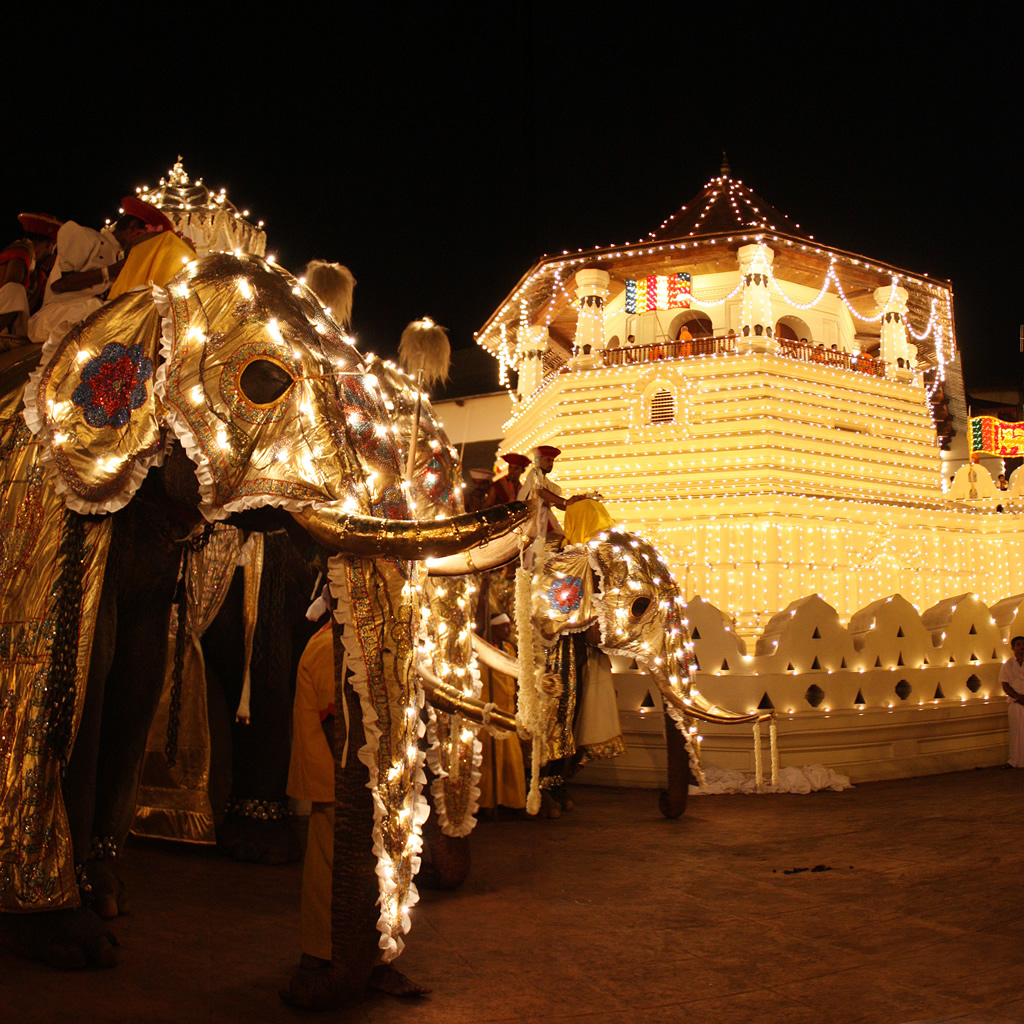 🇱🇰 Kandy, Sri LankaEsala Perahera
A Sri Lankan procession of sacred relics, drummers and elephants honouring the BuddhaSpiritual
🇱🇰 Kandy, Sri LankaEsala Perahera
A Sri Lankan procession of sacred relics, drummers and elephants honouring the BuddhaSpiritual