Dress and adornmentSouth AsiaHinduJain
Dhoti
A long unstitched cloth men wrap like trousers, for worship and formal days

A garment of unstitched cloth, usually about four yards long, wrapped at the waist and between the legs so that it looks like trousers. It is worn by men across the Indian subcontinent, most often for puja, weddings and formal occasions, and it stays common daily dress in rural areas.
When is Dhoti kept?
Dhoti is kept on worn for puja, weddings and formal functions, and as daily dress in rural areas.
The dhoti is a long piece of unstitched cloth that men wrap around the waist and legs in the Indian subcontinent, so that it sits like loose trousers. It is the male counterpart of the sari. Worn for temple worship, weddings and formal occasions, it is also still everyday dress in many rural areas, though its use has fallen in cities.
What it is
The dhoti is a rectangular length of cloth, commonly around four yards, that is not cut or sewn. A man winds it around his waist and legs so that it falls to the ankles and resembles trousers. It is ethnic wear for men in the Indian subcontinent and the counterpart of the sari worn by women. A yellow silk dhoti, the pitambar, is kept for auspicious occasions. Ready-to-wear dhoti pants and readymade panchakachams are a newer fashion and are not the same garment. The names mundu and veshti are often used loosely for it, but those cloths are wrapped differently.
Origins and history
The dhoti grew out of the ancient antriya, a cloth passed between the legs, tucked at the back and pleated at the front. The oldest depictions found in inscriptions date to the Mauryan Empire. In the Sunga period two ways of wearing it were distinguished: sakaccha, where the cloth passes between the legs and is tucked behind, and vikaccha, worn more like a lungi. Stitched clothes spread with the arrival of Persians and Greeks, yet the dhoti continued in both forms. According to G. S. Ghurye, the firmly fitted style was worn mostly by farmers and martial artists.
Religion and ritual
Unstitched cloth carries meaning in several communities. Conservative Jain men wear the pancha when they visit a derasar or basadi for puja, since unstitched clothing is held to be less open to pollution and so more fitting for ritual. The International Society for Krishna Consciousness asks its Western members to wear a pancha, usually saffron or white and folded in a Bengali style. At some temples in South India, men go without a shirt when they enter, as stitched garments are thought to work against the energy of the idol. Elsewhere a shirt is worn with the dhoti.
Wearing and wrapping
In the formal style, the cloth is looped and tucked so that it wraps each leg separately, close to the shape of trousers. In a shorter, casual style, it covers both legs firmly: the back is drawn to the front, tucked at the waist, and the loose ends are secured behind. South Indians know the formal wrapping as panchakacham. Men may add a shirt or kurta, and at certain temples they wear the dhoti alone. Wrapping is a skill that has been passed down, and today fewer men learn it.
Today and change
Daily use of the dhoti has declined from its former place in the subcontinent. It now appears mostly at religious gatherings and some secular functions. Many men no longer know how to wrap one. In cities such as Bombay, now Mumbai, English dress displaced it, and stitched clothing was described as caste neutral, unlike older styles of wrapping that differed between communities. Kurta-pyjama sets, which came with the Mughal Empire from Central Asia, are often worn instead. In rural India the dhoti is still common, while in some city spaces wearers face being seen as poor.
How Dhoti is kept
Men wear the dhoti, and women wear the sari it answers. A single length of cloth is taken and wrapped at the waist. For the formal panchakacham, the cloth is looped around each leg and tucked, giving a trouser-like shape. In the simpler style the back is pulled forward, tucked at the waist, and the loose ends are tucked behind so that both legs are covered firmly. Farmers and martial artists are associated with the close-fitting way. At Jain derasars and some South Indian temples, the wearer may leave the upper body bare; elsewhere a shirt goes with it.
When and where
The dhoti has no fixed day of its own. It is worn for puja at temples and derasars, at weddings and receptions, and on formal occasions, and it stays everyday dress for many men in rural areas.
The dhoti belongs to the Indian subcontinent, with India and Bangladesh given as its home. It is strongest in rural India, where many men still wear it, and in South India, where the formal wrap is called panchakacham. Sikh men wore it in the Punjab. In South Canara, Christian men wore it to weddings and receptions until the 1960s.
What Dhoti means
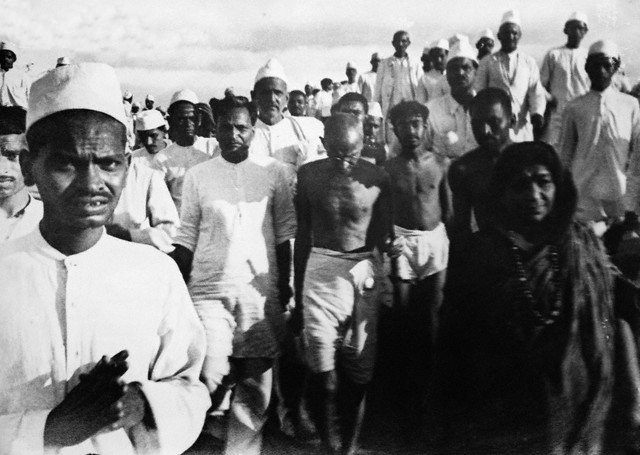
Worn without a shirt during British colonial rule, the dhoti became a sign of cultural identity and resistance. At the height of the independence movement, weaving khadi stood for the swadeshi cause, and in 1921 Gandhi took up the dhoti, often without a shirt, to align himself with the handicrafts of rural and poor people. For Jain worshippers, cloth that is unstitched is considered less exposed to pollution and so better suited to ritual. Many men treat it as formal dress, unlike the casual lungi.


Questions people ask about Dhoti
When is Dhoti kept?
Dhoti is kept on worn for puja, weddings and formal functions, and as daily dress in rural areas.
What is a dhoti?
It is a length of unstitched cloth, usually about four yards long, that a man wraps around his waist and legs so that it resembles loose trousers. It is the male counterpart of the sari and counts as ethnic wear across the Indian subcontinent.
Where is it worn?
It belongs to the Indian subcontinent, with India and Bangladesh named as home. It is most common in rural India and in South India, where the formal wrap is called panchakacham. Sikh men wore it in the Punjab, and Christian men in South Canara wore it to weddings until the 1960s.
How is it different from a lungi?
The lungi is a similar cloth, but it is more casual and often worn at home. The dhoti is wrapped around the legs in a way that gives it the shape of trousers and is treated as formal dress, sometimes worn by politicians. Mundu and veshti are names used loosely for the dhoti.
Why is it worn less today?
English dress displaced it in cities such as Bombay, now Mumbai, and stitched clothes were seen as caste neutral. Kurta-pyjama sets from Central Asia are often worn instead. Fewer men learn to wrap a dhoti, though it is still everyday dress in rural areas.
Is it worn for religious occasions?
Yes. Conservative Jain men wear the pancha for puja at a derasar or basadi, and the International Society for Krishna Consciousness asks Western members to wear one. At some South Indian temples men wear the dhoti without a shirt.
See also
 PashminaUltra-fine wool of Himalayan goats, hand-woven in Kashmir into shawls of rank
 SherwaniA long buttoned coat for men, worn at weddings and state occasions in South Asia
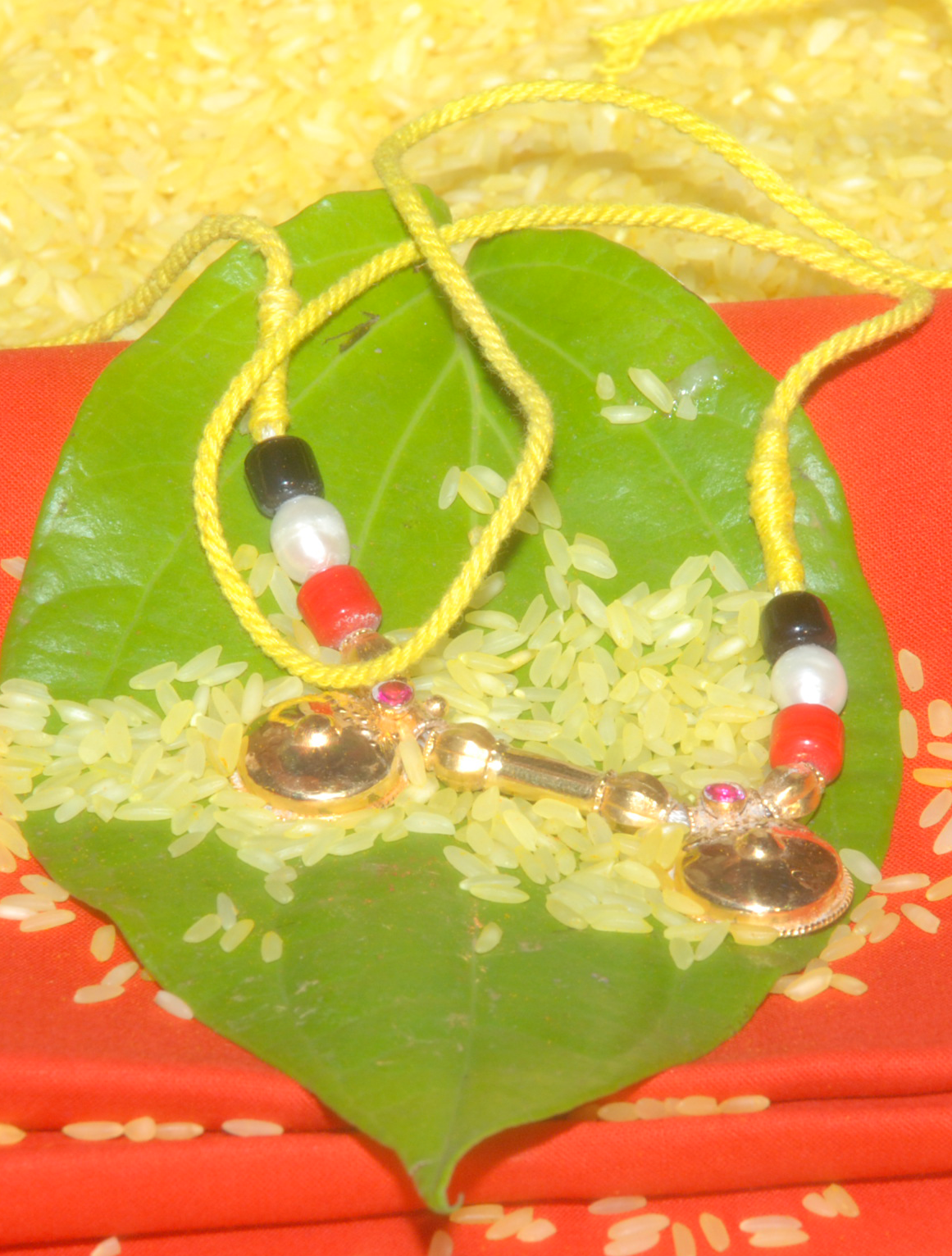 MangalasutraA necklace tied by the groom at a wedding, worn through married life
 SariAn unstitched length of cloth that women drape around the body, worn across South Asia
Good reading and sources
- Encyclopaedia BritannicaArticle
- Sartorial quirkinessDeccan Herald, Article
- Gandhi Jayanti: When Mahatma Gandhi turned ‘half-naked fakir’ in Tamil NaduHindustan Times, Article
- Dhoti dynamicsThe Hindu, Article
- Sartorial quirkinessDeccan Herald, Article
- Gandhi Jayanti: When Mahatma Gandhi turned ‘half-naked fakir’ in Tamil NaduHindustan Times, Article
- Dhoti dynamicsThe Hindu, Article
- Dhoti on WikipediaEncyclopedia
- More photos on Wikimedia CommonsPhotos and video
- Wikidata recordOpen data
The facts on this page come from the Wikipedia article "Dhoti", written by its contributors and used under the CC BY-SA 4.0 licence, and from its Wikidata record (CC0). EveryParampara rewrote the text in its own words, with AI assistance, and compares every page with the article to make sure no passage is copied. It may be reused under the same CC BY-SA 4.0 licence with a link back.
It may contain mistakes. Traditions differ from one family, village and community to the next, and the people who keep them know them best. If something is wrong, tell us. Last refreshed 2026-10-05.
More from India
All the traditions of India
🇮🇳 Srinagar, India and 3 morePashmina
Ultra-fine wool of Himalayan goats, hand-woven in Kashmir into shawls of rankDress
🇮🇳 India and 2 moreMangalasutraमङ्गलसूत्रम् (maṅgalasūtram)
A necklace tied by the groom at a wedding, worn through married lifeDress
🇮🇳 Lucknow, India and 3 moreSherwani
A long buttoned coat for men, worn at weddings and state occasions in South AsiaDress
🇮🇳 India and 4 moreSariसाड़ी
An unstitched length of cloth that women drape around the body, worn across South AsiaDress
The same idea elsewhere
Weddings compared 🇼🇸 Samoa and 1 moreʻIe tōga
Precious woven mats exchanged in Samoan ceremonies to honor family ties and chiefly status.Dress
🇼🇸 Samoa and 1 moreʻIe tōga
Precious woven mats exchanged in Samoan ceremonies to honor family ties and chiefly status.Dress
 🇹🇱 Timor-LesteUma Lulik
Sacred ancestral clan houses and ritual shrines in East TimorSpiritual
🇹🇱 Timor-LesteUma Lulik
Sacred ancestral clan houses and ritual shrines in East TimorSpiritual
 🇮🇩 Indonesia and 2 moreKenduri
A communal prayer meal and gathering shared across Indonesia, Malaysia and BruneiSpiritual · Feasts and festival meals
🇺🇬 UgandaKwanjula
A formal marriage introduction ritual of the Baganda people in Uganda, where families meet to exchange gifts and seek blRite of passage
🇮🇩 Indonesia and 2 moreKenduri
A communal prayer meal and gathering shared across Indonesia, Malaysia and BruneiSpiritual · Feasts and festival meals
🇺🇬 UgandaKwanjula
A formal marriage introduction ritual of the Baganda people in Uganda, where families meet to exchange gifts and seek blRite of passage