Dress and adornmentSouth AsiaHindu
Sari
In its own language: साड़ी
An unstitched length of cloth that women drape around the body, worn across South Asia

A sari is a long piece of woven cloth, worn without stitching, that women wrap around the body, with one end over a shoulder. It is everyday and formal dress in India, Bangladesh, Sri Lanka, Nepal and Pakistan, and a red sari is the usual choice for a Hindu bride.
When is Sari kept?
Sari is kept on worn on ordinary days and for festive and formal occasions, with no fixed date.
Unstitched and unsewn, a sari is a length of woven cloth that a woman wraps around herself: a skirt at the waist, pleats in front, and one end carried over a shoulder. Women across India, Bangladesh, Sri Lanka, Nepal and Pakistan wear it at home, to work, and to weddings. Its regional names, weaves and ways of tying it differ from place to place.
What it is
A sari is one length of cloth, not cut and not stitched. Most are between about four and a half and nine yards long, and between two and four feet wide. Underneath, a woman wears a close-fitting blouse, the choli, and tucks the cloth into a petticoat at the waist. Names travel: the blouse is ravike or kuppasa in southern India and cholo, or chaubandi cholo, in Nepal, while the underskirt may be called saya, parkar or ul pavadai. The loose end, the pallu, is carried over a shoulder, and the midriff is often left bare.
Origins and history
The name comes from śāṭikā, a Sanskrit word for a strip of cloth, with related forms in Pali and in Kannada. Early Hindu and Buddhist writings describe a dress in three parts: a lower wrap, a veil for the shoulder or head, and a band across the chest. Those three, the antariya, the uttariya and the stanapatta, are the ancestors of the skirt, the dupatta and the blouse. Drapery of this sort is traced to the north-west of the subcontinent between 2800 and 1800 BCE. Cotton weaving there is older still, and indigo, lac, madder and turmeric were already in use as dyes.
How it is draped
Recorded ways of tying a sari run past eighty, and one textile scholar, Ṛta Kapur Chishti, sets down 108 of them in a book covering drapes from fourteen states. The nivi drape is the commonest. In the Deccan it has a variant in which the pleats pass between the legs and are tucked at the back, so the legs stay covered and free to move. Bengali and Odia women use a single box pleat and carry a longer end over the left shoulder. In the Himalayan hills a woollen sari, the Kulluvi Pattu, is worn. Women in Bihar, Uttar Pradesh, Gujarat and Rajasthan bring the loose end forward instead.
Cloth and weaving
Handloom saris are named after the place or the technique that produced them. Silk brocades include Banarasi, Kanchipuram, Paithani, Mysore and Chanderi. Ikat and cotton weaving give Patola, Sambalpuri, Jamdani, Tant and Ilkal. Bandhani, Leheria, Ajrakh, Bagh and Kalamkari cloth, dyed or block printed, is worn in the monsoon. Embroidery lifts plainer saris: gota patti, phulkari, kasuti and others. Polyester, georgette and charmeuse are common now as well. Silk came into use in the subcontinent somewhere around 2450 to 2000 BCE, and cotton much earlier.
Today and change
The sari is still worn and still being altered. It is accepted as formal dress in the region, and women wear it to offices, ceremonies and weddings, where red remains the favourite colour for a bride. The bodice has a history of its own: tied at the front in the south, and still tied at the back in Rajasthan in the older northern way. A non-profit project begun in 2017, the Sari Series, filmed more than eighty drapes so that they are not forgotten. Whether of handloom silk or of synthetic cloth, each sari is tied fresh when it is put on.
How Sari is kept
The cloth goes around the waist first, its upper edge tucked into the petticoat, with pleats falling at the front to the feet. The rest of the length crosses the body and comes to rest on one shoulder, showing more or less of the midriff according to local custom and the occasion. A choli sits underneath. In some communities a married woman also draws the loose end over her head as a ghoonghat. Brides wear red. Women choose the weave, the colour and the drape to suit a wedding, a festival, a working day or a quiet one at home.
When and where
A sari has no date of its own, since it is not a festival. It belongs to ordinary days and to special ones alike. On a wedding day a Hindu bride in the region very often wears one; at a festival or a formal occasion it is the usual choice; on a working morning it is simply what many women put on.
It is worn in India, Bangladesh, Sri Lanka, Nepal and Pakistan, and counts as ethnic dress in all five. Regional styles are strongest where they are woven: Banarasi silk in the north, Kanchipuram and Kanjivaram in the south, Jamdani and Tant in Bengal, Sambalpuri and Bomkai in Odisha, Patola and Bandhani in the west.
What Sari means
The sari carries ideas about modesty as well as beauty. Ancient law writers held that a woman's navel should never be seen, though many old images show it bare, so rule and practice did not always agree. For a married woman, drawing the end over her head as a ghoonghat marks respect and married status in Hindi-speaking areas. For a bride, red marks the wedding itself. Because the cloth is tied by hand each time, one sari can be worn in many ways.


Questions people ask about Sari
When is Sari kept?
Sari is kept on worn on ordinary days and for festive and formal occasions, with no fixed date.
What exactly is a sari?
It is a long piece of woven cloth, neither cut nor stitched, that a woman winds around herself. One part makes the skirt, the folds at the front make the pleats, and the rest is carried over a shoulder. It is worn over a fitted blouse and a petticoat.
Where is it worn?
In India, Bangladesh, Sri Lanka, Nepal and Pakistan, where it counts as ethnic dress and is accepted as formal wear. Each region has its own weaves and its own way of tying it.
How long is one?
Usually between about four and a half and nine yards, which is roughly four to eight metres, and between two and four feet wide. A drape that needs more cloth, or less, calls for a different length.
What is worn under it?
A close-fitting blouse called a choli, known in the south as ravike or kuppasa and in Nepal as cholo, and a petticoat, also called saya, parkar or ul pavadai. In one older Rajbanshi style women traditionally wore no blouse at all.
Is it only for weddings?
No. A wedding is where a red sari is most expected, but the garment is worn for work, daily life, festivals and formal occasions just as much.
See also
 PashminaUltra-fine wool of Himalayan goats, hand-woven in Kashmir into shawls of rank
 SherwaniA long buttoned coat for men, worn at weddings and state occasions in South Asia
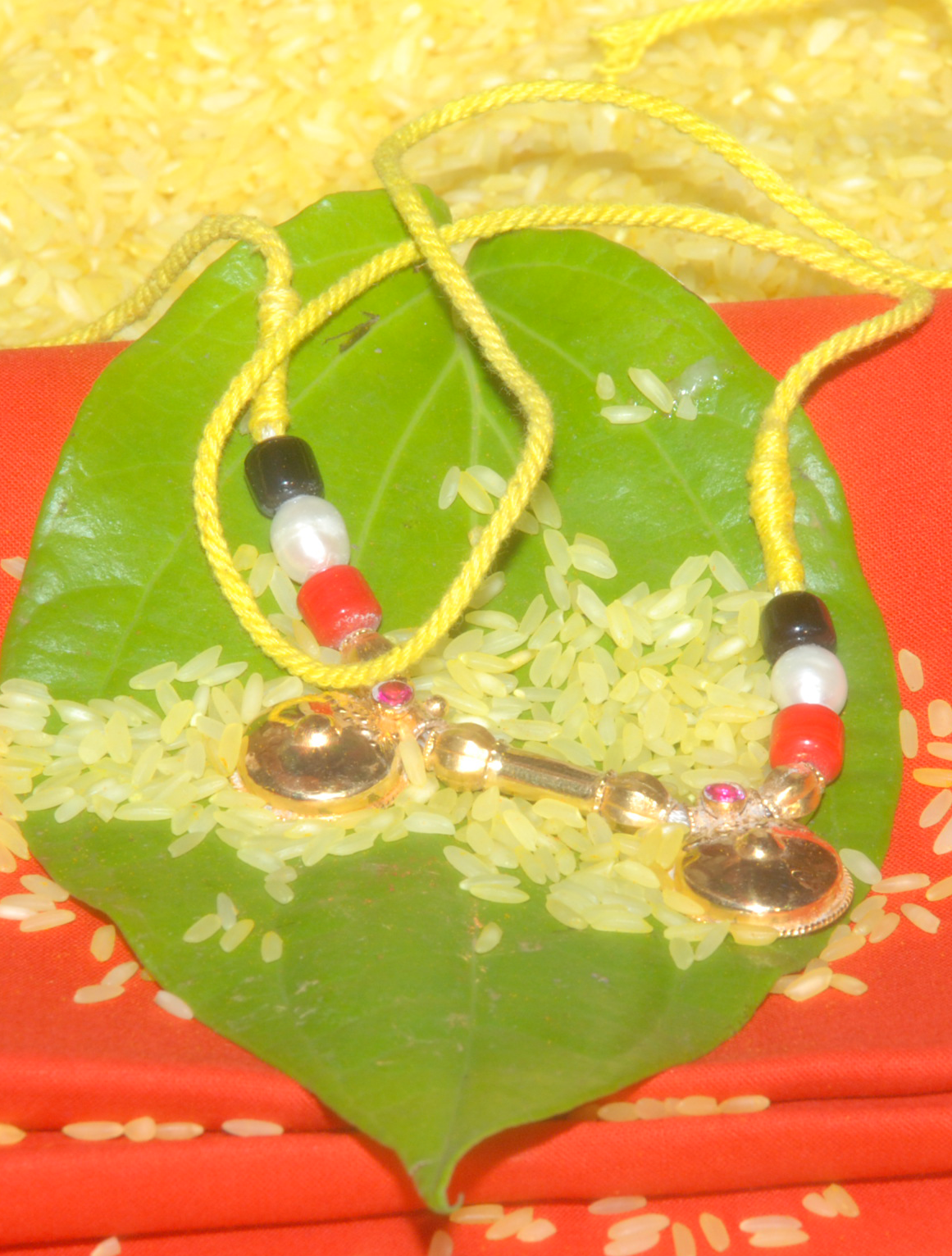 MangalasutraA necklace tied by the groom at a wedding, worn through married life
 IkatA resist-dyeing craft from Southeast Asia, where yarns are tied and dyed before weaving
Good reading and sources
- Encyclopaedia BritannicaArticle
- Wendell Rodricks showcases colours of GoaHindustan Times, Article
- Jamdani Sari gets GI registration certificateThe Daily Star, Article
- Wendell Rodricks showcases colours of GoaHindustan Times, Article
- Jamdani Sari gets GI registration certificateThe Daily Star, Article
- Sari on WikipediaEncyclopedia
- More photos on Wikimedia CommonsPhotos and video
- Wikidata recordOpen data
The facts on this page come from the Wikipedia article "Sari", written by its contributors and used under the CC BY-SA 4.0 licence, and from its Wikidata record (CC0). EveryParampara rewrote the text in its own words, with AI assistance, and compares every page with the article to make sure no passage is copied. It may be reused under the same CC BY-SA 4.0 licence with a link back.
It may contain mistakes. Traditions differ from one family, village and community to the next, and the people who keep them know them best. If something is wrong, tell us. Last refreshed 2026-10-05.
More from India
All the traditions of India 🇮🇳 Mumbai, India and 1 moreDhoti
A long unstitched cloth men wrap like trousers, for worship and formal daysDress
🇮🇳 India and 2 moreMangalasutraमङ्गलसूत्रम् (maṅgalasūtram)
A necklace tied by the groom at a wedding, worn through married lifeDress
🇮🇳 Lucknow, India and 3 moreSherwani
A long buttoned coat for men, worn at weddings and state occasions in South AsiaDress
🇮🇳 Srinagar, India and 3 morePashmina
Ultra-fine wool of Himalayan goats, hand-woven in Kashmir into shawls of rankDress
🇮🇳 Mumbai, India and 1 moreDhoti
A long unstitched cloth men wrap like trousers, for worship and formal daysDress
🇮🇳 India and 2 moreMangalasutraमङ्गलसूत्रम् (maṅgalasūtram)
A necklace tied by the groom at a wedding, worn through married lifeDress
🇮🇳 Lucknow, India and 3 moreSherwani
A long buttoned coat for men, worn at weddings and state occasions in South AsiaDress
🇮🇳 Srinagar, India and 3 morePashmina
Ultra-fine wool of Himalayan goats, hand-woven in Kashmir into shawls of rankDress
The same idea elsewhere
Weddings compared 🇼🇸 Samoa and 1 moreʻIe tōga
Precious woven mats exchanged in Samoan ceremonies to honor family ties and chiefly status.Dress
🇼🇸 Samoa and 1 moreʻIe tōga
Precious woven mats exchanged in Samoan ceremonies to honor family ties and chiefly status.Dress
 🇹🇱 Timor-LesteUma Lulik
Sacred ancestral clan houses and ritual shrines in East TimorSpiritual
🇹🇱 Timor-LesteUma Lulik
Sacred ancestral clan houses and ritual shrines in East TimorSpiritual
 🇮🇩 Indonesia and 2 moreKenduri
A communal prayer meal and gathering shared across Indonesia, Malaysia and BruneiSpiritual · Feasts and festival meals
🇺🇬 UgandaKwanjula
A formal marriage introduction ritual of the Baganda people in Uganda, where families meet to exchange gifts and seek blRite of passage
🇮🇩 Indonesia and 2 moreKenduri
A communal prayer meal and gathering shared across Indonesia, Malaysia and BruneiSpiritual · Feasts and festival meals
🇺🇬 UgandaKwanjula
A formal marriage introduction ritual of the Baganda people in Uganda, where families meet to exchange gifts and seek blRite of passage