Pashmina
Ultra-fine wool of Himalayan goats, hand-woven in Kashmir into shawls of rank

Pashmina is the ultra-fine wool of the Changthangi goat of the Himalayan plateau, and also the name of the Kashmiri shawls woven from it. Among Mughal and Iranian rulers it marked rank and favour, later it became a dowry heirloom and a European fashion, and in Srinagar craftspeople still make it by hand.
When is Pashmina kept?
Pashmina is kept on spring, when the goats shed their undercoat and it is combed out.
Pashmina is the very fine underwool of the Changthangi goat, a breed herded on the high Changthang plateau. The same word names the Kashmiri shawl woven from it, once a mark of rank at Mughal and Iranian courts, then a dowry heirloom and a European fashion. Herders comb the wool out in spring; craftspeople in Srinagar clean, spin and weave it by hand.
What pashmina is
The word pashm means wool in Persian. In Kashmir it named the unspun fleece of the domesticated Changthangi goat. Today the same term covers both that raw material and the Kashmiri shawl woven from it, and sometimes a blend of 70 per cent cashmere with 30 per cent silk. Cashmere and pashmina come from the same animal; what separates them is fineness. Ordinary cashmere fibres run from 12 to 21 microns in diameter, while pashmina and the cashmere-silk blend are usually 12 to 16.
Rank and ceremony
Wool recovered from corroded copper objects at Harappa, a site of the Indus Valley Civilisation, is thought to have been pashmina and shahtoosh. The material became known through the Kashmir shawl. Mughal emperors wore and gave it: Babur, who founded the empire in 1526, began the custom of presenting robes of honour, and a set could take in a turban, coat, gown, jacket, sash, shawl, trousers, shirt and scarf, some of pashmina and embroidered in gold. Under Babur's grandson Akbar, who took Kashmir in 1568, a pair of shawls was expected at such ceremonies. In Iran, emperors of the Safavid, Zand and Qajar dynasties wore pashmina and gave Kashmir shawls as marks of favour.
Goats and gathering
The goats belong to Changpa herders, nomads of the Changthang plateau in Tibet, and to the Ladakh region. They graze at no less than about 4,100 metres, in a place where winter can reach minus 40 Celsius, and the same households keep sheep for meat. Pashmina comes off the animal with the spring moult: the undercoat loosens and is combed away, not shorn, roughly 80 to 170 grams from each goat. The fibre then travels to Kashmir. Combing, cleaning, spinning, weaving and finishing are hand work, done by men and women who specialise in the craft.
Cloth and trade
Pashmina is prized for softness and warmth. Pieces are made in several sizes, from a scarf of about 70 by 200 centimetres to a large shawl of 137 by 274 centimetres. A single traditional stole of 70 by 200 centimetres is said to take about 180 hours of hand work. In Kashmir the shawl is called shahmina, and a surge of demand in the mid-1990s pushed consumption past what the raw fibre could supply. That opened the door to doubtful selling. Some goods sold as pashmina hold sheep's wool, others viscose, and in the United States the term has no legal standing of its own.
Patterns and motifs
The first shawls carried no special design, only stripes in different colours, and weavers later looked to nature for ideas. Flowers became common, and Persian influence is strong in the ornament, with traces of European taste from the middle of the nineteenth century. A chand-dar, or moon shawl, put a medallion in the middle and quarter motifs at the corners, and the pattern spread over almost the whole ground, leaving little of the base colour visible. Small butis and badam shapes remain among the favourite motifs.
How Pashmina is kept
The Changpa herd pashmina goats for wool and sheep for meat on the Changthang plateau. Each spring the animals shed their winter undercoat, which is combed out rather than shorn, giving roughly 80 to 170 grams an animal. The raw fibre goes to Kashmir. There, specialists clean it, remove coarse guard hair, align the fibres, spin the yarn, weave the cloth and finish it, all by hand. A traditional stole of about 70 by 200 centimetres takes around 180 hours of work.
When and where
The fibre is gathered once a year, in spring, at the moult, so that the goats keep a coat for winter and grow a fresh one. There is no fixed festival date. Weaving runs through the year in Kashmir, and shawls were once worn and given whenever rank, marriage or a coming of age called for them.
The goats are herded on the Changthang plateau of Tibet and in the Ladakh region of the Himalayas, at altitudes above about 4,100 metres. The raw wool travels to Kashmir for working, and the old quarter of Srinagar is the main centre of pashmina cloth production. Iran, Nepal and Pakistan have their own histories of wearing and gifting these shawls; China and Mongolia now lead world cashmere output.
What Pashmina means
In the Mughal court a pashmina robe or shawl marked service rewarded, and Iranian rulers used the cloth to honour courtiers and allies. Indian, Pakistani and Nepali households put pashmina blankets into a bride's dowry. Nineteenth-century English writing treated the Kashmiri shawl as a woman's luxury and an heirloom she inherited rather than bought, worn at marriage and at coming of age. Under the Bourbon Restoration and the Second Empire the shawl showed French bourgeois standing.


Questions people ask about Pashmina
When is Pashmina kept?
Pashmina is kept on spring, when the goats shed their undercoat and it is combed out.
What exactly is pashmina?
Sources use the word in two ways. It can mean the fine cashmere wool of the Changthangi goat, and it can mean the Kashmiri shawl made from that wool or from a cashmere and silk blend. Typical cashmere fibres measure 12 to 21 microns across; pashmina fibre is finer, 12 to 16.
Where does it come from?
The goats are kept by Changpa herders on the Changthang plateau of Tibet and in Ladakh, where winter temperatures can fall to minus 40 Celsius. The raw wool is sent to Kashmir, and the old district of Srinagar is the main centre for making it into cloth.
How is the wool collected?
Not by shearing. The goats shed their winter undercoat on their own each spring and grow a new one for winter, and herders comb the loose fibre out. One animal yields roughly 80 to 170 grams.
Why did a pashmina shawl matter so much?
At the Mughal court, robes of honour could be made of it, and in Iran emperors wore and gifted it. Later it became an heirloom in South Asian dowries and a mark of fashion and class in Europe.
Is every shawl sold as pashmina really pashmina?
No. In the United States the word has no legal labelling status and is treated as another name for cashmere. Some items sold under it contain sheep's wool, and others contain artificial fibres. Makers are asked to state on a tag what they mean by the term.
See also
 TurbanCloth wound around the head, worn for faith, rank, shade and identity
 SherwaniA long buttoned coat for men, worn at weddings and state occasions in South Asia
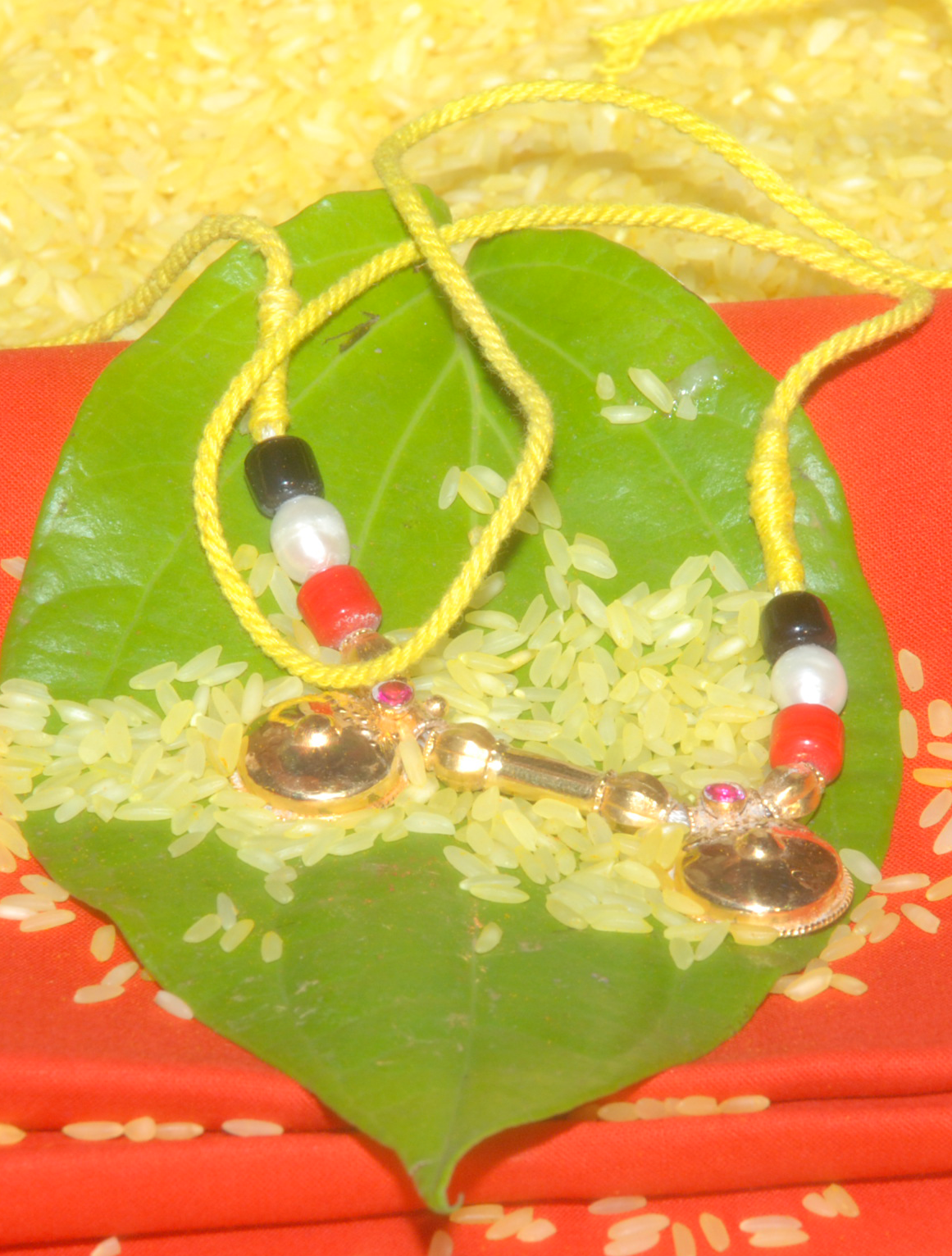 MangalasutraA necklace tied by the groom at a wedding, worn through married life
 IkatA resist-dyeing craft from Southeast Asia, where yarns are tied and dyed before weaving
Good reading and sources
- Pashmina (material) on WikipediaEncyclopedia
- More photos on Wikimedia CommonsPhotos and video
- Wikidata recordOpen data
The facts on this page come from the Wikipedia article "Pashmina (material)", written by its contributors and used under the CC BY-SA 4.0 licence, and from its Wikidata record (CC0). EveryParampara rewrote the text in its own words, with AI assistance, and compares every page with the article to make sure no passage is copied. It may be reused under the same CC BY-SA 4.0 licence with a link back.
It may contain mistakes. Traditions differ from one family, village and community to the next, and the people who keep them know them best. If something is wrong, tell us. Last refreshed 2026-10-05.
More from India
All the traditions of India
🇮🇳 Pune, India and 5 moreTurbanدولبند (dolband)
Cloth wound around the head, worn for faith, rank, shade and identityDress
🇮🇳 India and 2 moreMangalasutraमङ्गलसूत्रम् (maṅgalasūtram)
A necklace tied by the groom at a wedding, worn through married lifeDress
🇮🇳 Lucknow, India and 3 moreSherwani
A long buttoned coat for men, worn at weddings and state occasions in South AsiaDress
 🇮🇳 Mumbai, India and 1 moreDhoti
A long unstitched cloth men wrap like trousers, for worship and formal daysDress
🇮🇳 Mumbai, India and 1 moreDhoti
A long unstitched cloth men wrap like trousers, for worship and formal daysDress
The same idea elsewhere
Royalty and coronation compared 🇺🇬 Uganda and 4 moreBarkcloth
Cloth beaten from tree bark across Africa, Asia and the PacificCraft
🇮🇩 Bali, Indonesia and 5 moreIkat
A resist-dyeing craft from Southeast Asia, where yarns are tied and dyed before weavingCraft
🇺🇬 Uganda and 4 moreBarkcloth
Cloth beaten from tree bark across Africa, Asia and the PacificCraft
🇮🇩 Bali, Indonesia and 5 moreIkat
A resist-dyeing craft from Southeast Asia, where yarns are tied and dyed before weavingCraft
 🇮🇱 IsraelTallitטלית
A four-cornered Jewish prayer shawl with ritual fringes worn during worshipSpiritual
🇮🇱 IsraelTallitטלית
A four-cornered Jewish prayer shawl with ritual fringes worn during worshipSpiritual
 🇮🇷 Isfahan, Iran and 3 morePersian gardenباغ ایرانی
An ancient tradition of creating walled, geometric sanctuaries of shade and flowing waterCraft
🇮🇷 Isfahan, Iran and 3 morePersian gardenباغ ایرانی
An ancient tradition of creating walled, geometric sanctuaries of shade and flowing waterCraft