Music, dance and storytellingLatin America and the CaribbeanChristianIndigenous and traditional
Diablada
In its own language: Danza de los Diablos
An Andean masked dance depicting a battle between devils and the Archangel Michael

Diablada is an Andean folk dance performed in elaborate devil masks and costumes, celebrated during major carnivals and religious feasts in Bolivia, Peru, and Chile. Dancers depict demons, the seven deadly sins, and Saint Michael in choreographed street battles between good and evil.
When is Diablada marked?
Diablada is kept as part of Candlemas, which is on Tuesday, 2 February 2027.
Diablada, or the Dance of the Devils, is an Andean masquerade dance known for dramatic demon masks, intricate costumes, and lively music. Rooted in ancient Uru and Aymara rituals as well as Spanish Catholic morality plays, the dance portrays the battle between the Archangel Michael and forces of evil. Today, large squads perform it across the streets of Bolivia, Peru, and Chile during regional festivals and carnival celebrations.
Ancient roots and faith
Bolivian historians trace the performance back to the Uru people and their ancient dance honoring Tiw, a protective underground spirit linked with caves and rivers. With Spanish colonial rule, authorities suppressed native rites or blended them with Christian liturgy. Tiw transformed into El Tío, the guardian of the mines, and was later equated with the devil. Similar customs emerged around Lake Titicaca among the Lupaka and Aymara peoples, drawing on theatrical autos sacramentales that depicted fights between angels and demons. Over centuries, these layered beliefs produced the modern festival dance.
Characters and choreography
The dance presents a theatrical procession led by the Archangel Michael, who appears dressed in a skirt and blouse while wielding a sword and shield. Behind him march Lucifer, Satan, and devil women known as China Supay, along with dancers representing the seven deadly sins. Troopers in fierce masks follow, constantly moving across streets, plazas, or theater stages. In the climactic moment of the performance, Saint Michael defeats the devil. Choreographies rely on three distinct structural formats, each unfolding across seven moves.
Music and traditional instruments
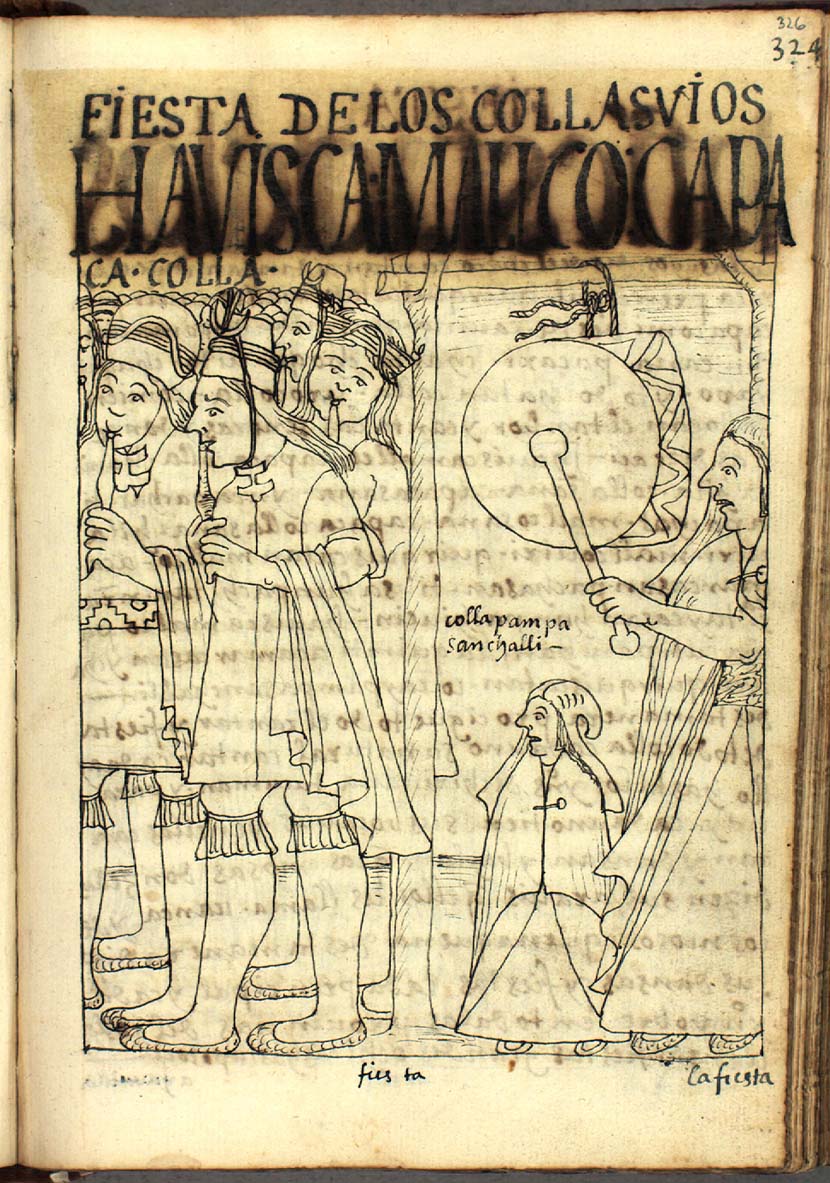
Musical accompaniment for the dance originally depended on sikuri ensembles playing the siku, a traditional Andean panpipe. Modern groups perform to full brass orchestras or percussionists called Sicu-Morenos. A typical musical piece is divided into two distinct sections: an opening march followed by the lively rhythm known as the Devil's Mecapaqueña. While historical performances included spoken dialogue between the saint and the devils, mid-twentieth-century performers abandoned the spoken lines to concentrate entirely on synchronized movement and music.
Festivals across the Andes
The dance is a central attraction of the Carnival of Oruro in Bolivia, where organized groups like the Gran Tradicional y Auténtica Diablada Oruro have danced since the early twentieth century. Across the border in Peru, the Diablada Puneña is celebrated in Puno, incorporating distinct regional costumes and historical pre-Columbian motifs. In northern Chile, tens of thousands gather in the village of La Tirana for the Fiesta de La Tirana, where squads dance to honour the Virgin of Carmen.
How Diablada is kept
Performers organise into dedicated dance squads and take to city streets or public arenas in elaborate costumes. Led by Saint Michael holding a sword and shield, the troupe processes alongside Lucifer, Satan, devil women, and figures embodying the seven deadly sins. Accompanied by brass bands or traditional panpipes, the angels and demons execute series of synchronized steps. The ritual reaches its climax when the archangel confronts and conquers the devil in front of the watching crowd.
When and where
The dance is held primarily during Carnival season and Catholic feasts. Key dates include Candlemas on 2 February, the annual Carnival of Oruro, and northern Chile's Fiesta de La Tirana.
Diablada is performed across the Andean Altiplano region, with its deepest roots in Oruro and Potosí in Bolivia. Major traditions also thrive in Puno, Peru, and in northern Chilean towns like La Tirana and Iquique.
What Diablada means
The performance represents the triumph of good over evil through the victory of Saint Michael over the devil. Beneath the Christian narrative, the dance preserves ancient Andean cosmology, honouring subterranean guardians like Tiw or El Tío, and celebrating mythical creatures such as snakes, lizards, toads, and ants that protected sacred places.
Days Diablada is marked
Questions people ask about Diablada
When is Diablada marked?
Diablada is kept as part of Candlemas, which is on Tuesday, 2 February 2027.
What is the Diablada?
It is an Andean masquerade folk dance that depicts a confrontation between Christian angels and devils. Dancers wear elaborate masks, capes, and horns, accompanied by brass orchestras or panpipe players in street parades.
Where did the dance originate?
Bolivian history traces the dance to ancient Uru rituals and miners in the Socavón mines of Oruro and Potosí. Related traditions also developed among the Lupaka and Aymara peoples across the Lake Titicaca region and Peru.
Who are the main characters in the dance?
The procession is led by the Archangel Michael, armed with a sword and shield. He confronts Lucifer, Satan, female devils called China Supay, figures personifying the seven deadly sins, and a legion of masked devils.
See also
 Feast of Corpus ChristiA Christian feast celebrating the presence of Christ in the bread and wine of the Eucharist
 Inti RaymiA major Andean festival honoring the sun god Inti and marking the winter solstice in Cusco.
 Carnival of OruroA Bolivian festival of masked pilgrimage dances honoring the Virgin of the Mineshaft
Good reading and sources
- Diablada on WikipediaEncyclopedia
- More photos on Wikimedia CommonsPhotos and video
- Wikidata recordOpen data
The facts on this page come from the Wikipedia article "Diablada", written by its contributors and used under the CC BY-SA 4.0 licence, and from its Wikidata record (CC0). EveryParampara rewrote the text in its own words, with AI assistance, and compares every page with the article to make sure no passage is copied. It may be reused under the same CC BY-SA 4.0 licence with a link back.
It may contain mistakes. Traditions differ from one family, village and community to the next, and the people who keep them know them best. If something is wrong, tell us. Last refreshed 2026-10-04.
More from Bolivia
All the traditions of Bolivia 🇧🇴 Oruro, Bolivia and 3 moreMorenada
A Bolivian folk dance featuring heavy masks and rattling instruments, performed in festivals across the Andes.Performance
🇧🇴 Oruro, Bolivia and 3 moreMorenada
A Bolivian folk dance featuring heavy masks and rattling instruments, performed in festivals across the Andes.Performance
 🇨🇱 Santiago, Chile and 3 moreCueca
A courtship dance of Chile and the Andes where partners trace circles with handkerchiefs to mimic a rooster and hen.Performance
🇦🇷 Salta, Argentina and 3 moreZamba
A graceful Argentine couple dance of circling steps and fluttering white handkerchiefsPerformance
🇨🇱 Santiago, Chile and 3 moreCueca
A courtship dance of Chile and the Andes where partners trace circles with handkerchiefs to mimic a rooster and hen.Performance
🇦🇷 Salta, Argentina and 3 moreZamba
A graceful Argentine couple dance of circling steps and fluttering white handkerchiefsPerformance
 🇦🇷 Santiago del Estero, Argentina and 1 moreChacarera
A partner dance and folk music genre from Argentina's north-west, known for its distinctive rhythm and courtship steps.Performance
🇦🇷 Santiago del Estero, Argentina and 1 moreChacarera
A partner dance and folk music genre from Argentina's north-west, known for its distinctive rhythm and courtship steps.Performance
The same idea elsewhere
All of this kind 🇹🇷 Kayseri, Turkey and 4 moreHalay
A traditional line and circle folk dance kept across Turkey, Azerbaijan, Armenia, Iran, and Syria.Performance
🇹🇷 Kayseri, Turkey and 4 moreHalay
A traditional line and circle folk dance kept across Turkey, Azerbaijan, Armenia, Iran, and Syria.Performance
 🇳🇿 Auckland, New ZealandPoi
A Māori performing art of swinging tethered weights in rhythmical patterns.Performance
🇳🇿 Auckland, New ZealandPoi
A Māori performing art of swinging tethered weights in rhythmical patterns.Performance
 🇺🇦 Kyiv, UkraineBanduraБандура
A Ukrainian plucked string instrument played to accompany epic songs and folk balladsPerformance
🇺🇦 Kyiv, UkraineBanduraБандура
A Ukrainian plucked string instrument played to accompany epic songs and folk balladsPerformance
 🇵🇭 Philippines and 1 morePangalay
A traditional fingernail dance of the Tausūg and Bajau peoples in the Sulu Archipelago and Sabah.Performance
🇵🇭 Philippines and 1 morePangalay
A traditional fingernail dance of the Tausūg and Bajau peoples in the Sulu Archipelago and Sabah.Performance