Festivals and celebrationsEuropeChristianSecular and civic
Ducasse de Mons
An eight-day festival in Mons featuring a golden carriage and a dragon combat

The Ducasse de Mons, or Doudou, is an annual civic and religious festival held in the Belgian city of Mons around Trinity Sunday. Citizens accompany the reliquary of Saint Waltrude through town on a golden carriage before gathering in the main square to watch Saint George battle a giant dragon.
When is Ducasse de Mons kept?
Ducasse de Mons is kept on annually across eight days starting the weekend of Trinity Sunday.
The Ducasse de Mons, locally known as the Doudou, is an eight-day festival celebrated in the city of Mons in western Belgium. Held every year around Trinity Sunday, the event unites religious devotion and civic theatre. The town honours its patron, Saint Waltrude, by parading her shrine through the streets on a massive gilded carriage, followed by a choreographed public combat in the central square between Saint George and a ten-metre dragon.
Origins and history
Records of a religious circumambulation in Mons date back to 1248. Local lore long credited the event to a 1349 procession that supposedly halted an outbreak of the Black Death. By 1352, the annual date settled on Trinity Sunday. Over the centuries, secular elements joined the sacred ritual. Noble fraternities introduced Saint George after 1380, and the staged monster fight appeared around 1440. Political rulers repeatedly suppressed the battle, including Austrian Emperor Joseph II in 1786 and Dutch authorities in 1819. Local enthusiasm revived the traditions in the twentieth century, and UNESCO recognised the celebrations in 2008 as part of the processional heritage of Belgium and France.
The golden chariot procession
Festivities begin on Saturday evening when clergy transfer Saint Waltrude's reliquary to civic leaders inside the collegiate church, followed by a torchlit parade. On Trinity Sunday morning, attendants mount the reliquary onto the Car d'Or, a heavy gilded wagon. Draft horses pull the carriage through the streets, flanked by members of historical guilds. The most tense moment occurs at the Rampe Sainte-Waudru, a steep cobblestone incline. Hundreds of spectators push from behind to help the horses climb the slope without stalling. According to local belief, failing to clear the hill in a single attempt brings misfortune to the city.
The combat of the Lumeçon
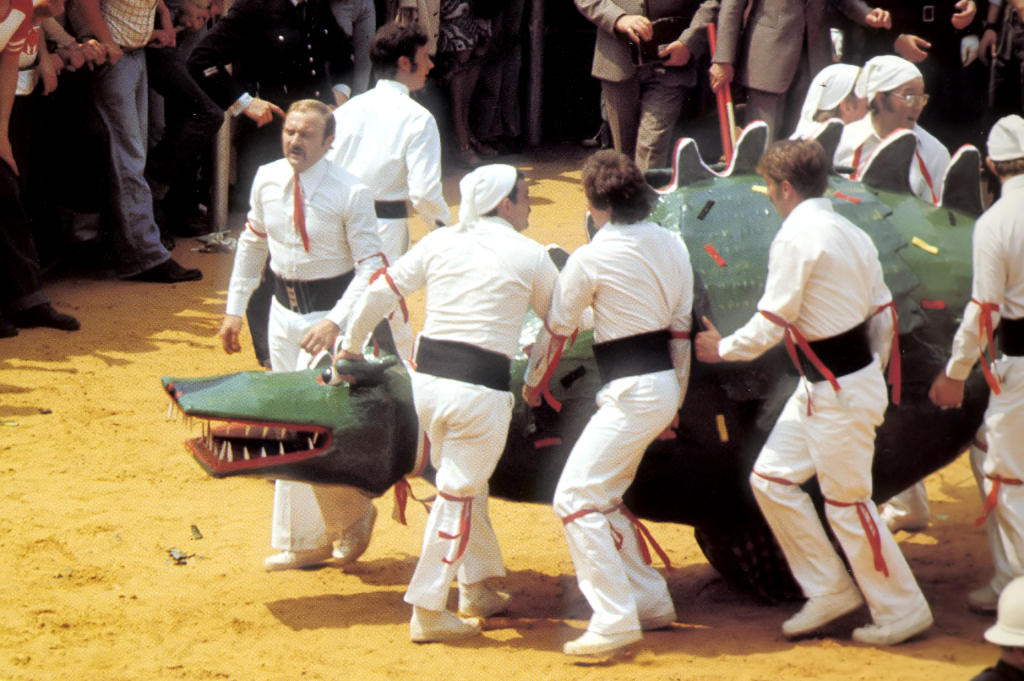
At midday on Trinity Sunday, crowds fill the Grand-Place to witness the Lumeçon, a staged duel between Saint George and a wicker dragon. Saint George circles clockwise on horseback while the ten-metre beast turns counter-clockwise. White-clad handlers carry the monster, supported by figures covered in ivy leaves, while devils wielding inflated bladders strike out at the crowd and canine guardians called Chinchins. As Saint George breaks his lance and finishes the beast with pistol fire, onlookers surge forward to pull horsehairs from the dragon's tail. Possessing these hairs is thought to bring good fortune for the coming year.
The festival week
The Ducasse forms an eight-day octave featuring varied civic events alongside the main weekend rites. International military bands perform in the main square on the opening Friday night, while a large street sale occupies the town on Monday. On the final Sunday, children stage their own version of the dragon combat using a smaller, lighter model. During the festivities, the city centre becomes a walking zone where families gather to listen to music, share barbecues, and drink local beer. The festival officially concludes when the saint's reliquary is ceremonially returned to its shrine.
How Ducasse de Mons is kept
On Saturday evening, the town priest entrusts Saint Waltrude's shrine to city officials for a torchlit walk. The next morning, the reliquary rides on the Car d'Or through the streets. Spectators unite behind the carriage to push it up a steep cobblestone hill. At midday, actors perform the Lumeçon in the Grand-Place, where Saint George slays a dragon defended by devils and ivy-clad helpers. Spectators grab horsehairs from the beast's tail for luck. Over the following days, the city hosts concerts, a street market, a children's fight, and the final return of the shrine.
When and where
The festival spans eight days, known as an octave, beginning the Saturday before Trinity Sunday and ending the following Sunday. Trinity Sunday takes place fifty-seven days after Easter.
The Ducasse takes place across the city of Mons in the Belgian province of Hainaut. Key moments occur inside the Collegiate Church of St. Waudru, along the cobblestone Rampe Sainte-Waudru, and in the central Grand-Place.
What Ducasse de Mons means
The festival unites civic identity with sacred protection. Saint George moving clockwise against the counter-clockwise dragon represents the triumph of good over evil. The shared effort of pushing the heavy reliquary up the hill symbolises communal resilience against municipal misfortune, while pluckings from the dragon's tail are cherished as protective tokens of annual good luck.


Questions people ask about Ducasse de Mons
When is Ducasse de Mons kept?
Ducasse de Mons is kept on annually across eight days starting the weekend of Trinity Sunday.
What is the Ducasse de Mons?
The Ducasse de Mons, or Doudou, is an eight-day festival in Mons, Belgium. It combines a religious procession carrying the shrine of Saint Waltrude on a gilded chariot with a traditional theatrical battle between Saint George and a dragon.
What happens during the Lumeçon combat?
In the town square, actors recreate the fight between Saint George and a ten-metre dragon. Saint George rides on horseback, supported by figures called Chinchins, while the dragon is aided by devils and ivy-covered men. Saint George eventually shoots the dragon with a pistol.
Why do people push the Golden Chariot?
The Car d'Or is a heavy wooden carriage bearing the saint's reliquary. Hundreds of people push it up the steep Rampe Sainte-Waudru because tradition warns that if the horses fail to reach the top in one continuous climb, the town will face misfortune.
Why do spectators pull hairs from the dragon's tail?
The tail of the processional dragon is wrapped with horsehair mane. During the combat, spectators in the arena try to snatch strands from the tail, believing that keeping them will bring good luck for the entire year.
See also
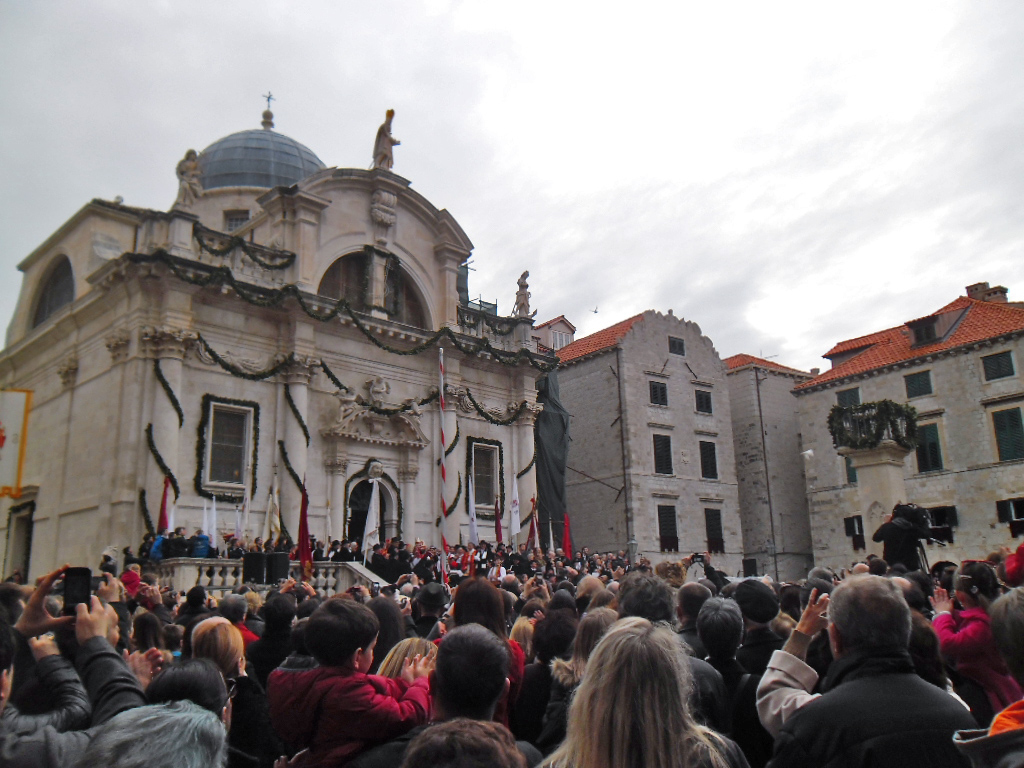 Festivity of Saint BlaiseAn annual patron saint festival in Dubrovnik with processions, relics and doves
 GillesCostumed carnival figures of Binche and surrounding Belgian towns
 MeyboomAn annual Brussels parade and ceremonial tree planting held every August
 CandlemasA Christian feast of candle blessings marking the end of the Christmas season
Good reading and sources
- Processional giants and dragons in Belgium and FranceUNESCO, Heritage listing
- Processional giants and dragons in Belgium and FranceUNESCO, Article
- Ducasse de Mons on WikipediaEncyclopedia
- More photos on Wikimedia CommonsPhotos and video
- Wikidata recordOpen data
The facts on this page come from the Wikipedia article "Ducasse de Mons", written by its contributors and used under the CC BY-SA 4.0 licence, and from its Wikidata record (CC0). EveryParampara rewrote the text in its own words, with AI assistance, and compares every page with the article to make sure no passage is copied. It may be reused under the same CC BY-SA 4.0 licence with a link back.
It may contain mistakes. Traditions differ from one family, village and community to the next, and the people who keep them know them best. If something is wrong, tell us. Last refreshed 2026-10-04.
More from Belgium
All the traditions of Belgium
🇭🇷 Dubrovnik, Croatia and 1 moreFestivity of Saint BlaiseFesta Svetog Vlaha
An annual patron saint festival in Dubrovnik with processions, relics and dovesFestival
🇧🇪 Brussels, BelgiumMeyboomMaâbuum
An annual Brussels parade and ceremonial tree planting held every AugustFestival
 🇩🇪 Germany and 5 moreMaypole
A tall wooden pole, garlanded and danced around, raised at May Day, Whitsun or MidsummerFestival
🇧🇪 Binche, BelgiumGillesGille
Costumed carnival figures of Binche and surrounding Belgian townsFestival
🇩🇪 Germany and 5 moreMaypole
A tall wooden pole, garlanded and danced around, raised at May Day, Whitsun or MidsummerFestival
🇧🇪 Binche, BelgiumGillesGille
Costumed carnival figures of Binche and surrounding Belgian townsFestival
The same idea elsewhere
Healing, luck and protection compared 🇮🇳 India and 4 moreWater lantern
Small lamps floated on water to honour the dead and ask for good fortuneFestival
🇮🇳 India and 4 moreWater lantern
Small lamps floated on water to honour the dead and ask for good fortuneFestival
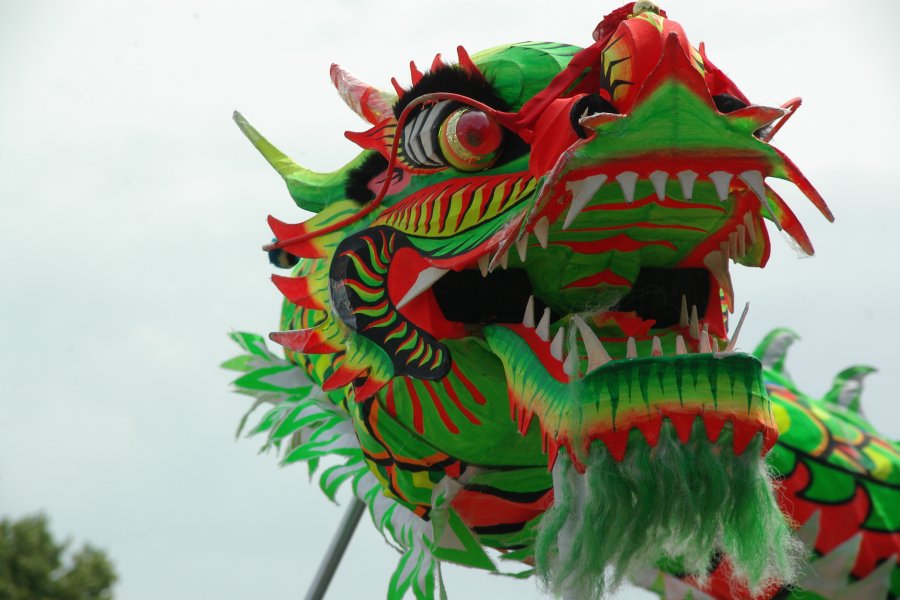 🇨🇳 China and 3 moreDragon dance舞龍 / 舞龙
A long dragon puppet on poles, danced by a team at Chinese New Year and other festivalsPerformance
🇨🇳 China and 3 moreDragon dance舞龍 / 舞龙
A long dragon puppet on poles, danced by a team at Chinese New Year and other festivalsPerformance
 🇺🇸 United States and 4 moreFriday the 13th
A Western folk superstition regarding the unluckiness of a Friday falling on the 13th.Folklore
🇵🇬 Trobriand Islands, Papua New GuineaTrobriand cricket
Cricket as played in the Trobriand Islands, with chants, dances and a feastGame
🇺🇸 United States and 4 moreFriday the 13th
A Western folk superstition regarding the unluckiness of a Friday falling on the 13th.Folklore
🇵🇬 Trobriand Islands, Papua New GuineaTrobriand cricket
Cricket as played in the Trobriand Islands, with chants, dances and a feastGame