Festivals and celebrationsEuropeChristian
Festivity of Saint Blaise
In its own language: Festa Svetog Vlaha
An annual patron saint festival in Dubrovnik with processions, relics and doves
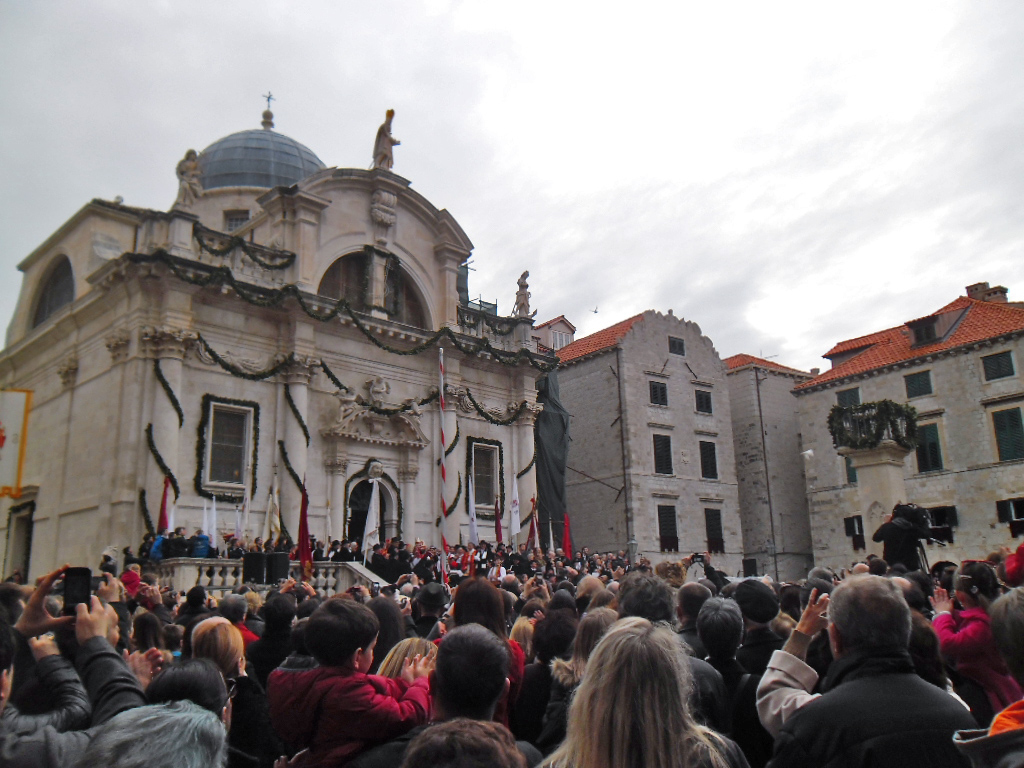
Held every February in Dubrovnik, Croatia, the Festivity of Saint Blaise honours the patron saint who according to legend saved the city in 972. Local residents, clergy and visitors gather for church blessings, rifle salutes and a grand relic procession through the historic stone streets.
When is Festivity of Saint Blaise kept?
Festivity of Saint Blaise is kept on annually on February 2 and 3.
The Festivity of Saint Blaise is an annual observance in Dubrovnik, Croatia, commemorating the saint believed to have protected the city from Venetian conquest in 972. Held at the start of February, the event blends Roman Catholic devotion with civic pride. Church leaders, local families and visitors assemble for sacred rites, colourful flag displays, dove releases and street processions, celebrating both a cherished protector and the official Day of the City.
Origins and legend
According to tradition, Dubrovnik developed after refugees fled the ruined settlement of Epidaurum in the seventh century. In 972, Venetian ships anchored nearby, claiming they needed to buy provisions, though their true aim was to seize the city. Saint Blaise appeared in a vision to a priest named Stojko in the Church of Saint Stephen, commanding him to warn the local Senate. The city prepared its defences in time and repelled the invaders. In gratitude, the leaders chose Saint Blaise as their principal guardian, replacing their earlier patrons, Sergius and Bacchus.
The opening day rites
Celebrations begin on February 2, the feast of Our Lady of Candelora. People recite an old rhyme noting that while Candelora bids farewell to winter, Saint Blaise follows and calls it a lie. Outside Dubrovnik Cathedral, participants release white doves to symbolise peace and freedom. The saint's official flag is then hoisted on Orlando's column in the main square. Long ago, the Republic granted safe passage during this period, allowing outlaws and banished citizens to enter the town without fear of arrest so everyone could take part in the festivities.
Processions and blessings
On February 3, the celebration reaches its peak as clergy and worshippers walk through the historic streets, including the main thoroughfare known as Stradun. The Bishop of Dubrovnik and fellow priests carry sacred relics, including pieces tied to Saint Blaise and a relic of Christ's shroud beneath a ceremonial canopy. Attendees pray, touch the reliquaries and kiss the bishop's hand. In front of the church, parish banners dip in salute to the saint, while priests offer throat blessings using crossed candles, invoking Saint Blaise's traditional role as a protector against throat ailments.
Gunfire and village banners
A distinct group known as trombunjeri participates by carrying wide, short-barrelled rifles on their shoulders. Before entering the historic centre, they fire loud volleys along Brsalje Street, recalling the historic use of gunfire and artillery to frighten away hostile forces during Republic times. When the central ceremonies conclude, representatives carry their consecrated parish banners back to rural communities. This gesture conveys the patron's blessings to elderly or distant villagers who were unable to travel into the city for the gathering.
How Festivity of Saint Blaise is kept
Festivities open on February 2 with white doves released outside Dubrovnik Cathedral and a flag raised on Orlando's column. Riflemen known as trombunjeri fire ceremonial shots outside the city walls. On February 3, a solemn procession travels along the Stradun, where clergy carry relics of Saint Blaise and the shroud of Jesus beneath a canopy. Citizens touch the relics, kiss the bishop's hand and receive throat blessings with crossed candles. Finally, standard-bearers return home with their banners, bringing blessings to nearby villages.
When and where
The festival takes place annually on February 2 and 3, coinciding with the feast of Our Lady of Candelora and Saint Blaise's Day. It is also marked as the official Day of the City of Dubrovnik.
The observance centres on Dubrovnik, Croatia, especially around Dubrovnik Cathedral, Orlando's column, Brsalje Street and the Stradun. Since 2014, a local branch in Brussels also organises an observance for the diaspora.
What Festivity of Saint Blaise means
For Dubrovnik, Saint Blaise represents divine safeguarding, communal unity and centuries of civic resilience. Releasing white doves expresses hopes for liberty and peace, while crossed candles honour the saint's protective power over throat health. Historically, the truce of Saint Blaise offered temporary pardon to outlaws, showing how the festival reinforced broad social harmony across all ranks.

Questions people ask about Festivity of Saint Blaise
When is Festivity of Saint Blaise kept?
Festivity of Saint Blaise is kept on annually on February 2 and 3.
What is the Festivity of Saint Blaise?
It is an annual civic and religious celebration in Dubrovnik, Croatia, honouring the city's patron saint who is credited with saving the town from Venetian invasion in 972.
What are the key rituals during the celebration?
Participants release white doves, raise banners, fire ceremonial rifles and join a relic procession along the Stradun, where priests bestow throat blessings using two crossed candles.
Who are the trombunjeri?
They are traditional riflemen who shoulder short, broad guns and fire loud volleys before entering the city gates, recalling historical artillery drills meant to deter invaders.
See also
 Mid-Autumn FestivalAn annual harvest festival celebrating family reunions, full moons and mooncakes
 Mardi GrasA festive day of parades and rich foods marking the final celebration before the Christian fasting season of Lent begins
 St. Martin's DayA November feast of lantern walks, bonfires, roast goose and new wine
 PysankaA wax-resist egg decorating tradition kept by Slavic communities for Easter and spring renewal.
Good reading and sources
- Festivity of Saint Blaise, the patron of Dubrovnik on WikipediaEncyclopedia
- More photos on Wikimedia CommonsPhotos and video
- Wikidata recordOpen data
The facts on this page come from the Wikipedia article "Festivity of Saint Blaise, the patron of Dubrovnik", written by its contributors and used under the CC BY-SA 4.0 licence, and from its Wikidata record (CC0). EveryParampara rewrote the text in its own words, with AI assistance, and compares every page with the article to make sure no passage is copied. It may be reused under the same CC BY-SA 4.0 licence with a link back.
It may contain mistakes. Traditions differ from one family, village and community to the next, and the people who keep them know them best. If something is wrong, tell us. Last refreshed 2026-10-04.
More from Croatia
All the traditions of Croatia 🇷🇸 Serbia and 5 moreĐurđevdanЂурђевдан
A spring festival and feast of Saint George kept across the Balkans and Eastern EuropeFestival · Feasts and festival meals
🇷🇸 Serbia and 5 moreĐurđevdanЂурђевдан
A spring festival and feast of Saint George kept across the Balkans and Eastern EuropeFestival · Feasts and festival meals
 🇬🇷 Greece and 5 moreName day
A calendar tradition where people celebrate the feast day of the saint after whom they are named.Festival
🇺🇦 Kyiv, Ukraine and 14 morePysankaписанка
A wax-resist egg decorating tradition kept by Slavic communities for Easter and spring renewal.Festival
🇬🇷 Greece and 5 moreName day
A calendar tradition where people celebrate the feast day of the saint after whom they are named.Festival
🇺🇦 Kyiv, Ukraine and 14 morePysankaписанка
A wax-resist egg decorating tradition kept by Slavic communities for Easter and spring renewal.Festival
 🇺🇦 Ukraine and 12 moreKoliadaКоляда
A traditional winter caroling and solstice festival kept across Slavic EuropeFestival
🇺🇦 Ukraine and 12 moreKoliadaКоляда
A traditional winter caroling and solstice festival kept across Slavic EuropeFestival
The same idea elsewhere
Healing, luck and protection compared 🇮🇳 India and 4 moreWater lantern
Small lamps floated on water to honour the dead and ask for good fortuneFestival
🇮🇳 India and 4 moreWater lantern
Small lamps floated on water to honour the dead and ask for good fortuneFestival
 🇨🇳 China and 3 moreDragon dance舞龍 / 舞龙
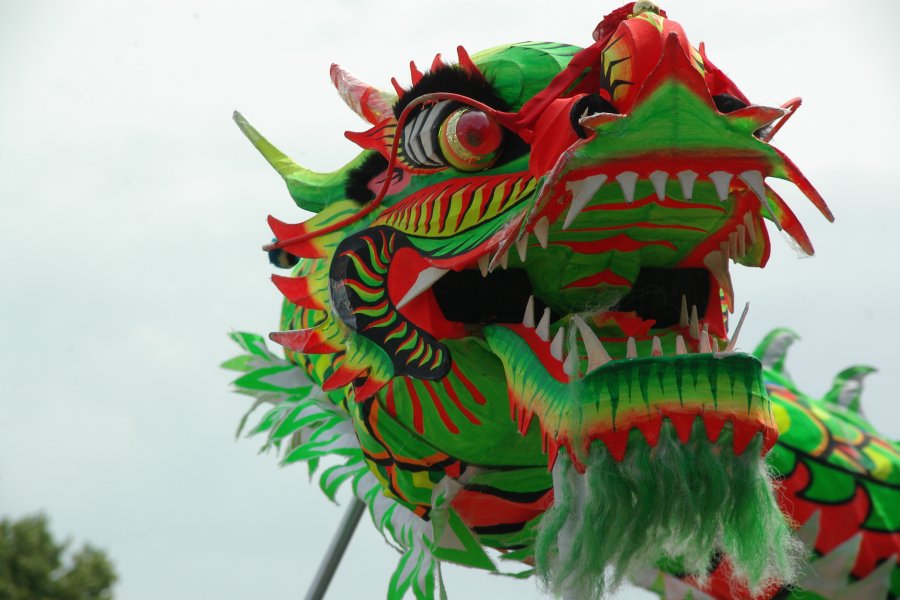
A long dragon puppet on poles, danced by a team at Chinese New Year and other festivalsPerformance
🇨🇳 China and 3 moreDragon dance舞龍 / 舞龙
A long dragon puppet on poles, danced by a team at Chinese New Year and other festivalsPerformance
 🇺🇸 United States and 4 moreFriday the 13th
A Western folk superstition regarding the unluckiness of a Friday falling on the 13th.Folklore
🇵🇬 Trobriand Islands, Papua New GuineaTrobriand cricket
Cricket as played in the Trobriand Islands, with chants, dances and a feastGame
🇺🇸 United States and 4 moreFriday the 13th
A Western folk superstition regarding the unluckiness of a Friday falling on the 13th.Folklore
🇵🇬 Trobriand Islands, Papua New GuineaTrobriand cricket
Cricket as played in the Trobriand Islands, with chants, dances and a feastGame