Music, dance and storytellingEast Asia
Eighteen Songs of a Nomad Flute
In its own language: 胡笳十八拍
A Chinese song and poetry cycle telling the story and sorrow of Cai Wenji

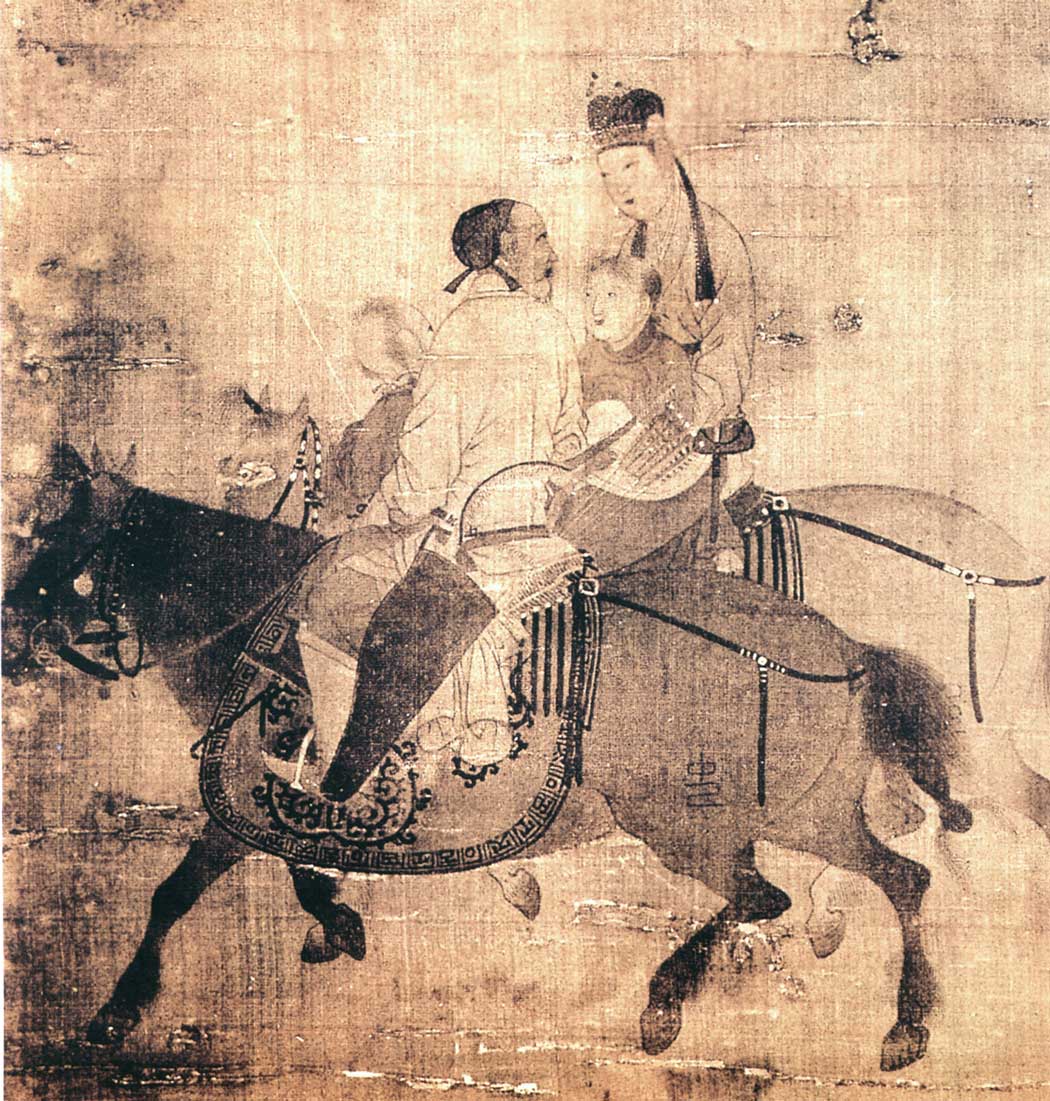
Eighteen Songs of a Nomad Flute is a classical Chinese cycle of songs and poetry that recounts the capture and exile of the poet Cai Wenji. Composed during the Tang dynasty and later set to eighteen painted scenes, the work centres on grief, longing, and maternal separation.
Eighteen Songs of a Nomad Flute is a renowned Chinese cycle of poetry and music. Originating in the Tang dynasty, the work relates the dramatic life of the Han dynasty poet Cai Wenji, who spent twelve years in captivity among northern nomads. Through eighteen stanzas, the piece explores themes of exile, homesickness, and the sorrow of a mother forced to leave her children behind upon returning to her homeland.
The story of Cai Wenji
The cycle draws on the real life of Cai Yan, widely known as Cai Wenji, a daughter of the Eastern Han scholar Cai Yong from Henan. Born late in the second century, she was widowed at a young age. Around 194 CE, nomadic Xiongnu forces swept into the capital and carried her away to the northern frontier. During her twelve years of captivity, she married a nomad leader known as the Leftside Virtuous King and gave birth to two sons. Chancellor Cao Cao eventually paid a ransom to bring her home in honour of her deceased father. Her return forced a heartbreaking choice, as she had to leave her young sons behind in the north.
Poetry and painted scrolls
Cai Wenji wrote about her experiences, and subsequent generations continued to celebrate her memory through verse. Around 770 CE during the Tang dynasty, the poet Liu Shang composed the eighteen-part poem that gave the suite its lasting form. Centuries later, Emperor Gaozong of the Song dynasty ordered an illustrated handscroll featuring Liu Shang's text alongside eighteen painted scenes. Surviving fragments of early versions are preserved in modern art museums, including early pieces in Boston and a fourteenth-century complete edition in New York. The blend of poetry and visual narrative helped preserve the historical tale through the ages.
Exile and historical allegory
Beyond its emotional weight, the story held deep political meaning for later dynasties. When Emperor Gaozong commissioned the painted handscroll, the tale mirrored the plight of his own mother, Empress Dowager Wei. Jurchen forces had captured her along with other members of the Song imperial household, holding her captive until a peace agreement allowed her release in 1142. For audiences across centuries, Cai Wenji's ordeal served as a powerful historical parallel for displacement and loss. Today, the artistic legacy of the songs continues to resonate primarily through its enduring portrait of personal sorrow and maternal sacrifice.
When and where
Originating in ancient China, the poetry and imagery of the cycle spread from Henan and the imperial capitals to become recognized across Chinese literary and artistic traditions.
What Eighteen Songs of a Nomad Flute means
The eighteen verses convey the grief of displacement, cultural estrangement, and the pain of parting. Cai Wenji represents resilience amid hardship, while her separation from her nomad-born sons stands as a symbol of sacrifice and sorrow.
Questions people ask about Eighteen Songs of a Nomad Flute
What is Eighteen Songs of a Nomad Flute?
It is a celebrated Chinese sequence of eighteen poems and songs. It narrates the life, captivity, and eventual repatriation of the Han dynasty poet Cai Wenji.
Who wrote the eighteen songs?
The Tang dynasty poet Liu Shang composed the eighteen-stanza poem around 770 CE, drawing on the historical life of Cai Wenji and earlier writings about her exile.
Why was Cai Wenji in exile?
Nomadic Xiongnu forces captured her around 194 CE and held her in the northern frontier for twelve years before Han Chancellor Cao Cao paid a ransom for her return.
What connection does the work have to the Song dynasty?
Emperor Gaozong commissioned an illustrated handscroll of the poems with eighteen painted scenes, which paralleled his mother Empress Dowager Wei's real-life captivity by northern Jurchen forces.
See also
 KizombaA close, slow couple dance from Angola, named after a Kimbundu word for party
 Chinese operaA sung, danced and acrobatic theatre from China, in over a hundred regional styles
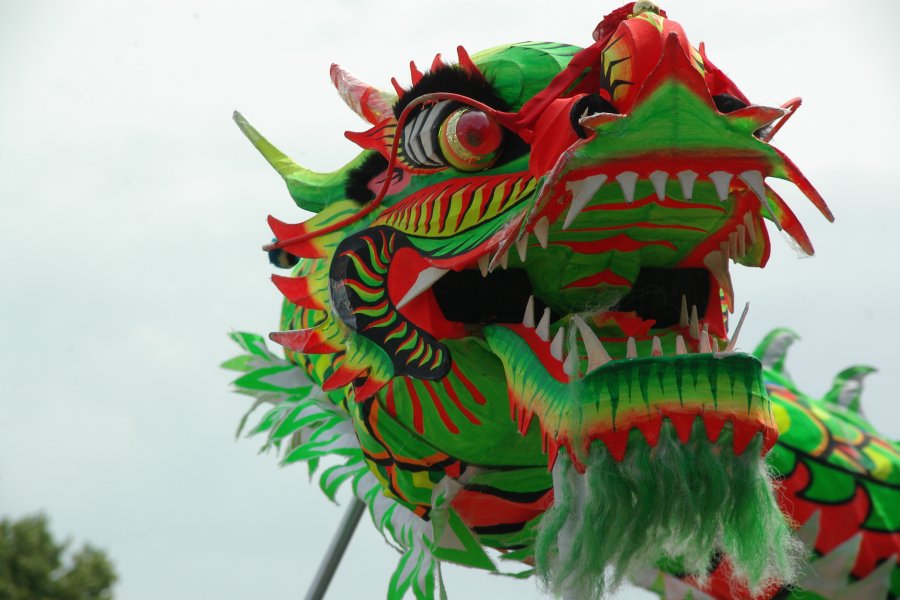 Dragon danceA long dragon puppet on poles, danced by a team at Chinese New Year and other festivals
 Glove puppetryA traditional theatre of cloth-bodied puppets with carved wooden heads and live music
Good reading and sources
The facts on this page come from the Wikipedia article "Eighteen Songs of a Nomad Flute", written by its contributors and used under the CC BY-SA 4.0 licence, and from its Wikidata record (CC0). EveryParampara rewrote the text in its own words, with AI assistance, and compares every page with the article to make sure no passage is copied. It may be reused under the same CC BY-SA 4.0 licence with a link back.
It may contain mistakes. Traditions differ from one family, village and community to the next, and the people who keep them know them best. If something is wrong, tell us. Last refreshed 2026-10-07.
More from China
All the traditions of China 🇹🇼 Yilan, Taiwan and 4 moreTaiwanese opera歌仔戲
A Taiwanese theatrical art of Hokkien balladry, stylized staging, and expressive song.Performance
🇹🇼 Yilan, Taiwan and 4 moreTaiwanese opera歌仔戲
A Taiwanese theatrical art of Hokkien balladry, stylized staging, and expressive song.Performance
 🇨🇳 China and 5 moreLion dance舞獅
A dynamic ritual dance featuring costumed lions, drums and martial acrobaticsPerformance
🇨🇳 Quanzhou, China and 3 moreGlove puppetry布袋戲
A traditional theatre of cloth-bodied puppets with carved wooden heads and live musicPerformance
🇨🇳 China and 5 moreLion dance舞獅
A dynamic ritual dance featuring costumed lions, drums and martial acrobaticsPerformance
🇨🇳 Quanzhou, China and 3 moreGlove puppetry布袋戲
A traditional theatre of cloth-bodied puppets with carved wooden heads and live musicPerformance
 🇨🇳 China and 5 moreShadow play
A storytelling art using flat puppets and light to cast moving silhouettes on a screen.Performance
🇨🇳 China and 5 moreShadow play
A storytelling art using flat puppets and light to cast moving silhouettes on a screen.Performance
The same idea elsewhere
All of this kind 🇳🇿 Auckland, New ZealandPoi
A Māori performing art of swinging tethered weights in rhythmical patterns.Performance
🇳🇿 Auckland, New ZealandPoi
A Māori performing art of swinging tethered weights in rhythmical patterns.Performance
 🇵🇭 Philippines and 1 morePangalay
A traditional fingernail dance of the Tausūg and Bajau peoples in the Sulu Archipelago and Sabah.Performance
🇵🇭 Philippines and 1 morePangalay
A traditional fingernail dance of the Tausūg and Bajau peoples in the Sulu Archipelago and Sabah.Performance
 🇺🇦 Kyiv, UkraineBanduraБандура
A Ukrainian plucked string instrument played to accompany epic songs and folk balladsPerformance
🇺🇦 Kyiv, UkraineBanduraБандура
A Ukrainian plucked string instrument played to accompany epic songs and folk balladsPerformance
 🇵🇱 Kraków, PolandSt. Mary's Trumpet CallHejnał mariacki
A five-note bugle call played hourly from the tower of St. Mary's Church in Kraków, Poland.Performance
🇵🇱 Kraków, PolandSt. Mary's Trumpet CallHejnał mariacki
A five-note bugle call played hourly from the tower of St. Mary's Church in Kraków, Poland.Performance