Music, dance and storytellingEast Asia
Glove puppetry
In its own language: 布袋戲
A traditional theatre of cloth-bodied puppets with carved wooden heads and live music

Originating in seventeenth-century southern China, glove puppetry is a theatrical tradition where performers animate cloth-bodied figures with carved wooden heads. Today it thrives across Taiwan and in Indonesian Chinese communities, accompanied by spoken dialogue and live orchestra music.
Glove puppetry is a dramatic art that combines fine woodworking, storytelling, and musical accompaniment. Originating in Fujian province, the form takes its name from the sack-like cloth robes that conceal the performer's hand. Audiences gather to enjoy the nimble movements of small figurines, poetic recitations by skilled narrators, and lively instrumental support, keeping regional folklore and local dialects alive through theatrical spectacle.
Crafting the puppets
Each puppet is built around carved wooden elements. The artisan shapes the head from hollowed wood, creating expressive features, and crafts small wooden palms and feet to match. The remainder of the figure, including the torso, arms, and legs, consists entirely of fabric clothing. Early puppets resembled plain cloth sacks, giving rise to the literal name cloth bag opera. During a show, the puppeteer slides a gloved hand directly inside the costume, using fingers to manipulate the head and limbs from within.
The stage and performance
A customary presentation unfolds in two distinct segments. The opening act, known as the show platform, features an introductory demonstration where a master puppeteer displays manipulation techniques on stage. The main event follows, bringing together the puppeteer, spoken dialogue, and an accompanying musical orchestra. Unlike many forms of traditional Chinese opera, glove puppet performances rarely include human singing. Viewers focus instead on the physical dexterity of the handler, the rhythm of the musicians, and the poetic spoken delivery of the voice actors.
Regional styles and adaptations
Historically popular in Min Nan-speaking regions like Quanzhou, Zhangzhou, and Guangdong, glove puppetry spread widely across East and Southeast Asia. In Taiwan, Yunlin County became a prominent hub for major production studios, with television series incorporating modern computer effects alongside classic puppetry. In Indonesia, the practice blended with Javanese culture to create Peranakan Potehi, also known as Wayang Potehi. Preserved mainly in East and Central Java communities like Semarang and Gudo in Jombang, these Indonesian shows narrate traditional stories in Javanese and Indonesian.
How Glove puppetry is kept
A performance begins on the stage platform with a display of the lead puppeteer's hand manipulation skills. The second part introduces the full story, driven by an ensemble of musicians, narrators, and puppeteers. The puppeteer controls the cloth and wooden figures from beneath their robes, making them move, fight, and gesture in sync with instrumental accompaniment and spoken recitations. Audiences watch the stage action while listening to spoken verses rather than operatic singing.
When and where
Originating in Fujian and southern China, glove puppetry is practiced in Taiwan, particularly across Yunlin County. In Indonesia, it is maintained by Chinese communities in Sumatra and Java, including Semarang and Jombang, as well as in Malaysia.
Questions people ask about Glove puppetry
What is glove puppetry?
Glove puppetry, known as bùdàixì or pò͘-tē-hì, is a theatrical tradition using cloth-bodied puppets with wooden heads, hands, and feet, operated by a puppeteer's hand inside the costume.
Where is glove puppetry practiced?
Originating in southern China, it is widely performed in Taiwan, as well as in Indonesian towns like Semarang and Jombang under the name Wayang Potehi, and in Malaysia.
How does glove puppetry differ from other Chinese operas?
Glove puppetry rarely features operatic singing or human vocal music. Shows rely instead on the dexterity of the puppeteer, poetic spoken lines from voice actors, and live orchestral accompaniment.
What is Wayang Potehi?
Wayang Potehi is an Indonesian style of glove puppetry developed through the interaction of Chinese and Javanese cultures. Shows are narrated primarily in Javanese and Indonesian.
See also
 DutarA long-necked lute crafted from wood and played across Iran and Central Asia
 NowruzThe Iranian new year at the March equinox, kept with fire, greenery and picnics
 MawlidAn annual festival marking the birth of the Prophet Muhammad, marked by poetry, processions and feasts.
 Traditional tattooingThe ancient custom of marking the skin for protection, healing, status and sacred rites
Good reading and sources
- Glove puppetry on WikipediaEncyclopedia
- More photos on Wikimedia CommonsPhotos and video
- Wikidata recordOpen data
The facts on this page come from the Wikipedia article "Glove puppetry", written by its contributors and used under the CC BY-SA 4.0 licence, and from its Wikidata record (CC0). EveryParampara rewrote the text in its own words, with AI assistance, and compares every page with the article to make sure no passage is copied. It may be reused under the same CC BY-SA 4.0 licence with a link back.
It may contain mistakes. Traditions differ from one family, village and community to the next, and the people who keep them know them best. If something is wrong, tell us. Last refreshed 2026-10-04.
More from China
All the traditions of China 🇨🇳 China and 5 moreLion dance舞獅
A dynamic ritual dance featuring costumed lions, drums and martial acrobaticsPerformance
🇨🇳 China and 5 moreLion dance舞獅
A dynamic ritual dance featuring costumed lions, drums and martial acrobaticsPerformance
 🇨🇳 China and 5 moreShadow play
A storytelling art using flat puppets and light to cast moving silhouettes on a screen.Performance
🇨🇳 China and 5 moreShadow play
A storytelling art using flat puppets and light to cast moving silhouettes on a screen.Performance
 🇹🇼 Yilan, Taiwan and 4 moreTaiwanese opera歌仔戲
A Taiwanese theatrical art of Hokkien balladry, stylized staging, and expressive song.Performance
🇹🇼 Yilan, Taiwan and 4 moreTaiwanese opera歌仔戲
A Taiwanese theatrical art of Hokkien balladry, stylized staging, and expressive song.Performance
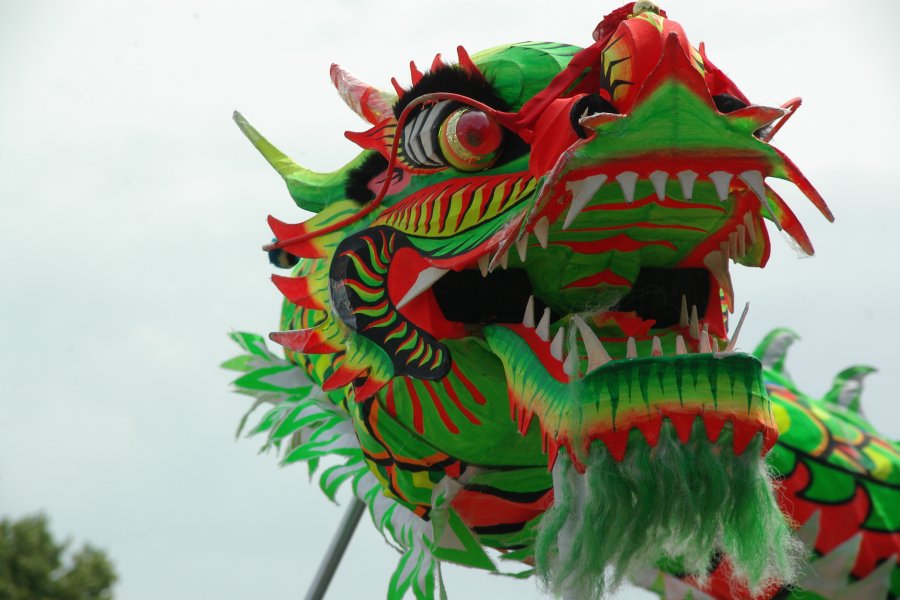 🇨🇳 China and 3 moreDragon dance舞龍 / 舞龙
A long dragon puppet on poles, danced by a team at Chinese New Year and other festivalsPerformance
🇨🇳 China and 3 moreDragon dance舞龍 / 舞龙
A long dragon puppet on poles, danced by a team at Chinese New Year and other festivalsPerformance
The same idea elsewhere
All of this kind 🇹🇷 Kayseri, Turkey and 4 moreHalay
A traditional line and circle folk dance kept across Turkey, Azerbaijan, Armenia, Iran, and Syria.Performance
🇧🇷 BrazilBaião
A syncopated folk rhythm and partnered dance from northeastern BrazilPerformance
🇹🇷 Kayseri, Turkey and 4 moreHalay
A traditional line and circle folk dance kept across Turkey, Azerbaijan, Armenia, Iran, and Syria.Performance
🇧🇷 BrazilBaião
A syncopated folk rhythm and partnered dance from northeastern BrazilPerformance
 🇺🇦 Kyiv, UkraineBanduraБандура
A Ukrainian plucked string instrument played to accompany epic songs and folk balladsPerformance
🇺🇦 Kyiv, UkraineBanduraБандура
A Ukrainian plucked string instrument played to accompany epic songs and folk balladsPerformance
 🇳🇿 Auckland, New ZealandPoi
A Māori performing art of swinging tethered weights in rhythmical patterns.Performance
🇳🇿 Auckland, New ZealandPoi
A Māori performing art of swinging tethered weights in rhythmical patterns.Performance