Music, dance and storytellingEast Asia
Shadow play
A storytelling art using flat puppets and light to cast moving silhouettes on a screen.

This ancient performance tradition uses articulated cut-out figures placed between a light source and a translucent screen. It is kept across Asia, the Middle East, and Europe, with strong histories in China, India, Indonesia, and France. Puppeteers manipulate the figures to enact stories for audiences of all ages.
When is Shadow play kept?
Shadow play is kept on various times throughout history, often during holidays or as regular entertainment.
Shadow play is a theatrical genre that tells stories through the manipulation of flat puppets behind a backlit screen. This art form has existed for centuries in many parts of the world. It allows performers to create dynamic scenes that move and interact. The tradition remains a living folk practice in several Asian nations and holds historical significance in European culture.
How the art works
Performers hold flat, jointed figures between a lamp and a thin cloth. Light passes through the material, casting colored shadows on the other side. Skilled artists move the puppets to simulate walking, fighting, or dancing. There are different viewing styles, including daytime shows and performances where the audience sees both sides of the screen. The technique relies on precise hand movements and creative lighting to bring the characters to life.
Origins and spread
Scholars believe the practice began in Central Asia, China, or India around the first millennium BCE. Early versions may have used painted cloths illuminated by oil lamps. By two hundred BCE, Indian troupes used leather puppets behind fine screens. The art moved westward, reaching the Middle East after Mongol invasions and entering Europe via Italy in the seventeenth century. French missionaries later introduced Chinese shadow shows to Paris, where they became a popular entertainment.
Traditions in Asia
China hosts distinct regional styles, such as those from Luanzhou and Sichuan. In Sichuan, apprentices carve ox hide using traditional tools to preserve the craft. Taiwan maintains a large repertoire of scripts from the southern school, accompanied by melodies similar to funeral rites. Indonesia, Malaysia, Thailand, and Cambodia also keep this tradition alive. These Southeast Asian forms represent an ancient art that continues to engage local communities today.
European history
The tradition gained traction in France after 1767, evolving into what locals called French shadows. François Dominique Séraphin established a permanent theatre in Paris in 1784, using clockwork mechanisms to automate scenes. The art flourished in Montmartre cabarets during the nineteenth century. Artists like Henri Rivière created elaborate productions using zinc figures and optical lanterns. This period influenced later visual media and phantasmagoria shows.
Legacy and influence
Shadow play is recognized as intangible cultural heritage in Syria. Its techniques share principles with modern cinema, particularly in the use of projected images and sound. The nonlinear evolution of this art form contributed to the development of slides and film. Contemporary creators still draw inspiration from these ancient methods, adapting the aesthetic for games and television programs while honoring the original craftsmanship.
How Shadow play is kept
Puppeteers manipulate flat, jointed figures made of leather or paper behind a translucent screen. A light source illuminates the puppets from behind, casting colored silhouettes for the audience. Performers use sticks and rods to make the figures walk, dance, or fight. Different regions maintain specific carving tools and musical accompaniments, ensuring the craft is passed down through hands-on training.
When and where
The tradition likely emerged in the first millennium BCE. It was performed during holidays in ancient China and as regular entertainment in European cities. Dates vary by region and historical period, with no single fixed calendar observance globally.
The practice is strongest in China, India, Indonesia, and France. Major historical centers include Beijing, Paris, and Siem Reap. It is also maintained in Cambodia, Thailand, Malaysia, and various Middle Eastern countries. The art has spread to Australia and the United States through contemporary practitioners.
What Shadow play means
The art serves as a narrative vehicle for history, mythology, and folklore. In some contexts, it connects to spiritual beliefs, such as Taoist funeral melodies in Taiwan. The interplay of light and shadow represents the boundary between reality and imagination. It preserves cultural memory through visual storytelling and communal performance.


Questions people ask about Shadow play
When is Shadow play kept?
Shadow play is kept on various times throughout history, often during holidays or as regular entertainment.
Where is Shadow play kept?
Shadow play belongs to the traditions of China, India, Indonesia, France and Cambodia.
See also
 Glove puppetryA traditional theatre of cloth-bodied puppets with carved wooden heads and live music
 Dandiya RaasA stick dance from Gujarat performed in pairs during the festival of Navaratri
 Christmas carolFestive songs and hymns sung during the Christmas season and door to door
 SegaA music and dance tradition from Mauritius and Réunion with Afro-Malagasy roots.
Good reading and sources
- Shadow play on WikipediaEncyclopedia
- More photos on Wikimedia CommonsPhotos and video
- Wikidata recordOpen data
The facts on this page come from the Wikipedia article "Shadow play", written by its contributors and used under the CC BY-SA 4.0 licence, and from its Wikidata record (CC0). EveryParampara rewrote the text in its own words, with AI assistance, and compares every page with the article to make sure no passage is copied. It may be reused under the same CC BY-SA 4.0 licence with a link back.
It may contain mistakes. Traditions differ from one family, village and community to the next, and the people who keep them know them best. If something is wrong, tell us. Last refreshed 2026-10-05.
More from China
All the traditions of China 🇹🇼 Yilan, Taiwan and 4 moreTaiwanese opera歌仔戲
A Taiwanese theatrical art of Hokkien balladry, stylized staging, and expressive song.Performance
🇹🇼 Yilan, Taiwan and 4 moreTaiwanese opera歌仔戲
A Taiwanese theatrical art of Hokkien balladry, stylized staging, and expressive song.Performance
 🇨🇳 China and 5 moreLion dance舞獅
A dynamic ritual dance featuring costumed lions, drums and martial acrobaticsPerformance
🇨🇳 Quanzhou, China and 3 moreGlove puppetry布袋戲
A traditional theatre of cloth-bodied puppets with carved wooden heads and live musicPerformance
🇨🇳 China and 5 moreLion dance舞獅
A dynamic ritual dance featuring costumed lions, drums and martial acrobaticsPerformance
🇨🇳 Quanzhou, China and 3 moreGlove puppetry布袋戲
A traditional theatre of cloth-bodied puppets with carved wooden heads and live musicPerformance
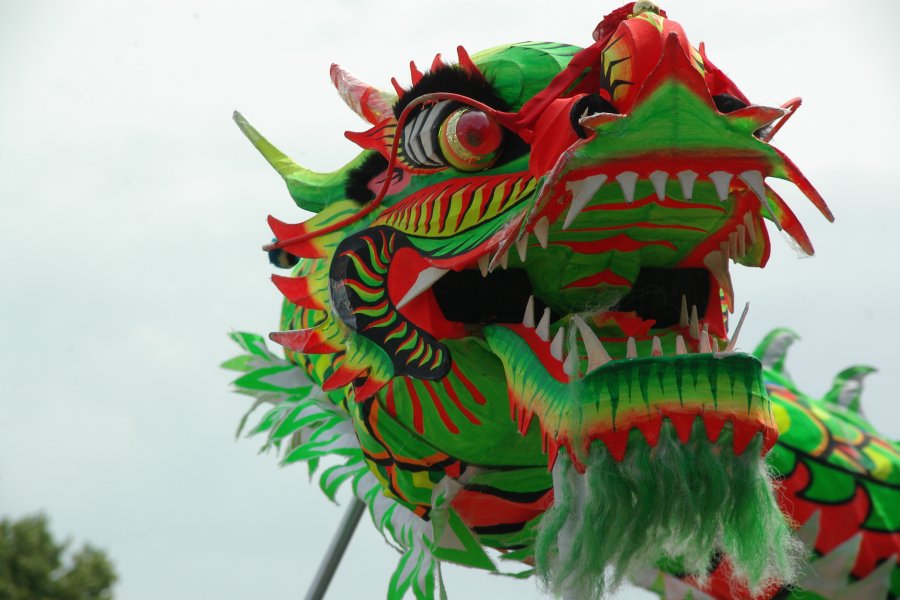 🇨🇳 China and 3 moreDragon dance舞龍 / 舞龙
A long dragon puppet on poles, danced by a team at Chinese New Year and other festivalsPerformance
🇨🇳 China and 3 moreDragon dance舞龍 / 舞龙
A long dragon puppet on poles, danced by a team at Chinese New Year and other festivalsPerformance
The same idea elsewhere
All of this kind 🇹🇷 Kayseri, Turkey and 4 moreHalay
A traditional line and circle folk dance kept across Turkey, Azerbaijan, Armenia, Iran, and Syria.Performance
🇧🇷 BrazilBaião
A syncopated folk rhythm and partnered dance from northeastern BrazilPerformance
🇹🇷 Kayseri, Turkey and 4 moreHalay
A traditional line and circle folk dance kept across Turkey, Azerbaijan, Armenia, Iran, and Syria.Performance
🇧🇷 BrazilBaião
A syncopated folk rhythm and partnered dance from northeastern BrazilPerformance
 🇺🇦 Kyiv, UkraineBanduraБандура
A Ukrainian plucked string instrument played to accompany epic songs and folk balladsPerformance
🇺🇦 Kyiv, UkraineBanduraБандура
A Ukrainian plucked string instrument played to accompany epic songs and folk balladsPerformance
 🇳🇿 Auckland, New ZealandPoi
A Māori performing art of swinging tethered weights in rhythmical patterns.Performance
🇳🇿 Auckland, New ZealandPoi
A Māori performing art of swinging tethered weights in rhythmical patterns.Performance