Festivals and celebrationsNorth AmericaChristian
Feast of San Gennaro
In its own language: Festa di San Gennaro
A patronal festival of parades, street food and prayer honouring Saint Januarius

The Feast of San Gennaro is a patronal celebration honouring Saint Januarius, patron of Naples and Manhattan's Little Italy. Held every September by Neapolitans and Italian Americans, it features religious processions, blood liquefaction rites and street fairs with traditional foods.
When is Feast of San Gennaro kept?
Feast of San Gennaro is kept on annually in September, with extra observances in May and December.
The Feast of San Gennaro honours Saint Januarius, the patron protector of Naples. Kept both in southern Italy and across Italian-American communities, the celebration combines Catholic devotion with lively street festivities. In cities like New York and Naples, crowds gather for religious processions, music, communal meals and prayers. The event celebrates cultural roots, mutual charity and long-standing religious stories that trace back to early Christian history.
Origins and the miracle
According to tradition, Bishop Gennaro of Benevento died as a martyr in the year 305 during Roman persecutions under Emperor Diocletian. A woman named Eusebia preserved his blood in glass vials. Legend states that the dried blood liquefied when placed near his remains in Naples several years later. Believers also credit the saint with slowing the molten lava during the 1631 eruption of Mount Vesuvius. In Naples, the faithful assemble three times every year, most notably on 19 September, to witness the liquefaction ceremony, pray for protection and take part in sacred processions through the city.
Little Italy and expansion
In September 1926, Neapolitan immigrants living on Mulberry Street in Manhattan started a local observance. Cafe owners set up an outdoor shrine, inviting neighbours to pin cash donations to streamers attached to the saint's figure to assist poor residents. What began as a single day of prayer developed into an eleven-day neighbourhood fair with street stalls, carnival games, zeppole and grilled sausages. Similar celebrations emerged later across the United States, including annual gatherings in the Bronx, Los Angeles, Seattle and twice-yearly events in the Las Vegas Valley.
Processions and community life
Street fairs close roads to motor traffic, turning avenues into open gathering spaces filled with music, vendors and performers. A central highlight remains the grand parade, where worshippers walk with candles alongside the painted statue of San Gennaro. Devotees offer prayers and gifts, preserving habits brought across the Atlantic by early migrant families. Even after administrative reforms in New York during the 1990s brought professional management, the festival retained its communal character, drawing both local churchgoers and outside visitors together over shared food and heritage.
How Feast of San Gennaro is kept
Festivities centre on closed city avenues lined with food stalls and stages. In Naples, observers attend church rituals to observe the liquefaction of the martyr's blood, alongside parades and musical shows over three days. In American cities such as New York, celebrations last up to eleven days. The major procession takes place on the final Saturday afternoon, where a painted statue of the saint journeys through the streets accompanied by candle-bearing worshippers, while visitors enjoy fried pastries, sausages and street entertainment.
When and where
The official Catholic feast day falls on 19 September, marking the date of Gennaro's martyrdom. In Naples, commemorations also occur on the Saturday preceding the first Sunday in May and on 16 December. American street fairs generally run for several days during September.
The festival takes place in Naples and surrounding towns in southern Italy, as well as several American cities. Major celebrations occur in Manhattan's Little Italy, the Bronx, Los Angeles, Seattle and the Las Vegas Valley.
What Feast of San Gennaro means
For participants, San Gennaro represents heavenly protection, survival and community aid. The saint is remembered for guarding Naples from catastrophe, including the seventeenth-century volcanic eruption of Mount Vesuvius. In immigrant enclaves, the feast serves as a living connection to ancestral towns, reinforcing collective solidarity and charitable giving to those in need.
On the table
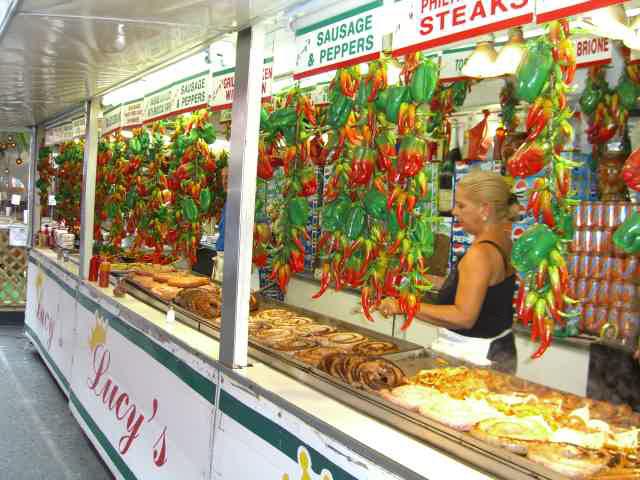
- sausages
- zeppole


Questions people ask about Feast of San Gennaro
When is Feast of San Gennaro kept?
Feast of San Gennaro is kept on annually in September, with extra observances in May and December.
What is the Feast of San Gennaro?
It is a patronal festival dedicated to Saint Januarius, the patron saint of Naples. It combines Roman Catholic religious rituals, such as statue processions and prayers, with large street fairs featuring Italian foods and music.
Where and when does the festival take place?
The celebration takes place primarily in Naples, Italy, and in Italian-American neighbourhoods such as Manhattan's Little Italy in New York. The main calendar date is 19 September, though street fairs often span multiple days.
What is the miracle of San Gennaro?
According to Catholic belief, dried blood kept in a vial since the fourth century liquefies during ceremonies in Naples. This liquefaction is observed three times a year, commemorating the saint's martyrdom and historical intercessions.
How did the festival begin in the United States?
Neapolitan cafe owners on Mulberry Street in Manhattan started the tradition in September 1926. They erected a street shrine, collected donations pinned to ribbons on the saint's statue, and gave the funds to needy local families.
See also
 JāņiAn annual Latvian summer solstice celebration of bonfires, singing and woven wreaths
 ChristmasA festival of Jesus's birth, kept on 25 December with gifts, lights and shared meals
 HalloweenAn annual observance on 31 October marking the eve of All Saints' Day, rooted in Christian tradition and Celtic heritage
 Valentine's DayA Christian feast day and cultural celebration of love kept on February 14 in many countries.
Good reading and sources
- Feast of San Gennaro on WikipediaEncyclopedia
- More photos on Wikimedia CommonsPhotos and video
- Wikidata recordOpen data
The facts on this page come from the Wikipedia article "Feast of San Gennaro", written by its contributors and used under the CC BY-SA 4.0 licence, and from its Wikidata record (CC0). EveryParampara rewrote the text in its own words, with AI assistance, and compares every page with the article to make sure no passage is copied. It may be reused under the same CC BY-SA 4.0 licence with a link back.
It may contain mistakes. Traditions differ from one family, village and community to the next, and the people who keep them know them best. If something is wrong, tell us. Last refreshed 2026-10-04.
More from the United States
All the traditions of the United States
🇱🇻 Riga, Latvia and 4 moreJāņi
An annual Latvian summer solstice celebration of bonfires, singing and woven wreathsFestival
 🇪🇸 Madrid, Spain and 5 moreTwelve GrapesLas doce uvas de la suerte
A grape for every chime at midnight on 31 December, welcoming the new yearFestival · Tea-time and snacking customs
🇪🇸 Madrid, Spain and 5 moreTwelve GrapesLas doce uvas de la suerte
A grape for every chime at midnight on 31 December, welcoming the new yearFestival · Tea-time and snacking customs
 🇮🇳 Hyderabad, India and 3 moreBonalu
An annual festival of thanksgiving to Goddess Mahakali across Telangana, IndiaFestival · Feasts and festival meals
🇮🇹 Rome, Italy and 4 moreChristmas
A festival of Jesus's birth, kept on 25 December with gifts, lights and shared mealsFestival
🇮🇳 Hyderabad, India and 3 moreBonalu
An annual festival of thanksgiving to Goddess Mahakali across Telangana, IndiaFestival · Feasts and festival meals
🇮🇹 Rome, Italy and 4 moreChristmas
A festival of Jesus's birth, kept on 25 December with gifts, lights and shared mealsFestival
The same idea elsewhere
Healing, luck and protection compared
🇮🇹 Rome, Italy and 4 moreValentine's Day
A Christian feast day and cultural celebration of love kept on February 14 in many countries.Festival
 🇩🇪 Germany and 5 moreChristmas tree
A decorated evergreen or artificial tree placed indoors to mark the Christmas season.Festival
🇩🇪 Germany and 5 moreChristmas tree
A decorated evergreen or artificial tree placed indoors to mark the Christmas season.Festival
 🇫🇷 France and 5 moreCandlemas
A Christian feast of candle blessings marking the end of the Christmas seasonSpiritual
🇮🇪 Ireland and 2 moreJack-o'-lantern
A carved pumpkin lantern lit with a candle to brighten and protect Halloween nightsFolklore
🇫🇷 France and 5 moreCandlemas
A Christian feast of candle blessings marking the end of the Christmas seasonSpiritual
🇮🇪 Ireland and 2 moreJack-o'-lantern
A carved pumpkin lantern lit with a candle to brighten and protect Halloween nightsFolklore