Festivals and celebrationsEuropeSecular and civic
Twelve Grapes
In its own language: Las doce uvas de la suerte
A grape for every chime at midnight on 31 December, welcoming the new year

On the last night of the year, people in Spain and in many Spanish-speaking places eat one grape for each of the twelve chimes of the clock at midnight. The custom has been recorded since at least 1895, was promoted by vine growers near Alicante in 1909, and is kept at home after the Nochevieja meal or in town squares, most famously at Puerta del Sol in Madrid.
When is Twelve Grapes marked?
Twelve Grapes is kept as part of New Year's Eve, which runs from 31 December 2026 to 1 January 2027.
The Twelve Grapes is a Spanish New Year custom. As the clock strikes twelve at midnight on 31 December, people eat one grape for each chime, and each grape stands for one month of the year ahead. It is kept at home after the Nochevieja meal and in town squares, above all at Puerta del Sol in Madrid.
What it is
The Twelve Grapes is a way of seeing in the new year that belongs to Spain. On the night of 31 December, when the clock begins to strike twelve, those taking part eat a grape at each stroke. The twelve fruits match the twelve chimes, and each one is understood to stand for a single month of the year that is starting. People do this at home with their families, or outdoors in a town square, and the grapes are eaten quickly, one after another, as midnight arrives.
Origins and history
The custom can be traced back to at least 1895. It became much better known in 1909. That December, vine growers around Alicante wanted to sell more fruit. Their harvest had been unusually good, leaving them with more grapes than the market could take, so they encouraged the midnight habit. The idea caught on and travelled far past the region. In 1962 Televisión Española started showing the chimes from Madrid, and viewers across the country could follow the same count.
Where it spread
Places with close cultural links to Spain have taken up the custom. It is kept in the Philippines and in many Latin American and Caribbean countries, and Hispanic communities in the United States also mark it. Some people in Jamaica do the same. Among the countries where it is observed are Andorra, Argentina, Brazil, Colombia, Costa Rica, Cuba, the Dominican Republic, Ecuador, Mexico, Nicaragua, Peru, Puerto Rico, Serbia, Uruguay and Venezuela. For those who keep it, the grapes sit inside the wider Christmas season rather than standing apart from it.
What it means
People who follow the custom often say the grapes bring luck for the months ahead, and that a good start at midnight sets the tone for the year. In some places the same act was once thought to turn away witches and other harmful things. That protective reading has mostly faded, and most households now treat the twelve grapes as a cheerful way to greet the new year together, whether they are at a family table or standing in a crowded square.
How Twelve Grapes is kept
On 31 December, households eat the Nochevieja meal, and as midnight approaches they turn on the television, the radio or a clock. When the first of twelve strokes sounds, each person eats one grape, then the next at the second stroke, and so on until the twelfth. The fruit is usually prepared in advance, sometimes peeled or seeded, so nobody falls behind. In towns and cities people also gather in the main square to watch the clock together, and in Madrid crowds fill Puerta del Sol, where the chimes are broadcast across the country.
When and where
It falls on the last night of the year, 31 December, and the grapes are eaten at midnight as the new year begins. The date is fixed by the civil calendar, so it is the same every year, and it sits inside the Christmas season in Spain and in the places that have taken the custom up.
The custom belongs to Spain, where it is kept from the capital outward. Madrid's Puerta del Sol is its best known setting, since the national chimes are broadcast from there. It also has a following in the Philippines, in Latin American and Caribbean countries, in Serbia, and among Hispanic communities in the United States, with some people in Jamaica taking part as well.
What Twelve Grapes means
Each grape stands for one month of the year to come, so the twelve together hold the whole year. Eating them in time with the chimes joins a person to everyone else listening to the same clock. Many hope the practice will bring them luck in the months ahead. Older beliefs held that it kept witches and evil away, a meaning that has largely given way to celebration.

Days Twelve Grapes is marked
Questions people ask about Twelve Grapes
When is Twelve Grapes marked?
Twelve Grapes is kept as part of New Year's Eve, which runs from 31 December 2026 to 1 January 2027.
What is the Twelve Grapes?
It is a Spanish new year custom. When the clock strikes twelve at midnight on 31 December, those taking part eat one grape for each chime, and every grape is understood to stand for one month of the coming year.
Where is it kept?
It began in Spain and is best known at Puerta del Sol in Madrid. It is also observed in the Philippines, in Latin American and Caribbean countries, in Serbia, and by Hispanic communities in the United States.
Why do people eat grapes at midnight?
According to the tradition, the grapes bring luck for the year ahead. In some places they were also believed to keep witches and evil away. Today most people follow the custom simply to welcome the new year with family or neighbours.
How did the custom start?
It can be traced to at least 1895, but it became widely popular in 1909. That December, vine growers near Alicante, facing more grapes than they could sell after an excellent harvest, promoted the midnight habit, and it spread from there.
See also
 HanukkahAn eight-day Jewish festival marking the rededication of the Second Temple in Jerusalem and the miracle of a single day'
 Christmas EveThe evening before Christmas, marked by church services, family meals, and gift preparations across Christian cultures.
 Simbang GabiA nine-day series of early morning Masses held in the Philippines to prepare for Christmas.
 JulebukkingA Scandinavian Christmas custom where masked visitors go door to door for songs and treats.
Good reading and sources
- Por qué se comen 12 uvas a la medianoche y el origen de otras tradiciones de Año Nuevo en América LatinaBBC, Article
- Por qué se comen 12 uvas a la medianoche y el origen de otras tradiciones de Año Nuevo en América LatinaBBC, Article
- Twelve Grapes on WikipediaEncyclopedia
- More photos on Wikimedia CommonsPhotos and video
- Wikidata recordOpen data
The facts on this page come from the Wikipedia article "Twelve Grapes", written by its contributors and used under the CC BY-SA 4.0 licence, and from its Wikidata record (CC0). EveryParampara rewrote the text in its own words, with AI assistance, and compares every page with the article to make sure no passage is copied. It may be reused under the same CC BY-SA 4.0 licence with a link back.
It may contain mistakes. Traditions differ from one family, village and community to the next, and the people who keep them know them best. If something is wrong, tell us. Last refreshed 2026-10-05.
More from Spain
All the traditions of Spain 🇵🇭 Cebu City, Philippines and 4 moreSinulog Festival
An annual Philippine dance festival and Catholic devotion honouring the Santo NiñoFestival
🇵🇭 Cebu City, Philippines and 4 moreSinulog Festival
An annual Philippine dance festival and Catholic devotion honouring the Santo NiñoFestival
 🇪🇸 Spain and 1 moreTió de Nadal
A Catalan Christmas tradition where a decorated log is fed and beaten to produce small gifts for children.Festival
🇪🇸 Spain and 1 moreTió de Nadal
A Catalan Christmas tradition where a decorated log is fed and beaten to produce small gifts for children.Festival
 🇪🇸 Córdoba, Spain and 5 moreFiesta de las Cruces
A May festival where communities decorate crosses with flowers and crafts to celebrate faith and local heritage.Festival
🇪🇸 Córdoba, Spain and 5 moreFiesta de las Cruces
A May festival where communities decorate crosses with flowers and crafts to celebrate faith and local heritage.Festival
 🇮🇪 Ireland and 5 moreHalloween
An annual observance on 31 October marking the eve of All Saints' Day, rooted in Christian tradition and Celtic heritageFestival · Sweets given and shared
🇮🇪 Ireland and 5 moreHalloween
An annual observance on 31 October marking the eve of All Saints' Day, rooted in Christian tradition and Celtic heritageFestival · Sweets given and shared
The same idea elsewhere
New Year compared 🇰🇷 Jeju, South KoreaGut굿
Sacred rites of song, dance, and spirit communion performed by Korean shamansSpiritual
🇰🇷 Jeju, South KoreaGut굿
Sacred rites of song, dance, and spirit communion performed by Korean shamansSpiritual
 🇮🇩 IndonesiaOgoh-ogohᬳᭀᬕᭀᬄᬳᭀᬕᭀᬄ
Giant handcrafted statues paraded and burned on the eve of the Balinese Saka New YearFestival
🇮🇩 IndonesiaOgoh-ogohᬳᭀᬕᭀᬄᬳᭀᬕᭀᬄ
Giant handcrafted statues paraded and burned on the eve of the Balinese Saka New YearFestival
 🇨🇳 China and 3 moreDragon dance舞龍 / 舞龙
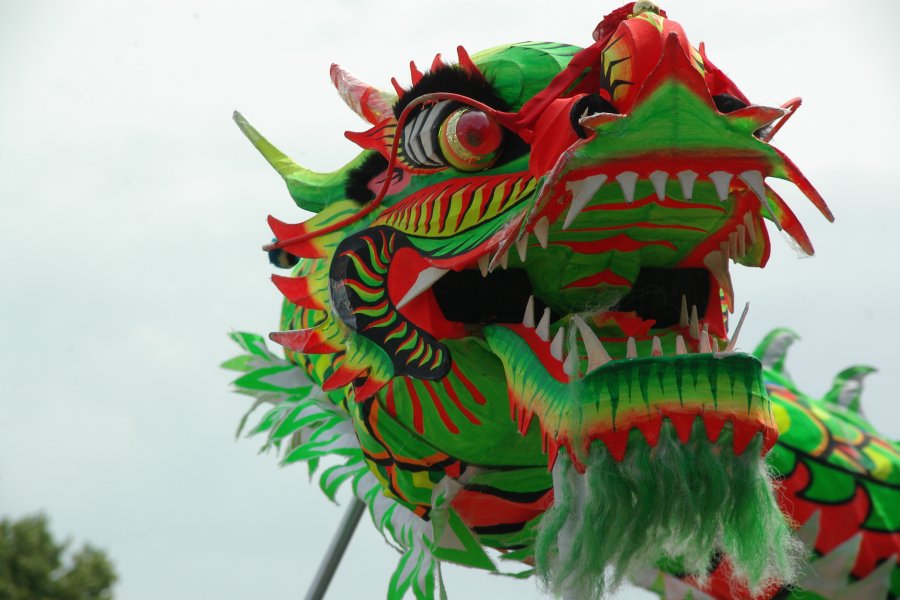
A long dragon puppet on poles, danced by a team at Chinese New Year and other festivalsPerformance
🇨🇳 China and 3 moreDragon dance舞龍 / 舞龙
A long dragon puppet on poles, danced by a team at Chinese New Year and other festivalsPerformance
 🇨🇳 China and 5 moreLion dance舞獅
A dynamic ritual dance featuring costumed lions, drums and martial acrobaticsPerformance
🇨🇳 China and 5 moreLion dance舞獅
A dynamic ritual dance featuring costumed lions, drums and martial acrobaticsPerformance