Festivals and celebrationsEuropeChristian
Gävle goat
In its own language: Gävlebocken
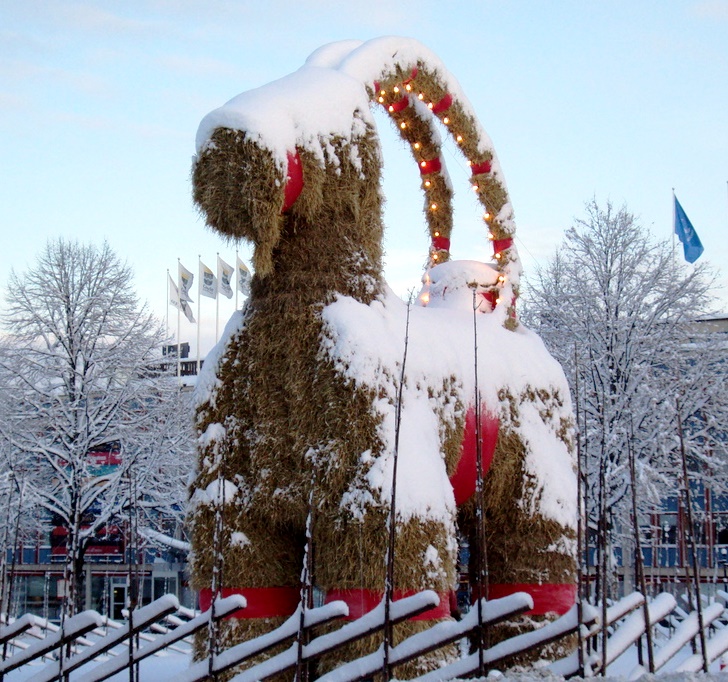
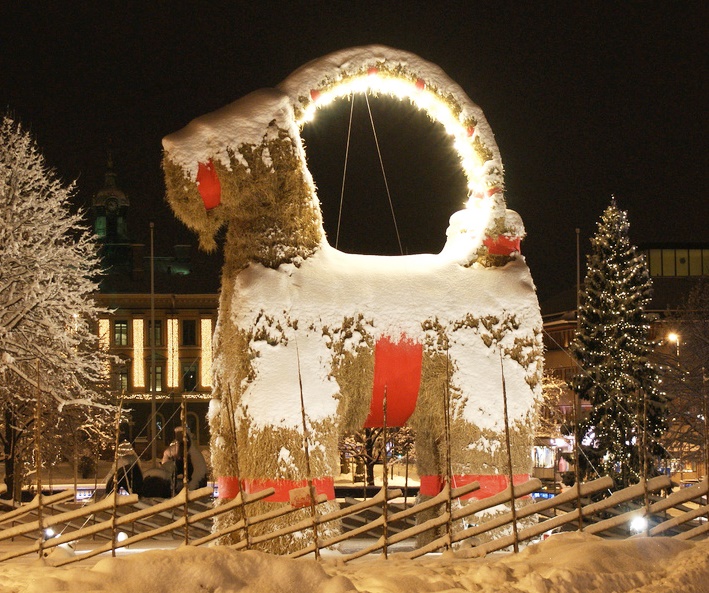
A towering straw Yule goat built each Advent in the central square of Gävle

Every year at the start of Advent, people in Gävle, Sweden, construct an enormous straw Yule goat in the town square. Although illicit arsonists frequently attempt to burn the figure down before Christmas, community groups rebuild and guard the massive holiday monument each winter.
When is Gävle goat marked?
Gävle goat is kept as part of Advent, which runs from 29 November to 22 December 2026.
The Gävle goat is a giant Swedish Christmas sculpture made of straw, raised each year at Slottstorget in Gävle. Inspired by the classic Scandinavian Yule goat, local business groups and students build the enormous figure to mark the opening of Advent. It has gained worldwide attention due to recurring, illegal attempts by arsonists to burn the structure before the holiday season ends.
origins of the giant goat
In 1966, an advertising specialist named Stig Gavlén suggested raising a gigantic version of Sweden's customary straw goat on Castle Square. His brother, the local fire chief, oversaw its assembly with the fire department, while Harry Ström funded the work. That initial thirteen-metre creation was torched on New Year's Eve, yet the idea caught on. A merchant association soon took over regular funding. In 1971, pupils from the local secondary school science society took up the mantle of making their own rival goat. By 1986, both groups were erecting separate straw sculptures each winter.
building and the rival sculptures
The main straw figure takes two days to put together on a heavy wooden frame. For years, the commercial association and the student society competed over the height of their respective goats. The science pupils entered record books twice, in 1985 and 1993, by designing figures that towered up to nearly fifteen metres. This rivalry created local tension, prompting mock disputes and playful seasonal greetings. The municipal authority shares one-third of the main goat's construction budget, while the merchant group pays the remaining balance. If an early fire damages the straw before mid-December, teams reconstruct the effigy.
the battle against destruction
Defending the landmark has proved difficult over decades of winters. Arson remains an outlawed act carrying potential jail sentences, yet dozens of goats have been destroyed or damaged by petrol, flames, storms, or foraging birds. Organisers have tried round-the-clock guards, streaming video cameras, and specialist flame-retardant sprays used in aviation. Freezing weather once drove watchmen inside, giving an arsonist an opening. In another episode, an overseas tourist was prosecuted after mistaking the destruction for a legal custom. When the goat survives unburned, workers dismantle the straw frame around New Year.
echoes in other places
The fame of the Swedish goat has inspired seasonal homages elsewhere. Since 2010, an IKEA store in the Icelandic town of Garðabær has put up its own outdoor straw goat each winter. That structure has experienced its own share of trouble, suffering from electrical fires, strong gusts, and arson attacks, leading the store to install an electric perimeter fence. Smaller festive goats also appear across Sweden, though several have been targeted by copycat arsonists during coordinated December attacks.
How Gävle goat is kept
Construction begins on the first day of Advent and takes about two days to complete. Builders fit pre-ordered straw bundles over a massive wooden skeleton in the town square. Throughout December, webcams, security personnel, and protective coatings are deployed to guard the monument from firebugs. If fire strikes prior to Saint Lucia Day on 13 December, crews rebuild the outer straw layer. If the goat survives through the festive period, workers disassemble the frame around the new year, saving the timber structure for the following winter.
When and where
The goat is erected on the first day of Advent, falling in late November or early December on the Christian calendar. It stands throughout the Christmas season until just after New Year's Day, provided it escapes destruction.
The tradition is centred on Slottstorget, or Castle Square, in the city of Gävle, Sweden. A related straw goat display is also raised outside a home furnishing store in Garðabær, Iceland.
What Gävle goat means
The figure is a monumental interpretation of the traditional Swedish Yule goat, a long-standing festive folk character made of straw and bound with ribbon. In Gävle, the annual build serves as a civic celebration of Advent and town pride, uniting local merchants, students, and citizens in a shared winter project that draws international curiosity.

Days Gävle goat is marked
Questions people ask about Gävle goat
When is Gävle goat marked?
Gävle goat is kept as part of Advent, which runs from 29 November to 22 December 2026.
What is the Gävle goat?
It is a gigantic straw sculpture fashioned after the traditional Swedish Yule goat. Local community organisations assemble it each winter in Castle Square in Gävle, Sweden, to celebrate the start of Advent.
Why does the goat get burned down so often?
Although burning the goat is illegal vandalism that can lead to prison time, repeated arson attacks have destroyed most editions of the display since 1966, despite guards, fireproofing, and webcam surveillance.
What happens if the goat burns down early?
If arson destroys the straw before Saint Lucia Day on 13 December, volunteers and organizers use backup straw supplies to repair the wooden frame and reconstruct the sculpture for the rest of the season.
See also
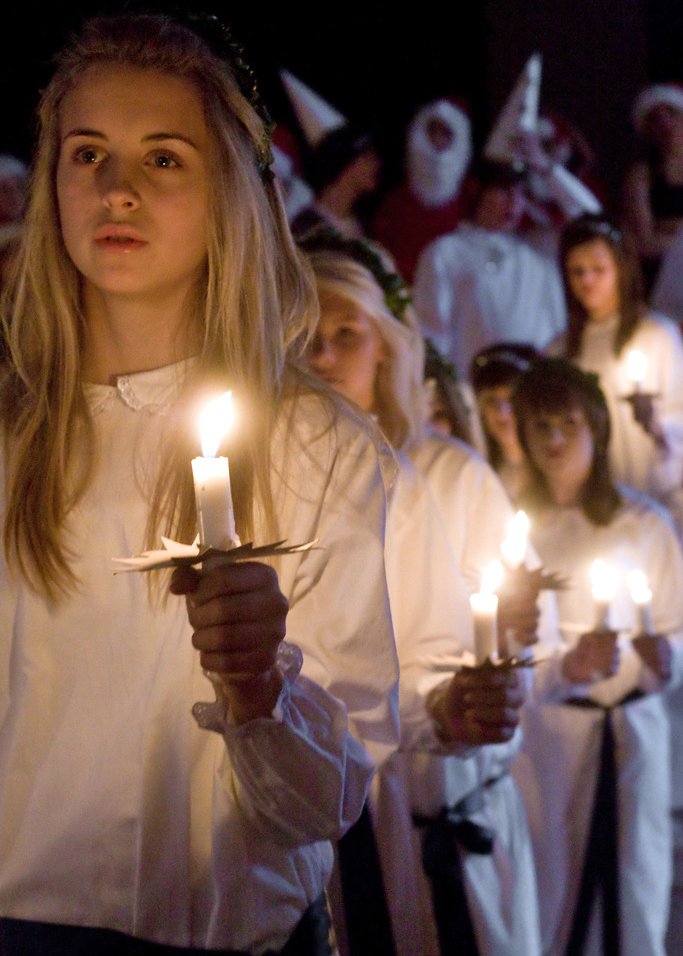 Saint Lucy's DayA December festival of light and song held across Scandinavia and Italy to honour a Christian martyr.
 Mardi GrasA festive day of parades and rich foods marking the final celebration before the Christian fasting season of Lent begins
 Advent calendarA daily countdown to Christmas using doors, images, or small gifts.
 Makar SankrantiA mid-winter harvest festival marking the sun's northward journey, celebrated across South and Southeast Asia with fairs
Good reading and sources
- Gävle goat on WikipediaEncyclopedia
- More photos on Wikimedia CommonsPhotos and video
- Wikidata recordOpen data
The facts on this page come from the Wikipedia article "Gävle goat", written by its contributors and used under the CC BY-SA 4.0 licence, and from its Wikidata record (CC0). EveryParampara rewrote the text in its own words, with AI assistance, and compares every page with the article to make sure no passage is copied. It may be reused under the same CC BY-SA 4.0 licence with a link back.
It may contain mistakes. Traditions differ from one family, village and community to the next, and the people who keep them know them best. If something is wrong, tell us. Last refreshed 2026-10-04.
More from Sweden
All the traditions of Sweden
🇸🇪 Stockholm, Sweden and 4 moreSaint Lucy's Day
A December festival of light and song held across Scandinavia and Italy to honour a Christian martyr.Festival · Breakfast
 🇸🇪 Gävle, Sweden and 1 moreYule goatJulbocken
A straw goat of northern Christmas, once a harvest spirit, now a tree ornamentFestival
🇸🇪 Gävle, Sweden and 1 moreYule goatJulbocken
A straw goat of northern Christmas, once a harvest spirit, now a tree ornamentFestival
 🇸🇪 Sweden and 3 moreAdventadventus
A four-week Christian season of waiting and preparation for Christmas and the Second Coming.Festival
🇸🇪 Sweden and 3 moreAdventadventus
A four-week Christian season of waiting and preparation for Christmas and the Second Coming.Festival
 🇳🇴 Norway and 3 moreJulebukkingGå julebukk
A Scandinavian Christmas custom where masked visitors go door to door for songs and treats.Festival
🇳🇴 Norway and 3 moreJulebukkingGå julebukk
A Scandinavian Christmas custom where masked visitors go door to door for songs and treats.Festival
The same idea elsewhere
Midwinter and the longest night compared 🇵🇪 Cusco, Peru and 4 moreIntiinti (Quechua)
The Inca sun deity, honoured with temples, offerings and the June festival Inti RaymiSpiritual
🇵🇪 Cusco, Peru and 4 moreIntiinti (Quechua)
The Inca sun deity, honoured with temples, offerings and the June festival Inti RaymiSpiritual
 🇮🇷 Iran and 5 moreYaldā Nightشب یلدا
A solstice night of poetry, fruit and family, kept from Iran through Central AsiaFestival · Dinner
🇮🇷 Iran and 5 moreYaldā Nightشب یلدا
A solstice night of poetry, fruit and family, kept from Iran through Central AsiaFestival · Dinner
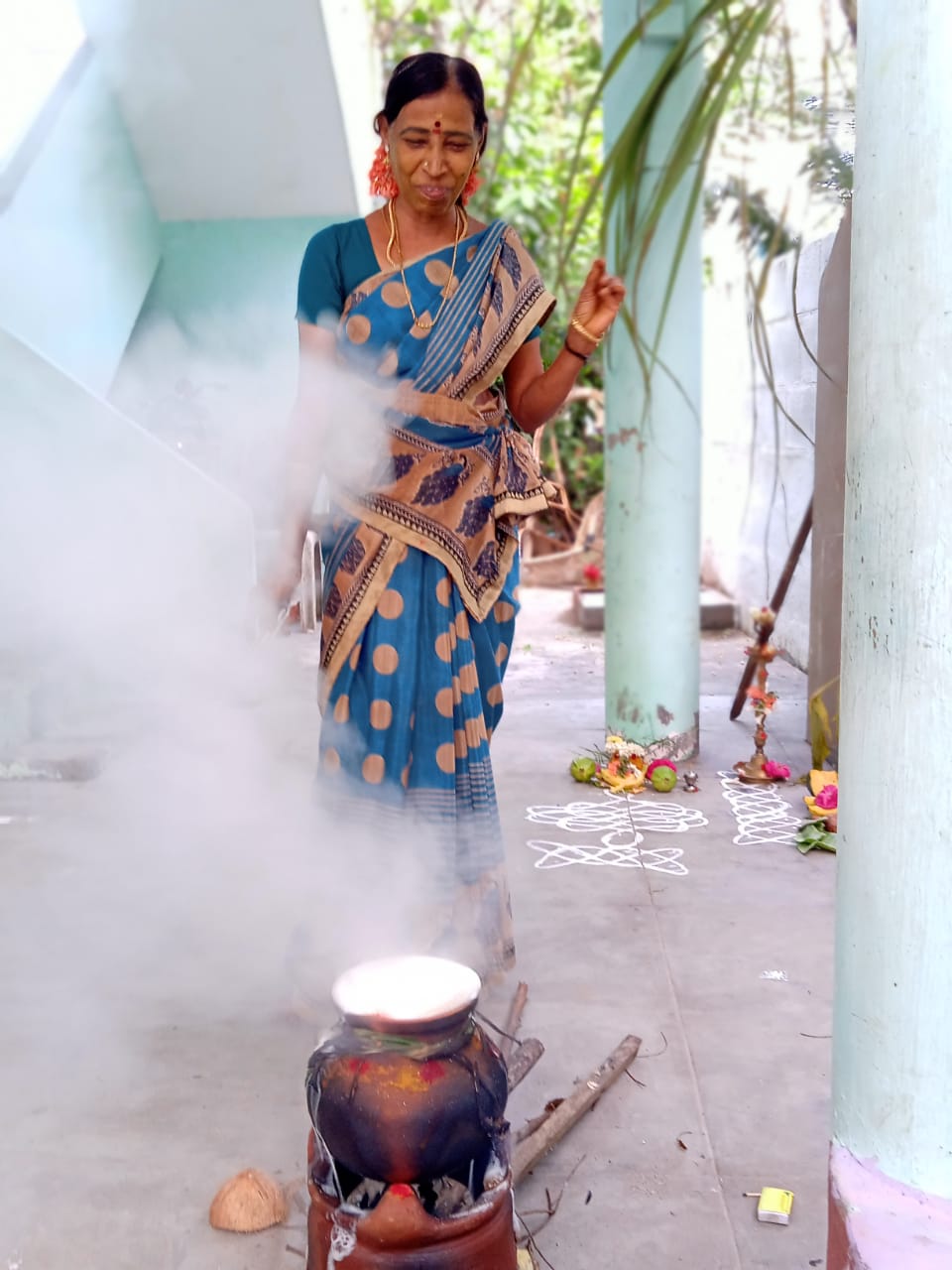 🇮🇳 India and 5 morePongal
Three or four days of boiling rice, garlanded cattle and thanks to the sunSeasonal · Sweets given and shared
🇮🇳 India and 5 morePongal
Three or four days of boiling rice, garlanded cattle and thanks to the sunSeasonal · Sweets given and shared
 🇨🇳 Shanghai, China and 1 moreJiaozi餃子
Crescent Chinese dumplings filled with meat or vegetables, eaten for fortune and feastsTable custom · Breakfast
🇨🇳 Shanghai, China and 1 moreJiaozi餃子
Crescent Chinese dumplings filled with meat or vegetables, eaten for fortune and feastsTable custom · Breakfast