Festivals and celebrationsEuropeChristianPagan and ancient
Yule goat
In its own language: Julbocken
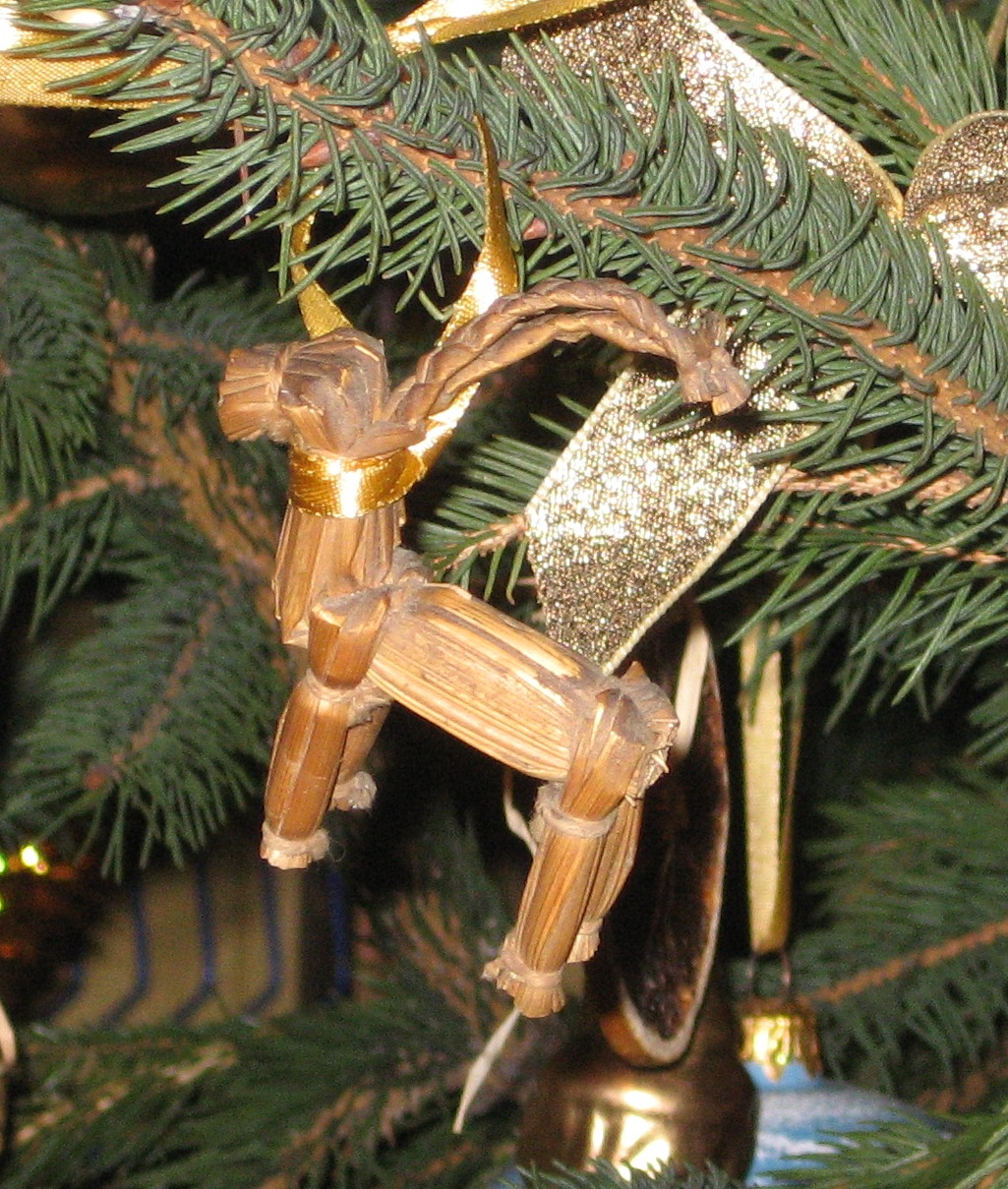
A straw goat of northern Christmas, once a harvest spirit, now a tree ornament

A Christmas figure of straw, kept in Scandinavia and the Nordic countries. Long ago it was the last sheaf of the harvest, and a disguised visitor at Christmas; now it hangs on trees, and huge versions stand in town squares, above all in Gävle in Sweden.
When is Yule goat marked?
Yule goat is kept as part of Christmas, which is on Friday, 25 December 2026.
The Yule goat is a Christmas figure from Scandinavia and the rest of northern Europe. In older farming villages it was a harvest spirit and a rowdy visitor. Today it is mostly a small goat of straw tied with red ribbon, hung on a tree or set on a table, while larger ones stand in town squares. In Finland the Christmas gift-bringer is still called Joulupukki, which means Yule goat.
What it is
For most of the year the goat is a small object, but it belongs to Christmas. It appears in homes across Scandinavia and further north in Europe. The word covers several things at once. There is the decoration of straw, tied with red ribbon, that people hang on the tree or stand on a table. There is the giant version that towns put up in the open. Behind both lies an older pair: a sheaf of grain kept back from the harvest, and a person who dressed as a goat and came visiting. In Finland the Christmas gift-bringer is still Joulupukki, meaning Yule goat.
Origins and history
Where the goat began is not known. One common theory ties it to old Norse belief: the god Thor was said to travel in a chariot pulled by two goats, Tanngrisnir and Tanngnjóstr, and the custom may reach back to shared Indo-European ideas. The last sheaf of the year was thought to hold magical power as the spirit of the harvest, and it was saved for Yule as the Julbocken. A man-sized goat appears in eleventh-century accounts of Childermas, led by a man dressed as Saint Nicholas, a picture of the saint ruling the Devil. The oldest written notes come from the 1500s. Peder Palladius, a theologian writing probably between 1537 and 1560, reports that the assembly had banned the Yule goat along with other night-time drinking customs.
Spirit and prank
In Swedish folk belief the Yule goat could be invisible. It was said to show up shortly before Christmas to check that the household had done its Yule work properly. Rough objects of straw or carved wood carried the same name. In older Scandinavian society a favourite Christmas joke was to leave such a goat in a neighbour's house unseen; the family who had been tricked then had to pass it on in the same sly way. A related custom, known from the 1600s and still alive in some districts, sent young men in costume from house to house at Christmas or Epiphany, singing, acting and playing tricks much as English wassailers did.
Straw goats today
During the 1800s the goat changed job across Scandinavia and began bringing Christmas gifts, with a man of the household dressing as the goat. This may connect to Santa Claus and to medieval Saint Nicholas plays. By the later 1800s and early 1900s the jultomte, or julenisse, had taken the goat's place, and the costumed goat disappeared from use. What remains is the ornament: straw bound with red ribbon, bought or made for the tree. Towns and cities build giant versions, a practice that began with the Gävle goat in 1966. Vandals have burned or damaged several, so the big goat is watched, and people keep finding cleverer ways to set it alight. Old Swedish carols from around 1900 still name the Christmas goat.
Julebukking
Julebukking is a separate Christmas custom with Scandinavian roots, kept between Christmas Day and New Year's Day. Groups put on masks and costumes, and in that disguise they walk from door to door. The neighbours who let them in try to guess who is standing in front of them. Sometimes the visitors sing carols and are handed sweets for their trouble. In one version, the household must send one of its own along with the masked band to the next door. Julebukkers hide their voices and the way they move. Treats and a drink are offered, and once the faces are known and the food is gone, the group walks on. In some ways it resembles the trick-or-treating of modern Halloween.
How Yule goat is kept
In the weeks before Christmas, families bring out the straw goat and hang it on the tree or stand it on a table. Towns raise large ones. In some districts young men still dress up and go singing from house to house at Christmas or Epiphany. In Julebukking, masked groups visit neighbours between Christmas and New Year's Day. The household tries to name each visitor, then offers sweets, holiday treats and a drink. In one variant, someone from the home joins the group for the walk to the next house. Once everyone is recognised and the food is eaten, the visitors move on.
When and where
Christmas time, in December and the first days of January. Julebukking runs from Christmas Day to New Year's Day. Young men's house-to-house rounds were made at Christmas or at Epiphany. The date of Christmas itself is fixed, so the goat's season comes round every year at the same point in the calendar.
Scandinavia and northern Europe more widely, with Sweden and Finland named in the records. Straw goats hang in homes across the region at Christmas, and towns build large ones. The best known is the goat of Gävle in Sweden, put up every year since 1966. In Finland the Christmas gift-bringer still keeps the goat's name, Joulupukki.
What Yule goat means
The goat carries more than one meaning. As the last sheaf of the harvest, it stood for the spirit of the grain and was kept for the Yule feast. As a masked visitor it was a creature of misrule, noisy and a little frightening, asking for gifts. In the Swedish version it watched over the household to see that Christmas was properly prepared. Later it turned into a giver of presents, and the man who dressed as the goat may be one root of Santa Claus. Today a straw goat on the tree mainly says that Christmas has come.


Days Yule goat is marked
Questions people ask about Yule goat
When is Yule goat marked?
Yule goat is kept as part of Christmas, which is on Friday, 25 December 2026.
What is the Yule goat?
It is a Christmas figure from Scandinavia and northern Europe. Most people know it as a small goat made of straw and tied with red ribbon, hung on the tree or set on a shelf. The same name once belonged to a harvest sheaf and to a costumed visitor at the door.
Where is it found?
Scandinavia and northern Europe. Sweden and Finland appear most often in the records. The town of Gävle in Sweden has raised a giant straw goat every Christmas since 1966, and it has often been attacked and burned by vandals.
Why do people link it to Thor?
That is a theory, not a settled fact. Some writers connect the goat to Norse belief in the god Thor, whose chariot was drawn by two goats, Tanngrisnir and Tanngnjóstr, and from there to older Indo-European ideas. Others point instead to the saved harvest sheaf.
How does Julebukking work?
Masked people go from door to door between Christmas and New Year's Day. Neighbours try to work out who is behind each disguise. Carols may be sung for sweets. In one version a member of the household just visited must walk on with the group. Treats and a drink are served before the band moves on.
See also
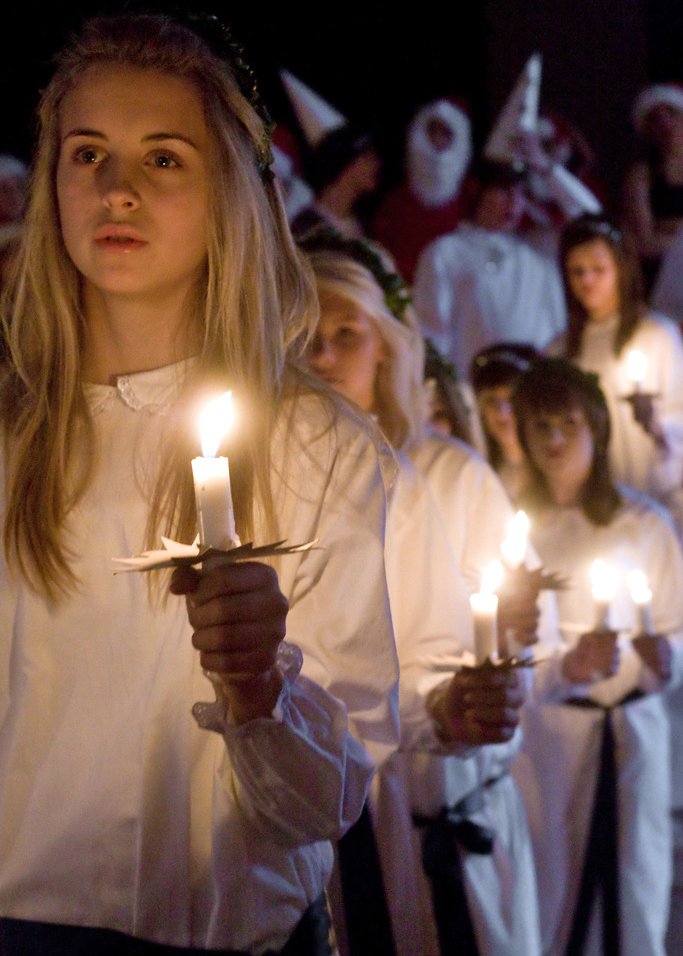 Saint Lucy's DayA December festival of light and song held across Scandinavia and Italy to honour a Christian martyr.
 Gävle goatA towering straw Yule goat built each Advent in the central square of Gävle
 RisalamandeA chilled Danish Christmas rice dessert with cream, chopped almonds and cherry sauce
 JulA midwinter holiday of feast tables, doorstep gift givers, and candlelit mornings
Good reading and sources
- Yule goat on WikipediaEncyclopedia
- More photos on Wikimedia CommonsPhotos and video
- Wikidata recordOpen data
The facts on this page come from the Wikipedia article "Yule goat", written by its contributors and used under the CC BY-SA 4.0 licence, and from its Wikidata record (CC0). EveryParampara rewrote the text in its own words, with AI assistance, and compares every page with the article to make sure no passage is copied. It may be reused under the same CC BY-SA 4.0 licence with a link back.
It may contain mistakes. Traditions differ from one family, village and community to the next, and the people who keep them know them best. If something is wrong, tell us. Last refreshed 2026-10-05.
More from Sweden
All the traditions of Sweden
🇸🇪 Stockholm, Sweden and 4 moreSaint Lucy's Day
A December festival of light and song held across Scandinavia and Italy to honour a Christian martyr.Festival · Breakfast
🇸🇪 Gävle, SwedenGävle goatGävlebocken
A towering straw Yule goat built each Advent in the central square of GävleFestival
 🇸🇪 Sweden and 3 moreAdventadventus
A four-week Christian season of waiting and preparation for Christmas and the Second Coming.Festival
🇸🇪 Sweden and 3 moreAdventadventus
A four-week Christian season of waiting and preparation for Christmas and the Second Coming.Festival
 🇳🇴 Norway and 3 moreJulebukkingGå julebukk
A Scandinavian Christmas custom where masked visitors go door to door for songs and treats.Festival
🇳🇴 Norway and 3 moreJulebukkingGå julebukk
A Scandinavian Christmas custom where masked visitors go door to door for songs and treats.Festival
The same idea elsewhere
Harvest and thanksgiving compared 🇵🇪 Cusco, Peru and 4 moreIntiinti (Quechua)
The Inca sun deity, honoured with temples, offerings and the June festival Inti RaymiSpiritual
🇵🇪 Cusco, Peru and 4 moreIntiinti (Quechua)
The Inca sun deity, honoured with temples, offerings and the June festival Inti RaymiSpiritual
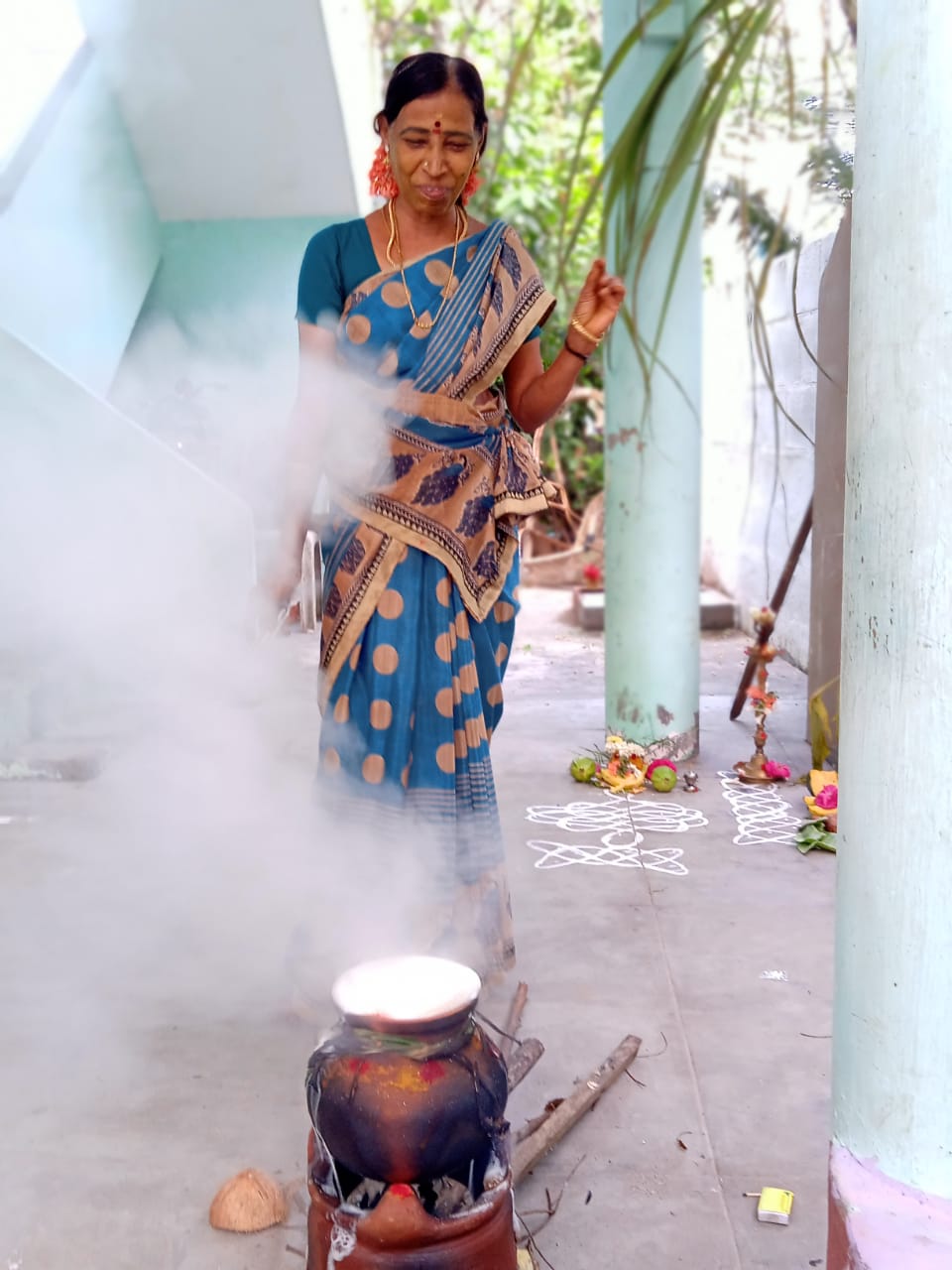 🇮🇳 India and 5 morePongal
Three or four days of boiling rice, garlanded cattle and thanks to the sunSeasonal · Sweets given and shared
🇮🇳 India and 5 morePongal
Three or four days of boiling rice, garlanded cattle and thanks to the sunSeasonal · Sweets given and shared
 🇮🇳 Prayagraj, India and 6 moreMakar Sankrantiमकरसङ्क्रान्ति (Makarasaṅkrānti)
A mid-winter harvest festival marking the sun's northward journey, celebrated across South and Southeast Asia with fairsFestival · Feasts and festival meals
🇮🇳 Prayagraj, India and 6 moreMakar Sankrantiमकरसङ्क्रान्ति (Makarasaṅkrānti)
A mid-winter harvest festival marking the sun's northward journey, celebrated across South and Southeast Asia with fairsFestival · Feasts and festival meals
 🇮🇳 India and 1 moreLohri
A northern Indian midwinter festival of evening bonfires, folk songs and harvest foodsSeasonal
🇮🇳 India and 1 moreLohri
A northern Indian midwinter festival of evening bonfires, folk songs and harvest foodsSeasonal