Spiritual and religiousMiddle EastMuslim
Hadra
In its own language: حضرة
A collective Sufi ritual of chanted divine remembrance, sacred poetry and rhythmic movement

Hadra is a communal Sufi gathering of spiritual remembrance found across North Africa, the Middle East, Turkey and parts of Southeast Asia. Guided by a spiritual leader, participants chant sacred names, recite scripture and move in rhythm to turn their focus toward the divine presence.
When is Hadra kept?
Hadra is kept on often on Thursday, Friday or Sunday evenings, and during religious festivals.
Hadra is a communal devotional ceremony practiced by various Sufi spiritual brotherhoods. Named after the Arabic word for divine presence, the gathering brings seekers together to remember God through rhythmic recitations of sacred names, chanted poetry and synchronized breathing. Led by a spiritual master, the ceremony helps worshippers transcend personal ego, culminating in an elevated state of shared contemplation followed by measured recitation of the Quran.
Chants, poetry and remembrance
At the core of the gathering is dhikr, the devotional remembrance of God. Worshippers chant sacred formulas, starting with the Islamic declaration of unity and moving through divine names such as Hayy, the Living, and Qayyum, the Sustainer. Alongside these phrases, participants recite special prayers known as hizb and wird, which are unique to their particular spiritual order. Chanted verses praising God and the Prophet Muhammad interweave with the invocations. A solo singer frequently delivers an elaborate vocal melody over the steady drone of the group, using traditional Arab musical modes to evoke diverse devotional moods.
Movement, breath and rhythm
Physical motion and controlled respiration give the assembly its driving tempo. Participants often stand together, bending forward as they exhale repetitive sacred syllables from deep within the chest and rising straight as they breathe in. This collective breathing creates a percussive foundation that quickens over time. Depending on the custom of the order, rhythmic accompaniment may rely solely on a frame drum called the daf, varied musical instruments, or purely unaccompanied voices. The gathering reaches its peak with urgent calls upon God before settling into quiet, measured recitation of scripture in the tarteel style.
Guidance and spiritual purpose
A spiritual guide known as a sheikh directs the gathering, adjusting its tempo, length and emotional depth to meet the spiritual needs of the seekers. Rather than focusing on intellectual discourse alone, the ritual often follows a lesson to help internalize sacred teachings. The ultimate aim is entering hudur, an intense awareness of divine reality that frees the individual from self-centered absorption. Practiced in homes as well as mosques, this tradition remains an enduring centerpiece of brotherhoods like the Qadiri, Shadhili, Khalwati and Rifa'i throughout Turkey, North Africa, the Middle East and Southeast Asia.
How Hadra is kept
Worshippers gather in a mosque or home under the direction of their sheikh. The assembly often begins after formal study or prayers with scriptural readings, sermons and specific lineage prayers. Chanting follows, as participants rhythmically repeat divine names and the testimony of faith, accompanied in some orders by frame drums or other instruments. As the pace quickens, worshippers coordinate their breathing and body movements, bowing forward and rising in unison while repeating sacred syllables. The ceremony builds toward a unified spiritual climax of calling upon God, after which the gathering concludes with calm Quranic recitation.
When and where
The ritual commonly takes place on Thursday evenings after the night prayer, on Friday afternoons following congregational worship, or on Sunday nights. Gatherings also mark notable Islamic celebrations and major personal rites of passage.
The tradition is kept in homes and mosques across North Africa, the Middle East, Turkey and the Balkans, as well as in Southeast Asian nations including Indonesia and Malaysia.
What Hadra means
The word hadra denotes divine presence, and the practice is designed to lead the participant into hudur, a state of spiritual consciousness. Through repetitive chants, breath control and collective movement, worshippers seek to dissolve personal self-absorption and draw their hearts into complete mindfulness of God.

Questions people ask about Hadra
When is Hadra kept?
Hadra is kept on often on Thursday, Friday or Sunday evenings, and during religious festivals.
What is a hadra?
It is a collective Sufi spiritual assembly centered on divine remembrance, sacred song, rhythmic breathing and physical movement, designed to draw participants into deep awareness of God.
Where and when does the gathering take place?
It is held in mosques or private residences, most often on Thursday nights, Friday afternoons after communal prayers, Sunday evenings, or during major Islamic festivals.
Who leads the ritual and how is it structured?
A sheikh or appointed deputy leads the gathering. The leader guides the pacing and intensity of the chants and physical movements, concluding the session with measured Quranic recitation.
Are musical instruments used during hadra?
Usage varies across Sufi orders. Conservative groups permit no instruments or only the daf, a traditional frame drum, while other traditions incorporate a broader variety of musical instruments alongside chanted poetry.
See also
 Eid al-FitrThe feast that ends Ramadan, opened with morning prayers, sweets and visits home
 Mevlevi OrderA Sufi tradition from Konya known for its whirling ceremony and devotion to Rumi's teachings.
 KenduriA communal prayer meal and gathering shared across Indonesia, Malaysia and Brunei
 MelastiA Balinese Hindu purification ritual held at the sea before Nyepi to cleanse sacred objects and people.
Good reading and sources
- Hadra (Sufism) on WikipediaEncyclopedia
- More photos on Wikimedia CommonsPhotos and video
- Wikidata recordOpen data
The facts on this page come from the Wikipedia article "Hadra (Sufism)", written by its contributors and used under the CC BY-SA 4.0 licence, and from its Wikidata record (CC0). EveryParampara rewrote the text in its own words, with AI assistance, and compares every page with the article to make sure no passage is copied. It may be reused under the same CC BY-SA 4.0 licence with a link back.
It may contain mistakes. Traditions differ from one family, village and community to the next, and the people who keep them know them best. If something is wrong, tell us. Last refreshed 2026-10-06.
More from Turkey
All the traditions of Turkey
🇹🇷 Konya, Turkey and 4 moreMevlevi OrderMevlevilik
A Sufi tradition from Konya known for its whirling ceremony and devotion to Rumi's teachings.Spiritual
 🇹🇷 TurkeyRamadan in Turkey
A holy month of fasting, prayer, and community meals, observed across Turkey with unique local customs.Spiritual · Fasting and breaking the fast
🇹🇷 TurkeyRamadan in Turkey
A holy month of fasting, prayer, and community meals, observed across Turkey with unique local customs.Spiritual · Fasting and breaking the fast
 🇹🇷 Turkey and 1 moreSamaSema (Turkish); سَماع (Persian)
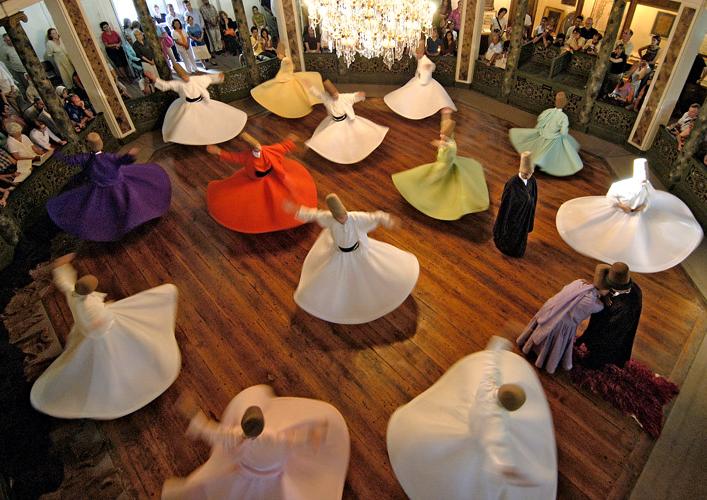
A Sufi rite of listening, music and turning, kept by Mevlevi and other Sufi ordersSpiritual
🇹🇷 Turkey and 1 moreSamaSema (Turkish); سَماع (Persian)
A Sufi rite of listening, music and turning, kept by Mevlevi and other Sufi ordersSpiritual
 🇦🇲 Yerevan, Armenia and 6 moreArmenian Genocide Remembrance DayՄեծ Եղեռնի զոհերի հիշատակի օր
An annual day of mourning and remembrance for the victims of the 1915 Armenian Genocide.Spiritual
🇦🇲 Yerevan, Armenia and 6 moreArmenian Genocide Remembrance DayՄեծ Եղեռնի զոհերի հիշատակի օր
An annual day of mourning and remembrance for the victims of the 1915 Armenian Genocide.Spiritual
The same idea elsewhere
All of this kind 🇦🇺 Australia and 5 moreGood Friday
A solemn Christian holy day commemorating the crucifixion and death of Jesus Christ.Spiritual · Fasting and breaking the fast
🇦🇺 Australia and 5 moreGood Friday
A solemn Christian holy day commemorating the crucifixion and death of Jesus Christ.Spiritual · Fasting and breaking the fast
 🇵🇭 Philippines and 5 moreHoly WeekἉγία καὶ Μεγάλη Ἑβδομάς
The solemn seven days leading to Easter, recalling the final week and Passion of JesusSpiritual · Fasting and breaking the fast
🇵🇭 Philippines and 5 moreHoly WeekἉγία καὶ Μεγάλη Ἑβδομάς
The solemn seven days leading to Easter, recalling the final week and Passion of JesusSpiritual · Fasting and breaking the fast
 🇺🇸 New York, United States and 4 moreFeast of the Ascension
The fortieth day of Easter, when Christians remember Jesus being taken up into heavenSpiritual
🇺🇸 New York, United States and 4 moreFeast of the Ascension
The fortieth day of Easter, when Christians remember Jesus being taken up into heavenSpiritual
 🇪🇸 Valencia, Spain and 5 moreFeast of Corpus ChristiCorpus Domini
A Christian feast celebrating the presence of Christ in the bread and wine of the EucharistSpiritual
🇪🇸 Valencia, Spain and 5 moreFeast of Corpus ChristiCorpus Domini
A Christian feast celebrating the presence of Christ in the bread and wine of the EucharistSpiritual