Spiritual and religiousNorth AfricaPagan and ancientChristian
Hermetic Qabalah
A Western esoteric tradition blending Kabbalah, astrology, tarot and classical myth

Hermetic Qabalah is a Western mystical tradition that blends Jewish Kabbalah with Neoplatonism, alchemy, tarot, and ancient pagan symbolism. Originating in Renaissance Europe and developed in modern esoteric orders, practitioners study the Tree of Life and meditate on its divine emanations and correspondences.
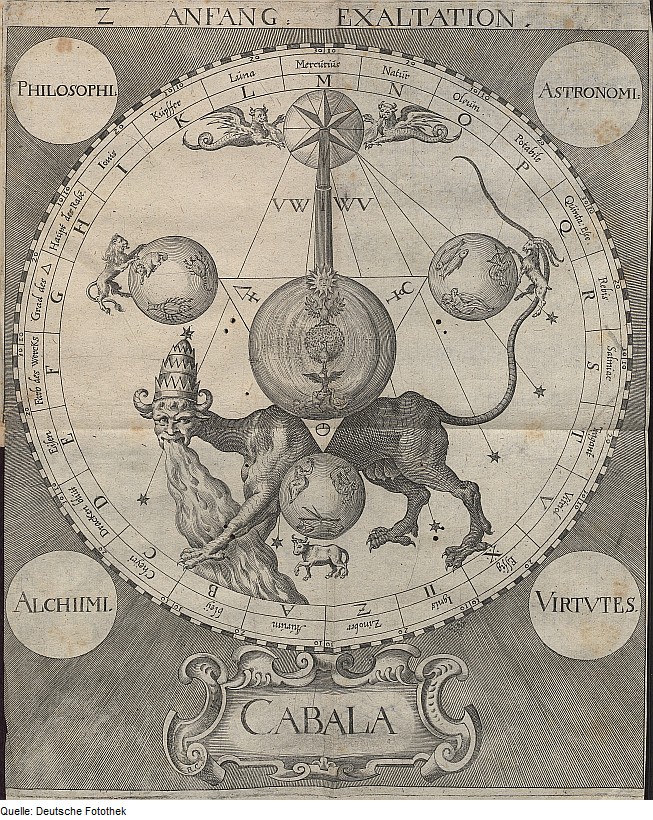
Hermetic Qabalah is a Western esoteric system that explores the nature of divinity, the cosmos, and human awareness. Born during the European Renaissance from a synthesis of Jewish mysticism, Christian thought, and classical philosophy, it maps spiritual existence through a symbolic diagram called the Tree of Life. Modern occultists and esoteric orders study these teachings to understand the connections between physical reality and the divine source.
Divinity and the Sephiroth
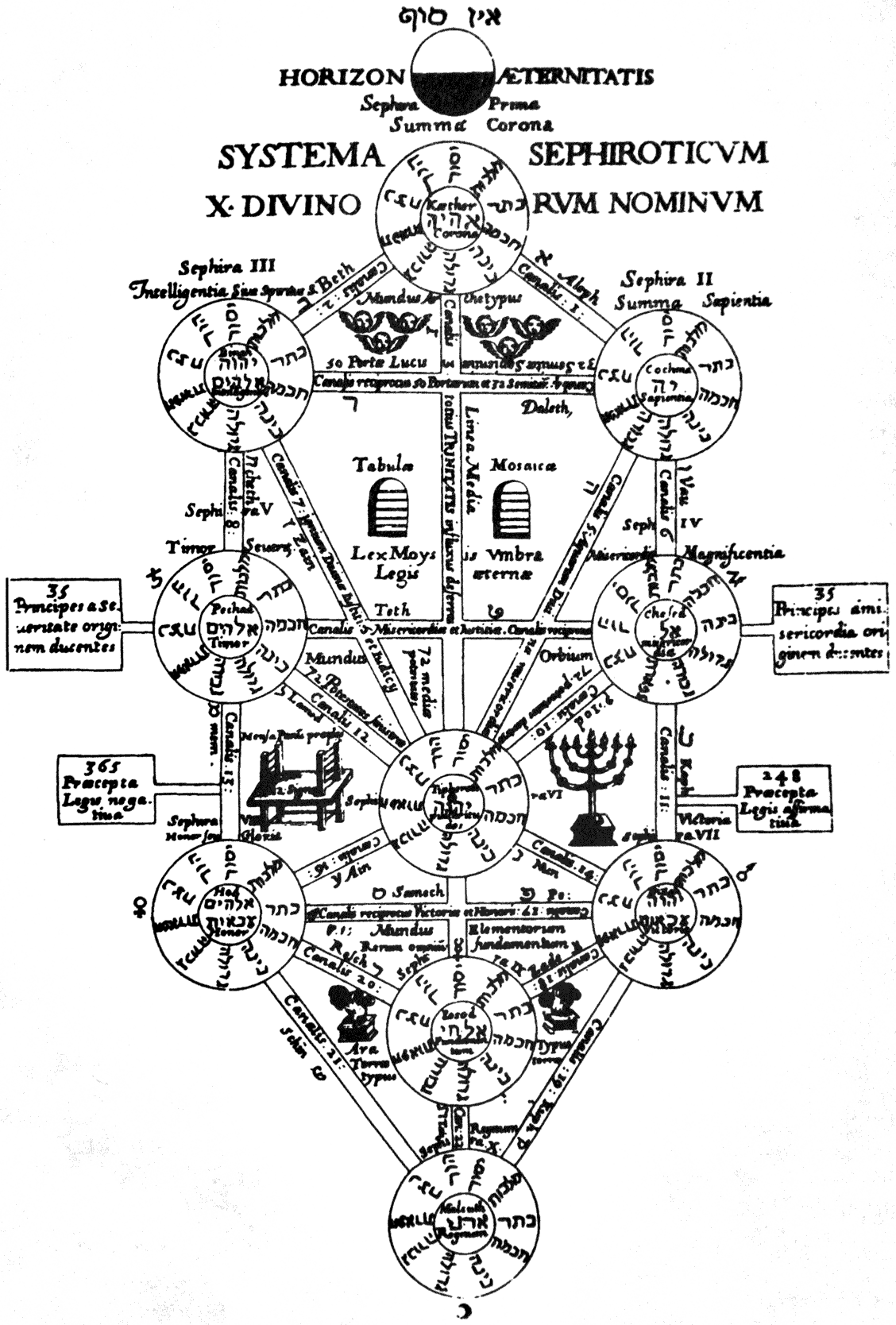
In Hermetic Qabalah, creation emerges from the unmanifest through three preliminary states of nothingness, limitless space, and limitless light. From this origin, divine energy pours forth in a lightning pattern across ten spheres known as Sephiroth. These spheres begin with Kether, representing the initial divine impulse, and culminate in Malkuth, which corresponds to the physical realm. A hidden sphere named Daath sits between upper and lower regions. Unlike strict monotheism, the system views the universe as a sequence of divine emanations where humanity and the divine are not entirely separate. Practitioners contemplate this structure to trace how spirit becomes matter.
Symbols and correspondences
A central practice in Hermetic Qabalah involves building extensive networks of symbolic associations for each part of the Tree of Life. The twenty-two pathways linking the spheres correspond to the letters of the Hebrew alphabet and the Major Arcana cards of the tarot deck. Each sphere also connects to specific planets, angels, alchemical elements, and ancient deities. For example, the sphere of Hod brings together the planet Mercury, the Egyptian deity Thoth, the archangel Michael, and the eights of tarot suits. By meditating on these layered correspondences, students seek to uncover underlying spiritual harmonies.
Renaissance beginnings
The tradition took form in fifteenth-century Europe when thinkers merged Jewish mystical texts with classical philosophy. Giovanni Pico della Mirandola helped launch this syncretic movement by blending Kabbalah with Platonism, Hermeticism, and Christian theology. In the sixteenth century, Heinrich Cornelius Agrippa integrated these ideas into ceremonial magic through his influential writings on occult philosophy. Later scholars like Athanasius Kircher added layers of Egyptian myth and Orphic mysteries. Over centuries, these Renaissance ideas evolved from early Christian interpretations into an independent framework used across various occult and esoteric societies.
Nineteenth century revival
Interest in Hermetic Qabalah surged during the nineteenth-century occult revival. French writer Eliphas Levi established lasting connections between tarot cards and Hebrew letters, bridging ceremonial magic and mystical philosophy. Later, the Hermetic Order of the Golden Dawn expanded these concepts into structured ritual work, incorporating angel magic and Eastern ideas. Prominent members like Aleister Crowley and Dion Fortune further developed the system through published teachings and independent magical orders. Fortune wrote widely read introductions to the subject, while Crowley integrated Qabalistic tables into his own philosophical traditions.
How Hermetic Qabalah is kept
Followers engage with Hermetic Qabalah through private contemplation, intellectual study, and ceremonial rituals. Students often draw the Tree of Life diagram, mapping its spheres and twenty-two connecting paths. They reflect on symbolic tables of correspondences that link each sphere to colours, planets, tarot cards, and mythological figures. In structured esoteric societies, members use these Qabalistic classifications to frame ritual initiations and personal meditation, aiming to expand consciousness and trace the path back to the divine source.
When and where
Hermetic Qabalah developed across Western Europe, particularly in Renaissance Italy, Germany, France, and Victorian Britain. Today, it is practiced worldwide within various Western esoteric groups, magical orders, and independent mystical circles rather than in a single geographic territory.
What Hermetic Qabalah means
The central symbol of the tradition is the Tree of Life, representing both the cosmic creation process and the inner landscape of the human soul. The descent of light through the ten spheres signifies how spiritual reality manifests in the physical world. For practitioners, studying the connecting paths represents an ascent of consciousness, allowing the seeker to gain deeper knowledge of the divine.

Questions people ask about Hermetic Qabalah
What is Hermetic Qabalah?
Hermetic Qabalah is a Western esoteric philosophy and mystical tradition. It combines Jewish Kabbalah with Hermeticism, Neoplatonism, astrology, and tarot symbolism to map how the universe emanates from the divine and how seekers can explore spiritual awareness.
How does it differ from Jewish Kabbalah?
While it shares core concepts like the ten Sephiroth and Hebrew letter symbolism, Hermetic Qabalah is an eclectic Western tradition. It incorporates pagan mythologies, ceremonial magic, planetary astrology, and tarot imagery that are not part of traditional Jewish Kabbalah.
What is the Tree of Life in this tradition?
The Tree of Life is a glyph composed of ten spheres, known as Sephiroth, connected by twenty-two paths. It illustrates the flow of divine energy into creation and provides a roadmap for meditation, ritual, and spiritual development.
Where and when did Hermetic Qabalah develop?
The tradition began during the European Renaissance in the fifteenth century, when Christian humanists combined Jewish mystical writings with classical philosophy. It was later expanded into ceremonial magical systems in nineteenth-century Europe.
See also
 Mevlevi OrderA Sufi tradition from Konya known for its whirling ceremony and devotion to Rumi's teachings.
 Holy FireA fire ceremony in Jerusalem each year, kept by Orthodox Christians before Easter
 Dormition of the Mother of GodA major feast in Eastern Christianity marking the death and heavenly ascent of Mary.
Good reading and sources
- Hermetic Qabalah on WikipediaEncyclopedia
- More photos on Wikimedia CommonsPhotos and video
- Wikidata recordOpen data
The facts on this page come from the Wikipedia article "Hermetic Qabalah", written by its contributors and used under the CC BY-SA 4.0 licence, and from its Wikidata record (CC0). EveryParampara rewrote the text in its own words, with AI assistance, and compares every page with the article to make sure no passage is copied. It may be reused under the same CC BY-SA 4.0 licence with a link back.
It may contain mistakes. Traditions differ from one family, village and community to the next, and the people who keep them know them best. If something is wrong, tell us. Last refreshed 2026-10-06.
More from Egypt
All the traditions of Egypt
🇮🇱 Jerusalem, Israel and 5 moreHoly FireἋγιον Φῶς
A fire ceremony in Jerusalem each year, kept by Orthodox Christians before EasterSpiritual
🇹🇷 Konya, Turkey and 4 moreMevlevi OrderMevlevilik
A Sufi tradition from Konya known for its whirling ceremony and devotion to Rumi's teachings.Spiritual
🇲🇦 Morocco and 1 moreHamadsha
A Moroccan possession rite kept by Muslim fraternities to cure affliction and restore social balance through music and dSpiritual
 🇹🇷 Turkey and 1 moreSamaSema (Turkish); سَماع (Persian)
A Sufi rite of listening, music and turning, kept by Mevlevi and other Sufi ordersSpiritual
🇹🇷 Turkey and 1 moreSamaSema (Turkish); سَماع (Persian)
A Sufi rite of listening, music and turning, kept by Mevlevi and other Sufi ordersSpiritual
The same idea elsewhere
All of this kind 🇦🇺 Australia and 5 moreGood Friday
A solemn Christian holy day commemorating the crucifixion and death of Jesus Christ.Spiritual · Fasting and breaking the fast
🇦🇺 Australia and 5 moreGood Friday
A solemn Christian holy day commemorating the crucifixion and death of Jesus Christ.Spiritual · Fasting and breaking the fast
 🇮🇱 Jerusalem, IsraelPassoverפסח
A Jewish spring festival celebrating freedom from slavery with ritual mealsSpiritual · Dinner
🇮🇱 Jerusalem, IsraelPassoverפסח
A Jewish spring festival celebrating freedom from slavery with ritual mealsSpiritual · Dinner
 🇵🇭 Philippines and 5 moreHoly WeekἉγία καὶ Μεγάλη Ἑβδομάς
The solemn seven days leading to Easter, recalling the final week and Passion of JesusSpiritual · Fasting and breaking the fast
🇵🇭 Philippines and 5 moreHoly WeekἉγία καὶ Μεγάλη Ἑβδομάς
The solemn seven days leading to Easter, recalling the final week and Passion of JesusSpiritual · Fasting and breaking the fast
 🇮🇱 Jerusalem, IsraelYom Kippurיוֹם כִּפּוּר
The holiest day in Judaism, dedicated to fasting, prayer and atonementSpiritual · Fasting and breaking the fast
🇮🇱 Jerusalem, IsraelYom Kippurיוֹם כִּפּוּר
The holiest day in Judaism, dedicated to fasting, prayer and atonementSpiritual · Fasting and breaking the fast