Dress and adornmentMiddle EastMuslim
Hijab
In its own language: حجاب
A Muslim practice of modesty and dress, worn by women as a headscarf or more covering
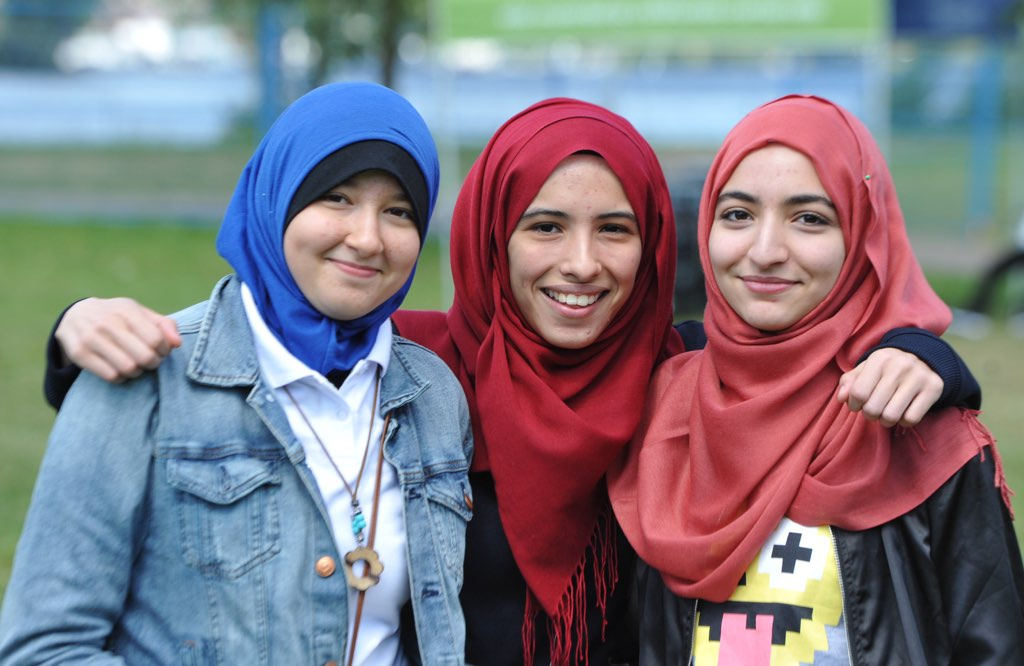
Hijab is an Arabic word for a screen or partition, and today it usually means the headscarf and modest dress of Muslim women. Muslims keep it in many forms, from a scarf over the hair to fuller covering, shaped by scripture, law, climate and local custom.
When is Hijab kept?
Hijab is kept every day, in public and at home, as part of dress and behaviour.
Islam's teaching on modesty is called hijab. The word itself means a screen or curtain, and in everyday use today it points to the headscarf and the modest dress of Muslim women. Muslims keep it in many shapes, from a scarf over the hair to fuller covering, and they read it as worship, as faith and, for some, as adornment.
What it is
Hijab is an Arabic noun built on the root h-j-b, which gathers ideas of hiding, blocking and concealing. Early texts use it for a partition, a cloth hung to divide a space, and also for a barrier between people and God. From that it came to name Islamic rules of modesty. In modern English the word usually means the covering a Muslim woman wears over her hair, neck and ears while her face stays visible. Local understanding can stretch or narrow it, and the Turkish word points to an inner state of shame rather than to any garment.
Words and coverings
Several words sit near hijab and are not the same. Khimar names a covering, and jilbab an outer garment. Hadith collections fill in practical detail: one report has Umar asking Muhammad to have his wives veiled, and another describes how the Prophet's wives went out at night. The hijab is not one uniform thing. Writers compare it with the tichel and snood of observant Jewish women, the apostolnik and kapp of some Christian women, and the dupatta of North Indian Hindu and Sikh culture. Each is shaped by local law, custom, weather and the body's needs, and each is called by its own name.
Early history
Veiling did not begin with Islam. It was already practised in Arabian towns, where it marked high social standing, and something like it existed among Greeks, Byzantines, Jews and Assyrians. A Qur'anic verse understood to date from 627 tells visitors to speak to the Prophet's wives from behind a screen, which is usually read as a way of protecting them from strangers who crowded the mosque that served as his home. Leila Ahmed notes that his wives wore veils while his concubines did not, and that a phrase was used among Muslims over time for a woman who joined the wives.
Scripture and law
When the Qur'an speaks of women's dress it uses khimar and jilbab rather than hijab. One verse, Al-A'raf 26, gives the plain purpose of clothing as covering the body and places fear of God above it. An-Nur 24:30-31 addresses men and women together, asking both to guard their chastity and telling women to draw their coverings over their chests, with a list of relatives in whose company adornment may be shown. Al-Ahzab 59 tells believing women to draw their outer garments around themselves so they are recognised and not harmed. Jurists later worked out the details, and scholars still disagree about the face and hands.
Law and debate
Iran and Afghanistan under Taliban rule require the hijab by law. Other states restrict or ban it. The result is that a woman may be punished in one country for covering and in another for leaving her head bare. The subject reaches beyond dress into how far women take part in public life, and into arguments about human rights and international law. One practical question raised in the sources is whether a judge who wears a religious symbol can be seen as impartial, since judicial independence is a basic principle. Modernist thinkers read the same texts differently from scholars of classical jurisprudence, and that disagreement runs through Muslim communities today.
How Hijab is kept
A Muslim woman who keeps hijab covers her hair, neck and ears, and often the chest, when she is where unrelated men may see her; many leave the face and hands uncovered, and some cover them as well. Men keep their own modest dress and lower their gaze. Families, teachers and communities pass the practice on, and law decides some of what happens outside the home. The shape of covering changes with climate and custom: a scarf, a longer cloak, or a lighter style in hot places. It is worn through the day and taken off among close relatives.
When and where
There is no date and no season. Hijab belongs to ordinary days and is kept all year, at home, on the street and at work. The rules change with company: which relatives a woman may appear before without covering, and whether the face and hands count, are settled differently by different schools of thought and by local law.
It is kept wherever Muslims live, in widely different forms. Iran and Afghanistan under Taliban rule require it by law, while other countries place restrictions or bans on it. Writers in the sources place it beside the tichel and snood of observant Jewish women, the apostolnik and kapp of some Christian women, and the dupatta of North Indian Hindu and Sikh communities.
What Hijab means
For many Muslims hijab is worship: modesty, called haya, is a matter of the heart before it is a matter of cloth, and the sources describe fear of God as more important than any covering. Modesty is honoured and its opposite, fahisha, is treated as a sign of jahiliyyah, spiritual ignorance. Some women describe the headscarf as a marker of faith and dignity, others as a form of adornment, and some jurists explain the outer garment as protection, so that a woman is recognised as a free Muslim and not troubled.



Questions people ask about Hijab
When is Hijab kept?
Hijab is kept every day, in public and at home, as part of dress and behaviour.
What is hijab?
In Islamic writing the word names an inner modesty and reserve, called haya, and the dress and behaviour that go with it. In everyday English it usually means the headscarf a Muslim woman wears over her hair, neck and ears, with her face showing.
Where is it required, and where is it restricted?
Iran and Afghanistan under Taliban rule require it by law, and other countries place restrictions or bans on it. So a woman can be penalised in one place for covering and in another for not covering.
Must a Muslim woman cover her head?
Scholars disagree. Those who follow classical jurisprudence generally treat head covering as a religious duty, and even they differ over whether the face and hands must be covered. Modernist and Qur'an-centric thinkers read the evidence differently and do not count it among Islamic obligations.
Which words does the Qur'an use for women's dress?
Verses on women's dress speak of the khimar, a covering, and the jilbab, an outer garment. The word hijab appears in the Qur'an for a curtain or partition, as in the verse of about 627 that tells visitors to address the Prophet's wives from behind one.
See also
 ChokhaA high-collared wool coat of the Caucasus, worn by men for battle and ceremony
 TurbanCloth wound around the head, worn for faith, rank, shade and identity
 NiqabA face veil worn by some Muslim women, hiding all but the eyes
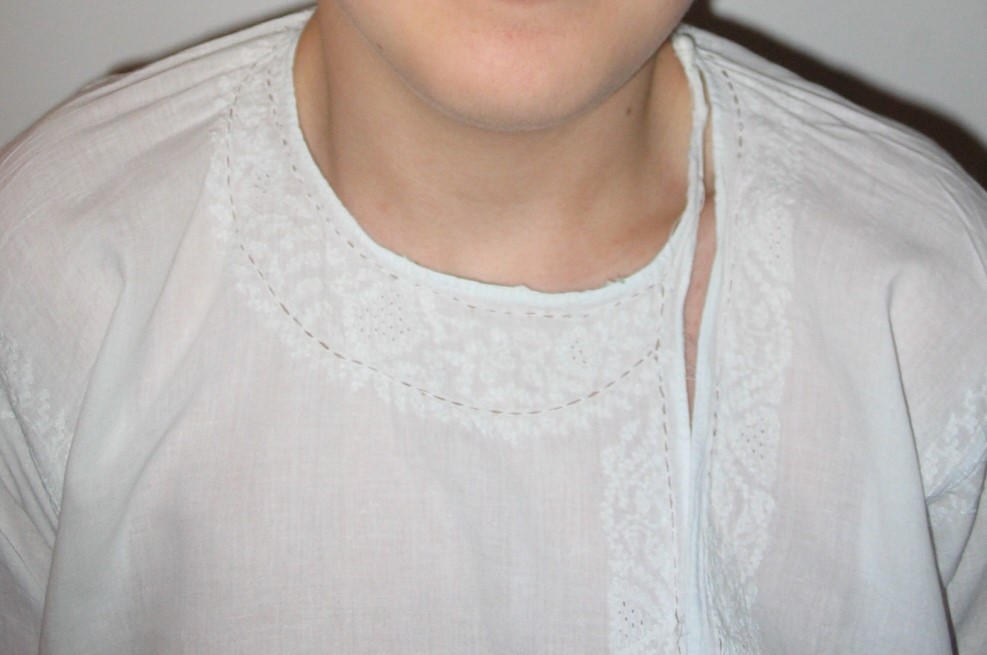 KurtaA loose collarless tunic from South Asia, worn plain or embroidered over pyjamas or jeans
Good reading and sources
- Quiet end to Turkey's college headscarf banBBC, Article
- Fashion police get tough in TehranAl Jazeera, Article
- Quiet end to Turkey's college headscarf banBBC, Article
- Fashion police get tough in TehranAl Jazeera, Article
- Hijab on WikipediaEncyclopedia
- More photos on Wikimedia CommonsPhotos and video
- Wikidata recordOpen data
The facts on this page come from the Wikipedia article "Hijab", written by its contributors and used under the CC BY-SA 4.0 licence, and from its Wikidata record (CC0). EveryParampara rewrote the text in its own words, with AI assistance, and compares every page with the article to make sure no passage is copied. It may be reused under the same CC BY-SA 4.0 licence with a link back.
It may contain mistakes. Traditions differ from one family, village and community to the next, and the people who keep them know them best. If something is wrong, tell us. Last refreshed 2026-10-05.
More from Saudi Arabia
All the traditions of Saudi Arabia
🇸🇦 Saudi Arabia and 2 moreNiqabنِقاب
A face veil worn by some Muslim women, hiding all but the eyesDress
 🇵🇸 Palestine and 5 moreKeffiyehكُوفِيَّة (kūfīyah)
A square cotton headscarf worn by men in arid parts of the Middle East and North AfricaDress
🇵🇸 Palestine and 5 moreKeffiyehكُوفِيَّة (kūfīyah)
A square cotton headscarf worn by men in arid parts of the Middle East and North AfricaDress
 🇩🇿 Algeria and 4 moreFoutaفوطة
A thin patterned cotton or linen cloth, worn as a wrap at the baths and as dressDress
🇩🇿 Algeria and 4 moreFoutaفوطة
A thin patterned cotton or linen cloth, worn as a wrap at the baths and as dressDress
 🇸🇦 Mecca, Saudi ArabiaIhramإِحْرَام
A sacred state and simple dress that Muslims enter for Hajj and UmrahSpiritual
🇸🇦 Mecca, Saudi ArabiaIhramإِحْرَام
A sacred state and simple dress that Muslims enter for Hajj and UmrahSpiritual
The same idea elsewhere
All of this kind 🇮🇳 Paithan, IndiaPaithani
A handwoven silk sari from Maharashtra, with a squared border and a peacock palluDress
🇮🇳 Paithan, IndiaPaithani
A handwoven silk sari from Maharashtra, with a squared border and a peacock palluDress
 🇳🇴 Norway and 3 moreGákti
A traditional coat worn by the Sámi people across northern Scandinavia and Russia, signaling origin and status through cDress
🇳🇴 Norway and 3 moreGákti
A traditional coat worn by the Sámi people across northern Scandinavia and Russia, signaling origin and status through cDress
 🇼🇸 Samoa and 1 moreʻIe tōga
Precious woven mats exchanged in Samoan ceremonies to honor family ties and chiefly status.Dress
🇼🇸 Samoa and 1 moreʻIe tōga
Precious woven mats exchanged in Samoan ceremonies to honor family ties and chiefly status.Dress
 🇪🇬 Egypt and 5 moreTraditional tattooing
The ancient custom of marking the skin for protection, healing, status and sacred ritesDress
🇪🇬 Egypt and 5 moreTraditional tattooing
The ancient custom of marking the skin for protection, healing, status and sacred ritesDress