Folklore and beliefSoutheast AsiaIndigenous and traditional
Hilot
A Filipino healing practice of hands-on massage, harmony and the spirit

Hilot is a Filipino practice meant to heal, using massage and manipulation, kept by healers who say the gift comes from a calling, a vision, or a breech birth. It grew out of the shamanic tradition of the ancient Philippines and is still found mainly in rural areas, with herbs and midwifery alongside it.
When is Hilot kept?
Hilot is kept on called on whenever someone is unwell or a baby is due, all year round, most often in rural parts of the Philippines..
Hilot is a Filipino healing practice. A healer works with the hands, using massage and manipulation, and often treats the spiritual side of a person's trouble as well. It grew from the shamanic tradition of the ancient Philippines and is still used today, mainly in the countryside, where a hilot is often a more affordable choice than a doctor.
What it is
Hilot is a Filipino word for healing by hand. A healer, a manghihilot, uses touch and massage to find what is wrong and to treat it. Methods are not the same everywhere: what one healer does, another may not. Some work with their hands alone, while an albularyo, an herbalist, gives plant medicines as well. The same word is used for traditional midwives, whether or not they hold a licence; in Meranaw they are called panday. Healers speak of the calling to this work coming through visions, or of a person born breech being marked for it.
Harmony and the spirit
Healers describe two sides to the work. The spiritual side concerns how a person's attitude sits with a universal energy, and the aim is to bring the body back to harmony, changing what is inside first. Some follow the Banahaw Devotional Technique, traced to the fifteenth century, which uses orations and sacrificial rituals to reach the spirit and to ask forgiveness from God. It is often carried out at Mount Banahaw, an active volcano on Luzon. The valuing process follows, turning inner understanding into outward change through three steps: mabuti, or self-honesty; makabubuti, or sincerity; and makapagpapabuti, goodness with consequences. Stress and other inner conflict are said to unbalance the four elements.
Four ways of working
The body is read through four elements: earth, water, fire and air, which should stay in balance. Four methods, called modalities, are used to bring balance back, and each one moves from the outer, material side of a person towards the inner. The bio-chemical method concerns the body's chemistry. The neuro-electrical method works with electric charge, positive and negative ions. The electro-magnetic field method aims at the neuro-electric field, so that cells can work normally again. The bio-mechanical method is the closest to chiropractic: bones, tendons and muscles are moved and handled until they act as they should.
Links with Chinese medicine
The Philippines stands where Southeast Asia is entered and left, and trade has carried medical knowledge in both directions. China and the islands were trading by the eighth century, and the traffic grew in the sixteenth, when the Manila-Acapulco galleons sailed. Manghihilot methods look like the acupuncture tradition that reads the body through the energy fluids yin and yang. Filipino healers diagnose with four elements, while Chinese medicine uses the Five Element Theory. Both may explain a complaint as an imbalance; one may be read by a healer as engkanto sa hangin, an air entity, where Western medicine would say asthma. Whether either tradition borrowed from the other is not known, nor is it known which local practices may have come from Ayurveda.
Today and change
Hilot is still practised, and its methods have grown more detailed over time. It is strongest in the countryside. Fitting it into the national health system has proved difficult: Western medicine is the standard, and hilot is often linked with superstition, with little scholarly proof that it works. The Traditional and Alternative Medicine Act of 1997 was passed to widen access to care in rural places, and groups formed after it argue for research into these systems and for their place in public health. The old practice has become a disputed question in Philippine health policy.
How Hilot is kept
A person who is unwell goes to a manghihilot, or to an albularyo who adds herbs to the massage. The healer asks about the illness, reads the face and the tongue, and works by touch, feeling for joints and muscles that are out of place. Sprains and dislocations at the knee, ankle, fingers or metacarpal bones may be set. Some healers first go on pilgrimage to Mount Banahaw for the spiritual part. A pregnant woman sees a magpapaanak for check-ups, and that midwife stays through the birth and may carry out suob, with the mother under a cloak.
When and where
Hilot keeps no calendar. It is called on when a person is ill or a baby is coming, at any time of year, and it is strongest in the rural parts of the Philippines. The devotional branch is tied to Mount Banahaw on Luzon, where healers also go on pilgrimage.
The practice belongs to the Philippines, above all to the countryside and to deep rural areas where a doctor is far away. Mount Banahaw, an active volcano on the island of Luzon, is named as the popular place for the devotional technique, and it draws manghihilot on pilgrimage.
What Hilot means
To the people who keep hilot, the point is harmony. The spiritual work is described as the meeting of a person's attitude with a universal energy, and its purpose is to bring the body back into balance, first within, then in how a person lives. Illness may be read as an unseen being, an engkanto, pressing on the body. Some healers hold that their power is given to them rather than learned, and that a calling marks them out.
Questions people ask about Hilot
When is Hilot kept?
Hilot is kept on called on whenever someone is unwell or a baby is due, all year round, most often in rural parts of the Philippines..
What is hilot?
A Filipino way of healing that works by hand: massage, manipulation and touch. Healers, called manghihilot, may also treat the spiritual side of an illness, and an albularyo among them adds plant medicines to the massage. Methods differ between one practitioner and the next.
Where and when is it kept?
It belongs to the Philippines and is still used there, mainly in rural areas, at any time of year and with no fixed date. People seek a healer when they are unwell or when a baby is due. Some healers travel to Mount Banahaw in Luzon as part of their practice.
Who practises it?
Two kinds of healer are named. The manghihilot works by hand on muscle, bone and joint, and the albularyo uses herbs as well. The same word, hilot, also covers traditional midwives, the magpapaanak, who visit pregnant women and help at the birth. Meranaw speakers call such a midwife a panday.
Does it come from Chinese medicine?
The question is open. Filipino and Chinese ways of reading the body look alike in places, and trade between the two countries is recorded from the eighth century. Researchers say it is not clear whether anything was borrowed, in which direction, or whether the likeness is coincidence.
Is hilot part of Philippine health care?
Western medicine is the standard, and hilot is often seen as superstition, with little scholarly evidence behind it. An act of 1997 on traditional and alternative medicine aimed to widen rural access to care, and groups formed since then argue for research into these systems and for a place in public health.
See also
 Stations of the CrossA Christian prayer journey following fourteen moments of the Passion of Jesus
 NovenaA nine-day Christian prayer tradition for petitions, feasts, or mourning.
 Spirit houseA small roofed shrine on a pillar, kept in homes and villages across Southeast Asia to honour protective spirits.
 Moriones FestivalA Holy Week reenactment in Marinduque where masked participants search for the Roman centurion Longinus.
Good reading and sources
The facts on this page come from the Wikipedia article "Hilot", written by its contributors and used under the CC BY-SA 4.0 licence, and from its Wikidata record (CC0). EveryParampara rewrote the text in its own words, with AI assistance, and compares every page with the article to make sure no passage is copied. It may be reused under the same CC BY-SA 4.0 licence with a link back.
It may contain mistakes. Traditions differ from one family, village and community to the next, and the people who keep them know them best. If something is wrong, tell us. Last refreshed 2026-10-12.
More from the Philippines
All the traditions of the Philippines
🇵🇸 Jerusalem, Palestine and 2 moreStations of the CrossVia Crucis
A Christian prayer journey following fourteen moments of the Passion of JesusSpiritual
🇹🇭 Thailand and 7 moreSpirit house
A small roofed shrine on a pillar, kept in homes and villages across Southeast Asia to honour protective spirits.Spiritual
🇵🇭 Manila, Philippines and 5 moreNovena
A nine-day Christian prayer tradition for petitions, feasts, or mourning.Spiritual
🇵🇭 Marinduque, PhilippinesMoriones Festival
A Holy Week reenactment in Marinduque where masked participants search for the Roman centurion Longinus.Festival
The same idea elsewhere
Healing, luck and protection compared 🇦🇺 AustraliaSmoking ceremonyNumbuk Yabbun
An Aboriginal Australian ritual of burning native plants to cleanse, heal and welcomeSpiritual
🇦🇺 AustraliaSmoking ceremonyNumbuk Yabbun
An Aboriginal Australian ritual of burning native plants to cleanse, heal and welcomeSpiritual
 🇨🇳 China and 5 morePostpartum confinement
A period of rest, nourishment, and seclusion for mothers after giving birth.Rite of passage
🇨🇳 China and 5 morePostpartum confinement
A period of rest, nourishment, and seclusion for mothers after giving birth.Rite of passage
 🇺🇸 United States and 1 moreDreamcatcherᐊᓴᐱᑫᔒᓐᐦ (asabikeshiinh)
A hand-woven hoop from Anishinaabe tradition, hung above a cradle to protect a childCraft
🇺🇸 United States and 1 moreDreamcatcherᐊᓴᐱᑫᔒᓐᐦ (asabikeshiinh)
A hand-woven hoop from Anishinaabe tradition, hung above a cradle to protect a childCraft
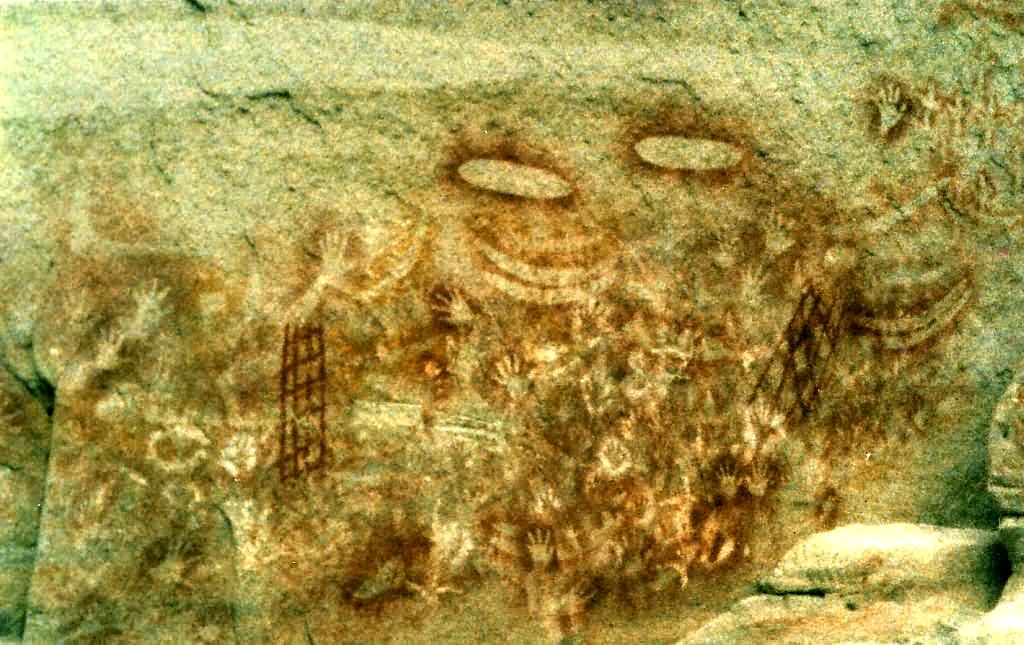 🇦🇺 AustraliaThe Dreaming
A living spiritual worldview and law connecting Aboriginal Australians to ancestors, land, and community.Spiritual
🇦🇺 AustraliaThe Dreaming
A living spiritual worldview and law connecting Aboriginal Australians to ancestors, land, and community.Spiritual