Spiritual and religiousSoutheast AsiaHinduIndigenous and traditional
Spirit house
A small roofed shrine on a pillar, kept in homes and villages across Southeast Asia to honour protective spirits.

A spirit house is a small structure found throughout Southeast Asia that serves as a shelter for local guardian spirits. Families place these shrines on their property to keep the spirits happy and prevent them from causing trouble. Offerings of food, drink, and fruit are left regularly to maintain this peaceful relationship with the unseen world.
When is Spirit house kept?
Spirit house is kept on daily or weekly, depending on the family's routine.
People across Southeast Asia build small shrines called spirit houses to welcome protective spirits into their daily lives. These structures act as homes for guardians who watch over families and villages. By leaving regular offerings, residents show respect and ensure the spirits remain friendly and helpful rather than disruptive.
What it is
These shrines usually take the form of tiny buildings mounted on a single pillar or a raised platform. They range from simple wooden boxes to elaborate mini-houses large enough for a person to enter. Most feature a pitched roof, an altar space, and sometimes carved figures of animals or people inside. The design varies by region, but the purpose remains the same: to provide a comfortable dwelling for local spirits so they do not disturb the living.
Regional names
In Thailand, the shrine is known as san phra phum, meaning house of the guardian spirit. In Myanmar, locals call it nat sin or nat kun. Cambodia uses rean preah phum or rean taveda. In the Philippines, terms vary widely by language, including magdantang in Visayan, ulango or simbahan in Tagalog, and maligai in Subanen. Each name reflects the specific cultural understanding of the spirit being honoured in that particular area.
How it is kept
Families typically place the spirit house in an auspicious corner of their property, often chosen with help from a priest. Daily life continues around it, but residents leave regular offerings to keep the spirits content. Common gifts include rice, bananas, coconuts, and desserts. In Thailand, a red strawberry-flavoured soda is a very popular choice because its bright colour and sweetness are believed to please the guardians and keep harmful forces away.
Meaning and belief
The practice stems from ancient animistic beliefs that spirits inhabit the natural world and nearby places. People believe these guardians can cause problems if ignored or angered. By maintaining the shrine and providing food, residents appease the spirits and invite their protection. In some South Indian traditions linked to Dravidian beliefs, similar shrines protect villages from unpredictable forces, showing how widespread this need for spiritual balance truly is.
How Spirit house is kept
Families place the shrine in a designated spot on their land, often after consulting a religious figure. They then leave regular offerings such as fruit, rice, and drinks at the altar. This routine maintenance ensures the spirits feel respected and stay close to offer protection rather than causing mischief.
When and where
Offerings are made daily or weekly, without a fixed calendar date. The timing depends on the family's personal schedule and local customs.
These shrines are found throughout Southeast Asia, including Thailand, Cambodia, Laos, Myanmar, the Philippines, Vietnam, and Malaysia. They are also present in parts of South India among Tamil communities.
What Spirit house means
The spirit house symbolizes a respectful boundary between the human and spirit worlds. It acknowledges that unseen forces watch over daily life and require care. Providing a home and food shows gratitude and seeks harmony, ensuring the guardians remain benevolent allies to the household.


Questions people ask about Spirit house
When is Spirit house kept?
Spirit house is kept on daily or weekly, depending on the family's routine.
What is a spirit house?
It is a small, roofed shrine placed on a pillar or platform in homes and villages across Southeast Asia. Its purpose is to provide a home for local guardian spirits so they remain friendly and protective of the residents.
Where are spirit houses located?
They are found in Thailand, Cambodia, Laos, Myanmar, the Philippines, Vietnam, and Malaysia. You will also see similar shrines in parts of South India, particularly in Tamil Nadu and Kerala, among communities with animistic roots.
What do people offer to spirit houses?
Common offerings include fruits like bananas and oranges, rice, coconuts, and desserts. In Thailand, red strawberry soda is very popular. These gifts are left at the altar to show respect and keep the spirits content.
Why are spirit houses important?
People believe that ignoring these spirits could lead to trouble or bad luck. By maintaining the shrine and leaving offerings, families ensure the guardians stay close to protect them from harm and maintain peace in the home.
See also
 MelastiA Balinese Hindu purification ritual held at the sea before Nyepi to cleanse sacred objects and people.
 Nat worshipVeneration of guardian spirits and nature deities alongside Buddhism in Myanmar
 PretaOfferings and rites for spirits enduring deep hunger across Asian traditions.
 PenjorA curved bamboo pole decorated with leaves and offerings, raised in Bali to mark Galungan and invite prosperity.
Good reading and sources
- Spirit house on WikipediaEncyclopedia
- More photos on Wikimedia CommonsPhotos and video
- Wikidata recordOpen data
The facts on this page come from the Wikipedia article "Spirit house", written by its contributors and used under the CC BY-SA 4.0 licence, and from its Wikidata record (CC0). EveryParampara rewrote the text in its own words, with AI assistance, and compares every page with the article to make sure no passage is copied. It may be reused under the same CC BY-SA 4.0 licence with a link back.
It may contain mistakes. Traditions differ from one family, village and community to the next, and the people who keep them know them best. If something is wrong, tell us. Last refreshed 2026-10-05.
More from Thailand
All the traditions of Thailand
🇮🇳 India and 5 morePretaप्रेत
Offerings and rites for spirits enduring deep hunger across Asian traditions.Spiritual
 🇹🇭 Chiang Mai, Thailand and 1 moreYi Pengยี่เป็ง
A northern Thai Buddhist festival of sky lanterns, clay lamps and temple sermonsSpiritual
🇹🇭 Chiang Mai, Thailand and 1 moreYi Pengยี่เป็ง
A northern Thai Buddhist festival of sky lanterns, clay lamps and temple sermonsSpiritual
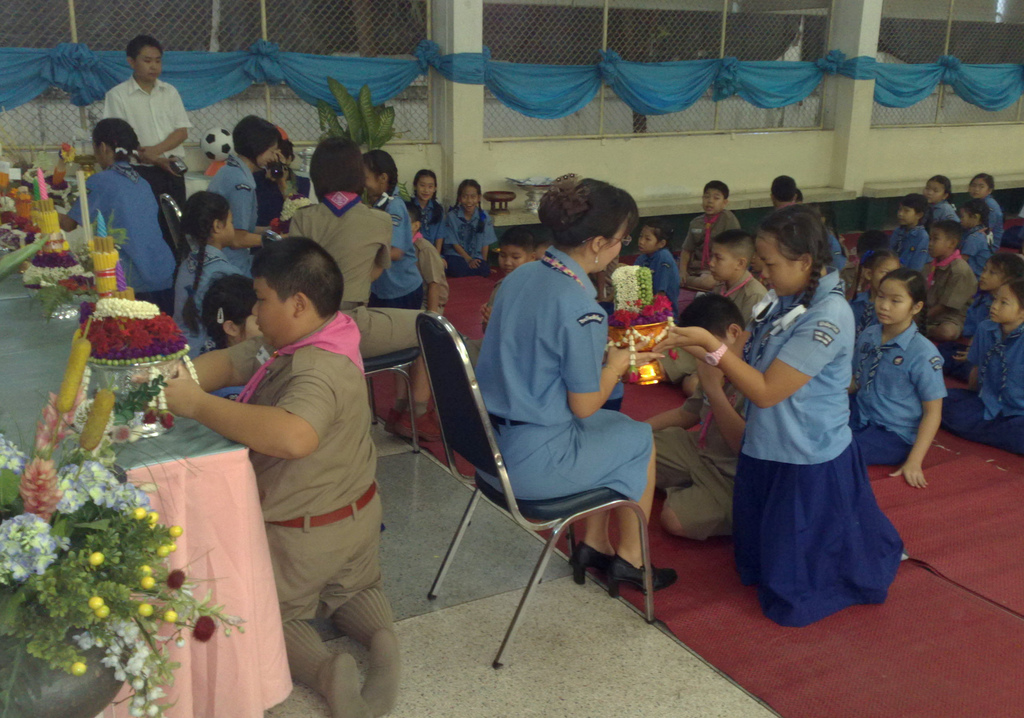 🇹🇭 ThailandWai khruพิธีไหว้ครู
A Thai ceremony of thanks to teachers, held in schools and in the artsSpiritual
🇹🇭 ThailandWai khruพิธีไหว้ครู
A Thai ceremony of thanks to teachers, held in schools and in the artsSpiritual
 🇨🇳 China and 5 moreLife release放生
A Buddhist practice of freeing captive animals to spare their lives and gain meritSpiritual
🇨🇳 China and 5 moreLife release放生
A Buddhist practice of freeing captive animals to spare their lives and gain meritSpiritual
The same idea elsewhere
Remembering the ancestors compared 🇬🇪 Tbilisi, Georgia and 4 moreGeorgian polyphonic singing
Several voices at once, sung without instruments at Georgian feasts and weddingsPerformance
🇬🇪 Tbilisi, Georgia and 4 moreGeorgian polyphonic singing
Several voices at once, sung without instruments at Georgian feasts and weddingsPerformance
 🇮🇳 India and 4 moreWater lantern
Small lamps floated on water to honour the dead and ask for good fortuneFestival
🇮🇳 India and 4 moreWater lantern
Small lamps floated on water to honour the dead and ask for good fortuneFestival
 🇮🇪 Ireland and 2 moreJack-o'-lantern
A carved pumpkin lantern lit with a candle to brighten and protect Halloween nightsFolklore
🇮🇪 Ireland and 2 moreJack-o'-lantern
A carved pumpkin lantern lit with a candle to brighten and protect Halloween nightsFolklore
 🇨🇬 Republic of the CongoNkisi
Spiritual vessels and figures crafted to channel ancestral power, healing and justiceSpiritual
🇨🇬 Republic of the CongoNkisi
Spiritual vessels and figures crafted to channel ancestral power, healing and justiceSpiritual