Music, dance and storytellingSub-Saharan Africa
Hiragasy
In its own language: Hira gasy
A day-long Malagasy highland tradition of song, dance, and poetic speech competitions

Hiragasy is a day-long performing art from the Central Highlands of Madagascar, kept mainly by the Merina people. Family-based troupes take the stage or compete from morning to dusk, weaving together vocal harmonies, martial-arts dances, instrumental music, and poetic speeches.
When is Hiragasy kept?
Hiragasy is kept from morning until nightfall during public gatherings and competitions.
Hiragasy is a day-long performing art from the Central Highlands of Madagascar. Created in the late eighteenth century, it combines choral song, acrobatic dance, and formal poetic oratory known as kabary. Extended family troupes travel across towns and villages to entertain audiences, debate social themes, share traditional proverbs, and compete against rival groups in public spectacles.
Origins and royal history
Prince Andrianampoinimerina first gathered musicians in the late eighteenth century to draw crowds before delivering royal speeches. Over time, these musical troupes became independent groups that mixed entertainment with political commentary. Under French colonial rule, administrators relied on hiragasy performers to announce official decrees in rural highland communities, exempting the artists from mandatory forced labor. Following national independence in 1960, the art form gained recognition across Madagascar as an emblem of cultural identity. Although political candidates still hire troupes to attract listeners during campaigns, most performers maintain an independent stance while discussing social and political life.
Costumes and instruments
Hiragasy troupes reflect their historical ties to the royal court through their dress and orchestration. Male performers wear red jackets and trousers modeled after nineteenth-century French military uniforms, paired with straw hats and traditional fabric sashes called lamba. Female members wear matching gowns influenced by the court fashion of the imperial era. Rather than using purely indigenous instruments, ensembles rely heavily on European instruments adopted through court contacts. Snare and bass drums establish the rhythm alongside violins and trumpets. Accordions, clarinets, and traditional sodina flutes or kabosy lutes also appear during certain performances.
The structure of a performance
Every performance follows five strict phases led by the troupe elder. The show opens with the sasitehaka, where drummers beat marching rhythms while male artists enter the crowd. Next comes the mpikabary, an opening speech laden with traditional proverbs that introduces the central theme. During the renihira, singers form an outward circle to deliver harmonic songs with dramatic gestures for over an hour. Dancers then take over during the dihy, showcasing athletic and martial movements accompanied by further oratory. The presentation finishes with the zanakira, a brief concluding piece that wraps up the performance.
Troupe competitions
Hiragasy often takes the form of a public contest between two or more rival troupes, each named after its founder and home village. Performers are usually related by blood or marriage, having honed their craft in rural areas. During a contest, opposing groups alternate through each segment of the programme, exploring several distinct themes across multiple rounds known as the vakisehatra and adi-kiha. Spectators actively shape the contest, expressing approval with cheers and applause or voicing discontent when a troupe falters. Competitions typically begin in the early morning and continue until sunset.
How Hiragasy is kept
A hiragasy troupe gathers in an open space, where drummers play rhythmic beats to summon the crowd. The troupe leader removes his straw hat to deliver a poetic speech outlining the event theme. Vocalists form an outward-facing circle to sing harmonies with expressive hand gestures, accompanied by violins, trumpets, and drums. Dancers perform energetic, martial routines before the troupe delivers concluding songs. In competitions, multiple troupes take turns through these stages from morning until dusk, while the audience cheers or signals disapproval.
When and where
Hiragasy does not follow a single calendar date. Performances take place during daytime public gatherings, festivals, and political events, often running from early morning until sunset.
The tradition thrives in Madagascar, primarily in the Central Highlands surrounding Antananarivo. It is maintained within rural Merina communities, though touring troupes also perform in coastal regions across the island.
What Hiragasy means
Hiragasy serves as a forum for moral reflection, social commentary, and oral history. Through kabary oratory and traditional proverbs, performers pass down community values and critique contemporary events. The blend of court attire, martial choreography, and shared song reflects Merina heritage, while active audience participation makes the event a dialogue between performers and their community.
Questions people ask about Hiragasy
When is Hiragasy kept?
Hiragasy is kept from morning until nightfall during public gatherings and competitions.
What is Hiragasy?
Hiragasy is a traditional performing art from Madagascar that blends harmony singing, acrobatic dance, and formal poetic speeches. Troupes perform day-long programmes or compete in public contests.
Where does Hiragasy take place?
The tradition is based in Madagascar, especially among the Merina people living in the Central Highlands around Antananarivo, though performances also occur along the coast.
What instruments and clothing are used in Hiragasy?
Men wear red coats, trousers, straw hats, and lamba sashes, while women wear imperial court gowns. Troupes play violins, trumpets, bass and snare drums, and occasionally flutes, clarinets, or accordions.
How do troupes compete against each other?
Rival troupes take turns performing each phase of the show, exploring multiple themes across several rounds. The audience actively judges the competition with applause, cheers, or disapproval from morning until dusk.
See also
 SegaA music and dance tradition from Mauritius and Réunion with Afro-Malagasy roots.
 FamadihanaA Malagasy reburial custom where families gather to rewrap and honour their ancestors
 Morris danceA rhythmic English folk dance performed in costume with bells, sticks and handkerchiefs
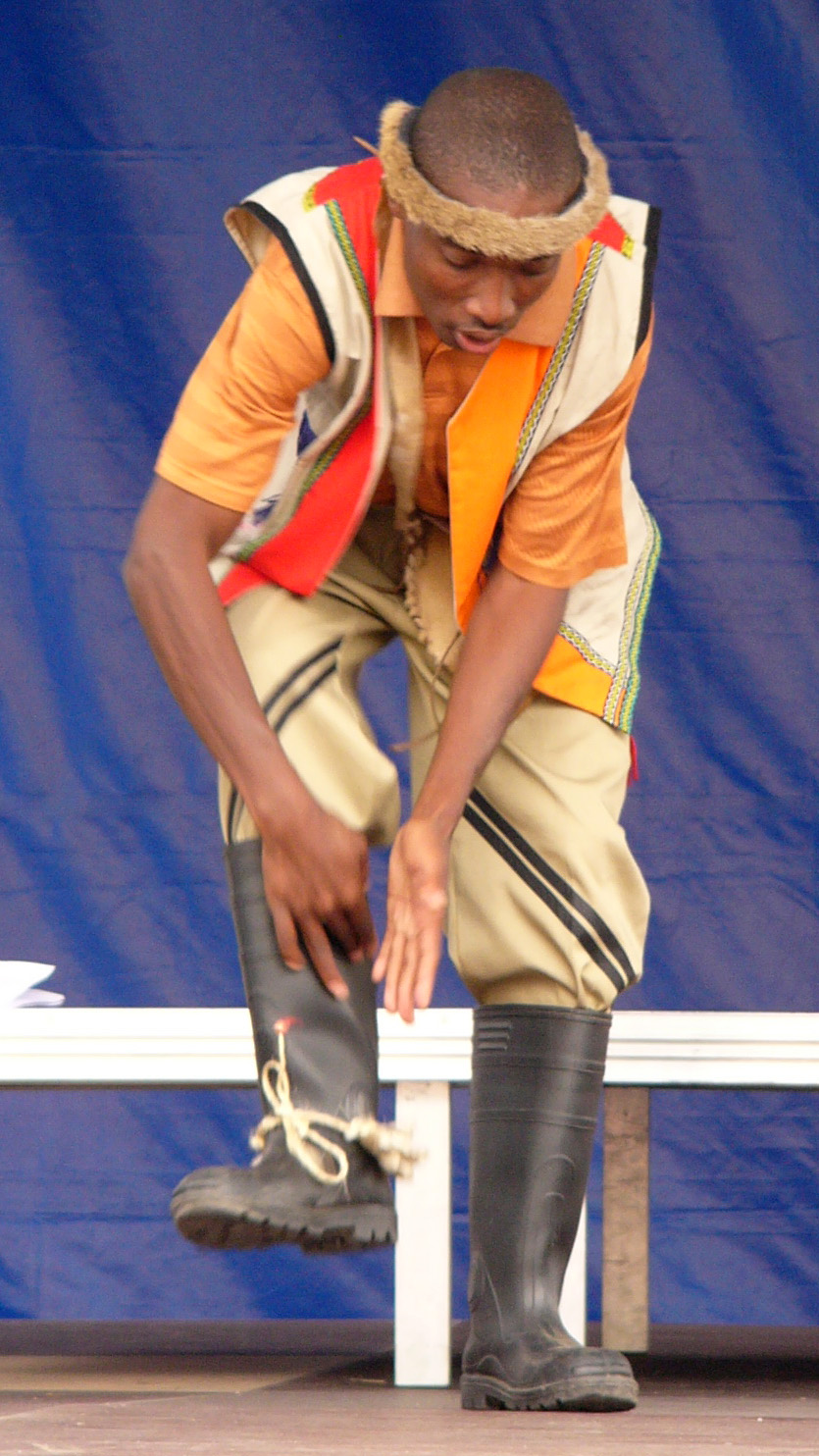 Gumboot danceA percussive South African dance born in the mines, performed in Wellington boots to communicate and celebrate.
Good reading and sources
- Hiragasy, a performing art of the Central Highlands of MadagascarUNESCO, Heritage listing
- BBC Radio 3 - World Routes, World Routes in Madagascar, Hira Gasy and Court MusicBBC, Article
- Hiragasy, a performing art of the Central Highlands of MadagascarUNESCO, Article
- BBC Radio 3 - World Routes, World Routes in Madagascar, Hira Gasy and Court MusicBBC, Article
- Hiragasy on WikipediaEncyclopedia
- More photos on Wikimedia CommonsPhotos and video
- Wikidata recordOpen data
The facts on this page come from the Wikipedia article "Hiragasy", written by its contributors and used under the CC BY-SA 4.0 licence, and from its Wikidata record (CC0). EveryParampara rewrote the text in its own words, with AI assistance, and compares every page with the article to make sure no passage is copied. It may be reused under the same CC BY-SA 4.0 licence with a link back.
It may contain mistakes. Traditions differ from one family, village and community to the next, and the people who keep them know them best. If something is wrong, tell us. Last refreshed 2026-10-04.
More from Madagascar
All the traditions of Madagascar 🇲🇬 MadagascarValiha
A bamboo tube zither from Madagascar, played for recreation and spirit ritualsPerformance
🇲🇺 Mauritius and 3 moreSegaséga
A music and dance tradition from Mauritius and Réunion with Afro-Malagasy roots.Performance
🇲🇬 MadagascarValiha
A bamboo tube zither from Madagascar, played for recreation and spirit ritualsPerformance
🇲🇺 Mauritius and 3 moreSegaséga
A music and dance tradition from Mauritius and Réunion with Afro-Malagasy roots.Performance
 🇺🇬 Uganda and 4 moreBarkcloth
Cloth beaten from tree bark across Africa, Asia and the PacificCraft
🇺🇬 Uganda and 4 moreBarkcloth
Cloth beaten from tree bark across Africa, Asia and the PacificCraft
 🇲🇬 MadagascarFady
A system of cultural taboos in Madagascar that regulate daily life and spiritual practice.Spiritual
🇲🇬 MadagascarFady
A system of cultural taboos in Madagascar that regulate daily life and spiritual practice.Spiritual
The same idea elsewhere
All of this kind 🇹🇷 Kayseri, Turkey and 4 moreHalay
A traditional line and circle folk dance kept across Turkey, Azerbaijan, Armenia, Iran, and Syria.Performance
🇧🇷 BrazilBaião
A syncopated folk rhythm and partnered dance from northeastern BrazilPerformance
🇹🇷 Kayseri, Turkey and 4 moreHalay
A traditional line and circle folk dance kept across Turkey, Azerbaijan, Armenia, Iran, and Syria.Performance
🇧🇷 BrazilBaião
A syncopated folk rhythm and partnered dance from northeastern BrazilPerformance
 🇺🇦 Kyiv, UkraineBanduraБандура
A Ukrainian plucked string instrument played to accompany epic songs and folk balladsPerformance
🇺🇦 Kyiv, UkraineBanduraБандура
A Ukrainian plucked string instrument played to accompany epic songs and folk balladsPerformance
 🇳🇿 Auckland, New ZealandPoi
A Māori performing art of swinging tethered weights in rhythmical patterns.Performance
🇳🇿 Auckland, New ZealandPoi
A Māori performing art of swinging tethered weights in rhythmical patterns.Performance