Royal, civic and national ceremonyEurope
Independence Day of Finland
In its own language: Suomen itsenäisyyspäivä
Finland's national day on 6 December, marked with window candles and a presidential ball

Finland sets aside 6 December as its national day, recalling the moment in 1917 when parliament approved independence from Russia. Homes glow with window candles, the flag flies everywhere, and the evening closes with a televised reception at the Presidential Palace.
When is Independence Day of Finland kept?
Independence Day of Finland is kept every year on 6 December, a fixed public holiday and flag day.
On 6 December Finland keeps its national day. It recalls the winter of 1917, when the country's parliament approved a declaration ending Russian rule. Families set candles at their windows, the blue and white flag flies, and millions settle down to watch the president greet guests at the palace in Helsinki. Outdoors the mood is calm; on screen it turns festive.
Winning independence
The push for independence grew out of Russia's own crisis. Hardship from the First World War and the revolutions that followed loosened the empire's grip, and Finland saw a chance to step away. At home, non-socialists and social democrats argued over who should hold power, yet on 4 December 1917 the Senate under Pehr Evind Svinhufvud put a declaration before the country, and parliament accepted it two days later, on the date now celebrated. Early festivities were modest and divided. The political left preferred 15 November, when elected representatives took charge, while in some districts 16 May, the winning side's Civil War holiday, loomed larger. Academics led the way in honouring 6 December, gathering on its first anniversary in 1918.
Candles at dusk
Patriotic speeches and church services filled the early decades, but from the 1970s the tone brightened. Shops trimmed their displays in the flag's blue and white, and bakeries turned out cakes iced to match. The most intimate custom belongs to home. Once darkness falls, families set two burning candles at every window, a habit reaching back to the 1920s. It has an older forerunner: candles once stood in Finnish windows on the birthday of poet Johan Ludvig Runeberg, in quiet protest against Russian rule. A well-loved story adds that a pair of flames guided young men travelling to Sweden and Germany to train as jägers, a sign that the household would take them in and hide them from the Russians.
How the day runs
Helsinki hosts the official programme. The flag goes up on Tähtitorninmäki, the hill by the observatory, a church service follows at Helsinki Cathedral, and delegations visit memorials to those killed in the Second World War. The Defence Forces stage a parade, broadcast nationwide. Television shapes the afternoon and evening: the public broadcaster YLE screens The Unknown Soldier, the 1955 film drawn from Väinö Linna's novel, which has appeared every year since 2000. In towns with a university, students carry a torch cavalcade through the streets, a custom dating to 1951, and lay wreaths on soldiers' graves.
Night at the palace
Evening belongs to the Presidential Palace, where roughly 2,000 invited guests attend the reception Finns call Linnanjuhlat, the Castle Ball. First staged in 1919 and held in most years since, it draws a huge television audience, and the arrivals are the draw: knights of the Mannerheim Cross walk in first, followed by ministers, members of parliament, archbishops, judges, senior officers and diplomats, then the president's own picks, entertainers, campaigners and athletes among them, with former presidents always last. Not everyone celebrates in evening dress. Demonstrators hold shadow gatherings outside, and Heikki Hursti has carried on his late father Veikko's custom of serving free meals to people in need.
Anniversaries and light
Milestones get their own marks. For the 90th anniversary in 2007, Finland minted a five-euro commemorative coin showing a nine-oared boat with rowers, meant to stand for working together, with hints of kantele strings worked into the design. Ten years later the centenary ran under the theme "Together", and buildings around the world were lit in blue and white for the night: Telstra Tower in Canberra, the Museum of Ethnography in Saint Petersburg, the Lion of Judah monument in Addis Ababa and the Finnish Embassy in Moscow, one evening when the colours reached far beyond Finland's borders.
How Independence Day of Finland is kept
The day unfolds from morning to night. The flag is raised on Tähtitorninmäki in Helsinki, a church service follows at the cathedral, and officials pay their respects at Second World War memorials. The Defence Forces parade, shown on national television. YLE then screens The Unknown Soldier, and students in university towns run torch processions, pausing at war graves. After dark, candles stand at family windows, two apiece. The president welcomes about 2,000 guests to a televised ball, while demonstrators and charity volunteers hold humbler gatherings of their own.
When and where
The date never moves: 6 December, the day in 1917 when parliament adopted the independence declaration. It is a public holiday across Finland and one of the country's official flag days, so the blue cross flies from every flagpole.
Kept throughout Finland and centred on Helsinki, where the flag-raising, cathedral service and palace reception all take place. Torch cavalcades pass through towns with universities, and during the 2017 centenary landmarks abroad, from Canberra to Saint Petersburg, were lit in Finnish colours.
What Independence Day of Finland means
For Finns the candles carry the day's quiet heart. One story ties them to a poet's birthday, kept as a wordless protest under Russian rule; another says a pair of flames told jäger recruits on the move that a house would hide them. Now the glow at dusk reads as thanks for an independent home. Wreaths on soldiers' graves remember the wars that tested the young state, and the palace guest list, mixing knights, ministers and entertainers, pictures the nation as one company.
On the table
- cakes iced in blue and white


Questions people ask about Independence Day of Finland
When is Independence Day of Finland kept?
Independence Day of Finland is kept every year on 6 December, a fixed public holiday and flag day.
What is Finnish Independence Day?
The national holiday of Finland, held every 6 December. It marks the day in 1917 when parliament approved the declaration that made the country independent, and it doubles as one of the nation's official flag days.
Why do Finns put candles in their windows?
The habit began in the 1920s. An older forerunner saw candles standing in windows on the birthday of poet Johan Ludvig Runeberg, in quiet protest against Russian rule. A legend adds that a pair of flames told jäger recruits a house would hide them.
What happens at the presidential reception?
About 2,000 invited guests file into the Presidential Palace in Helsinki while the country watches on television. Knights of the Mannerheim Cross enter first, then ministers, lawmakers, archbishops, judges, senior officers and diplomats, followed by the president's own guests, with former presidents always last.
Is anything special shown on television?
Yes. The public broadcaster YLE screens the 1955 film of The Unknown Soldier, adapted from Väinö Linna's novel, and later airs the palace reception, whose most watched moment is the arrival of the guests.
What do people eat on the day?
Bakeries sell cakes iced in the flag's blue and white. Alongside the official ball, volunteers have long served free meals to people short of money, a tradition begun by Veikko Hursti and kept up by his son Heikki since 2005.
See also
 HalloweenAn annual observance on 31 October marking the eve of All Saints' Day, rooted in Christian tradition and Celtic heritage
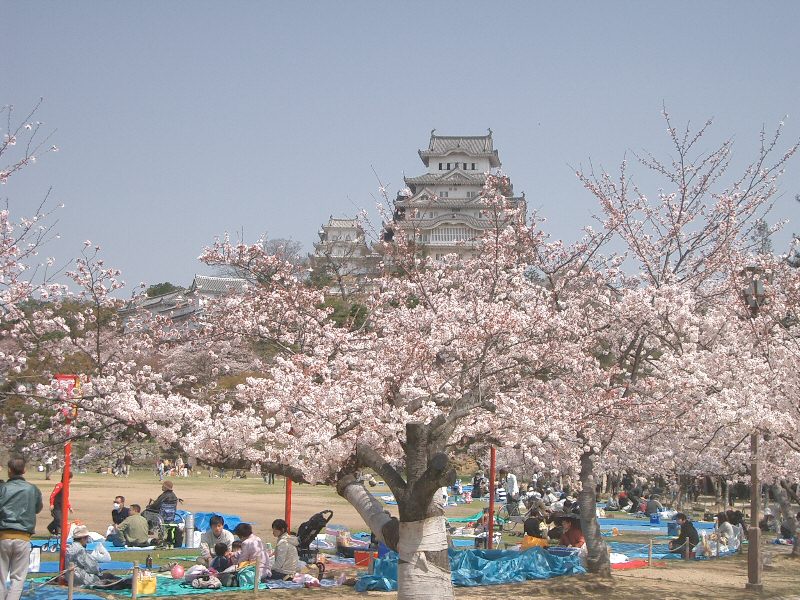 HanamiA Japanese spring custom of gathering under blooming cherry trees to eat, drink, and celebrate the fleeting beauty of th
 Advent calendarA daily countdown to Christmas using doors, images, or small gifts.
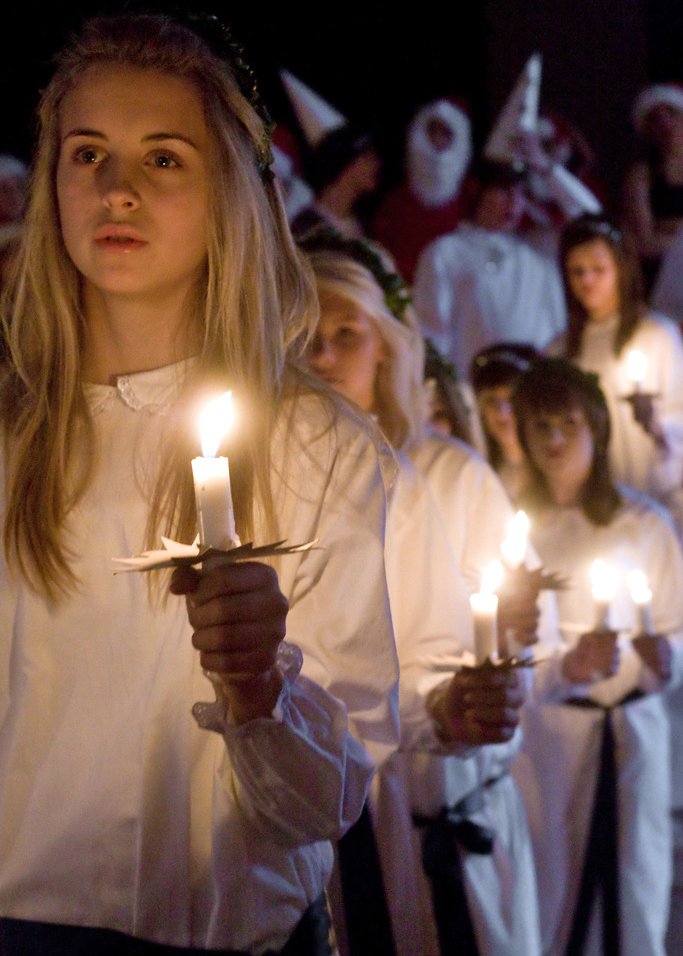 Saint Lucy's DayA December festival of light and song held across Scandinavia and Italy to honour a Christian martyr.
Good reading and sources
- Independence Day (Finland) on WikipediaEncyclopedia
- More photos on Wikimedia CommonsPhotos and video
- Wikidata recordOpen data
The facts on this page come from the Wikipedia article "Independence Day (Finland)", written by its contributors and used under the CC BY-SA 4.0 licence, and from its Wikidata record (CC0). EveryParampara rewrote the text in its own words, with AI assistance, and compares every page with the article to make sure no passage is copied. It may be reused under the same CC BY-SA 4.0 licence with a link back.
It may contain mistakes. Traditions differ from one family, village and community to the next, and the people who keep them know them best. If something is wrong, tell us. Last refreshed 2026-10-04.
More from Finland
All the traditions of Finland 🇫🇮 Helsinki, FinlandKalevala DayKalevalan päivä
A Finnish national flag day celebrating the country's epic poetry and living artsCeremony
🇫🇮 Helsinki, FinlandKalevala DayKalevalan päivä
A Finnish national flag day celebrating the country's epic poetry and living artsCeremony
 🇨🇦 Canada and 5 moreBuy Nothing Day
An annual 24-hour pause on shopping to protest consumerism and overconsumptionCeremony
🇨🇦 Canada and 5 moreBuy Nothing Day
An annual 24-hour pause on shopping to protest consumerism and overconsumptionCeremony
 🇸🇪 Stockholm, Sweden and 2 moreGustavus Adolphus DayGustav Adolfsdagen
A Swedish flag day on 6 November, marked with a pastry topped with the king's likenessCeremony · Sweets given and shared
🇸🇪 Stockholm, Sweden and 2 moreGustavus Adolphus DayGustav Adolfsdagen
A Swedish flag day on 6 November, marked with a pastry topped with the king's likenessCeremony · Sweets given and shared
 🇫🇮 Finland and 1 moreFinnish saunasauna
A weekly bathing ritual of steam and heat, central to Finnish life and wellbeing.Home
🇫🇮 Finland and 1 moreFinnish saunasauna
A weekly bathing ritual of steam and heat, central to Finnish life and wellbeing.Home
The same idea elsewhere
All of this kind 🇺🇸 Philadelphia, United States and 1 moreIndependence Day
The United States' national day of parades, barbecues and fireworks, kept each July 4Ceremony
🇺🇸 Philadelphia, United States and 1 moreIndependence Day
The United States' national day of parades, barbecues and fireworks, kept each July 4Ceremony
 🇺🇸 Washington, United StatesState of the Union address
The US president's yearly report to Congress and the nation, given in the House chamberCeremony
🇺🇸 Washington, United StatesState of the Union address
The US president's yearly report to Congress and the nation, given in the House chamberCeremony
 🇮🇳 Kolkata, IndiaJana Gana Mana
India's national anthem, from a Bengali hymn of 1911, sung at civic occasionsCeremony
🇮🇳 Kolkata, IndiaJana Gana Mana
India's national anthem, from a Bengali hymn of 1911, sung at civic occasionsCeremony
 🇺🇸 United StatesTalking stick
A carved staff that shows who may speak at a Northwest Coast gatheringCeremony
🇺🇸 United StatesTalking stick
A carved staff that shows who may speak at a Northwest Coast gatheringCeremony