Music, dance and storytellingLatin America and the CaribbeanIndigenous and traditional
Jongo
A nightlong dance and music gathering kept by Afro-Brazilian communities in the southeast of Brazil.

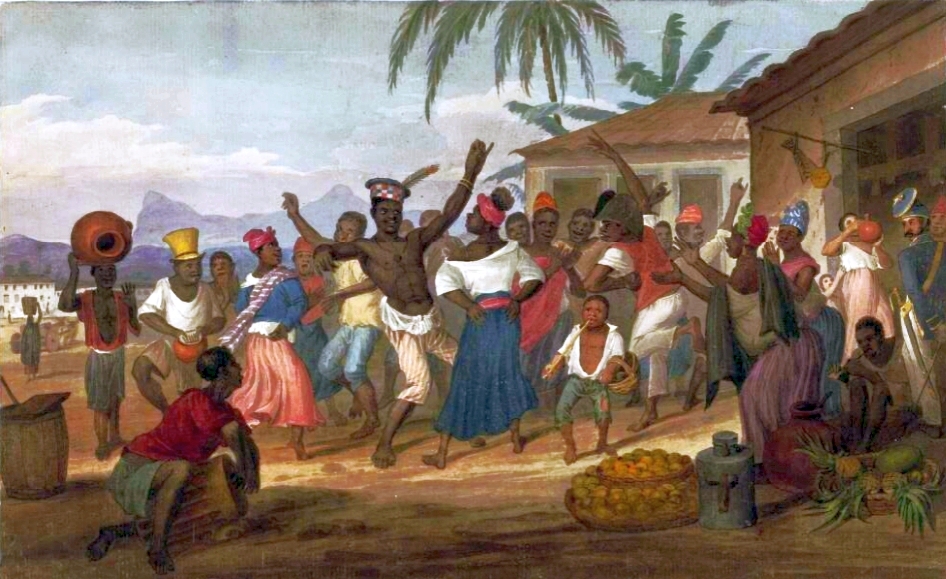
Jongo is a musical and dance tradition rooted in the descendants of enslaved people in southeast Brazil. It features drumming, circle dancing, and call-and-response singing that blends African heritage with local Portuguese language.
When is Jongo kept?
Jongo is kept on nightlong gatherings, often on weekends or holidays.
Jongo is a living cultural practice where music, dance, and poetry unite Afro-Brazilian communities. Originating from the experiences of enslaved workers on coffee farms, it preserves ancestral rhythms and spiritual connections through collective performance.
Origins and history
This tradition emerged during the nineteenth century among enslaved laborers on coffee plantations. These gatherings served as both entertainment and a covert space for religious expression. Participants used metaphorical language and African terms to communicate secretly, shielding their messages from overseers. The practice allowed for social criticism and the preservation of spiritual rites under the guise of secular dance.
Music and instruments
The sound relies on drums crafted from hollow tree trunks and animal hides. Musicians tune these instruments by heating them over a fire. The primary drums are called caxambu and tambu, while a smaller companion is known as candongueiro. Additional sounds come from friction drums and straw rattles. A soloist leads the performance, singing short phrases that the surrounding group answers in unison.
Dance and movement
Participants gather in a circle or pair up to dance throughout the night. A distinctive move involves two dancers pressing their bellies together, a step known as umbigada. The rhythm drives the movement, creating a shared physical experience. Dancers respond to the calls of the singer, maintaining a continuous flow of energy that connects the performers to one another and to the ancestors.
Spiritual significance
Jongo maintains strong ties to umbanda, a syncretic faith blending African, Catholic, and spiritist beliefs. Many practitioners consider themselves devout followers of this religion. Songs often include salutations to spiritual entities and ancestors. This connection ensures that the tradition remains a sacred act of remembrance and community bonding, rather than merely a form of amusement.
Modern revival
Since the nineteen nineties, jongo has seen a significant resurgence across Brazil. It is now recognized as a key element of Afro-Brazilian identity. Communities in rural areas and urban peripheries continue to host these gatherings. Cultural programs and heritage initiatives support the transmission of this knowledge to younger generations, ensuring its survival and visibility.
How Jongo is kept
Communities gather at night around drums tuned by fire. A soloist sings improvised verses called pontos, which the group answers. Dancers move in pairs or circles, performing steps like the belly-to-belly umbigada. The event functions as both a social party and a spiritual ceremony, honoring ancestors and maintaining cultural continuity.
When and where
Held during nightlong parties, typically on weekends or the eve of holidays. The timing allows for extended performance and community bonding.
Strongest in southeast Brazil, particularly in Rio de Janeiro and São Paulo states. It thrives in both rural farming regions and urban peripheral neighborhoods.
What Jongo means
Jongo serves as a vessel for memory and resistance. It preserves the linguistic and rhythmic heritage of enslaved ancestors. The songs allow for cryptic communication and social critique. The dance physically embodies the connection between the living and the spiritual world.
Questions people ask about Jongo
When is Jongo kept?
Jongo is kept on nightlong gatherings, often on weekends or holidays.
What is jongo?
Jongo is a musical and dance tradition of Afro-Brazilian communities. It features drumming, circle dancing, and call-and-response singing that preserves ancestral heritage.
Where is jongo practiced?
It is primarily found in southeast Brazil, especially in Rio de Janeiro and São Paulo. Communities exist in both rural areas and city outskirts.
What instruments are used?
The main instruments are drums made from tree trunks and animal hides. They are tuned by heat. Rattles and friction drums also provide rhythm.
Is jongo religious?
While often secular, it is closely linked to umbanda. Songs frequently honor spiritual entities and ancestors, maintaining a sacred dimension.
See also
 EgungunYoruba ancestral masquerades bringing blessings, counsel and moral renewal
 KwanzaaA seven-day African American celebration of heritage, family and community values
 Sango FestivalAn annual Yoruba gathering in Nigeria honoring the deity of thunder and lightning
 ObonA Japanese Buddhist festival honoring the spirits of ancestors through dance, light, and family reunion.
Good reading and sources
- Jongo on WikipediaEncyclopedia
- More photos on Wikimedia CommonsPhotos and video
- Wikidata recordOpen data
The facts on this page come from the Wikipedia article "Jongo", written by its contributors and used under the CC BY-SA 4.0 licence, and from its Wikidata record (CC0). EveryParampara rewrote the text in its own words, with AI assistance, and compares every page with the article to make sure no passage is copied. It may be reused under the same CC BY-SA 4.0 licence with a link back.
It may contain mistakes. Traditions differ from one family, village and community to the next, and the people who keep them know them best. If something is wrong, tell us. Last refreshed 2026-10-05.
More from Brazil
All the traditions of Brazil 🇧🇷 Recife, Brazil and 1 moreMaracatu
A set of Afro-Brazilian performance traditions from Pernambuco and Ceará featuring drumming, dance, and royal pageantry.Performance
🇧🇷 Recife, Brazil and 1 moreMaracatu
A set of Afro-Brazilian performance traditions from Pernambuco and Ceará featuring drumming, dance, and royal pageantry.Performance
 🇧🇷 São Paulo, BrazilMaculelê
An Afro-Brazilian stick dance from Bahia that blends rhythm, mock combat, and song.Performance
🇧🇷 São Paulo, BrazilMaculelê
An Afro-Brazilian stick dance from Bahia that blends rhythm, mock combat, and song.Performance
 🇧🇷 Belém, BrazilCarimbó
A dance and music genre from the Amazon region of Brazil, centered around a wooden drum.Performance
🇧🇷 BrazilBaião
A syncopated folk rhythm and partnered dance from northeastern BrazilPerformance
🇧🇷 Belém, BrazilCarimbó
A dance and music genre from the Amazon region of Brazil, centered around a wooden drum.Performance
🇧🇷 BrazilBaião
A syncopated folk rhythm and partnered dance from northeastern BrazilPerformance
The same idea elsewhere
Remembering the ancestors compared 🇮🇪 Ireland and 5 moreHalloween
An annual observance on 31 October marking the eve of All Saints' Day, rooted in Christian tradition and Celtic heritageFestival · Sweets given and shared
🇮🇪 Ireland and 5 moreHalloween
An annual observance on 31 October marking the eve of All Saints' Day, rooted in Christian tradition and Celtic heritageFestival · Sweets given and shared
 🇮🇳 Ayodhya, India and 7 moreDiwaliदीपावली (Dīpāvalī)
A five-day festival of lights celebrated across India and its diaspora to mark the victory of light over darkness.Festival · Feasts and festival meals
🇮🇳 Ayodhya, India and 7 moreDiwaliदीपावली (Dīpāvalī)
A five-day festival of lights celebrated across India and its diaspora to mark the victory of light over darkness.Festival · Feasts and festival meals
 🇮🇷 Iran and 7 moreNowruzنوروز
The Iranian new year at the March equinox, kept with fire, greenery and picnicsSeasonal
🇮🇷 Iran and 7 moreNowruzنوروز
The Iranian new year at the March equinox, kept with fire, greenery and picnicsSeasonal
 🇮🇱 Jerusalem, Israel and 1 moreHanukkahחֲנֻכָּה
An eight-day Jewish festival marking the rededication of the Second Temple in Jerusalem and the miracle of a single day'Festival
🇮🇱 Jerusalem, Israel and 1 moreHanukkahחֲנֻכָּה
An eight-day Jewish festival marking the rededication of the Second Temple in Jerusalem and the miracle of a single day'Festival