Festivals and celebrationsLatin America and the Caribbean
Junkanoo
A Caribbean masquerade festival of masked dancing, goatskin drumming, and cowbells

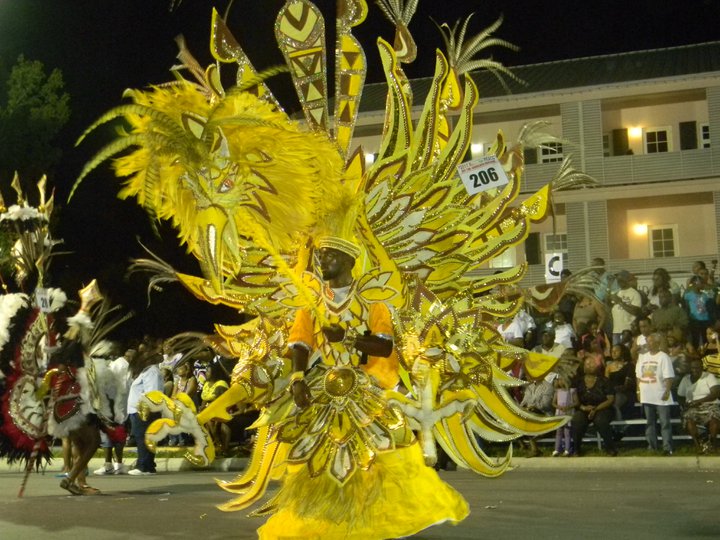
Junkanoo is a Caribbean street festival defined by masquerade dancers, goatskin drums, and brass cowbells. Created by enslaved Africans during the colonial era, it is celebrated widely across the Bahamas, Jamaica, and Belize, especially around Christmastime.
When is Junkanoo in 2026?
Junkanoo 2026 runs from 26 to 27 December 2026. Other years: 2027, 26 to 27 December 2027; 2028, 26 to 27 December 2028.
Junkanoo is a masquerade festival created in the Caribbean during the era of plantation slavery. Celebrated with choreographed dances, cowbells, and rhythmic goatskin drumming, it brings costumed troupes into the streets. Communities maintain the tradition across the Bahamas, Jamaica, Belize, and the wider diaspora to honour their heritage, express shared creativity, and mark major holidays with exuberant public performance.
Origins and history
Junkanoo emerged in the early eighteenth century among enslaved people in British Caribbean colonies, with strong historical roots in Jamaica. Scholars trace its naming and warrior motifs to John Canoe, an Akan leader from Axim who allied against European forces in West Africa. Captives brought to the Caribbean carried memory of his victories, weaving West African masking traditions and battle garments into holiday festivities granted by plantation owners. While some customs echoed Igbo and Yoruba ceremonies, Akan styles shaped early Jamaican performances. The tradition also travelled to North Carolina, where it was practiced until the late nineteenth century.
Music and dance
Music forms the heartbeat of every parade, driven by the intense rhythm of goatskin drums paired with clanging cowbells. Dancers move to rapid, coordinated steps rehearsed specifically for the event. In Belize, where the music is embraced widely by the Garifuna people, musical competitions are passionately fought. In the Bahamas, performers organize into formal groups competing across multiple divisions for coveted titles. The combination of percussive beats, whistles, and dynamic choreography turns city avenues into lively open-air stages, sweeping spectators into the celebration.
Traditional characters
Traditional parades showcase iconic masquerade figures, each playing a designated role. Pitchy Patchy cracks a cattle whip to direct crowds, wearing a suit constructed from shredded, colourful fabric. Belly Woman provides humour and represents abundance, portrayed by a male dancer wearing a pregnancy costume. Performers often balance miniature buildings as House Head to symbolize hope, or mount stilts in long-horned Cow Head disguises. Other enduring characters include the pitchfork-bearing Devil, regal Kings and Queens in shiny robes, Warriors wielding painted wooden swords, and backup dancers called Red-Set Girls.
The modern festival
Modern Junkanoo has developed from simple plantation gatherings into highly structured cultural celebrations. The Bahamas presents elaborate parades not only at Christmastime but also for independence celebrations and other national milestones, earning recognition on the UNESCO intangible cultural heritage list. In Jamaica, Christmas week remains the primary season for Jonkonnu masquerades. Across the diaspora, Caribbean communities maintain the custom in North America, organizing summer festivities in Miami and autumn events in Key West to preserve their communal ties.
How Junkanoo is kept
Bands of masqueraders gather in elaborate themed costumes, masks, and headpieces. Led by percussionists beating goatskin drums and shaking cowbells, performers parade through the streets in choreographed formations. Character dancers like Pitchy Patchy, the Devil, and royal figures interact with the audience and maintain order. In structured celebrations, rival troupes compete for official awards, judged on their musical performance, costume complexity, and dance synchrony before crowds of onlookers.
When and where
Most territories celebrate Junkanoo during Christmas week, between 25 December and 1 January. In the Bahamas, parades also occur on national holidays such as Independence Day. Diaspora communities host events at different points in the year, including June in Miami and October in Key West.
The tradition thrives in the Bahamas, Jamaica, and Belize, where it is practiced by Garifuna and broader Creole communities. Parades also occur in parts of the United States with strong West Indian ties, particularly Florida, having historically reached North Carolina.
What Junkanoo means
Junkanoo originated as an act of cultural resilience, allowing enslaved people to express identity, mock slaveholders in disguise, and celebrate rare days of rest. Masquerade figures carry deep meanings: House Head embodies aspirations for a better future, Belly Woman celebrates fertility and life, and warrior motifs honour African resistance heroes like John Canoe.



Days Junkanoo is marked
Junkanoo dates: 2026, 2027, 2028
| Year | Junkanoo date |
|---|---|
| 2026 | 26 to 27 December 2026 |
| 2027 | 26 to 27 December 2027 |
| 2028 | 26 to 27 December 2028 |
Questions people ask about Junkanoo
When is Junkanoo in 2026?
Junkanoo 2026 runs from 26 to 27 December 2026. Other years: 2027, 26 to 27 December 2027; 2028, 26 to 27 December 2028.
What is Junkanoo?
Junkanoo is a traditional Caribbean street festival featuring masked dancers, costumed character troupes, choreographed routines, and rhythmic music played on goatskin drums and cowbells.
Where and when does the festival take place?
It is celebrated mainly in the Bahamas, Jamaica, and Belize, typically during Christmas week. In the Bahamas, events also mark Independence Day, while diaspora parades occur in Miami and Key West.
Who was John Canoe?
According to historical accounts, John Canoe was an Akan warrior and chief from Axim in West Africa who defeated European forces around 1708. Enslaved people in the Caribbean celebrated his victories.
What characters appear in a Junkanoo parade?
Classic characters include Pitchy Patchy, who cracks a whip to manage crowds, the humorous Belly Woman, animal figures such as Cow Head and Horse Head, alongside Devils, Kings, Queens, and Warriors.
See also
 Advent wreathAn evergreen ring of candles lit week by week in the lead-up to Christmas
 Las PosadasA nine-night Christmas pageant remembering Mary and Joseph seeking shelterRéveillonA luxurious late-night feast that stretches until dawn across the winter holidays
 ChristmasA festival of Jesus's birth, kept on 25 December with gifts, lights and shared meals
Good reading and sources
- Junkanoo on WikipediaEncyclopedia
- More photos on Wikimedia CommonsPhotos and video
- Wikidata recordOpen data
The facts on this page come from the Wikipedia article "Junkanoo", written by its contributors and used under the CC BY-SA 4.0 licence, and from its Wikidata record (CC0). EveryParampara rewrote the text in its own words, with AI assistance, and compares every page with the article to make sure no passage is copied. It may be reused under the same CC BY-SA 4.0 licence with a link back.
It may contain mistakes. Traditions differ from one family, village and community to the next, and the people who keep them know them best. If something is wrong, tell us. Last refreshed 2026-10-04.
More from the Bahamas
All the traditions of the Bahamas
The same idea elsewhere
Midwinter and the longest night compared
🇮🇹 Rome, Italy and 4 moreChristmas
A festival of Jesus's birth, kept on 25 December with gifts, lights and shared mealsFestival
 🇩🇪 Germany and 5 moreChristmas tree
A decorated evergreen or artificial tree placed indoors to mark the Christmas season.Festival
🇩🇪 Germany and 5 moreChristmas tree
A decorated evergreen or artificial tree placed indoors to mark the Christmas season.Festival
 🇫🇷 France and 5 moreCandlemas
A Christian feast of candle blessings marking the end of the Christmas seasonSpiritual
🇫🇷 France and 5 moreCandlemas
A Christian feast of candle blessings marking the end of the Christmas seasonSpiritual
 🇩🇰 Copenhagen, Denmark and 1 moreHygge
A Danish word for unhurried time at home with others, kept with candles and cookingHome
🇩🇰 Copenhagen, Denmark and 1 moreHygge
A Danish word for unhurried time at home with others, kept with candles and cookingHome