Music, dance and storytellingEast AsiaShinto, Taoist and folk Chinese
Kagura
In its own language: 神楽
A sacred Shinto dance tradition in Japan that invites deities to descend and perform through human dancers.

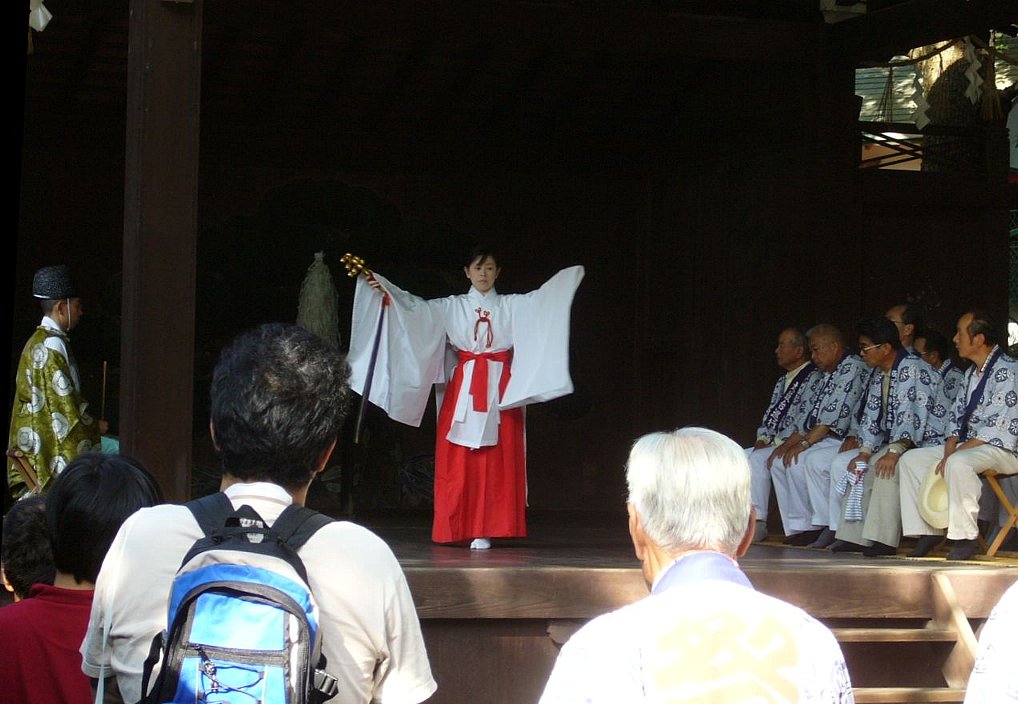
Kagura is a ceremonial dance practice rooted in Shinto belief across Japan. The word means entertainment for the gods, reflecting its purpose to welcome divine spirits into the ritual space. Dancers, often women or shrine attendants, use movement and music to enter trance states, becoming vessels for messages from the kami.
When is Kagura kept?
Kagura is kept on year-round at shrines and imperial ceremonies, with specific seasonal performances.
Kagura serves as a bridge between the human and divine realms in Japanese Shintoism. It involves structured dance and music designed to summon kami, or spirits, into a physical space. Performers move through stages of calm preparation and energetic trance, embodying the presence of these deities to bring blessings and purification to the community.
Origins and meaning
The term kagura translates to god-entertainment, highlighting its role as a gift to the divine. According to ancient texts like the Kojiki and Nihon Shoki, the practice began when the sun goddess Amaterasu hid in a cave, plunging the world into darkness. Another deity, Ame-no-Uzume, performed a lively dance to lure her out, restoring light. This event established dance as a powerful tool for engaging with the spiritual world. Originally known as kamukura, the art form evolved from court rituals into diverse folk traditions while maintaining its core purpose of connecting people with the kami.
Types of movement
Kagura encompasses two primary styles: mai and odori. Mai features slow, circular motions that emphasize grace and stillness, serving as a preparatory phase to invite the gods. Odori contrasts this with rapid, leaping movements that express energy and vitality. These styles represent different stages of the ritual process. During mai, performers use ceremonial wands called gohei to purify the space. As the ritual progresses, the dancer may enter a possessed state, transitioning into the spontaneous and vigorous movements of odori to fully embody the deity.
Imperial and folk forms
The tradition splits into imperial and folk categories. Mikagura refers to the formal dances performed at the imperial court and major shrines, accompanied by gagaku music. These performances include specific songs and instrumental pieces played on flutes and percussion. Satokagura covers the various regional folk dances that developed from imperial roots. Styles like Izumo-ryu and Hayachine Kagura incorporate local customs, masks, and acrobatics. Some forms have gained recognition as UNESCO Intangible Cultural Heritage, preserving their unique regional characteristics while spreading nationwide.
Modern practice
Today, kagura remains a living tradition within Shinto communities. Shrine maidens and priests perform these dances during festivals and special ceremonies to honor the kami. The practice has adapted over time, with some forms becoming more secularized while others retain strict ritual protocols. In urban centers like Hiroshima and rural areas such as Shimane Prefecture, communities continue to keep these dances alive. The art form also influenced other Japanese performance arts, including Noh theatre, demonstrating its lasting cultural impact beyond religious contexts.
How Kagura is kept
Performers gather at shrines or ceremonial spaces, often beginning with purification rites using gohei wands. A female shaman or shrine attendant leads the mai section with slow, deliberate steps to invite the kami. Once the spirit is believed to have arrived, the dancer shifts into odori, executing energetic leaps and jumps. Musicians accompany the dance with flutes, drums, and vocal chants. The ritual concludes with the performer returning to a normal state, having delivered blessings or omens from the deity to the gathered community.
When and where
Performed year-round at Shinto shrines, with significant ceremonies occurring during the Imperial harvest festival in December and various matsuri throughout the agricultural calendar.
Strongest in Japan, particularly in Shimane Prefecture and urban centers like Hiroshima. Imperial performances take place at the Imperial Sanctuary and major shrines such as Ise and Kamo-jinja.
What Kagura means
Kagura symbolizes the descent of the divine into the human world. The dancer’s transformation into a vessel for the kami represents the community’s connection to spiritual forces. The contrast between mai and odori mirrors the balance of calm and energy necessary for spiritual harmony. The ritual aims to purify the environment, restore cosmic order, and secure blessings for health and prosperity.


Questions people ask about Kagura
When is Kagura kept?
Kagura is kept on year-round at shrines and imperial ceremonies, with specific seasonal performances.
What is kagura?
Kagura is a sacred Shinto dance tradition in Japan. It involves ritual movements and music designed to summon deities, or kami, into the performance space. Dancers embody these spirits to deliver blessings and purification to the community.
Where is kagura practiced?
It is practiced throughout Japan, with strong traditions in Shimane Prefecture and cities like Hiroshima. Imperial versions are performed at the Imperial Sanctuary and major shrines such as Ise and Kamo-jinja.
What do the dances represent?
The dances represent the interaction between humans and gods. Slow mai movements prepare the space and invite the deity, while energetic odori movements show the deity’s presence. The entire ritual seeks to restore balance and receive divine guidance.
Who performs kagura?
Traditionally, shrine maidens and priests perform kagura. Female shamans often lead the trance sections, while male choirs provide vocal accompaniment in imperial settings. Modern practitioners include both religious officials and community performers.
See also
 RakugoJapanese solo comic storytelling told from a cushion using a fan and a cloth
 IkebanaThe Japanese art of arranging cut branches and flowers in a vessel
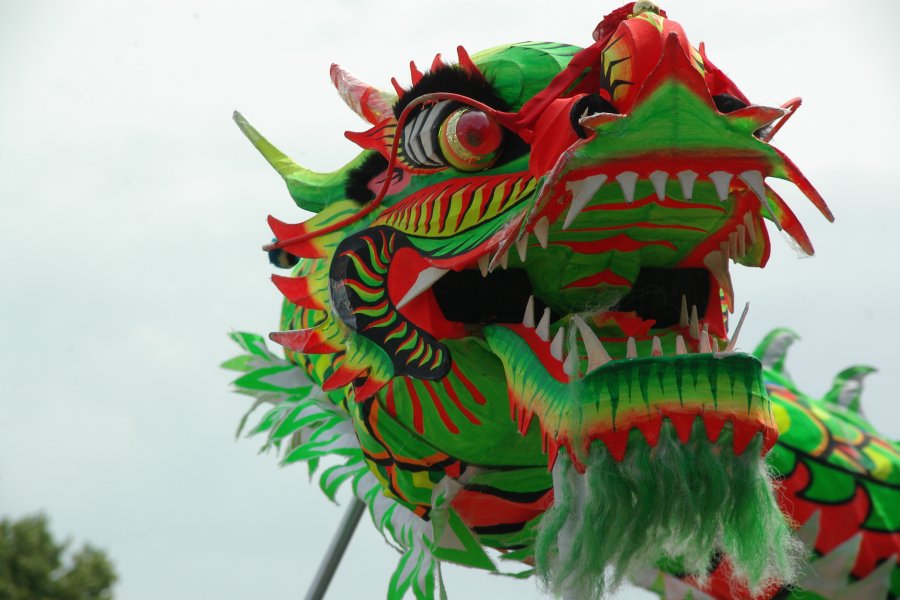 Dragon danceA long dragon puppet on poles, danced by a team at Chinese New Year and other festivals
 KyōgenA traditional Japanese comic theatre of short farces, spoken dialogue and satire
Good reading and sources
- Encyclopaedia BritannicaArticle
- Le Sada Shin Noh, danse sacrée au sanctuaire de Sada, ShimaneUNESCO, Heritage listing
- Le Sada Shin Noh, danse sacrée au sanctuaire de Sada, ShimaneUNESCO, Article
- Kagura on WikipediaEncyclopedia
- More photos on Wikimedia CommonsPhotos and video
- Wikidata recordOpen data
The facts on this page come from the Wikipedia article "Kagura", written by its contributors and used under the CC BY-SA 4.0 licence, and from its Wikidata record (CC0). EveryParampara rewrote the text in its own words, with AI assistance, and compares every page with the article to make sure no passage is copied. It may be reused under the same CC BY-SA 4.0 licence with a link back.
It may contain mistakes. Traditions differ from one family, village and community to the next, and the people who keep them know them best. If something is wrong, tell us. Last refreshed 2026-10-05.
More from Japan
All the traditions of Japan 🇨🇳 China and 5 moreLion dance舞獅
A dynamic ritual dance featuring costumed lions, drums and martial acrobaticsPerformance
🇯🇵 Kyoto, JapanKyōgen狂言
A traditional Japanese comic theatre of short farces, spoken dialogue and satirePerformance
🇯🇵 Tokyo, JapanRakugo落語
Japanese solo comic storytelling told from a cushion using a fan and a clothPerformance
🇨🇳 China and 3 moreDragon dance舞龍 / 舞龙
A long dragon puppet on poles, danced by a team at Chinese New Year and other festivalsPerformance
🇨🇳 China and 5 moreLion dance舞獅
A dynamic ritual dance featuring costumed lions, drums and martial acrobaticsPerformance
🇯🇵 Kyoto, JapanKyōgen狂言
A traditional Japanese comic theatre of short farces, spoken dialogue and satirePerformance
🇯🇵 Tokyo, JapanRakugo落語
Japanese solo comic storytelling told from a cushion using a fan and a clothPerformance
🇨🇳 China and 3 moreDragon dance舞龍 / 舞龙
A long dragon puppet on poles, danced by a team at Chinese New Year and other festivalsPerformance
The same idea elsewhere
All of this kind 🇹🇷 Kayseri, Turkey and 4 moreHalay
A traditional line and circle folk dance kept across Turkey, Azerbaijan, Armenia, Iran, and Syria.Performance
🇧🇷 BrazilBaião
A syncopated folk rhythm and partnered dance from northeastern BrazilPerformance
🇹🇷 Kayseri, Turkey and 4 moreHalay
A traditional line and circle folk dance kept across Turkey, Azerbaijan, Armenia, Iran, and Syria.Performance
🇧🇷 BrazilBaião
A syncopated folk rhythm and partnered dance from northeastern BrazilPerformance
 🇺🇦 Kyiv, UkraineBanduraБандура
A Ukrainian plucked string instrument played to accompany epic songs and folk balladsPerformance
🇺🇦 Kyiv, UkraineBanduraБандура
A Ukrainian plucked string instrument played to accompany epic songs and folk balladsPerformance
 🇳🇿 Auckland, New ZealandPoi
A Māori performing art of swinging tethered weights in rhythmical patterns.Performance
🇳🇿 Auckland, New ZealandPoi
A Māori performing art of swinging tethered weights in rhythmical patterns.Performance