Games, sport and playSouth AsiaHinduIndigenous and traditional
Kambala
An annual traditional buffalo race across muddy paddy fields in southwestern India

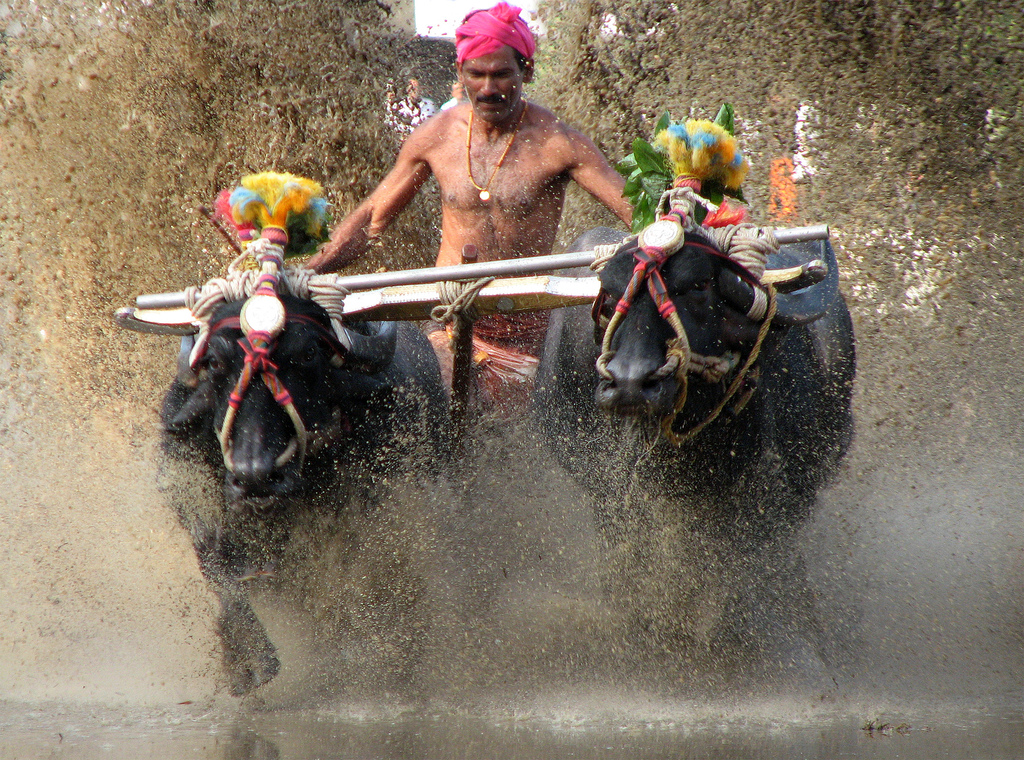
Kambala is a traditional buffalo race held across muddy, waterlogged paddy fields in coastal Karnataka and northern Kerala. Organised by local farming communities between November and March, handlers sprint alongside or ride behind paired buffaloes in fast-paced speed contests.
When is Kambala kept?
Kambala is kept on annually from November to March.
Kambala is an annual rural sport held across the waterlogged paddy fields of coastal Karnataka and northern Kerala in southwestern India. Sponsored by Tuluva households and regional committees, the events run from November to March. Handlers guide pairs of decorated buffaloes down muddy sprint tracks, competing for speed while honoring village deities and keeping local farming customs alive.
Race formats and categories
Modern Kambala features head-to-head sprint contests between two pairs of buffaloes on parallel muddy tracks. Organisers divide competitors into distinct classes based on equipment and experience. In entry-level heats, runners grip a lightweight imitation plough. In rope classes, handlers run beside experienced beasts while grasping knotted tethers. Senior events introduce riding boards. In one division, the jockey balances on a flat wooden plank skimming the slush. In the highest division, the runner balances on a single foot atop a rounded wooden block. Holes in the block channel muddy water upward as the buffaloes accelerate, with judges using the height of the water spray against a marked white flag to determine the fastest run.
Sacred rites and origins
Kambala carries deep spiritual connections shaped by ancient local traditions. On the eve of a race, Koraga men perform nocturnal dances and observe a ceremony under the night dew. They sing devotional verses to the spirit daiva Nicha to the beat of dudi drums, offering toddy alongside an unbroken round of boiled rice pudding. Some village races serve as acts of thanksgiving, where farmers run their herds to seek divine protection against cattle illnesses. Famous gatherings include Kadri Kambala, associated with the Sri Manjunatha Temple in Mangalore and formerly patronised by Alupa monarchs, as well as the December races dedicated to local deities in Thonnase.
Buffalo care and preparation
Racing buffaloes receive meticulous care from their owners throughout the year. Many keepers provide specialised diets to build strength and stamina, and some even construct dedicated swimming pools to keep the animals conditioned and cool. On race days, the animals are elaborately groomed. Owners drape their backs with special decorative towels called paavade and fit them with custom bridles. Buffaloes also wear polished silver or brass headpieces, frequently engraved with emblems of the sun and moon. While victorious pairs once earned simple agricultural gifts like bananas and coconuts, modern winners claim gold coins, silver medals, and substantial cash awards.
Spectacle and modern regulation
Kambala draws enthusiastic crowds, with major meetings attracting upwards of twenty thousand spectators who gather to watch the races and wager on contenders. Some venues now stage night heats under floodlights to accommodate large audiences. In recent years, animal welfare concerns regarding the whipping of racing beasts led to legal challenges and temporary national bans. Indian authorities and Karnataka state lawmakers subsequently introduced dedicated legislation allowing Kambala to continue under regulated conditions. Today, dozens of regional committees oversee the competitive calendar, striving to balance historic sporting fervor with official guidelines promoting gentler handling of the animals.
How Kambala is kept
Before the contest, community members gather for nocturnal rituals, music, and offerings of rice pudding. On race day, handlers lead pairs of decorated buffaloes to a flooded mud track. Competitions run in heats, where pairs either race alone against the clock or face off in side-by-side sprints. Drivers guide the animals while running on foot, skimming the slush on a flat board, or balancing on a round wooden block that shoots water into the air. Judges track finish times or the height of the water plume to declare the winners.
When and where
The Kambala season opens in November and continues through March. Local samithis, or organising committees, schedule more than forty-five independent meets across these five months, including historic events held annually in December.
Races take place throughout Tulu Nadu, a coastal area spanning the Udupi, Dakshina Kannada, and Bhatkal regions of Karnataka, alongside Kasaragod in northern Kerala. Flooded agricultural fields in rural villages and towns host the tracks.
What Kambala means
Kambala honors the vital relationship between farming households and their working cattle. Many races function as acts of devotion, thanking village deities and local spirits for shielding herds from disease. The sport also preserves the memory of historical royal patronage from the Alupa kings, reinforcing regional identity across the Tulu-speaking community through shared celebration.


Questions people ask about Kambala
When is Kambala kept?
Kambala is kept on annually from November to March.
What is Kambala?
Kambala is a traditional rural sport from southwestern India in which pairs of buffaloes sprint down waterlogged, muddy paddy tracks, guided by farmers who run alongside or ride behind them on wooden planks.
What rituals take place before the races?
On the night before racing, Koraga men perform nocturnal dances, play dudi drums, and carry out a dew ceremony with offerings of toddy and boiled rice pudding to honor the spirit daiva Nicha.
What prizes are given to the fastest buffaloes?
Historically, winning buffalo pairs were rewarded with coconuts and bananas. In modern competitions, owners compete for silver tokens, gold coins weighing up to eight grams, or cash rewards.
See also
 Postpartum confinementA period of rest, nourishment, and seclusion for mothers after giving birth.
 South Asian truck artThe craft of painting and adorning cargo trucks and buses across India and Pakistan.
 ThaipusamA Tamil Hindu festival honoring Murugan through devotional burdens and pilgrimage
 Chhath PujaA four-day Hindu festival honouring the sun and Chhathi Maiya along riverbanks
Good reading and sources
- Kadri Kambala witnesses confluence of Tulu cultureDeccan Herald, Article
- A chill-out zoneThe Hindu, Article
- Kadri Kambala witnesses confluence of Tulu cultureDeccan Herald, Article
- A chill-out zoneThe Hindu, Article
- Kambala on WikipediaEncyclopedia
- More photos on Wikimedia CommonsPhotos and video
- Wikidata recordOpen data
The facts on this page come from the Wikipedia article "Kambala", written by its contributors and used under the CC BY-SA 4.0 licence, and from its Wikidata record (CC0). EveryParampara rewrote the text in its own words, with AI assistance, and compares every page with the article to make sure no passage is copied. It may be reused under the same CC BY-SA 4.0 licence with a link back.
It may contain mistakes. Traditions differ from one family, village and community to the next, and the people who keep them know them best. If something is wrong, tell us. Last refreshed 2026-10-04.
More from India
All the traditions of India 🇮🇳 Kochi, IndiaVallam Kalivaḷḷaṃ kaḷi
A traditional canoe racing festival held across the waters of Kerala during OnamGame
🇮🇳 Kochi, IndiaVallam Kalivaḷḷaṃ kaḷi
A traditional canoe racing festival held across the waters of Kerala during OnamGame
 🇮🇳 India and 2 morePehlwani
A traditional discipline of clay-pit wrestling across the Indian subcontinent.Game
🇮🇳 India and 2 morePehlwani
A traditional discipline of clay-pit wrestling across the Indian subcontinent.Game
 🇰🇭 Phnom Penh, Cambodia and 3 moreBokatorល្បុក្កតោ (lbŏkkâtaô)
Cambodia's battlefield martial art of strikes, locks and weapons, now a ring sportGame
🇰🇭 Phnom Penh, Cambodia and 3 moreBokatorល្បុក្កតោ (lbŏkkâtaô)
Cambodia's battlefield martial art of strikes, locks and weapons, now a ring sportGame
 🇮🇳 Madurai, IndiaJallikattuஜல்லிக்கட்டு
A traditional bull-embracing event held during harvest celebrations in Tamil NaduGame
🇮🇳 Madurai, IndiaJallikattuஜல்லிக்கட்டு
A traditional bull-embracing event held during harvest celebrations in Tamil NaduGame
The same idea elsewhere
Healing, luck and protection compared 🇬🇧 United Kingdom and 5 moreTwelfth Night
The closing evening of the Christmas season, kept with cake, carols and wassailSpiritual · Feasts and festival meals
🇬🇧 United Kingdom and 5 moreTwelfth Night
The closing evening of the Christmas season, kept with cake, carols and wassailSpiritual · Feasts and festival meals
 🇬🇭 Cape Coast, GhanaFetu Afahye
A harvest festival of cleansing, boat races and royal durbars in Cape Coast, GhanaFestival · Feasts and festival meals
🇬🇭 Cape Coast, GhanaFetu Afahye
A harvest festival of cleansing, boat races and royal durbars in Cape Coast, GhanaFestival · Feasts and festival meals
 🇮🇩 Yogyakarta, IndonesiaSekatenꦱꦼꦏꦠꦺꦤ꧀
A week-long Javanese royal festival and market honouring the birth of the ProphetFestival
🇮🇩 Yogyakarta, IndonesiaSekatenꦱꦼꦏꦠꦺꦤ꧀
A week-long Javanese royal festival and market honouring the birth of the ProphetFestival
 🇸🇩 SudanJirtigالجَرْتِقْ
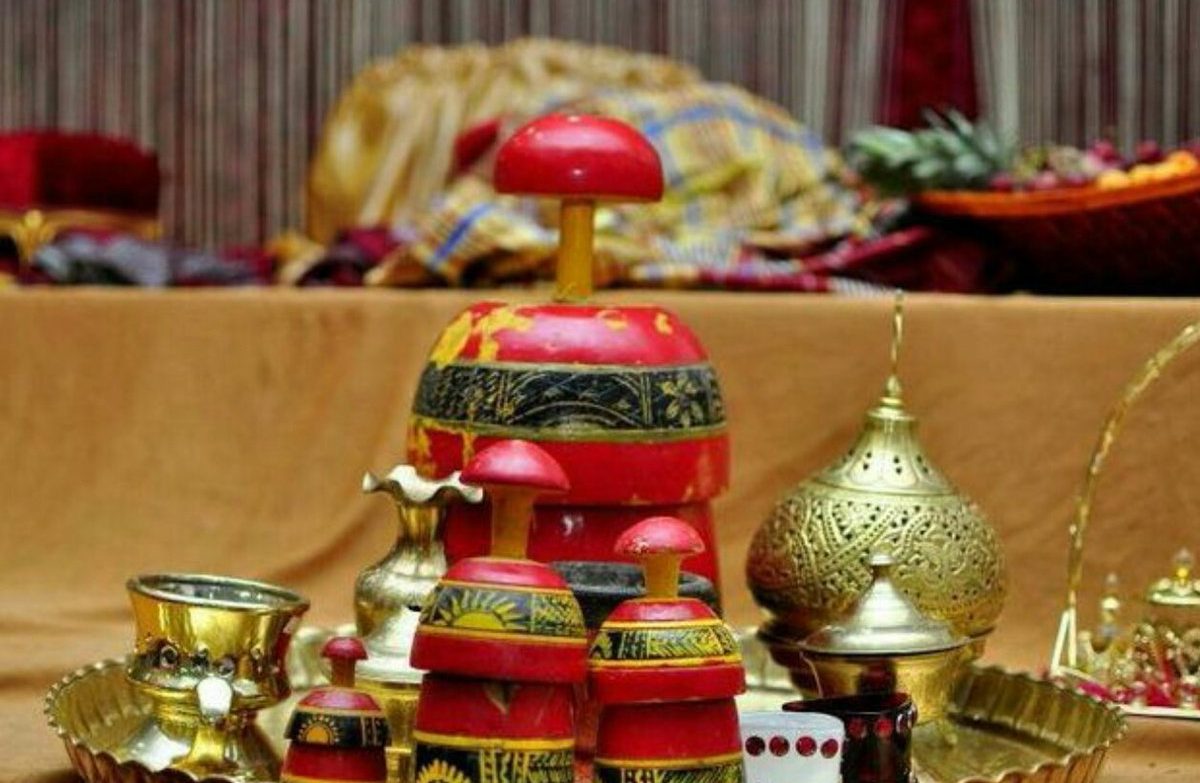
A Sudanese wedding ritual of regal adornment, protection, and blessings of fertilityRite of passage
🇸🇩 SudanJirtigالجَرْتِقْ
A Sudanese wedding ritual of regal adornment, protection, and blessings of fertilityRite of passage