Festivals and celebrationsSouth AsiaHinduJain
Kartika Purnima
In its own language: कार्त्तिकपूर्णिमा (Kārttikapūrṇimā)
A full moon festival of lights and holy baths celebrated by Hindus, Sikhs, and Jains across South Asia.

Kartika Purnima falls on the full moon in the Hindu month of Kartik, usually in November. It marks Shiva's victory over demons, Vishnu's return to heaven, and Guru Nanak's birth. People keep it with lamp processions, ritual bathing, and prayers at sacred sites like Varanasi and Pushkar.
When is Kartika Purnima kept?
Kartika Purnima is kept on the full moon day in the Hindu lunar month of Kartik, typically November or December.
Kartika Purnima is a major religious festival observed by Hindus, Sikhs, and Jains. It occurs on the full moon of the Kartik month. The day honors divine victories, spiritual awakenings, and historical births. Communities light lamps, take holy baths, and perform rituals to seek blessings and remember ancestors.
Divine significance
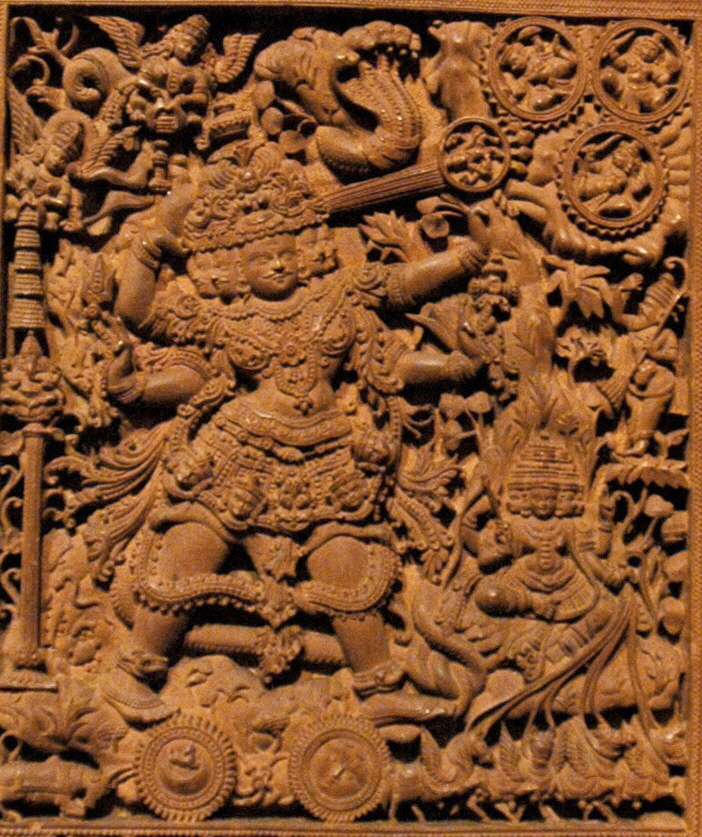
The festival holds multiple meanings across traditions. In Vaishnavism, it celebrates Radha and Krishna performing their divine dance. For Shaivas, it marks Shiva destroying the demon Tripurasura, earning the name Deva-Deepavali. It also recalls Vishnu returning from earth after visiting King Mahabali. Some view it as the manifestation of Vishnu as Matsya or the birthday of Kartikeya. Jains see it as the day Adinath delivered his first sermon.
Rituals and observances
Devotees prioritize purification through holy baths in rivers like the Ganges or lakes like Pushkar. Many observe fasting until sunset. Temples illuminate towers of lamps called deepmalas, sometimes using hundreds of wicks to symbolize the year. People float small lit boats in water bodies. In Odisha, this practice becomes Boita Bandana, honoring ancient maritime trade. Families also read sacred texts and avoid violence or cutting plants on this day.
Regional celebrations
In Varanasi, thousands gather at the ghats to offer diyas to Shiva. Pushkar hosts a massive fair concluding on this day. Tamil Nadu observes Karthika Deepam with rows of balcony lamps. Odisha celebrates Boita Bandana with miniature boats. Telugu households light daily lamps throughout the month. Jain pilgrims trek to Palitana hills for worship. These local customs reflect shared reverence while maintaining distinct regional flavors.
Cultural context
The festival follows Diwali by about two weeks. It ends the chaturmasya period when Vishnu is believed to sleep. In Odisha, the month concludes with Chhada Khai, allowing non-vegetarian food again. Sikh tradition links the date to Guru Nanak's birth, though some scholars dispute this timing. The day encourages charity, gift-giving, and spiritual reflection, reinforcing community bonds and ancestral memory.
How Kartika Purnima is kept
People begin by taking ritual baths in sacred waters like the Ganges or Pushkar Lake. They visit temples to offer prayers and light lamps. In many regions, families prepare oil lamps with numerous wicks. Devotees float miniature boats in rivers, especially in Odisha. Fasting is common until evening. Communities gather for fairs and processions. Reading scriptures and giving gifts are standard practices. The day emphasizes purity, remembrance, and divine connection.
When and where
It falls on the full moon day of the Hindu lunar month Kartik. This usually happens in November or December on the Gregorian calendar. The exact date varies yearly based on lunar cycles. It often coincides with Prabodhini Ekadashi, marking the end of a four-month dormant period for Vishnu.
It is widely observed across India, particularly in Varanasi, Pushkar, Puri, and Tamil Nadu. Significant celebrations occur in Odisha and among Jain communities in Gujarat. The tradition extends to Sri Lanka and Indonesian islands like Bali, reflecting historical cultural ties and maritime connections.
What Kartika Purnima means
The festival symbolizes the triumph of good over evil, represented by Shiva's victory. Lights signify knowledge dispelling ignorance and guiding souls. Floating boats honor ancient trade routes and ancestral journeys. Bathing represents spiritual cleansing. The timing marks renewal after a period of rest. It reinforces devotion, family unity, and respect for nature and ancestors.


Questions people ask about Kartika Purnima
When is Kartika Purnima kept?
Kartika Purnima is kept on the full moon day in the Hindu lunar month of Kartik, typically November or December.
What is Kartika Purnima?
It is a full moon festival celebrated by Hindus, Sikhs, and Jains. It honors divine events like Shiva's victory and Vishnu's return. People mark it with lamps, baths, and prayers across South Asia.
Why do people float boats?
In Odisha, floating boats called Boita Bandana honors ancient Kalinga traders who sailed to Southeast Asia. It commemorates maritime history and safe voyages.
Is it linked to Guru Nanak?
Some Sikhs celebrate it as Guru Nanak's birth. However, scholars note this date may have been chosen later to distinguish from Hindu festivals. Vaisakh is also cited as his birth month.
See also
 DiwaliA five-day festival of lights celebrated across India and its diaspora to mark the victory of light over darkness.
 NowruzThe Iranian new year at the March equinox, kept with fire, greenery and picnics
 MawlidAn annual festival marking the birth of the Prophet Muhammad, marked by poetry, processions and feasts.
 HoliA spring festival of colours and bonfires that marks the end of winter and the triumph of good over evil.
Good reading and sources
- Kartika Purnima on WikipediaEncyclopedia
- More photos on Wikimedia CommonsPhotos and video
- Wikidata recordOpen data
The facts on this page come from the Wikipedia article "Kartika Purnima", written by its contributors and used under the CC BY-SA 4.0 licence, and from its Wikidata record (CC0). EveryParampara rewrote the text in its own words, with AI assistance, and compares every page with the article to make sure no passage is copied. It may be reused under the same CC BY-SA 4.0 licence with a link back.
It may contain mistakes. Traditions differ from one family, village and community to the next, and the people who keep them know them best. If something is wrong, tell us. Last refreshed 2026-10-04.
More from India
All the traditions of India
🇮🇳 Ayodhya, India and 7 moreDiwaliदीपावली (Dīpāvalī)
A five-day festival of lights celebrated across India and its diaspora to mark the victory of light over darkness.Festival · Feasts and festival meals
🇪🇬 Egypt and 5 moreMawlidمولد (Mawlid)
An annual festival marking the birth of the Prophet Muhammad, marked by poetry, processions and feasts.Festival · Feasts and festival meals
🇮🇳 Mathura, India and 5 moreHoliहोली (Hindi)
A spring festival of colours and bonfires that marks the end of winter and the triumph of good over evil.Festival
 🇮🇳 India and 4 moreWater lantern
Small lamps floated on water to honour the dead and ask for good fortuneFestival
🇮🇳 India and 4 moreWater lantern
Small lamps floated on water to honour the dead and ask for good fortuneFestival
The same idea elsewhere
Remembering the ancestors compared
🇮🇷 Iran and 7 moreNowruzنوروز
The Iranian new year at the March equinox, kept with fire, greenery and picnicsSeasonal
 🇮🇱 Jerusalem, Israel and 1 moreHanukkahחֲנֻכָּה
An eight-day Jewish festival marking the rededication of the Second Temple in Jerusalem and the miracle of a single day'Festival
🇮🇱 Jerusalem, Israel and 1 moreHanukkahחֲנֻכָּה
An eight-day Jewish festival marking the rededication of the Second Temple in Jerusalem and the miracle of a single day'Festival
 🇯🇵 JapanKadomatsu門松
A Japanese New Year gateway decoration of pine and bamboo where a visiting deity can restSeasonal
🇯🇵 JapanKadomatsu門松
A Japanese New Year gateway decoration of pine and bamboo where a visiting deity can restSeasonal
 🇰🇷 Jeju, South KoreaGut굿
Sacred rites of song, dance, and spirit communion performed by Korean shamansSpiritual
🇰🇷 Jeju, South KoreaGut굿
Sacred rites of song, dance, and spirit communion performed by Korean shamansSpiritual