Spiritual and religiousSouth AsiaHinduSikh
Katha
In its own language: कथा (Hindi/Sanskrit), கதை (Tamil)
A traditional Indian practice of religious storytelling and scriptural commentary, kept across Hindu and Sikh communitie

Katha is a form of sacred narration used to share religious wisdom. Practitioners recite ancient texts and offer interpretations to guide listeners in their spiritual lives. The tradition spans India, with distinct regional styles in the north and south, as well as within Sikhism.
When is Katha kept?
Katha is kept at temples, weddings, and community gatherings throughout the year.
Katha serves as a bridge between ancient scriptures and modern believers. Through spoken word, music, and drama, storytellers convey moral lessons and divine stories. This living tradition adapts to local languages and customs while preserving core spiritual teachings for new generations.
What it is
The term denotes a narrative performance rooted in religious instruction. A narrator, often called a kathavachak or vyas, recites passages from holy books like the Puranas or Ramayana. Following the recitation, the speaker provides commentary to explain the deeper meaning. These sessions can occur in private homes or large public spaces. The goal is to instill ethical values by showing how actions lead to specific consequences. In Sikh contexts, the focus shifts to sermon-like discourses that clarify scripture for the congregation.
Regional styles
India hosts diverse methods of delivery depending on geography. Northern traditions often feature slow, systematic recitation mixed with prose explanations. Southern regions boast long histories of discourse, including Kathaprasangam in Tamil Nadu. Performers there might use classical music, dance, or dramatic elements to weave stories together. Other forms include Villu Paatu, which uses bow-shaped instruments, and Burra katha, where drummers mimic skulls while traveling. Each style reflects local linguistic and artistic heritage.
History and evolution
Storytelling has deep roots in Indian temple culture, where wall paintings once aided similar educational purposes. By the 17th century, figures like Arunachala Kavi refined southern styles. The 19th and 20th centuries saw a flourishing of performers in South India, such as Tanjavur Krishna Bagavathar, who blended music and narrative. Later, northern styles gained prominence, particularly the exposition of Hindi epics like the Ramcharitmanas. Scholars note that these performances evolved from simple recitations into complex art forms involving satire and humor.
Sikh tradition
Within Sikhism, katha refers to verbal expositions of sacred texts. The practice traces back to Bhai Gurdas, who was ordered by Guru Arjan to daily explain verses from the Adi Granth. Later, appointed officials known as masands continued this work in local parishes. Guru Gobind Singh also designated Bhai Mani Singh for this role. Today, a kathavacak leads the listening assembly, analyzing both canonical scriptures and historical accounts to guide correct beliefs and daily conduct.
How Katha is kept
A narrator selects a text, such as a Purana or epic poem, and recites it aloud. They then pause to offer commentary, using anecdotes or musical interludes to illustrate points. Listeners sit attentively, absorbing the moral and spiritual lessons. In some regions, performers incorporate dance or drama to enhance engagement. The setting varies from intimate household gatherings to large temple halls. The performer acts as a teacher, interpreting ancient wisdom for contemporary audiences.
When and where
Events occur at various times, including during festivals, weddings, and regular religious functions. There is no single fixed date, allowing flexibility for community needs and seasonal observances.
The practice is widespread across India. It is particularly strong in North India for Hindi-based narratives and in South India for Tamil and Telugu traditions. Sikh communities maintain their own distinct practices throughout the region.
What Katha means
Katha symbolizes the transmission of divine knowledge through human voice. It represents the connection between past sages and present seekers. The act of listening is considered a form of devotion, helping individuals align their lives with cosmic order and moral truth.
Questions people ask about Katha
When is Katha kept?
Katha is kept at temples, weddings, and community gatherings throughout the year.
What is katha?
It is a traditional Indian method of religious storytelling. Narrators recite sacred texts and provide commentary to teach moral and spiritual lessons to an audience.
Where is it performed?
You can find katha performances in temples, community centers, and private homes across India. Different regions have their own specific styles and venues.
Who performs katha?
Specialized narrators, often called kathavachaks or pandits, lead these sessions. They are trained in scriptures and skilled in oral presentation techniques.
Is it only Hindu?
No. While common in Hinduism, Sikhism also has a rich tradition of katha. In Sikhism, it involves sermons explaining the Guru Granth Sahib to congregations.
See also
 TheyyamA sacred ritual dance and divine invocation from North Malabar in IndiaChota Char DhamFour Himalayan shrines in Uttarakhand, visited in one season each year
 Kailash Mansarovar YatraA high-altitude pilgrimage to Mount Kailash and Lake Manasarovar in Tibet
 PretaOfferings and rites for spirits enduring deep hunger across Asian traditions.
Good reading and sources
The facts on this page come from the Wikipedia article "Katha (storytelling format)", written by its contributors and used under the CC BY-SA 4.0 licence, and from its Wikidata record (CC0). EveryParampara rewrote the text in its own words, with AI assistance, and compares every page with the article to make sure no passage is copied. It may be reused under the same CC BY-SA 4.0 licence with a link back.
It may contain mistakes. Traditions differ from one family, village and community to the next, and the people who keep them know them best. If something is wrong, tell us. Last refreshed 2026-10-09.
More from India
All the traditions of India
🇮🇳 IndiaTheyyam
A sacred ritual dance and divine invocation from North Malabar in IndiaSpiritual
🇮🇳 India and 1 moreKailash Mansarovar Yatraकैलाश मानसरोवर यात्रा (Hindi); ཀཱའི་ལ་ཤ་མན་ས་རོ་ཝར་ཡ་ཏྲ། (Tibetan)
A high-altitude pilgrimage to Mount Kailash and Lake Manasarovar in TibetSpiritual
🇮🇳 India and 5 morePretaप्रेत
Offerings and rites for spirits enduring deep hunger across Asian traditions.Spiritual
The same idea elsewhere
Remembering the ancestors compared 🇮🇱 Jerusalem, IsraelSukkotסוכות
A seven-day autumn Jewish festival of temporary booths, harvest prayers and hospitalitySpiritual
🇮🇱 Jerusalem, IsraelSukkotסוכות
A seven-day autumn Jewish festival of temporary booths, harvest prayers and hospitalitySpiritual
 🇯🇵 Kyoto, JapanTorii鳥居
A traditional Japanese gate marking the entrance to a Shinto shrine and separating the sacred from the mundane.Spiritual
🇯🇵 Kyoto, JapanTorii鳥居
A traditional Japanese gate marking the entrance to a Shinto shrine and separating the sacred from the mundane.Spiritual
 🇲🇲 Bagan, MyanmarNat worshipနတ်
Veneration of guardian spirits and nature deities alongside Buddhism in MyanmarSpiritual
🇲🇲 Bagan, MyanmarNat worshipနတ်
Veneration of guardian spirits and nature deities alongside Buddhism in MyanmarSpiritual
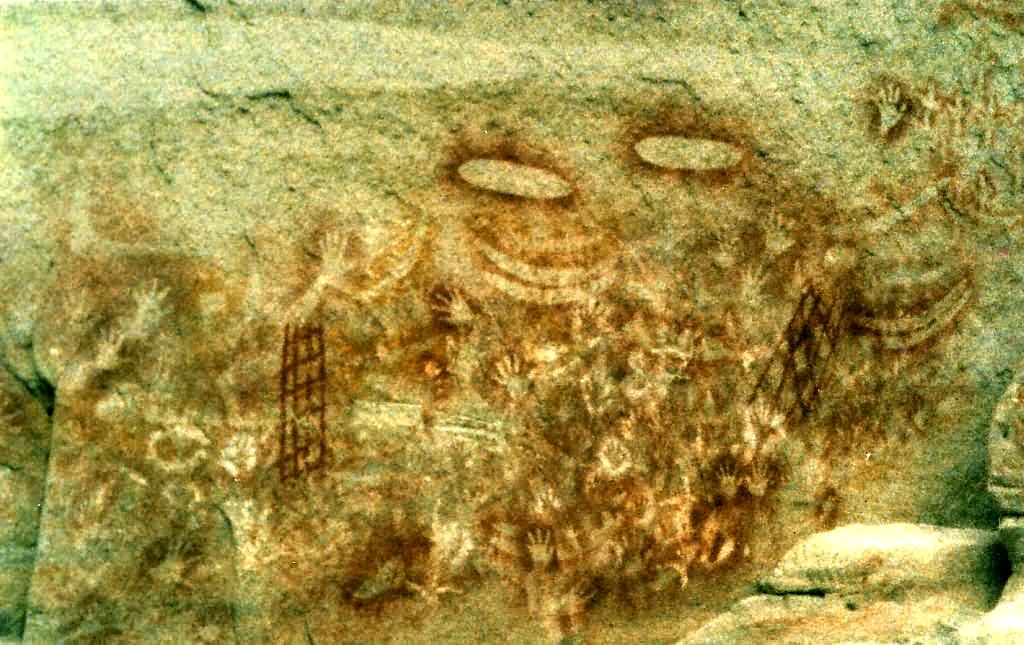 🇦🇺 AustraliaThe Dreaming
A living spiritual worldview and law connecting Aboriginal Australians to ancestors, land, and community.Spiritual
🇦🇺 AustraliaThe Dreaming
A living spiritual worldview and law connecting Aboriginal Australians to ancestors, land, and community.Spiritual