Festivals and celebrationsMiddle EastZoroastrian
Khāne-takānī
In its own language: خانهتکانی
A spring cleaning ritual in Iran that prepares homes for the Norouz new year.
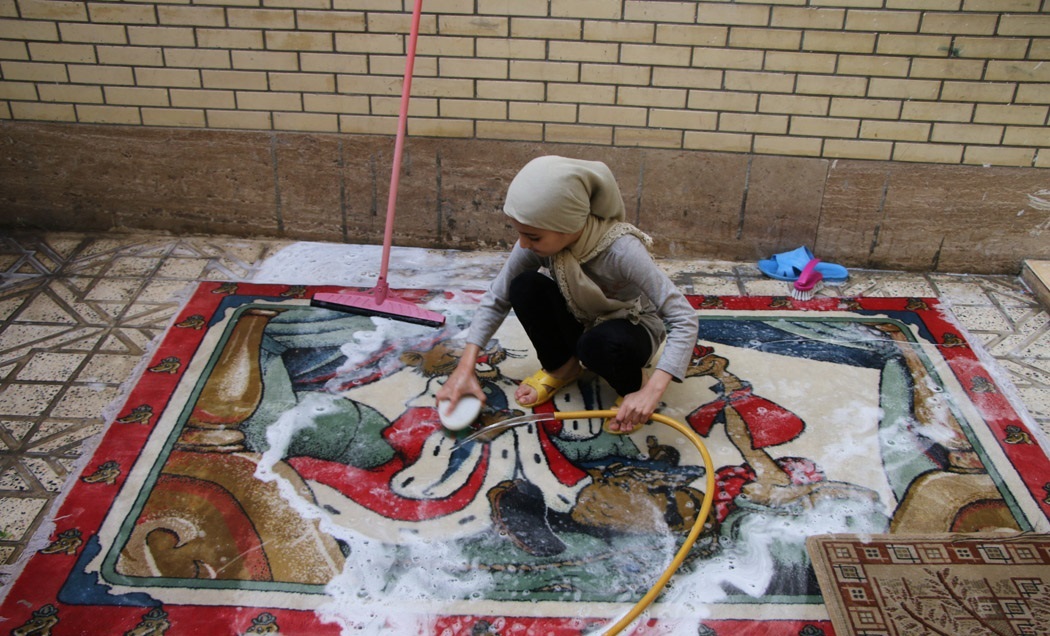
Khāne-takānī is an Iranian custom of thorough spring cleaning held before the Norouz festival. Families wash carpets, paint walls, and clear yards to purify their living spaces. The practice invites ancestral spirits to visit and bless the home's growth after winter.
When is Khāne-takānī kept?
Khāne-takānī is kept on before the Norouz new year festival.
Khāne-takānī, meaning shaking the house, is a traditional Iranian spring cleaning ritual. It serves as a vital preparation step for the Norouz new year festival. Families engage in deep cleaning to purify their homes and welcome the new season.
Origins and history
The custom stems from Zoroastrian beliefs about purity. Ancient practitioners viewed cleanliness as a spiritual defense against evil forces. This concept established a framework where maintaining a pure environment protected the kingdom of good. Over time, this religious principle evolved into a widespread cultural habit. Today, it remains a key part of the Norouz celebration across Iran. The tradition reflects a long-standing desire to cleanse both physical and spiritual spaces.
How it is kept
Households undertake extensive cleaning tasks to prepare for the new year. Residents wash heavy carpets and scrub floors throughout the home. Many families also repaint walls or refresh surfaces to remove dust and grime. Cleaning extends beyond the interior to include yards and attics. Everyone in the household participates in these labor-intensive activities. The goal is to leave no corner untouched by the new year's energy. This collective effort strengthens family bonds while ensuring the home is ready for guests.
Symbolism and meaning
The ritual carries deep symbolic weight for those who keep it. A clean home signals readiness to receive ancestral spirits. Families believe these spirits descend to visit their previous residences during this time. The purified space helps nourish the sabzeh, a sprouted wheat or barley plant central to Norouz. This greenery represents sustenance that was depleted during the cold winter months. By cleaning thoroughly, descendants honor their ancestors and support the cycle of renewal.
How Khāne-takānī is kept
Families wash carpets, paint walls, and clean yards and attics. This thorough effort prepares the home for the new year and honors ancestral spirits.
When and where
It occurs before the Norouz new year festival, marking the arrival of spring.
This tradition is practiced throughout Iran as part of the broader Norouz celebrations.
What Khāne-takānī means
Cleaning invites ancestral spirits to visit and bless the home. It supports the growth of sabzeh, representing sustenance renewed after winter.
Questions people ask about Khāne-takānī
When is Khāne-takānī kept?
Khāne-takānī is kept on before the Norouz new year festival.
What is Khāne-takānī?
It is an Iranian spring cleaning tradition performed before the Norouz new year festival. Families clean their homes thoroughly to prepare for the new season.
Why do Iranians clean their houses for Norouz?
The cleaning purifies the home and invites ancestral spirits to visit. It also supports the growth of sabzeh, which symbolizes renewal and sustenance.
See also
 Yaldā NightA solstice night of poetry, fruit and family, kept from Iran through Central Asia
 Chaharshanbe SuriAn Iranian festival of fire and renewal celebrated on the eve of the final Wednesday before spring.
 TirganAn ancient Iranian summer festival of water, poetry and rainbow bands, kept on the thirteenth day of Tir.
Good reading and sources
- Khāne-takānī on WikipediaEncyclopedia
- More photos on Wikimedia CommonsPhotos and video
- Wikidata recordOpen data
The facts on this page come from the Wikipedia article "Khāne-takānī", written by its contributors and used under the CC BY-SA 4.0 licence, and from its Wikidata record (CC0). EveryParampara rewrote the text in its own words, with AI assistance, and compares every page with the article to make sure no passage is copied. It may be reused under the same CC BY-SA 4.0 licence with a link back.
It may contain mistakes. Traditions differ from one family, village and community to the next, and the people who keep them know them best. If something is wrong, tell us. Last refreshed 2026-10-07.
More from Iran
All the traditions of Iran
🇮🇷 Isfahan, Iran and 4 moreChaharshanbe Suriچهارشنبهسوری
An Iranian festival of fire and renewal celebrated on the eve of the final Wednesday before spring.Festival · Tea-time and snacking customs
🇮🇷 Amol, Iran and 3 moreTirganتیرگان (Tirgān)
An ancient Iranian summer festival of water, poetry and rainbow bands, kept on the thirteenth day of Tir.Festival · Feasts and festival meals
 🇹🇷 Turkey and 5 moreNewrozنەورۆز
A Kurdish spring festival and new year celebration marked by bonfires, dance, and the lighting of fires.Festival
🇹🇷 Turkey and 5 moreNewrozنەورۆز
A Kurdish spring festival and new year celebration marked by bonfires, dance, and the lighting of fires.Festival
The same idea elsewhere
Remembering the ancestors compared 🇮🇪 Ireland and 5 moreHalloween
An annual observance on 31 October marking the eve of All Saints' Day, rooted in Christian tradition and Celtic heritageFestival · Sweets given and shared
🇮🇪 Ireland and 5 moreHalloween
An annual observance on 31 October marking the eve of All Saints' Day, rooted in Christian tradition and Celtic heritageFestival · Sweets given and shared
 🇮🇳 Ayodhya, India and 7 moreDiwaliदीपावली (Dīpāvalī)
A five-day festival of lights celebrated across India and its diaspora to mark the victory of light over darkness.Festival · Feasts and festival meals
🇮🇳 Ayodhya, India and 7 moreDiwaliदीपावली (Dīpāvalī)
A five-day festival of lights celebrated across India and its diaspora to mark the victory of light over darkness.Festival · Feasts and festival meals
 🇮🇳 Mathura, India and 5 moreHoliहोली (Hindi)
A spring festival of colours and bonfires that marks the end of winter and the triumph of good over evil.Festival
🇮🇳 Mathura, India and 5 moreHoliहोली (Hindi)
A spring festival of colours and bonfires that marks the end of winter and the triumph of good over evil.Festival
 🇲🇽 Mexico City, Mexico and 1 moreDay of the DeadDía de Muertos
A Mexican remembrance of deceased family and friends with altars, marigolds and feastsFestival · Sweets given and shared
🇲🇽 Mexico City, Mexico and 1 moreDay of the DeadDía de Muertos
A Mexican remembrance of deceased family and friends with altars, marigolds and feastsFestival · Sweets given and shared