Festivals and celebrationsMiddle EastZoroastrianSecular and civic
Chaharshanbe Suri
In its own language: چهارشنبهسوری
An Iranian festival of fire and renewal celebrated on the eve of the final Wednesday before spring.

Chaharshanbe Suri is a traditional Iranian festival marking the transition from winter to spring. People light bonfires in streets and yards, jumping over flames while exchanging colors for purification. The evening also features spoon-banging games, fortune-telling rituals, and sharing snacks of dried fruits and nuts.
When is Chaharshanbe Suri in 2027?
Chaharshanbe Suri 2027 is on Tuesday, 16 March 2027. The date follows the moon or a local calendar, so it can move by a day. Other years: 2028, Tuesday, 14 March 2028.
Chaharshanbe Suri is an ancient Iranian festival held on the eve of the final Wednesday before the spring equinox. It serves as a vibrant prelude to Nowruz, the Persian New Year. Communities gather to celebrate renewal through fire rituals, playful customs, and shared meals, honoring both seasonal change and ancestral traditions.
Fire and purification
The central ritual involves lighting large bonfires in public squares, rooftops, and village streets. Participants jump over the flames while chanting a phrase that exchanges their paleness for the fire's redness. This act symbolizes the shedding of illness, weakness, and bad luck, replacing them with vitality and strength. The fire represents purification and the arrival of spring energy.
Evening customs and games
After the fires, people engage in spoon-banging, a custom similar to trick-or-treating. Disguised participants knock on neighbors' doors, banging spoons on bowls to request snacks. Another tradition is fortune-telling using a jug or a book of poems by Hafez. Participants drop personal items into a container, and a child draws a slip of paper to reveal a verse predicting the future for the item's owner.
Food and offerings
Families share ajil, a mix of dried fruits and nuts like pistachios and almonds, believed to grant wishes. Supper varies by region but often includes polow with pasta or sabzi-polow with fish. In some areas, burning rue seeds or frankincense protects against the evil eye. A courtship ritual in northern Iran involves dropping a basket from a roof to gauge family approval.
History and modern context
Rooted in Zoroastrianism, the festival honors spirits during the Frawardigan period. Historically, Tehran residents visited the Pearl Cannon for blessings. Today, the celebration persists despite government discouragement, sometimes becoming a site for political expression. It remains a key cultural event for Iranians worldwide, including large gatherings in Stockholm.
How Chaharshanbe Suri is kept
Communities collect brushwood to build bonfires at sunset. People jump over the flames while chanting phrases of exchange. Later, they disguise themselves to bang spoons on bowls at neighbors' doors for snacks. Families gather for fortune-telling rituals using jugs or poetry books. They eat ajil snacks and regional supper dishes like polow, while burning rue seeds for protection.
When and where
It falls on the last Wednesday before the vernal equinox, usually in March. The date shifts annually based on the solar calendar, occurring in the final week of Esfand.
The festival is strongest in Iran, particularly in cities like Isfahan and Tehran. It is also observed in Azerbaijan, Afghanistan, Tajikistan, and Turkey. Large diaspora celebrations occur in places like Stockholm.
What Chaharshanbe Suri means
The fire purifies the soul, removing past misfortunes and welcoming spring energy. Jumping over the flames signifies leaving behind illness and weakness. The exchange of colors represents a spiritual renewal. The festival honors ancestors and marks the vital transition from winter to spring.
On the table
- Ajil
- Polow
- Sabzi-polow
- Pasta soup


Days Chaharshanbe Suri is marked
Chaharshanbe Suri dates: 2027, 2028
| Year | Chaharshanbe Suri date |
|---|---|
| 2027 | Tuesday, 16 March 2027 |
| 2028 | Tuesday, 14 March 2028 |
This date follows the moon or a local calendar and can move by a day, so check with a local source nearer the time.
Questions people ask about Chaharshanbe Suri
When is Chaharshanbe Suri in 2027?
Chaharshanbe Suri 2027 is on Tuesday, 16 March 2027. The date follows the moon or a local calendar, so it can move by a day. Other years: 2028, Tuesday, 14 March 2028.
Where is Chaharshanbe Suri kept?
Chaharshanbe Suri belongs to the traditions of Iran, Azerbaijan, Afghanistan, Tajikistan and Turkey, and is tied most closely to Isfahan.
Who keeps Chaharshanbe Suri?
As our sources describe it, Chaharshanbe Suri is kept by Iranian people. Many other communities and families now share it too.
See also
 NowruzThe Iranian new year at the March equinox, kept with fire, greenery and picnics
 MawlidAn annual festival marking the birth of the Prophet Muhammad, marked by poetry, processions and feasts.
 Yaldā NightA solstice night of poetry, fruit and family, kept from Iran through Central Asia
 Eid al-FitrThe feast that ends Ramadan, opened with morning prayers, sweets and visits home
Good reading and sources
- Chaharshanbe Suri on WikipediaEncyclopedia
- More photos on Wikimedia CommonsPhotos and video
- Wikidata recordOpen data
The facts on this page come from the Wikipedia article "Chaharshanbe Suri", written by its contributors and used under the CC BY-SA 4.0 licence, and from its Wikidata record (CC0). EveryParampara rewrote the text in its own words, with AI assistance, and compares every page with the article to make sure no passage is copied. It may be reused under the same CC BY-SA 4.0 licence with a link back.
It may contain mistakes. Traditions differ from one family, village and community to the next, and the people who keep them know them best. If something is wrong, tell us. Last refreshed 2026-10-04.
More from Iran
All the traditions of Iran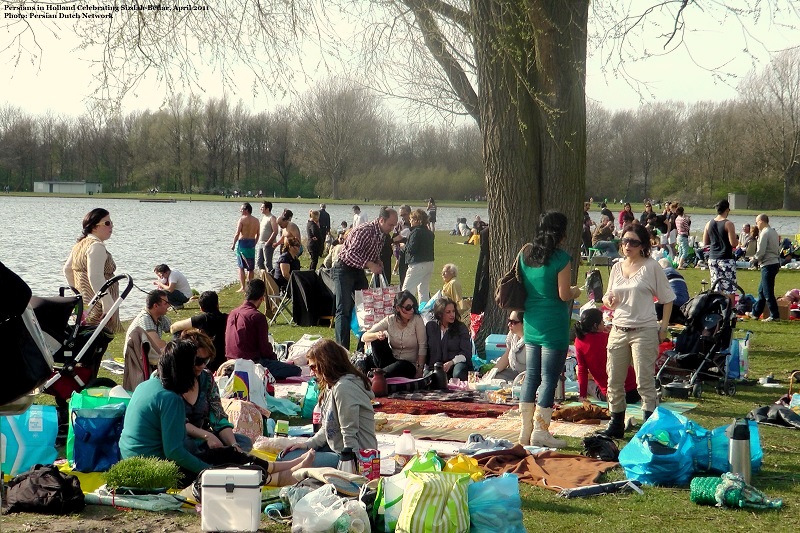 🇮🇷 Iran and 4 moreSizdah Bedarسیزدهبدر
An open-air picnic holiday concluding the Iranian New Year celebrationsFestival
🇮🇷 Iran and 4 moreSizdah Bedarسیزدهبدر
An open-air picnic holiday concluding the Iranian New Year celebrationsFestival
 🇮🇷 Amol, Iran and 3 moreTirganتیرگان (Tirgān)
An ancient Iranian summer festival of water, poetry and rainbow bands, kept on the thirteenth day of Tir.Festival · Feasts and festival meals
🇮🇷 Amol, Iran and 3 moreTirganتیرگان (Tirgān)
An ancient Iranian summer festival of water, poetry and rainbow bands, kept on the thirteenth day of Tir.Festival · Feasts and festival meals
 🇮🇷 Yazd, Iran and 1 moreSadehسده
An ancient midwinter festival of fire, light, and the approach of springFestival · Feasts and festival meals
🇮🇷 Yazd, Iran and 1 moreSadehسده
An ancient midwinter festival of fire, light, and the approach of springFestival · Feasts and festival meals
The same idea elsewhere
New Year compared 🇮🇳 Mathura, India and 5 moreHoliहोली (Hindi)
A spring festival of colours and bonfires that marks the end of winter and the triumph of good over evil.Festival
🇮🇳 Mathura, India and 5 moreHoliहोली (Hindi)
A spring festival of colours and bonfires that marks the end of winter and the triumph of good over evil.Festival
 🇮🇳 Guwahati, IndiaBihu dance
A folk dance from Assam that celebrates spring, fertility and the new year with energetic movement and music.Performance
🇮🇳 Guwahati, IndiaBihu dance
A folk dance from Assam that celebrates spring, fertility and the new year with energetic movement and music.Performance
 🇰🇷 Jeju, South KoreaGut굿
Sacred rites of song, dance, and spirit communion performed by Korean shamansSpiritual
🇰🇷 Jeju, South KoreaGut굿
Sacred rites of song, dance, and spirit communion performed by Korean shamansSpiritual
 🇦🇿 AzerbaijanNovruzNovruz Bayramı
The Azerbaijani spring equinox festival of bonfires, sweets and sprouted wheatSeasonal · Feasts and festival meals
🇦🇿 AzerbaijanNovruzNovruz Bayramı
The Azerbaijani spring equinox festival of bonfires, sweets and sprouted wheatSeasonal · Feasts and festival meals